
 Subscriptions
Read our Monthly Magazine
And support our mission to provide fearless stories about and outside the media system
As Andy Burnham prepares to relaunch the UK’s Labour government, attention has mostly been focused on his domestic agenda, with little given to his possible moves on international issues—or the effects these could have on the fortunes of his party.
Yet the two years since the 2024 general election have been filled with international crises with Israel at their heart: the genocide in Gaza, settler violence in the West Bank and the disastrous war on Iran that Prime Minister Benjamin Netanyahu persuaded Donald Trump to launch.
So when Burnham is forced to turn to world events, his attitude to Israel will be pivotal. In the past, he has taken a fairly standard Labour position, supporting a Palestinian state while joining Labour Friends of Israel—he even pledged in 2015 that his first overseas visit would be to the country if he won the party’s leadership.
On Gaza, as Manchester mayor, he joined other regional Labour leaders in calling for a ceasefire on 27 October 2023, at a time when the national party was still resisting that. But otherwise he has not gone further than a recent statement criticising the “disproportionate destruction” of Gaza.
Nimer Sultany, a Palestinian academic at SOAS University of London, has therefore concluded that “we can expect continuity, not a break from current British policy towards Israel”. Yet a break is exactly what Burnham needs to deliver—not only for the sake of Palestinians, but also to restore a viable bloc of voters which might keep Labour in power after the general election due in 2029.

Edinburgh Attacks Expose ‘Two-Tier’ Coverage of Racism in UK, New Data Shows
The Edinburgh attacks on five Muslim men received seven times less coverage than a comparable antisemitic attack in London two months earlier, reports Hugh Wilkinson
The Sharpest Edge of Starmer’s Legacy
In his resignation speech, outgoing Prime Minister Keir Starmer claimed to have overcome the Labour Party’s previous “moral bankruptcy”.
But it is Starmer’s own policy towards Israel that is most regarded as having been morally bankrupt by the voters he has lost. Although only some of his political obituaries have mentioned this, it is Labour’s complicity in the genocide that has created the most intractable obstacle that Burnham faces in recreating a viable electoral coalition.
Starmer fundamentally damaged Labour’s standing in October 2023, when he was leader of the opposition, by claiming that Israel “had the right” to cut off power and water from the Palestinians—and failing to apologise. He then joined the Conservatives to block calls for a ceasefire.
Labour paid a serious price for this in 2024, losing seats in Muslim areas to pro-Gaza Independents. Despite the huge Labour landslide, one shadow cabinet member, Jonathan Ashworth, lost his seat, and Wes Streeting almost lost his.
It must be tempting for Burnham to think that this is ancient history. The destruction of Gaza has slowed and its continuing plight has been pushed out of the headlines. However, Israel continues to commit atrocities, and public opinion towards the country has changed dramatically—more voters are favourable towards Palestine, and over half think that Israel has committed genocide. Labour members too are highly critical according to according to a recent poll.
As opinion shifted, even Starmer responded a little, for example criticising settlers in the West Bank and making gestures like allowing more injured Gazans to come to the UK for treatment. But there is still a huge gap between the Labour government and the progressive voters whom Labour needs to win back if it is to retain power after 2029.
Gaza is therefore the sharpest edge of Starmer’s domestic as well as international legacy. Under the advice of Morgan McSweeney, he pursued a policy of pursuing right-leaning voters and their supporters in the press.
Election and polling experts are now unanimous that this was a fatal mistake, since it alienated Labour’s core vote in the electorate’s “progressive bloc”. Much larger numbers have deserted Labour for other progressive parties than for the Conservatives or Reform, and Gaza has been a key factor.
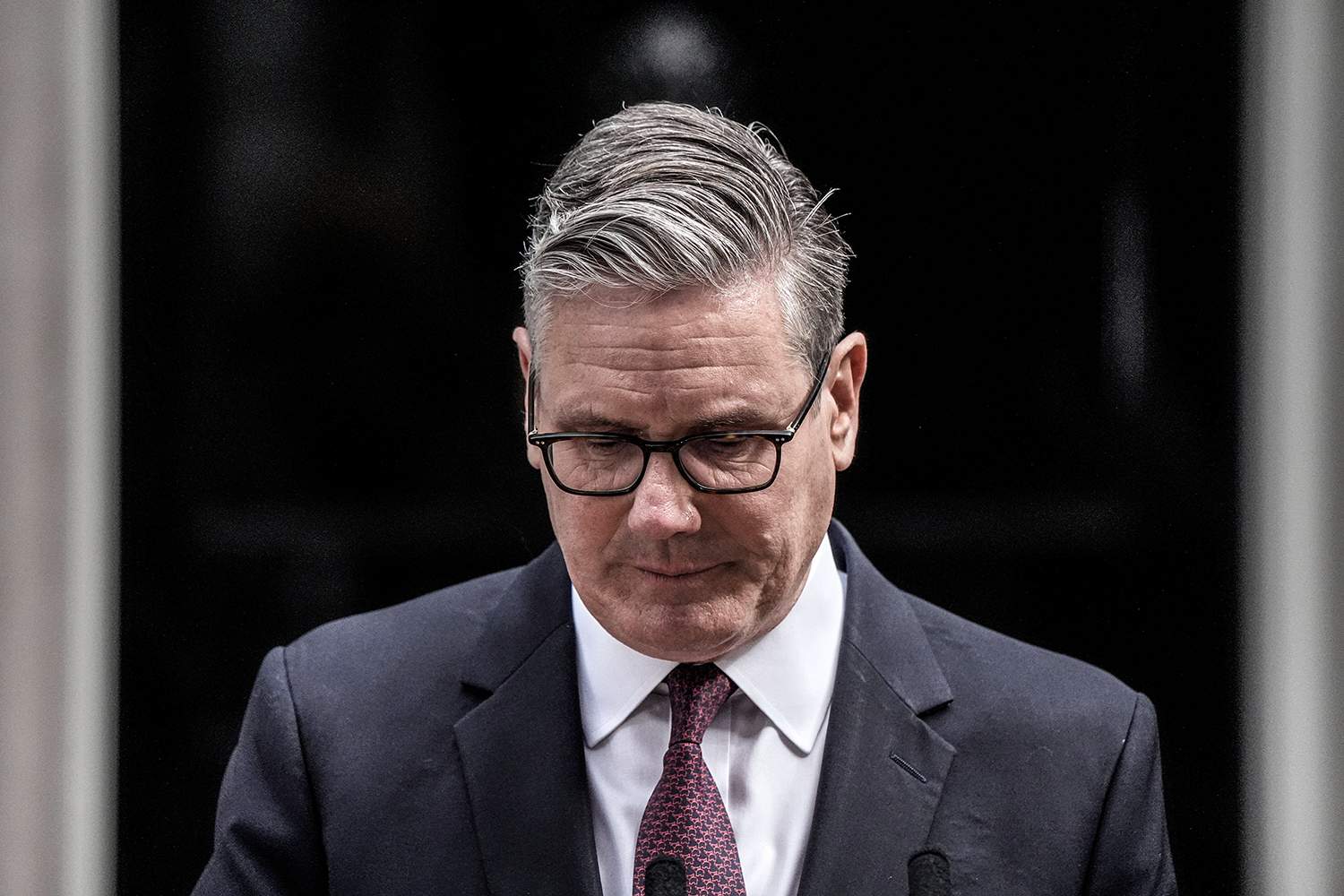
The Real ‘Moral Bankruptcy’ That Brought Down Keir Starmer’s Premiership
The Prime Minister promised to restore morality to our politics, but ended up falling far short of his own standards, argues Adam Bienkov
Support for a Genocide
The core of Labour’s Gaza policy has been support for Israel’s campaign—including by military means, with RAF planes collecting surveillance over the Strip which has been supplied to Israel and almost certainly used in the genocide. Labour imposed token sanctions on weapons for Israel, but it allowed parts to be sent for the F-35s that have been key to its destruction Gaza.
The Government also failed to carry out its international legal obligation (under the Genocide Convention) to act to prevent genocide. Starmer did not explicitly deny that genocide had been committed—as an international lawyer who prosecuted a genocide case in the International Court Justice (ICJ), he must have understood that it was probably occurring—but his government claimed that it had not made a determination to this effect.
Shamefully, they argued that they could not take a definitive view since the question had not been adjudicated by an international court. Yet they knew that the duty to prevent genocide—which obviously applies as soon as it is possible that the crime will be committed, not after long-drawn out legal proceedings—had been triggered by the International Court of Justice’s warning, in January 2024, of a “plausible risk” of genocide against the Palestinians.
Starmer’s Government has now ignored this duty for almost two and a half years. During this time it has repeatedly welcomed Israeli political and military leaders to the UK (except for Netanyahu himself, who has been indicted for crimes against humanity by the International Criminal Court).
Labour has even outlawed the direct-action protest group Palestine Action as a “terrorist” organisation. Although it claimed that this decision did not prevent pro-Palestinian protest, it also tarred peaceful protests—which included the participation of many anti-Israeli Jews—as “hate marches” and encouraged the police to act against them. And of course, it has hardly changed policy at all in response to the the huge wave of protests.
It is not just Starmer, and ministers like David Lammy and Yvette Cooper who have been most involved in these pro-Israeli policies, who are complicit. Wes Streeting has reported that he circulated videos of Israeli atrocities to cabinet—but neither he nor anyone else resigned. There has been little open dissent within Labour: only nine MPs out of more than 400 voted against the Palestine Action ban.
Gaza’s Effect on Public Opinion
This record scars the whole party, which is why Burnham must act. Any temptation to see Gaza as being of concern only the minority who actively take part in the pro-Palestinian movement would be deeply shortsighted.
Burnham has said that he will apply the “Makerfield test”—named after the seat he has won—to determine the direction of policy, and Gaza wasn’t a major issue in that by-election. Yet it was obviously relevant in the previous Manchester by-election, in Gorton and Denton, where Muslim and progressive voters swung decisively to the Greens and pushed Labour into third place.
The pressure group Think Labour (previously Labour Together, the group which was responsible for Starmer’s rise) has recently published research claiming to show that Muslim voters “regard the cost of living as their main priority, rather than the conflict in Gaza”. It therefore claims they can be won back to Labour by policies on the cost of living.
Yet comparing these issues for potential retail offers obscures the particular significance of Gaza. Genocide does not affect opinion in the same way as the price of petrol. It is more like Islamophobia, a question of group identity that Think Labour shows is very important to Muslims. Indeed, even their report acknowledges that the salience of Gaza among Muslims has only