
 Subscriptions
Read Our Monthly Magazine
And support our mission to provide fearless stories about and outside the media system
Keir Starmer’s claim, as he announced his resignation as Prime Minister on Monday, that the Labour party had heen “morally bankrupt” before he took over, tells us an awful lot about how he got himself into this position.
The claim, which was an apparent reference to the anti-semitism scandal under his predecessor Jeremy Corbyn, is revealing on a number of levels.
While it is certainly the case that Jewish people were badly let down by Corbyn’s leadership, it is also the case that Starmer was himself a very senior figure within the party during that period.
And while he today disowned that era as having been entirely “politically, financially and morally bankrupt” this is not a position he publicly took at the time, or when he campaigned to take over as Labour leader.
Indeed, the most notable part of Starmer’s own bid for the leadership back in 2020 was how closely it aligned with the outlook of his immediate predecessor.
In both policy and rhetoric, Starmer posed as being the heir to Corbyn, insisting that he would maintain what he described as his predecessor’s “radical” approach to politics.
Yet of the ten key pledges Starmer campaigned on to become Labour leader, almost every single one was later dropped.
Despite pledging to defend free movement, raise taxes on the wealthy, abolish the House of Lords and nationalise public utilities, Starmer instead governed as a Prime Minister who has taken freebies from millionaires, whilst claiming that immigration has done “incalculable damage” to the country.
Because the truth is that while there was initially huge optimism in the country that Starmer’s premiership would be a return to the sort of morality-based and principle-based politics that was largely absent during 14 years of Conservative government, in reality it was Starmer’s own failures on these terms that ultimately ended up bringing him down.
‘Shaking off the Fleas’
These failures could be most clearly seen in his early refusal to condemn Netanyahu’s brutal response to Hamas’ October 7 attacks. His comments that Israel ‘has the right’ to withhold power and water from Gaza, caused a massive breach with many of Labour’s core supporters. After large numbers of Muslim Labour councillors resigned in protest, a senior Labour source described it as the party merely “shaking off the fleas”.
This line was part of a divisive approach to politics that would go onto define his leadership. In the run up to the 2024 general election there was a concerted campaign by those around Starmer to purge left-wingers from the party, including Corbyn. The plan, which proved a massive distraction from the job of actually winning the election, culminated in an ultimately failed attempt to expel one of Labour’s longest serving members in Diane Abbott.
Later, when a small number of Labour MPs voted for an amendment to scrap the two child benefit limit that has driven hundreds of thousands of children into poverty, the MPs were immediately expelled from the party. In Starmer’s Labour, factional politics often trumped any other considerations.
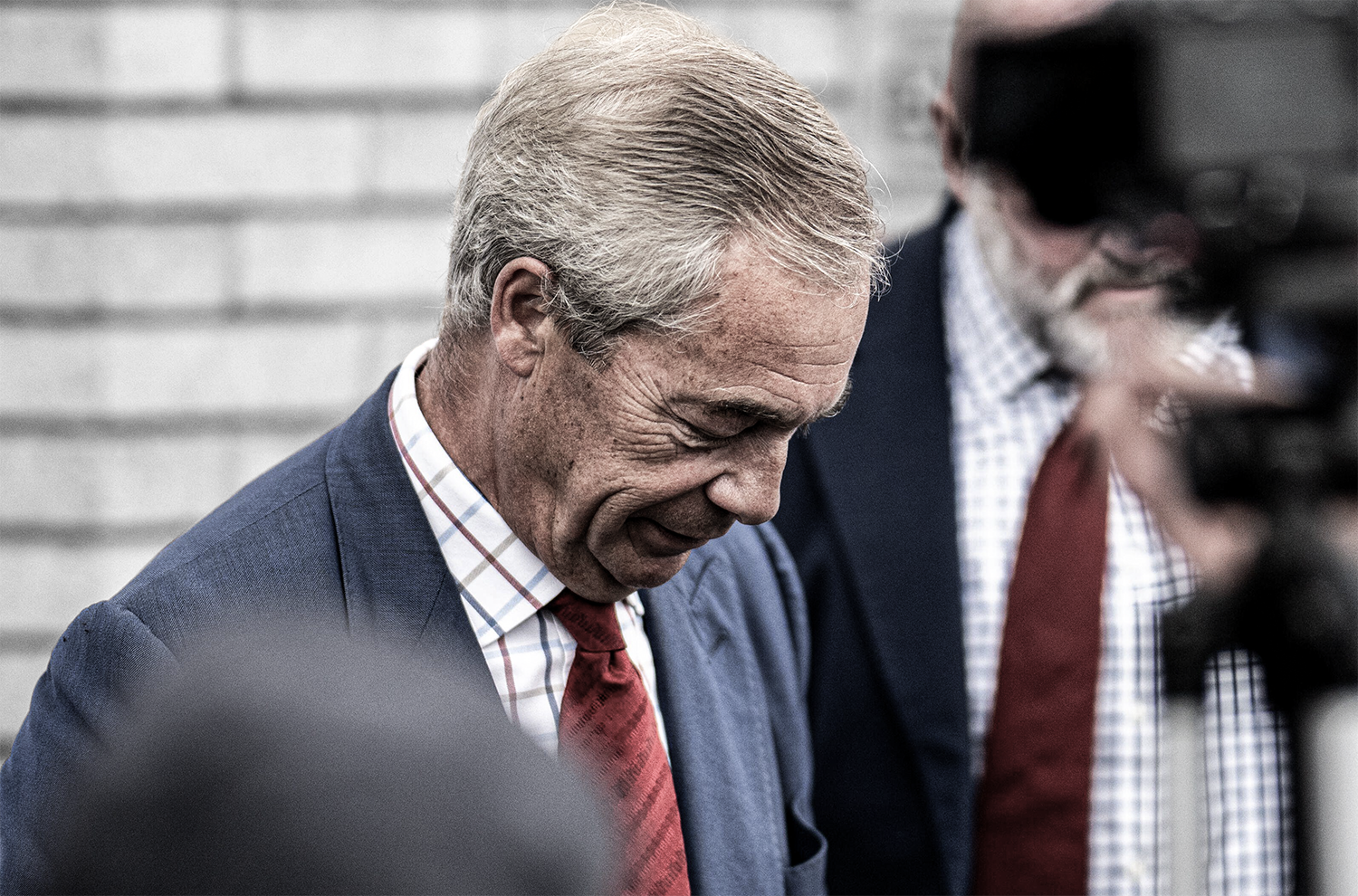
Makerfield By-Election Result: How Voters Rejected Nigel Farage’s Politics of ‘Pure Cold Rage’
For the third time in a row Reform sought to stoke division and violence on Britain’s streets and have been roundly rejected by voters as a result, reports Adam Bienkov
This approach also applied to his approach to the media.
Elected on a pledge never to talk to the Sun newspaper, because of its behaviour on Hillsborough, Starmer immediately abandoned this upon becoming leader, giving repeated interviews and preferential access to both the Sun and many other publications like the Telegraph, whose owners had long been deeply opposed both to Starmer and the Labour party. As Prime Minister he would go onto appoint multiple former journalists at Murdoch papers to his administration.
These attempts to appease those forces that most wanted to destroy him was often extended to policy too.
Under the advice of his long-time aide Morgan McSweeney, Starmer focused heavily on attempting to win over so-called “hero voters” who were sympathetic to Reform by taking a hardline stance on immigration and other culture war issues.
This strategy, which culminated in Starmer’s disastrous “Island of Strangers” speech, not only “shook off the fleas” who still believed in Starmer’s Labour leadership campaign pledge to “defend migrant rights” but also led to a broader fracturing of Labour’s electoral base.
By the time of last month’s local elections, the progressive defection of large numbers of left-wing voters from Labour to the Greens had caused the party not only to shed large numbers of votes to Zack Polanski’s party, but even larger numbers of seats to Nigel Farage’s Reform UK.
Trumped
In his resignation speech this morning Starmer sought to set out some of the real achievements he has made as Prime Minister over the last two years.
He listed new rights for workers, declining NHS waiting lists and his lifting of hundreds of thousands of children out of poverty.
However, it was telling that the one geniune achievement he will probably most be remembered for – keeping the UK out of Trump’s disastrous war in Iran – was not included on the list.
Its absence tells us much about Starmer’s leadership. Whereas other world leaders, like Canada’s Mark Carney, responded robustly and openly to Trump’s verbal attacks on them and their countries, the British Prime Minister often appeared reluctant to even mildly criticise, let alone strongly stand up to a US President who often held him in open contempt.
ENJOYING THIS ARTICLE? HELP US TO PRODUCE MORE
Receive the monthly Byline Times newspaper and help to support fearless, independent journalism that breaks stories, shapes the agenda and holds power to account.
We’re not funded by a billionaire oligarch or an offshore hedge-fund. We rely on our readers to fund our journalism. If you like what we do, please subscribe.
This failure added to a sense among many voters that he simply lacks the strength required for the job.
For his defenders this was always deeply unfair. What seemed to his critics as weakness, was to them merely pragmatism. And indeed it is notable that Starmer will likely be remembered most fondly for his approach to politics on the world stage.
Yet his refusal to ever loudly stand up to Trump, was part of a wider failing that ultimately led to his downfall.
That failing could be seen clearest in his disastrous decision to appoint Peter Mandelson as the UK’s ambassador to Trump.
For all his claims of moral rectitude this morning, the truth is that Starmer went ahead with Mandelson’s appointement despite being repeatedly warned about his close associations with the late convicted paedophile Jeffrey Epstein, as well as his financial ties to Russian billionaires and US tech firms.
And while he now accuses the left wing of his party of being “morally bankrupt”, it was precisely that wing of the party that most loudly warned against the bankruptcy of Mandelson’s appointment.
At the time Mandelson’s appointment was defended as an act of pragmatism, with the suggestion that it was done to please Trump. In truth Mandelson’s predecessor in the job was a hugely liked figure in Trump’s White House and Mandelson’s first job as ambassador involved smoothing over their disappointment over her being replaced.
In truth Starmer’s decision to push ahead with the appointment was actually due to both personal and factional concerns. Recommended for the job by McSweeney, who was his close friend and protoge, Mandelson’s appointment was also part of what one senior Labour figure told this newspaper at the time was a “calculated f*** you” to the left.
As often with Starmer’s leadership, the factional trumped the moral and it did so to the wider detriment of both his Government and the country.

Burnham Wins in Makerfield: Can the ‘Politics of Place’ Now Offer an Antidote to the Poverty of Possibility?
Having been on Reform UK’s target list as a winnable seat, Andy Burnham’s new constituency is a microcosm of Brexit Britain and the failed legacies of Thatcher and Blair. Peter Jukes and Hardeep Matharu paid a visit ahead of its seminal by-election
The Rise of Reform
However it is Starmer’s response to the dramatic rise of Reform UK and the far-right over the past two years where his failure has been greatest.
This rise, which has culminated in repeated racist riots and even a racist pogrom on UK streets earlier this month, has left many migrant and ethnic minority communities in real and growing fear for their safety.
Yet rather than crack down on these forces, Starmer has too often sought to appease them.
His refusal to act against billionaire X owner Elon Musk, even as he actively incites racist hate on our streets, has contributed significantly to the far-right poisoning of our national political debate over recent years.
This failure has not only ended up hurting Muslim and other ethnic minority communities across the UK, but it has also ended up hurting the very Jewish community who Starmer this morning boasted about having protected.
Over the last two years Islamophobic and antisemitic hate crimes have both risen and they have done so, not just because of the actions of far-right tech billionaires, but because of deep failures of political leadership that go directly to the front door to Number 10.
As the sixth British Prime Minister to have stood down in the last ten years, Starmer may never feature as a major part of our political history.
Yet if Downing Street does end up falling into the hands of Nigel Farage and his fellow travellers on the far-right, then the truth is that Starmer and his own moral failures will have played a significant role in that fall.
The responsibility for preventing that outcome will now likely fall to Andy Burnham.
Burnham’s huge victory in Makerfield, following a campaign that majored on hope, rather than hate, offers a real opportunity for the Labour party to recover from the moral failures of Starmer’s leadership and embrace a much more unified and pluralistic approach to politics.
It is an opportunity he would be well advised to take.