
 Subscriptions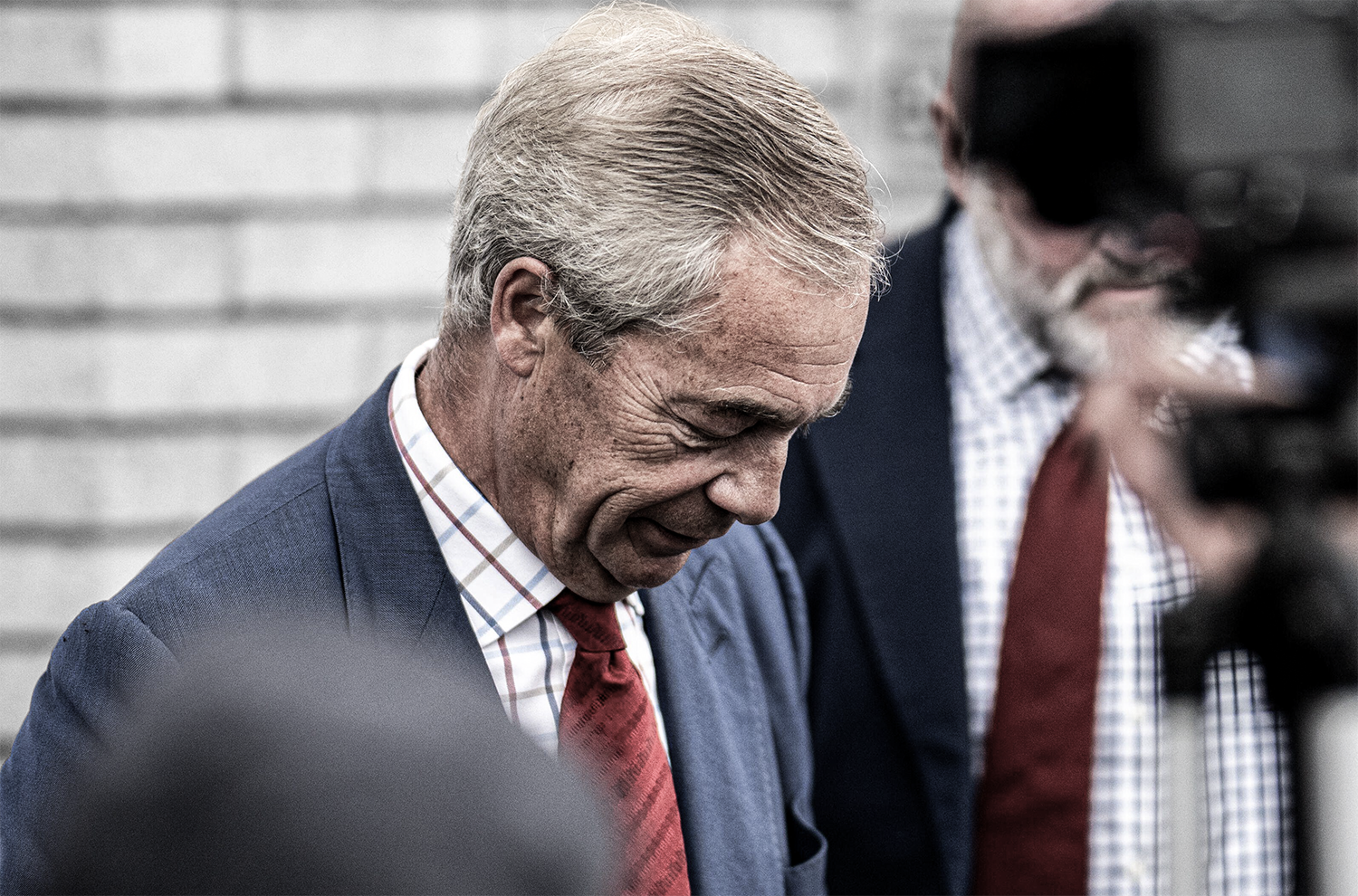
Read our Monthly Magazine
And support our mission to provide fearless stories about and outside the media system
In the end it wasn’t even close.
After a campaign in which the British press focused relentlessly on the question of whether or not Rupert Lowe and the far-right would somehow “gift” the result to Labour, Andy Burnham won the Makerfield by-election by a massive majority of over 20 points.
The result marks not just a clear rejection of the politics of “pure cold rage” called for by Nigel Farage during the campaign, but also a rejection of the cosy media consensus that his party is somehow inevitably heading for Government.
In reality Reform’s heavy defeat in Makerfield is the third time in recent months that Farage’s party has lost what should have been an incredibly winnable by-election to other parties of the centre and left.
In Caerphilly, Gorton and Denton and now Makerfield, Reform sought to exploit the politics of hatred, division and race and were roundly rejected by voters as a result.
Of the three rejections, Reform’s rejection in Makerfield was the biggest.
At the last general election Reform won their sixth highest share of the vote across the country in this constituency.
Were Farage really heading for Downing Street then he would be winning places like this with ease. That he has not suggests that his hopes of winning power in three years time are far lower than we have all been so strongly encouraged to believe.
Of course the particular circumstances in Makerfield played a huge part in the result.
Reform’s candidate was an ill-prepared bigot whose long history of misogynistic comments played terribly amongst voters in the constituency. Just as in Gorton and Denton, where Reform’s choice of an oddball GB News commentator with a series of extreme views helped motivate anti-Reform tactical voters to come to the polls for the Green Party, so too did Farage’s choice of candidate in Makerfield help turn what would have been a small defeat for his party into a big one.
Farage’s own actions also played a big part in the result. The Reform leader’s call for “pure cold rage” in response to the death of Henry Nowak, followed by his equivocation about the subsequent racist pogrom that played out on the streets of Belfast, proved alarming to many otherwise Reform-sympathetic voters across the country.

‘After Burnham’s Win in Makerfield, the Answer Cannot be Managerial Politics with a Different Accent’
Only structural change which seeks to transform a failing system can actually deliver a politics people will believe in, writes Labour MP Clive Lewis
Burnham too was a major factor in transforming Labour’s standing in the constituency.
At last month’s local elections Reform won almost double Labour’s vote in the area. At this election Burnham won double what his own party won back then.
Yet the very scale of his victory means that his version of Labour politics is now overwhelmingly likely to be the version that is put before the British people at the next general election.
If and when that happens, Farage’s hopes of taking power must surely be dramatically reduced.
Rejecting the Politics of Rage
In his victory speech, Burnham promised to take Britain “away from the path that takes us towards the divided politics of the United States” towards something we have lost: hope for the future”.
What the results in both Gorton and Denton and Makerfield shows is that this is a vision that the British people are ready to embrace.
Faced with a viable choice between the politics of rage and riots, or the politics of hope and unity, it is still likely that the British people will opt for the latter.
Such an offer will not be open for long, however.
As Burnham conceded in his victory speech, the result in Makerfield amounts to a “final chance” for Labour to embrace the politics they promised back in 2024.
Over the last two years Keir Starmer’s Government has failed to live up to its promise of uniting the country around a vision of shared progress and prosperity. A Government elected on the promise of rejecting the kind of divisive politics seen under 14 years of the Conservatives has too often fallen into exactly the same traps.
In particular, the relentless focus on issues like immigration that most concern what Starmer’s adviser Morgan McSweeney called “hero voters” has helped to massively boost Reform over the last two years. At the same time, Starmer’s failure to effectively stand up against those forces, both at home and abroad ,which have actively been seeking to foment racist riots on our streets, has been a colossal and shameful failure.
Burnham now has a chance to change all of this.
Of course that chance could still easily be missed.
Briefings that he intends to keep on the Home Secretary Shabana Mahmood and her deeply hostile immigration policies, should he become Prime Minister, suggests that he does not yet fully understand where the Labour Government has gone wrong in recent years.
Yet in other respects there are reasons for optimism. His promise of pluralism and electoral reform is a positive step in the right direction as are his commitments to deal with the issue of big money donors buying our politics.
The full nature of Burnham’s agenda will take time to become clear. However, it now looks inevitable that he will have an opportunity to put it in place.
If and when he does, it will pose a serious challenge not just to Farage and Reform, but to the deeply divisive Trumpian form of politics that they and their many media supporters have sought to impose on the UK.
For the last two years the global far-right has sought to stoke hatred and violence on Britain’s streets, in an attempt to push our politics irretrievably to the far-right.
Labour, under Burnham, now has one last chance to prevent that from happening.
ENJOYING THIS ARTICLE? HELP US TO PRODUCE MORE
Receive the monthly Byline Times newspaper and help to support fearless, independent journalism that breaks stories, shapes the agenda and holds power to account.
We’re not funded by a billionaire oligarch or an offshore hedge-fund. We rely on our readers to fund our journalism. If you like what we do, please subscribe.