
 Subscriptions
Read our Monthly Magazine
And support our mission to provide fearless stories about and outside the media system
Major restrictions to the right to protest in England and Wales were quietly brought into force on Monday.
The measures include a new offence of concealing your identity (e.g. with a face mask) in police-designated areas around protests, a ban on protesting outside the homes of public office-holders, including MPs, peers and candidates, and extra police powers to impose conditions on protests near places of worship.
The changes also add a duty for police to weigh the “cumulative disruption” from separate protests in the same area when setting conditions on demonstrations, as well as widening which officers can impose those conditions, to more junior ranks. Human rights groups pushed for this part of the legislation to be removed but were unsuccessful.
These provisions were passed by the Labour Government under the Crime and Policing Act 2026, large parts of which came into force on Monday (29 June).
As part of this, Government officials trumpeted the repeal of the Vagrancy Act, which criminalised rough sleeping. But other changes have gone less publicised.
A Home Office circular, published this week, sets out that the law makes it an offence to conceal your identity in a public place if it’s been ordered by a senior police officer. An inspector (or above) can designate an area as, effectively, mask-free for up to 24 hours. Those breaching a mask-ban face imprisonment up to one month, and/or a fine up to £1,000.
ENJOYING THIS ARTICLE? HELP US TO PRODUCE MORE
Receive the monthly Byline Times newspaper and help to support fearless, independent journalism that breaks stories, shapes the agenda and holds power to account.
We’re not funded by a billionaire oligarch or an offshore hedge-fund. We rely on our readers to fund our journalism. If you like what we do, please subscribe.
It is also now an offence to possess a ‘pyrotechnic article’ – like a firework or flare – while taking part in a protest in a public place. Flares have been staples of protests for decades. Those using them now face fines up to £1,000 each.
Section 161 makes it an offence to climb on a specified memorial – including (specifically) the statue of Sir Winston Churchill in London’s Parliament Square, and the Holocaust Memorial Garden in Hyde Park, among 23 others. Breaking this law is punishable by up to three months’ imprisonment, a fine up to £1,000, or both.
The ban on protests outside ‘public office holders’ homes includes “all types of elected persons in England and Wales, peers in the House of Lords, and candidates to elected posts.” So protests outside council candidates’ homes are among demonstrations now banned, if they relate to “persuading the public office-holder of something that they should or should not do or have done.”
Those knowingly protesting outside elected officials’ or candidates’ homes now face the maximum term for summary offences, currently six months in prison, a fine up to £2,500, or both.
New Powers for Police
Changes to the Public Order Act 1986 enable conditions to be imposed on public processions, public assemblies and even one-person protests, where a senior police officer “reasonably believes” the protest is in the vicinity of a place of worship and may intimidate them enough to deter them from accessing the place of worship or performing religious activities there. Defying these orders would put marchers in breach of the Public Order Act 1986.
And there is now a duty on senior officers to take account of any “relevant cumulative disruption” in an area when considering whether “serious disruption to the life of the community” is occurring from protests. Police can then impose extra conditions on a protest, for example ordering a change of route.
Cumulative disruption can include “the significant delay to the delivery of a time-sensitive product to consumers of that product,” such as blocking food or beverage supplies.
Protesters breaching police conditions face fined up to £2,500, while organisers can face up to six months in prison (though this could soon rise to 51 weeks).
Don’t miss a story
Existing public order powers are now extended to the British Transport Police (BTP) and Ministry of Defence Police (MDP) – adding the ability for BTP to place conditions on protests at train stations, and to enable BTP and MDP officers to require individuals to remove face coverings.
Police also now have renewed powers to direct trespassers to leave land, and to seize vehicles. The amendment reduces the period during which a person directed to leave land must not return from twelve months to three months, following a High Court ruling against similar powers in 2024.
It also removes the need for a constable in uniform to issue a warning to someone using their vehicle in a “manner causing alarm, distress or annoyance.” The Home Office says it will make it easier and quicker for police to seize vehicles being used “anti-socially.” It is thought this could include vehicles displaying political messages.
‘Acts That Were Never Crimes Before’
Greenpeace UK’s deputy head of politics Reshima Sharma told Byline Times: “Taking part in protests is one of the few ways people can make their voices heard between elections and hold the powerful to account. It’s an act of hope that builds community and participation in our democracy. Which begs the question: why have so many Labour and Conservative home secretaries been desperate to ban this?”
Sharma said the Crime and Policing Act provides “yet more reasons” why a peaceful protester could find themselves on the wrong side of the law – from wearing a face covering to being somewhere a previous protest has recently taken place.
Greenpeace added a call to Andy Burnham to look again at the legislation: “Our next prime minister will have a clear decision to make: defend our democracy by allowing protest in all its forms to flourish, or continue down the path of despots and dictators.”
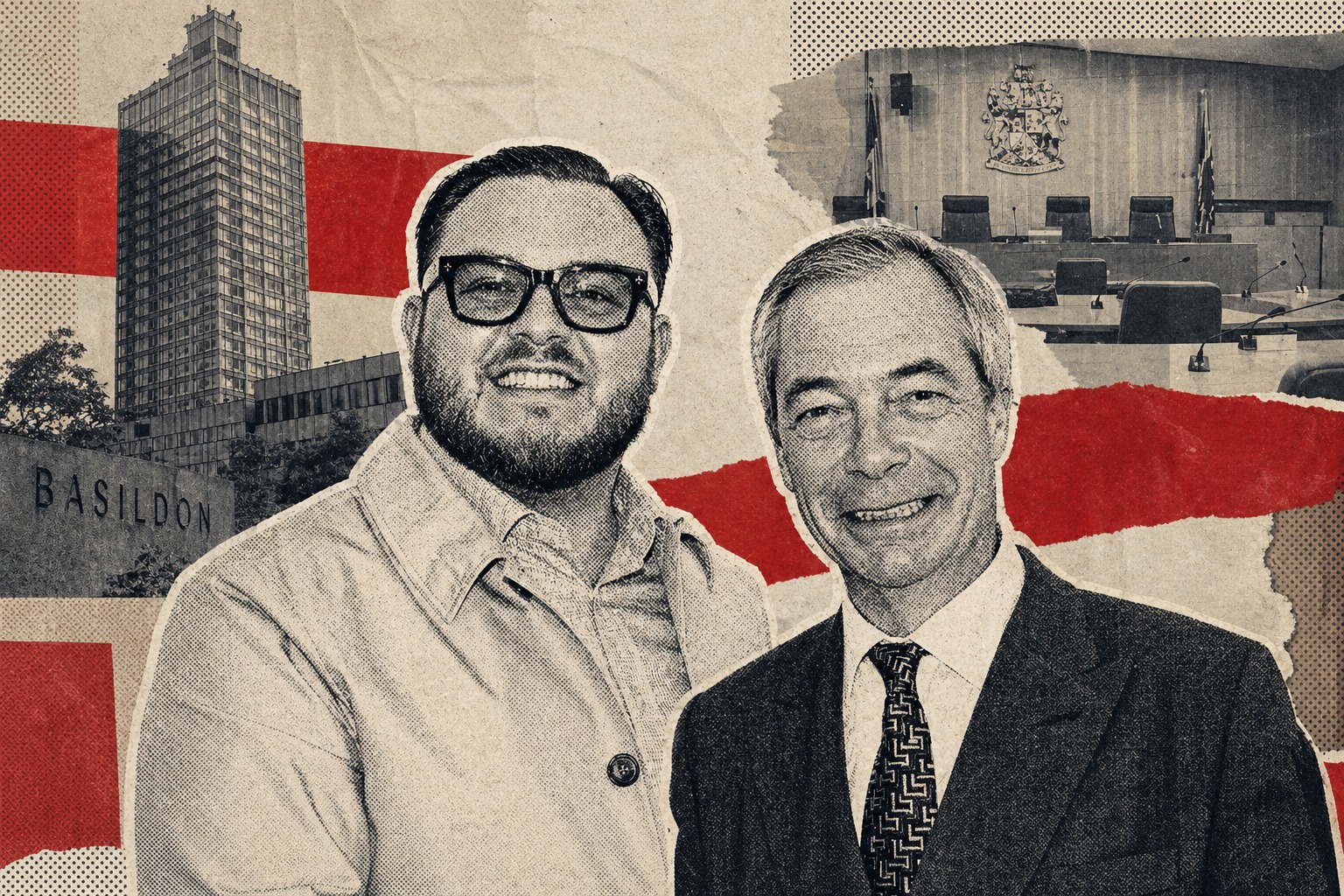
Police Admit Error After Failing to Seize Phone of Reform Councillor Arrested Over Stalking Claims
Essex police privately accepts device should have been taken from Reform Cllr Sam Journet rather than handed to a political ally
Melissa Dring, human rights group Liberty’s head of policy and campaigns, told this outlet that successive governments “have made it harder for people to come together and speak out.”
“Acts that were never crimes before are now being criminalised, alongside increasingly extreme powers given to police to enforce them. Many people can only protest safely with a face covering, while restrictions on repeat protests strike at the heart of what makes many protests successful,” she said.
Dring called it “particularly disappointing” to see new protest restrictions coming into force while the Government’s own review of protest legislation is ongoing.
Liberty also plans to lobby the next PM – almost certainly Andy Burnham – to change course: “Roll back the most extreme protest restrictions, and work