
 Subscriptions

Read our Monthly Magazine
And support our mission to provide fearless stories about and outside the media system
Last week, Byline Times revealed that George Cottrell, the convicted fraudster who has funded Nigel Farage and Reform UK, used a false Swiss identity and fraudulent passport to enter the City accountancy network that later gave Reform UK the treasurer, Mehrtash A’zami – who vetted the donations now under criminal investigation.
Byline Times has established that the same accountancy network has a pattern of ties stretching across Europe to Russian oligarchs, state enterprises and companies which are under US, UK and EU sanctions due to the war in Ukraine. Analysis of the network’s Moscow partnerships, Tivat corporate filings and regional company records shows that:
- The accountancy group McMillan Woods, whose directors and partners gave Cottrell his first job in the City under his false identity, was founded in Britain by a former advisor to Lukoil, Russia’s largest private oil company, now facing sanctions. The same firm maintains a live presence in Moscow through a partner who answers to a Russian executive with direct ties to two sanctioned oligarchs close to Russian President Vladimir Putin.
- The Tivat accountancy that today administers Cottrell’s own Montenegro company, meanwhile, shares senior staff with a firm that served as the registered contact for a Serbian arms dealer marketing Russian-designed weapons – including a missile system Serbia’s own military only received from Moscow under an official agreement with Putin.
- The same Tivat cluster bridging Reform UK officials and George Cottrell serves companies owned by individuals with direct ties to Russian state and state-backed institutions, spanning technology, finance and culture.
These findings place a network that first gave George Cottrell his start in corporate finance inside an accountancy world with live, active ties to Russia.
Byline Times has previously revealed that Cottrell, jailed in 2017 for wire fraud, first entered the corporate finance world under a Swiss alias, ‘Oscar’, hired in 2013 by A’zami at the McMillan Woods-linked firm Maxim. Hon Kong Yong, a fellow gambler who owns a group of businesses in Tivat with which Cottrell has shared personnel and corporate advisers, introduced Cottrell into that network around 2012 knowing all along about his false identity.
A’zami became Reform UK’s treasurer in 2019 – around the same time archived webpages show he was publicly listed as a McMillan Woods partner for corporate finance and capital markets. He served as treasurer until February 2025, but abruptly left the party after the Electoral Commission referred donations from Fiona Cottrell to the police.
A’zami and McMillan Woods did not respond to requests for comment.
McMillan Woods’ Moscow Adventures
McMillan Woods’ managing partner in the UK, and co-founder of McMillan Woods Global in 2005, is Ronnie Silva. He remains involved in the firm. Before that, Silva was a director of international markets at KPMG, where he served as an advisor to Lukoil, helping to establish its London operations. Lukoil has been under UK and US sanctions since October 2025.
According to a former senior partner in McMillan Woods, Silva had personally known Yong for years before that firm existed. Yong’s lawyers denied that he ever knew or met Silva.
McMillan Woods’ Moscow connection is far from historic, however. The group has a continuous presence in Russia through Vadim Vyacheslavovich Dolgopolov, its Moscow-based partner-in-charge since at least 2019. Dolgopolov’s boss is a Russian business leader with ties to two sanctioned oligarchs. A senior McMillan Woods source told Byline Times that all of the network’s national partners, including Dolgopolov, are personally vetted by its Malaysia-based founding president, Raymond Lieuw.
Dolgopolov simultaneously heads the Moscow office of Adam Global, a Dubai-based accounting network. McMillan Woods began referring cases to Adam Global in 2014, and signed a more formal global strategic partnership with the firm in 2018, at a ceremony in London.
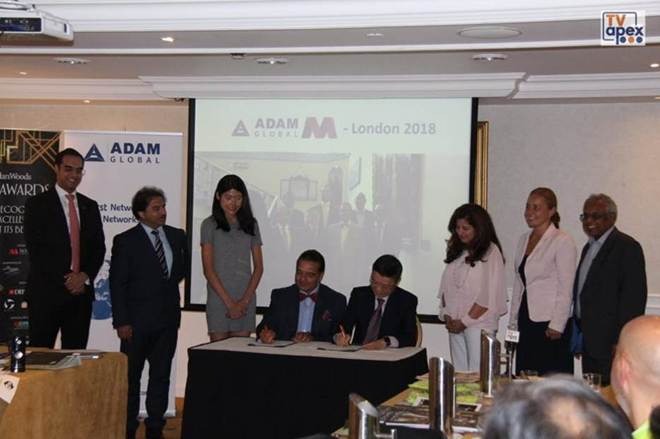
At Adam Global, Dolgopolov works under Igor Savelyev, the network’s Moscow-based board-level Russian strategy director.
Savelyev previously held senior roles in businesses controlled by two Russian oligarchs now under Western sanctions.
In 2014, he chaired Aquanika, then owned through the Volga Group of billionaire Gennady Timchenko, one of Vladimir Putin’s closest confidantes. Timchenko was sanctioned by the US that year over Russia’s invasion of Crimea.
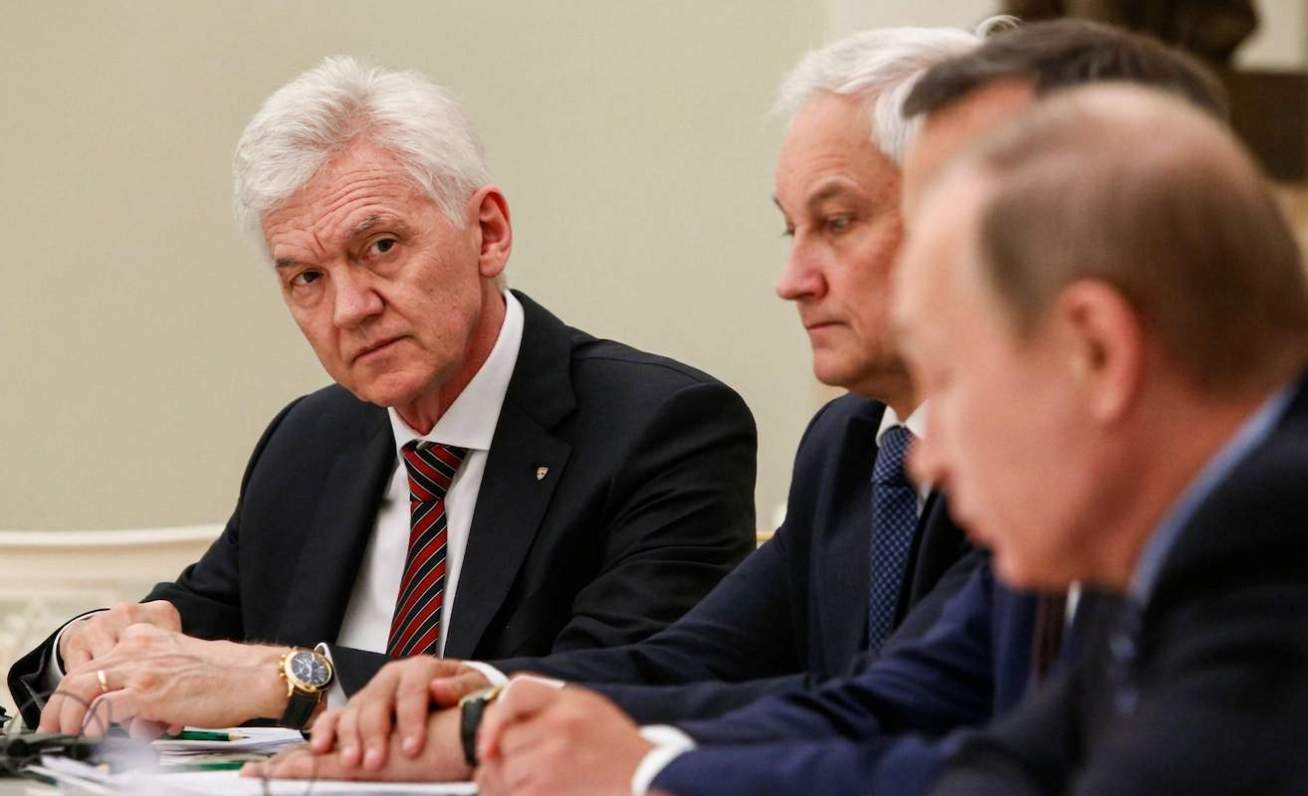
From 2013 to 2014, Savelyev also ran the oil and fats division of the agricultural conglomerate Rusagro, then controlled by billionaire Vadim Moshkovich. Moshkovich, then a Russian senator, attended Putin’s Kremlin meeting with leading businessmen immediately after the invasion of Ukraine, and was sanctioned by the UK and EU in 2022.
Dolgopolov’s corporate network extends beyond Russia and Dubai, too: it reaches Chinese state-linked businesses operating inside the country, including Beijing Tong Ren Tang Rus, the Russian subsidiary of a pharmaceutical group ultimately controlled by the Beijing municipal state.
Dolgopolov and Adam Global did not respond to requests for comment.
A Single Tivat Network
A different but interlinked structure sits behind Cottrell’s world in Montenegro. Where McMillan Woods operates as an international accountancy network, three Tivat firms – Global Financial Solutions (GFS), Artemon and Vegaplus – form a smaller corporate-services network of their own: local agents that register companies, file their accounts, handle their operations, supply their addresses and manage routine paperwork for a client roster that includes Cottrell himself, A’zami, and three more senior Reform UK figures.
A’zami’s own Montenegro company, Maxim Enterprises, sits inside the same GFS address in Tivat as Yong’s casino group and companies belonging to Christopher Harborne, Reform UK’s largest individual donor; Gawain Towler, its former communications chief; and Samee Bhatti, its former digital strategist. Cottrell’s own company, Private Family Office, runs through a different Tivat firm, Artemon, which shares senior staff with a second firm, Vegaplus – the accountancy of record for Bhatti’s company, Zebra Solutions.
As Byline Times previously reported, Nino Pantović – who owns GFS – was also linked with Artemon. He was personally involved in the early days of Cottrell’s Montenegro company, Private Family Office (PFO), having filed the paperwork transferring PFO’s directorship from Cottrell to Sander in October 2020.
During that period, Cottrell’s company was still being managed by Artemon, a Montenegro accountancy founded in 2009, which has run Private Family Office since its incorporation in January 2020. Its email address still appears on the company’s public record today.
Meanwhile, Artemon’s own staff overlap with a second Tivat firm, Vegaplus. Nives Vuković, who owns Vegaplus, is listed on her own profile as Artemon’s human resources manager, and Danilo Vuković, who directs Vegaplus, appears on Artemon’s own website as its client-services coordinator.
Artemon’s Budapest office lists him under a third title, project manager, on top of his Vegaplus directorship in Tivat. Taken together, the three roles describe a senior figure operating across Artemon’s regional network as a whole, not a single local bookkeeper attached to one office.
Zebra Solutions shares GFS’s own telephone number even as its accounting runs through Vegaplus – the same pattern of overlapping contact details visible across Hon Kong Yong’s and A’zami’s companies.
The Arms Dealer
Byline Times can confirm that a key manager at the corporate services firms running the Tivat companies that belong to both George Cottrell and Samee Bhatti, the webmaster of his political consultancy Geostrategy, simultaneously represents a Belgrade-based defence firm selling Russian weapons.
Artemon’s sister firm, Vegaplus is the registered address, telephone number and accounting email for the Montenegro branch of Princip Spec, a Serbian defence company that markets Russian-made and Soviet-era weaponry.
Princip Spec’s two authorised representatives are Danilo Vuković, the same senior Artemon and Vegaplus operator described above, and Nenad Obradović, the Serbian firm’s owner.
Princip Spec’s own 2019 sales catalogue, seen by Byline Times, describes a company staffed by former executives of “the largest state-owned Balkan companies”, specialising in Cold War surplus and Soviet-era hardware: tanks, machine guns, rocket launchers.
Among the systems it marketed that year was the 9M133 Kornet, a Russian-designed anti-tank missile. However, strangely, Serbia’s own armed forces did not officially receive their first Kornets until two years later. Belgrade’s Ministry of Defence announced the delivery in December 2021, following an agreement between Presidents Aleksandar Vučić and Vladimir Putin, and called the missiles a “new capability” for the Serbian military.
A private arms dealer had therefore been marketing a Russian missile system it should not yet have been able to source, more than two years before Serbia’s own government received its first supply directly from Moscow. Rosoboronexport, the Russian state monopoly that handles the great majority of the country’s arms exports and sits inside the state conglomerate Rostec, controls the lawful supply chain for a system like the Kornet. Princip Spec did not respond when asked how it had access to it before Serbia’s Government did.
A Pattern of Russian State-Linked Ownership
Artemon is not a small local bookkeeper. Its own website advertises global entity management, private banking and wealth management from offices across Montenegro, Serbia and Bosnia and Herzegovina, and from further addresses in London, Budapest, Florida and Belize.
A spokesperson for Artemon told Byline Times: “Artemon is an independent accounting and corporate services provider operating in accordance with applicable laws, professional standards and strict confidentiality obligations. We provide accounting and corporate services exclusively to corporate entities. The provision of such services does not constitute participation in, endorsement of, or knowledge of our clients’ business activities. Artemon has never been accused of, investigated for, charged with, or found liable for sanctions evasion, money laundering, or any other unlawful activity.”
Vegaplus, the smaller firm that shares Artemon’s senior staff, was incorporated in 2022, but now sits at the centre of a client list spanning a Balkan arms dealer, a cluster of Russian state-linked technology, finance and culture ventures, and Bhatti, Reform UK’s former digital strategist who runs the digital footprint of George Cottrell’s Geostrategy consultancy.
Module Agency, registered at Vegaplus’s office and using its telephone number and accounting email, is wholly owned by Pavel Chelyuskin, former head of user experience at VK Pay, the payments arm of Russia’s state-controlled social media group, until January 2022.
Since 2014, VK – Russia’s version of Facebook – has been controlled by the Mail.Ru Group, an internet conglomerate heavily backed by pro-Kremlin billionaire Alisher Usmanov. In December 2021, VK came under even more direct state control, passing into the hands of the state-run insurer Sogaz, part-owned by a longtime Putin ally, leaving state-owned entities in control of the internet group alongside Gazprom Media and a Rostec-linked vehicle.
Indapp, which uses Vegaplus’s accounting email though a separate address and telephone number, is owned by Pavel Alimov, who has described himself online as a former analyst on the Praktikum programme at Moscow School of Management Skolkovo. Its own published project work names Gazprom Neft, Gazprombank, Rosatom, Rosnano and the Moscow city government among the organisations its programmes have worked with – the same state-linked landscape as the rest of this network.
GLS, also registered at Vegaplus’s office and sharing its telephone number and accounting email, is owned by Aleksandr Golovin, who also runs a Montenegro photography studio, A3Studio. Public profile pages under his name record education at Oryol State Institute of Culture, a federal institution whose own website names Russia’s Ministry of Culture as its founder. A production credited to A3Studio was recognised at the 2023 Light to the World youth film festival, which operates with the support of Russia’s Ministry of Culture and lists the Russian Orthodox Church’s Rybinsk Diocese among its founding organisers.
George Cottrell’s lawyers told Byline Times: “Our client understands Artemon to be one of the largest and most widely-used corporate service providers in Montenegro, and it is therefore entirely unremarkable that Private Family Office should have used Artemon in this respect. So far as our client is aware, he does not know any directors or senior staff of Artemon, or what association they may or may not have with any other company. Our client has never heard of ‘Vegaplus’. He has no knowledge whatsoever of this company, its alleged clients or their alleged activities.”
They added that it is not “relevant” to Cottrell if the corporate services firm administering his company shares staff serving such Russia state-linked clients, and “categorically rejected” the idea that “any company of our client’s is, or has been, part of a ‘network’ involved in ‘money laundering’ or nefarious ‘foreign influence.’”
A Known Risk
Yet none of this happens in a vacuum. Montenegro and Serbia sit at the centre of what investigators repeatedly describe as one of Europe’s weakest points for illicit finance. The Global Initiative Against Transnational Organised Crime has documented how Russian money moves through the Western Balkans using precisely this kind of infrastructure: professionals who open accounts, form companies and build ownership structures opaque enough to defeat identification.
Researchers call the regional shadow economy a Russian “gateway” since 2014, worsened since Russia’s 2022 invasion of Ukraine by a fresh influx of Russian money and nationals into both countries. Hungary, where Artemon also keeps an office, runs its own investor-residency scheme, separately flagged by the European Commission for the same reasons: money laundering, tax evasion and weak screening of applicants’ wealth. Small corporate-services firms spanning exactly these jurisdictions, official and independent researchers agree, are the known conduit.
Asked about the broader pattern of shared advisors running through Cottrell’s Montenegro companies, his lawyers said it was “entirely unremarkable that individuals and organisations should use the same advisors” in a town as small as Tivat; Hon Kong Yong’s lawyers said shared providers, “without more”, establish no business relationship or wrongdoing.
Yet opaque company structures of this kind, in this part of Europe, are a recognised risk, one security services have repeatedly flagged as a channel for Russian and Chinese money laundering and influence operations. By his lawyers’ account, it is a risk that is of no concern to Cottrell.
For six years, Reform UK’s treasurer, largest donor, former communications chief and former digital strategist relied on corporate infrastructure that is highly vulnerable to Russian interference, while intertwined with that of George Cottrell’s – the party’s secret criminal funder.
Meanwhile, Reform UK has repeatedly failed to answer Byline Times’ questions about these activities.
Updated 28 July 2026 to include a comment and corrections from an Artermon spokesperson.