
 Subscriptions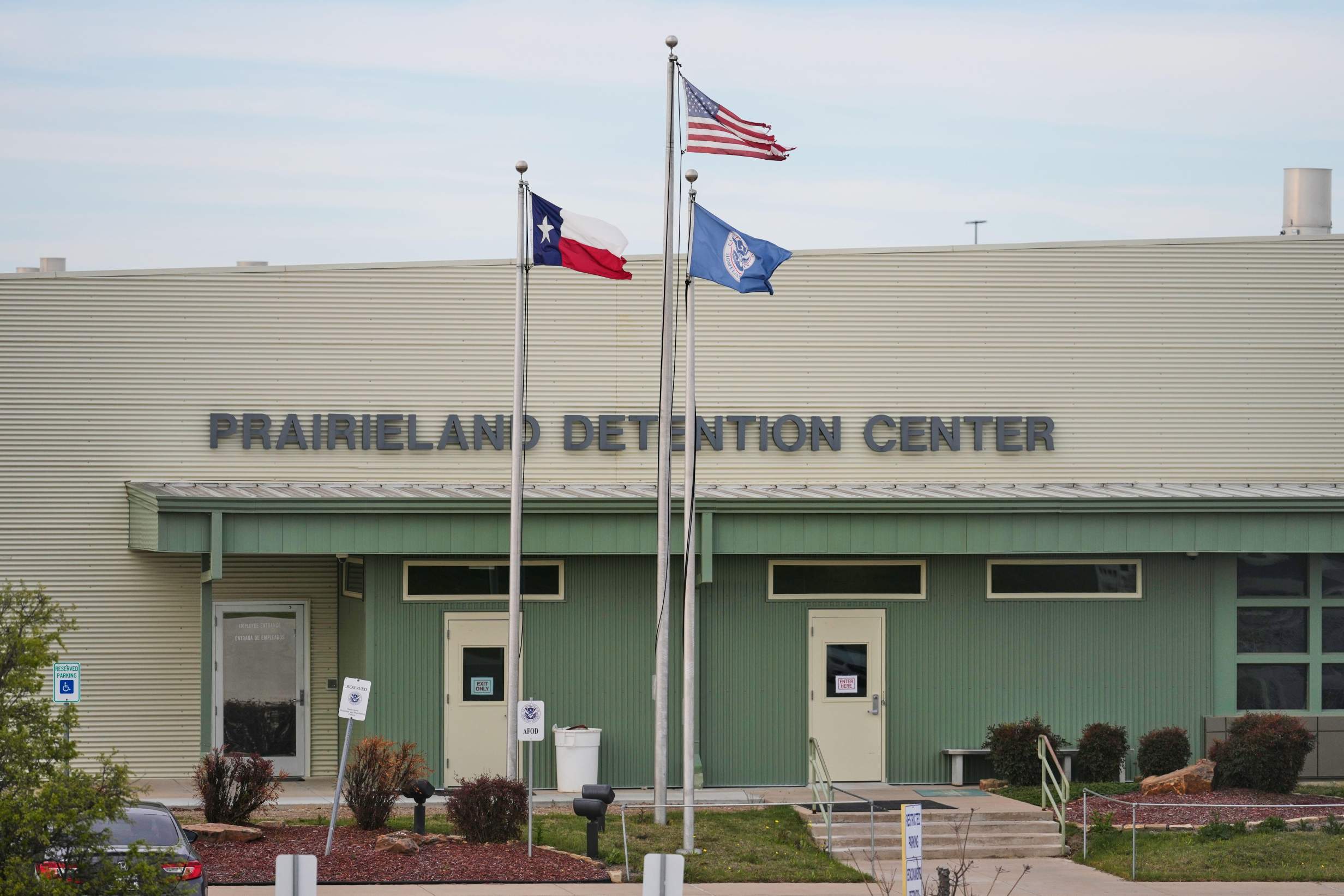

Read our Monthly Magazine
And support our mission to provide fearless stories about and outside the media system
The Trump administration’s crackdown on dissent reached an alarming new level last week when a federal judge in Texas sentenced eight defendants to prison terms ranging from 30 to 100 years, totalling approximately 450 years, for their role in a July 4, 2025 immigration protest outside a detention facility that ultimately resulted in the non-fatal shooting of a police officer.
The trial — which represents the first major test of the administration’s attempt to criminalise dissent through the use of sweeping anti-terrorism laws — involved eight defendants who were charged and convicted of terrorism-related offences in connection with their alleged ideological association with antifascism, also known as “antifa.”
“Extreme” Sentences
The longest sentence was handed down to defendant Benjamin Song, who received 100 years in prison for allegedly shooting a police officer in the shoulder during the July 2025 protest at the Prairieland Detention Center, which began as a peaceful noise demonstration meant to show solidarity with detainees but broke out into chaos when law enforcement arrived on scene.
The other seven defendants were given prison sentences ranging from 30 to 70 years for charges that included rioting, providing material support to terrorists, conspiracy to use and carry an explosive, and conspiracy to corruptly conceal documents. The explosives in question were fireworks that were used as part of the noise demonstration.
One of the defendants, Daniel “Des” Sanchez Estrada — the husband of protester Maricela Rueda, who was also charged and convicted in the same case — wasn’t even at the demonstration but was found guilty of conspiracy to conceal documents for moving a box of leftist pamphlets after the protest. He was sentenced to 30 years in prison.
Rueda, who wasn’t involved in planning the protest and left when guards asked her to, received a 70-year prison sentence.
Douglas Berman, law professor at the Ohio State University and one of the nation’s leading sentencing scholars, called the sentences “extreme.” In particular, Estrada’s 30-year sentence for moving a box of antifascist literature is “shocking [to] the conscience,” said University of St. Thomas law professor Mark Osler.
Don’t miss a story
The sentences handed down to the Prairieland defendants were all more severe than even the longest prison sentence given to any of the January 6 insurrectionists. The longest sentence for anyone involved in the attack on the Capitol was 22 years, given to Enrique Tarrio, former leader of the Proud Boys, who was sentenced for “masterminding a seditious conspiracy” aimed at stopping the lawful certification of a presidential election after Joe Biden beat Trump in 2020. All of the January 6 defendants were later pardoned by Trump.
During the Prairieland trial, the federal government’s case focused heavily on things like the possession of antifascist literature, the use of basic privacy tools and practices like encrypted communication apps, and wearing all black clothing to protests. Notably, none of these are indicative of terrorism or illegal behaviour, and most are common practices among protesters — which is among the reasons civil liberties advocates are so alarmed by the outcome of the trial and sentencing.
The case is “not only an attempt at chilling speech, but an indication that [the Trump administration] is going to continue going after protests extremely hard,” said Chip Gibbons, policy director at the advocacy group Defending Rights & Dissent.
Judge Reed O’Connor, who oversaw the case, reportedly told the court that the extreme sentences were meant to “send a message to anyone who shares a similar ideology.”
Manufacturing the Enemy
Last week’s sentencing marks the end (for now) of the first-ever legal case involving U.S. citizens being charged and convicted for domestic terrorism offences in connection with antifa. This follows a 2025 Executive Order in which Trump designated antifa as a domestic terrorist organisation, despite the fact that antifa isn’t an organisation at all, but rather a style of leftist politics.
The case highlights how much the information — or in this instance, disinformation — available to the public shapes what is viewed as acceptable and even necessary punishment. As Byline Times has reported previously, the Trump administration and its allies in Congress and the right-wing media ecosystem have for years waged an information war, laying the groundwork for the current crackdown on dissent by falsely portraying all left-wing protesters as violent and unruly, while simultaneously expanding the definition of “antifascism” so that any left-leaning movement could fall under that umbrella.
That way, when Trump labelled antifa a domestic terrorist organisation, he had already made room to apply that designation to virtually any dissidents who fall to the left of him on the political spectrum.
Over the past decade, Trump and his allies have worked tirelessly to delegitimise, demonise, and criminalise a variety of left-wing protest movements by referring to them as “antifa” and depicting their actions as dangerous, violent, and a threat to the country. Among those targeted in this expansive disinformation campaign are pro-choice advocates, immigration rights protesters, and transgender activists.

Masks, Flares and Climbing Statues: The Protest Bans That Quietly Came Into Force This Week
New powers criminalise face coverings at demonstrations and ban protests outside politicians’ homes
Historical Parallels
The Prairieland case also highlights the disturbing historical parallels between what is happening in the U.S. right now and the events that took place during the rise of fascism in Europe. For example, historians have shown that the Nazi Party in Germany did not consolidate power simply through violence, but rather reshaped public perception first by portraying political opponents as existential threats to national survival.
Following the Reichstag Fire in February 1933, Adolf Hitler’s government used the event to justify the