
 Subscriptions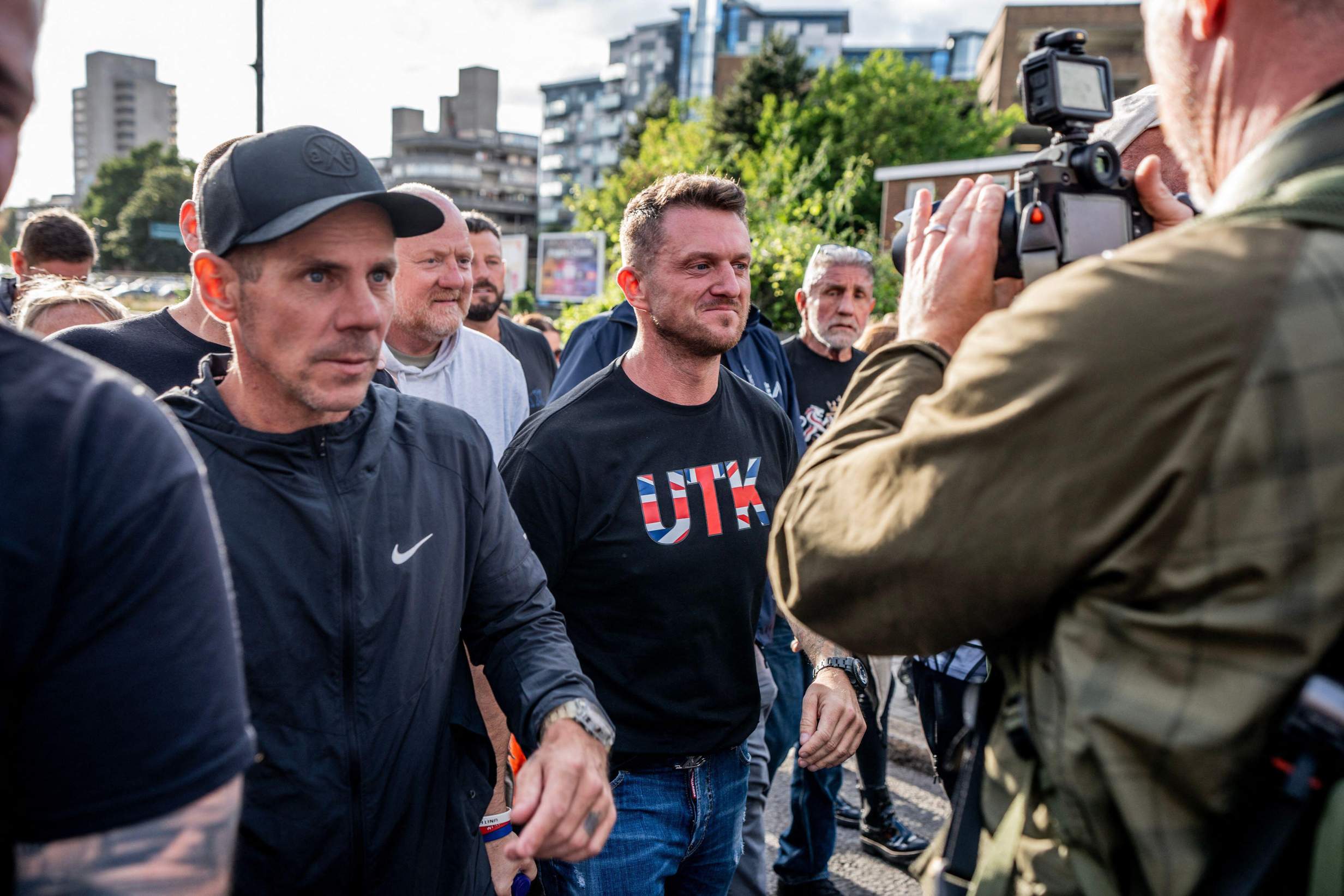
Read Our Monthly Magazine
And support our mission to provide fearless stories about and outside the media system
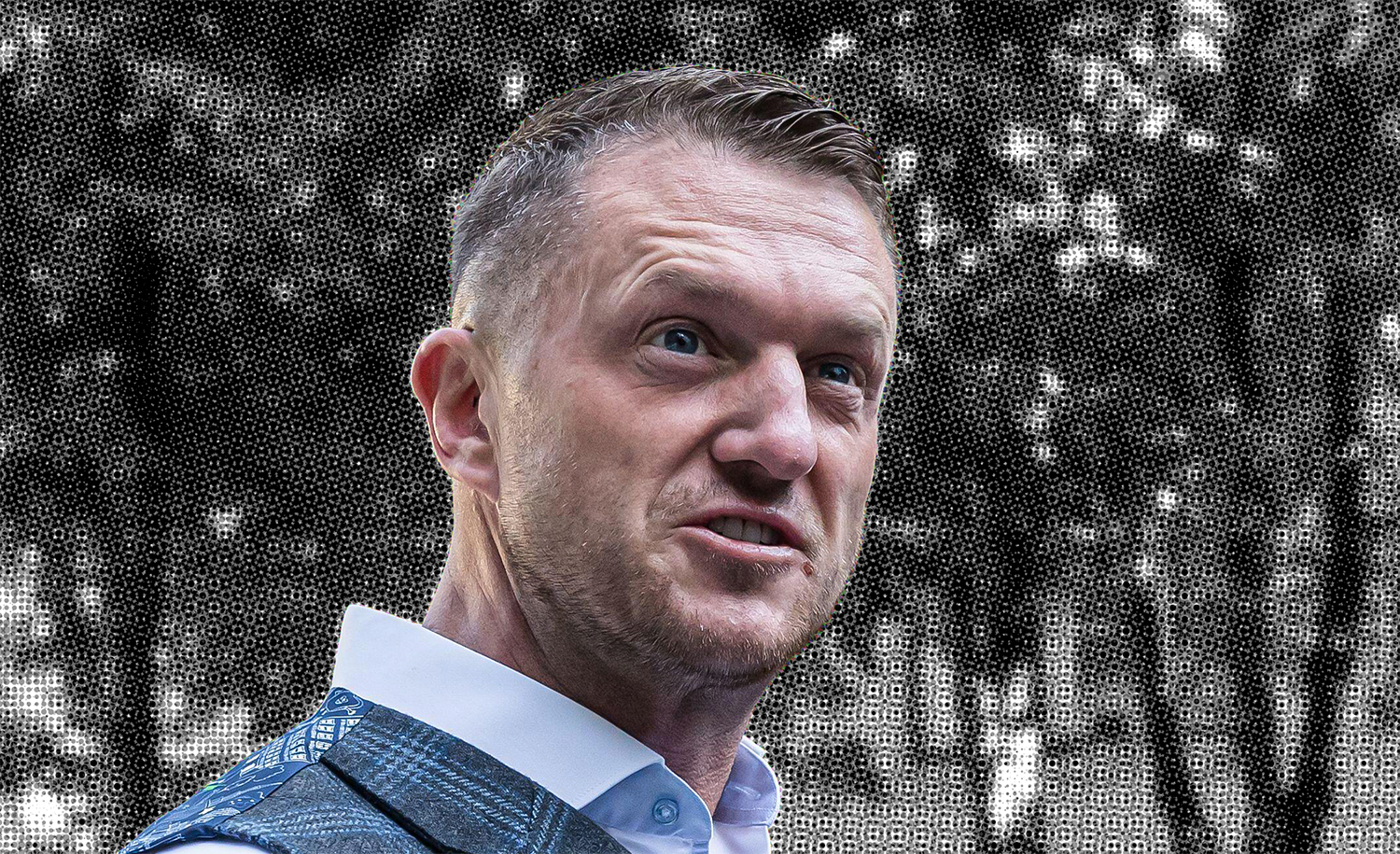
Last week Oxford Union, a renowned debating and literary private members club, hosted the far-right activist Stephen Yaxley-Lennon, known as Tommy Robinson. He spoke in favour of the motion ‘This House Believes the West is right to be suspicious of Islam.’
His speech was,perhaps not quite as radical as some statements he has made in the past. Instead of focusing on his political raison d’être, immigration, Robinson attempted to discuss Islamic scripture.
He made several of the points anyone who has spent time thinking about religion (and not exclusively Islam) will be familiar with in relation to Quranic attitudes towards homosexuality, pre-marital sex, and child marriage. Robinson also touched on his interpretation of the Quran’s calls for ‘common ground’ with other religions, arguing that the Muslim holy text only creates space for a common ground that is Islamic.
However, a quick scan through Robinson’s page on X reveals someone who is not necessarily interested in theological debates, but rather in stirring up hate and violence. In early June, operating from Moscow, Robinson reposted a tweet stating that “torches and pitchforks time is past due,” in reference to the events that occurred in Belfast.
Pubs Shut and Streets Close Amid Heavy Police Presence for Oxford Union Tommy Robinson Debate
The world’s most prestigious debating society hosts the far-right agitator just days after his return from Moscow and questioning under anti-terror legislation
It was in this context that Robinson arrived at the Oxford Union at 5:22pm. In order to make this possible, Thames Valley Police (TVP) closed down traffic on several streets in Oxford, and cut off access to St Michael’s Street, where the Union entrance is situated, entirely. Barricades prevented an increasing number of protestors from entering.
Several businesses in Oxford, including local pubs, were either forced to close due to street closures, or made the decision independently. As the Jolly Farmers, a well-known LGBTQ+ pub which voluntarily closed its doors, put it: “Businesses are going to suffer. Communities are going to suffer. Our reputation as a city is going to suffer.”
These security costs have been estimated at £50,000. Byline Times understands that this was not paid for by the Oxford Union. Instead, TVP and Oxfordshire County Council will share the bill. The Union’s Standing Committee, responsible for oversight of the day-to-day running of the society, freed up £10,000 in funding for security staff within the Union and on St Michael’s Street, behind barricades.
A large protest, which news outlets have put at around 500 people, assembled in the adjacent streets to the Union. On Cornmarket Street, protestors gathered around the barricade to St Michael’s Street, expressing their opposition to the debate and the invitation of Tommy Robinson. They successfully blocked several Union members from entering the venue for the debate. The same happened on the parallel New Inn Hall Street.
ENJOYING THIS ARTICLE? HELP US TO PRODUCE MORE
Receive the monthly Byline Times newspaper and help to support fearless, independent journalism that breaks stories, shapes the agenda and holds power to account.
We’re not funded by a billionaire oligarch or an offshore hedge-fund. We rely on our readers to fund our journalism. If you like what we do, please subscribe.
Half Empty
Union members had to ballot for tickets to attend the event. The result was a debating chamber that was noticeably under-capacity. Although some attendees did manage to stream in as the debate progressed, the final vote count posted on the Union’s Instagram indicated there were only 98 people there. The venue has a capacity for nearly 300 people.
These events showed a clear rejection by Oxford’s communities of Tommy Robinson, but they do not change the fact that, after dining with and being entertained by Oxford students, Robinson took the stage at one of (if not the most) prestigious student societies in the world.
The event made national news, and the Union continues to draw international attention. The platforming of Tommy Robinson (and of the lesser-known Laurence Fox and Jonathan Sacerdoti, who also spoke in favour of the motion) means something, and the Union deliberately chose to go ahead with it despite a widespread outcry.
Don’t miss a story
The Oxford Union has a far-right problem. Understanding this begins with an analysis of what motivates debate invitations. In WhatsApp chat logs seen by Byline Times, students on the committee who were tasked with organising the debate were instructed to “add as many BIG controversial names to [the planning] spreadsheet as possible,” and that the “vibe” for the debate was to bring “some of the most controversial polemical figures [on Islam].”
According to Shermar Pryce, Chief Advisor to the President until he resigned in early May following the revelation of the Tommy Robinson invite: “The Union as an institution […] has a far-right problem insofar as some of the pressures the Presidents are under can lead to an oversized far-right representation because of the notoriety.”
Every Union President seeks a certain shock value, and inviting far-right activists with a huge public presence is “convenient”: controversial speakers are the best way to make the term memorable, and generate media buzz around the Union at the same time.
According to Pryce, there is an atmosphere of “desperation” for a massive speaker, or a headline-worthy debate. People go to these sorts of events because it is a “shocking thing – there is a morbid curiosity.”
Pubs Shut and Streets Close Amid Heavy Police Presence for Oxford Union Tommy Robinson Debate
The world’s most prestigious debating society hosts the far-right agitator just days after his return from Moscow and questioning under anti-terror legislation
Why the Left Stays Away
There are often very few left-wing speakers at the Union, especially in comparison to the right. One reason for this is the current political climate in the United Kingdom. No left-wing figure or politician has the level of following, personality, or platform that can match some of the most well-known names on the right, including Tommy Robinson – not least as it is far-right figures who are most prominently boosted on Elon Musk’s platform, X (including by its billionaire owner Elon Musk).
The second reason, which two anonymous sources well-placed within the Union described to me, is the fact that even when invited, those on the political left tend to be hesitant to speak at the Union. One of these sources described the Union as “inherently conservative” as an institution.
Speaking at the Union simply does not fit with left-wing personas in the UK. The image of tradition and history appeals much more to right-wing agendas (what one may call small-c conservatism). The Union’s slogan claiming to be “the last bastion of free speech” was historically a liberal rallying cry, but increasingly it is positioned as a populist right talking point.
Given this outward image of the Union, a lot of left-wingers simply do not want to speak there: doing so would be ‘playing into’ an institution they may see as elitist, which has previously invited hard-right figures (and continues to do so).
It is these pressures to ‘chamber-fill’ and seek shock value, alongside the Union’s public image, which, according to Pryce, “lead to terms having an overrepresentation of right-wing speakers.”
The Platform and Its Consequences
The debate motion that was heard in the Union on 17 June is described by a Union insider as Tommy Robinson’s “bread and butter.”
This is the crux of the issue when it comes to discourse surrounding his invite and subsequent speech. Regardless of what happened inside that chamber in the late hours of the evening, Tommy Robinson was given a platform which only furthered his profile and his desire to be taken seriously.
It allowed him to claim that protestors were trying to silence him from speaking at “Oxford” (note the conflation of Union with University). It allowed him to say that a society which hosted Nelson Mandela, Malcolm X, and many others — when ‘establishment politics’ turned their back on them — had hosted him too.
Until the Oxford Union realises it genuinely yields this power, and begins to apply a more stringent, ethics-first approach to its invitations, it will always inevitably have a far-right problem.
Guilherme Lopes is editor of the Oxford Student.
Got a story? Get in touch in confidence on news@bylinetimes.com
holding farage to account #reformUNCOVERED
While most the rest of the media seems to happy to give the handful of Reform MPs undue prominence, Byline Times is committed to tracking the activities of Nigel Farage’s party when actually in power


 Contribute to our #ReformUncovered crowdfunder
 Subscribers Get More from JOSIAH
 Subscribers Get More from JOSIAH
Josiah Mortimer also writes the On the Ground column, exclusive to the print edition of Byline Times.
So for more from him…
