
 Subscriptions

Read Our Monthly Magazine
And support our mission to provide fearless stories about and outside the media system
Reform’s deputy leader has been accused of being “cavalier with the truth” after the party withdrew a denial that it had tried to make a profile of every voter in the UK.
Richard Tice MP signed a High Court defence which contained a denial that the party aimed to use personal data in order to build a profile of every voter in the UK – something the party’s lawyers later retracted.
The revelations are part of a looming trial over a campaign from thousands of Good Law Project supporters who joined the legal campaign group’s ‘#StopTargetingMe’ efforts ahead of the 2024 general election. The voters demanded that all major political parties “level with them about their personal data – as the law requires.”
Over 1,700 individuals used Good Law Project’s tool to ask Reform to provide a copy of all the data Reform held on them, and stop processing it.
But Reform ignored the requests, missing the one-month legal deadline to tell the voters what personal information it held on them. It finally replied just days after Good Law Project sent a legal letter threatening action. The party only narrowly avoided a default judgment against it after ignoring subsequent legal letters.
Fifty one voters are taking Reform to court. A GLP spokesperson said: “Reform failed to comply – and so we sued.” The party has been refused permission to throw out the case, but is now seeking permission to appeal, Byline Times can reveal.
ENJOYING THIS ARTICLE? HELP US TO PRODUCE MORE
Receive the monthly Byline Times newspaper and help to support fearless, independent journalism that breaks stories, shapes the agenda and holds power to account.
We’re not funded by a billionaire oligarch or an offshore hedge-fund. We rely on our readers to fund our journalism. If you like what we do, please subscribe.
Sworn Denials, Later Withdrawn
Reform UK’s privacy policy cited by Good Law Project stated an ambition “to create and maintain a profile for each registered voter in the UK”.
But when the party responded to the complainants, Nigel Farage’s officials claimed to have no data on any of those who requested it, something Good Law Project argues is highly improbable.
Reform’s defence did not address either point directly but said “the Defendant denies every allegation” in two paragraphs of GLP’s claim.
They contained both the quoted privacy policy wording – “Reform Party UK aims to create and maintain a profile for each registered voter in the UK. We will do this by merging the Electoral Register(s) with other data that may be lawfully available to us…” – and the assertion that Reform uses NationBuilder.
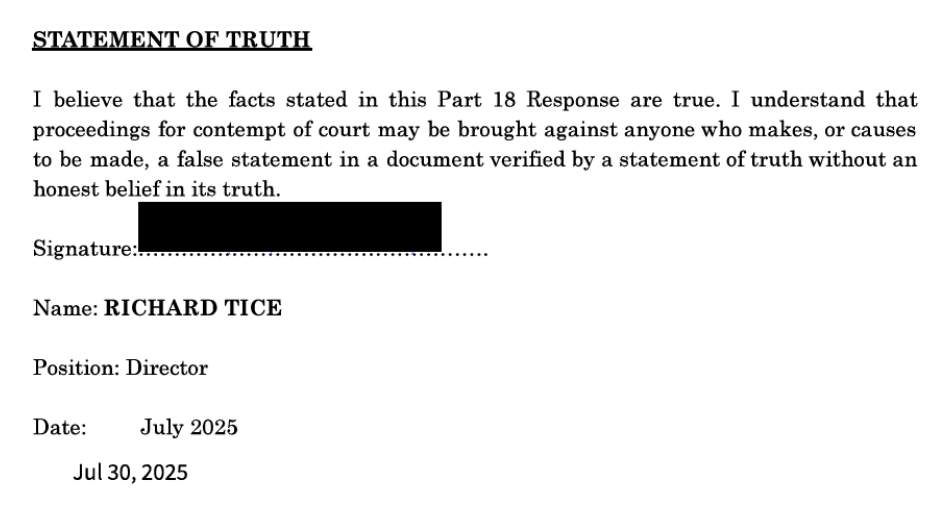
The defence was signed by Tice in his capacity as a director of Reform UK Party Limited.
A statement of truth carries a warning that contempt of court proceedings may be brought against “anyone who makes, or causes to be made, a false statement in a document verified by a Statement of Truth without an honest belief in its truth.”
Don’t miss a story
The party’s lawyers later withdrew both denials, in a response to a request for further information in July 2025. Reform’s original sworn case was therefore contradicted by its own later admissions to the High Court. There is no suggestion Tice knowingly made a false statement, and the court has made no finding on that point.
Reform maintains that its response to the voters asking for their personal data “was correct”, and that at the time it received the requests it was not processing the personal data of any of the individuals who sent them. Those are the questions now heading for trial.
However, the claims from the party to voters that Reform had “no record of you”, in GLP’s view, look far less believable after Farage’s party confirmed their privacy policy stated that Reform aimed to create a detailed profile of every voter in the country, and that it uses the NationBuilder campaign software.
‘Cavalier With the Truth’
GLP argues the retractions show that Richard Tice “originally swore a statement to the contrary which he then admitted was wrong.”
Jolyon Maugham, founder of Good Law Project, told Byline Times: “Richard Tice has never explained how he came to swear a central fact – denying Reform’s use of NationBuilder – which turned out to be simply untrue. The Civil Procedure Rules talk about this stuff being contempt of court – and at the very least it is cavalier with the truth.” (For clarity, the defence was submitted by Reform’s counsel, and Tice signed the statement of truth verifying it.)
Reform’s May 2025 defence also appeared to contradict itself. At one point it states the party “denies that it has failed to answer, or that it has delayed answering, any of the Emails”.
Five paragraphs later, the party “admits that it did not answer the [data] request within one month of receiving that request and admits that it did not extend the time required for its response”. Both statements are verified by the same statement of truth from Richard Tice.

Reform Wrongly Claims Party’s Elections Language Ban ‘Would Not Apply To Gaelic’ – Before Saying They’ll Rewrite Plans
Nigel Farage’s party hit by outrage after Byline Times revealed its plans would mean candidates being jailed for up to six months for using Gaelic, Irish or Cornish on election leaflets
According to GLP’s account of Reform’s barrister’s submissions for the party, Reform also floated the idea that it was entitled to answer the subject access requests using only the data it held at the moment it had to comply, rather than when the request itself came in.
In other words, they could delete a voter’s data after receiving a request for the information the party held on them – and then claim to have no data on them.
A spokesperson for GLP stated: “[The] KC for Reform mooted his client was entitled to delete data it held at the time a subject access request was made and provide only the data it held at the time of compliance. If this is Reform’s position it would be remarkable – and almost certainly wrong,” a 19 June 2026 statement from GLP said.
Into the Long Grass
Reform sought permission to appeal its rejected efforts to have the case thrown out. But on the same day the judgment was handed down (19 June 2026), High Court judge Mr Justice Murray refused it, saying they had no real prospect of success.
Now the party has gone to the Court of Appeal in a long-shot move that could drag the case out for years. Backers of the claimants are understood to believe it is an attempt to kick the issue into the long grass.
Reform had attempted to argue that, since part of Good Law Project is now legally based in Jersey (as of this May), the case should be thrown out. But a High Court judge dismissed GLP’s location as “irrelevant”.
Mr Justice Murray added: “The claim sets out a clear allegation of a breach by the Defendant of relevant data protection rules and non-material damage suffered by the Relevant Individuals. There is therefore a proper dispute for resolution at trial and not on this application.”
The case is at an early stage, with the High Court judge finding GLP’s case is “arguable” and fit for trial. No date has yet been set and Reform’s latest Court of Appeal efforts could mean it is a long way off yet.
If Reform fails again to get the case struck out, the party must pay Good Law Project and the Access to Justice Foundation’s costs, totalling around £180,000.
Reform UK and Richard Tice were contacted for comment.
Got a story? Get in touch in confidence on josiah@bylinetimes.com
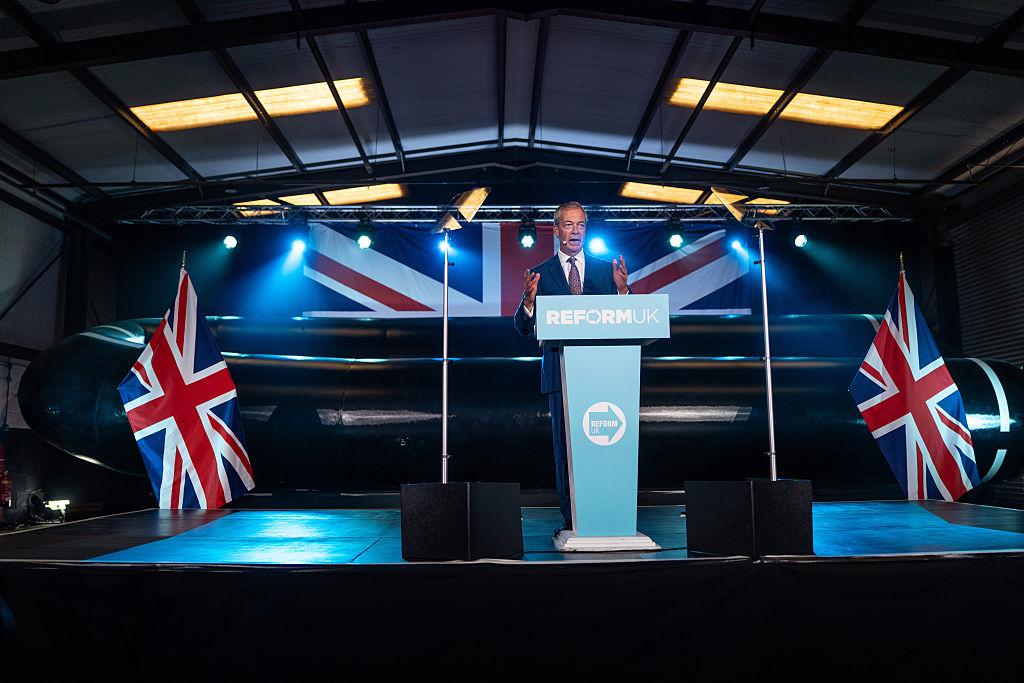
holding farage to account #reformUNCOVERED
While most the rest of the media seems to happy to give the handful of Reform MPs undue prominence, Byline Times is committed to tracking the activities of Nigel Farage’s party when actually in power




 Contribute to our #ReformUncovered crowdfunder
 Subscribers Get More from JOSIAH
 Subscribers Get More from JOSIAH
Josiah Mortimer also writes the On the Ground column, exclusive to the print edition of Byline Times.
So for more from him…
