
Read Our Monthly Magazine
And support our mission to provide fearless stories about and outside the media system
Self-styled ‘race realists’ worked with much of the British press this summer to discredit Jason Arday, the neurodivergent Cambridge academic who had made national news as the youngest Black professor in the university’s history. In doing so they employed a tactic first deployed in the 1770s by a famous English slave-owner in Jamaica. Edward Long had set out to demolish the reputation of Francis Williams, the leading black intellectual of his time, because Williams’ accomplishments disproved Long’s claim that intellectual capacity was determined by race.
Long’s effort to maintain slavery ultimately failed. But his justification of it, based on the notion of inherent black inferiority, has survived abolition, the decline of Empire and the antiracist activism of a new wave of black and brown Commonwealth immigrants. Between Long and Nathan Cofnas – the scientific racist whose blog post helped launch the press campaign against Arday – lies 250 years of ‘intellectuals’ acting as the imperial guard of structural racism.
What began in 2023 as one emeritus professor’s search for faults in Arday’s work was taken up by race scientists on both sides of the Atlantic, then by the Telegraph and the Spectator. In the 22 days between the first national coverage and Arday’s death on 14 August, 274 articles criticising and mocking him were published, according to Stephanie Lamy, a French analyst of far-right online influencing. Through Arday, the ‘race realists’ also targeted the diversity, equity and inclusion (DEI) measures they despised.

Did Black Lives Matter to the British Empire in World War Two?
The often overlooked story of the African soldiers who risked their lives and left their families to fight for the British must finally be recognised – as the sacrifice of their white counterparts is
Edward Long Brings Down Francis Williams
In the 1750s, Edward Long inherited a Jamaican plantation called Lucky Valley and its enslaved chattel workforce. Where many British slave-owners were absentees, Long decided to travel to Jamaica and manage his slave estate in person.
He spent a little more than a decade at Lucky Valley before returning to his comfortable home in Chichester. But he returned to a very different England. In June 1772, the Lord Chief Justice, Lord Mansfield, had ruled that the escaped enslaved man James Somerset could not legally be forced back to the Americas with his ‘owner’. Although its legal implications were narrower, the judgment was widely interpreted as undermining British slave-owners’ rights to human property, and marked a milestone in the campaign for abolition.
Long wrote his influential book, The History of Jamaica (1774), as propaganda against the incipient antislavery movement. He argued that the West Indian planters were the bedrock of Britain’s prosperity, and that their own liberty would be undermined if denied the right to own black slaves. Most importantly for the longer-term trajectory of racism, he argued that slavery was a just and natural state for Africans to be in, given what he claimed was their inherent and intractable inferiority.
Long’s insistence that black people were a different species from white people, with more limited intellectual capacity, has led biographers to call him the founding father of scientific racism. The phrenologists (who claimed to read character from the shape of the skull), race scientists and eugenicists who came after him – as Britain set about the colonisation of Australasia and much more of Africa and Asia – were his intellectual heirs. When the eugenicist Francis Galton wrote in 1892 that “a modern European” possesses natural ability “in a much greater average share than men of the lower races”, he was affirming Long’s assertions.
Long chose his target with care. Francis Williams was a free-born Jamaican and one of the few black people of the time to have his portrait painted. Williams had been educated in England, where he became a member of Lincoln’s Inn, attended Royal Society meetings, and was reputedly even proposed as a fellow of the Royal Society, but denied solely “on account of his complection”. A slave-owner in his own right, he was a poet and mathematician and the founder of a school for black boys in Spanish Town.
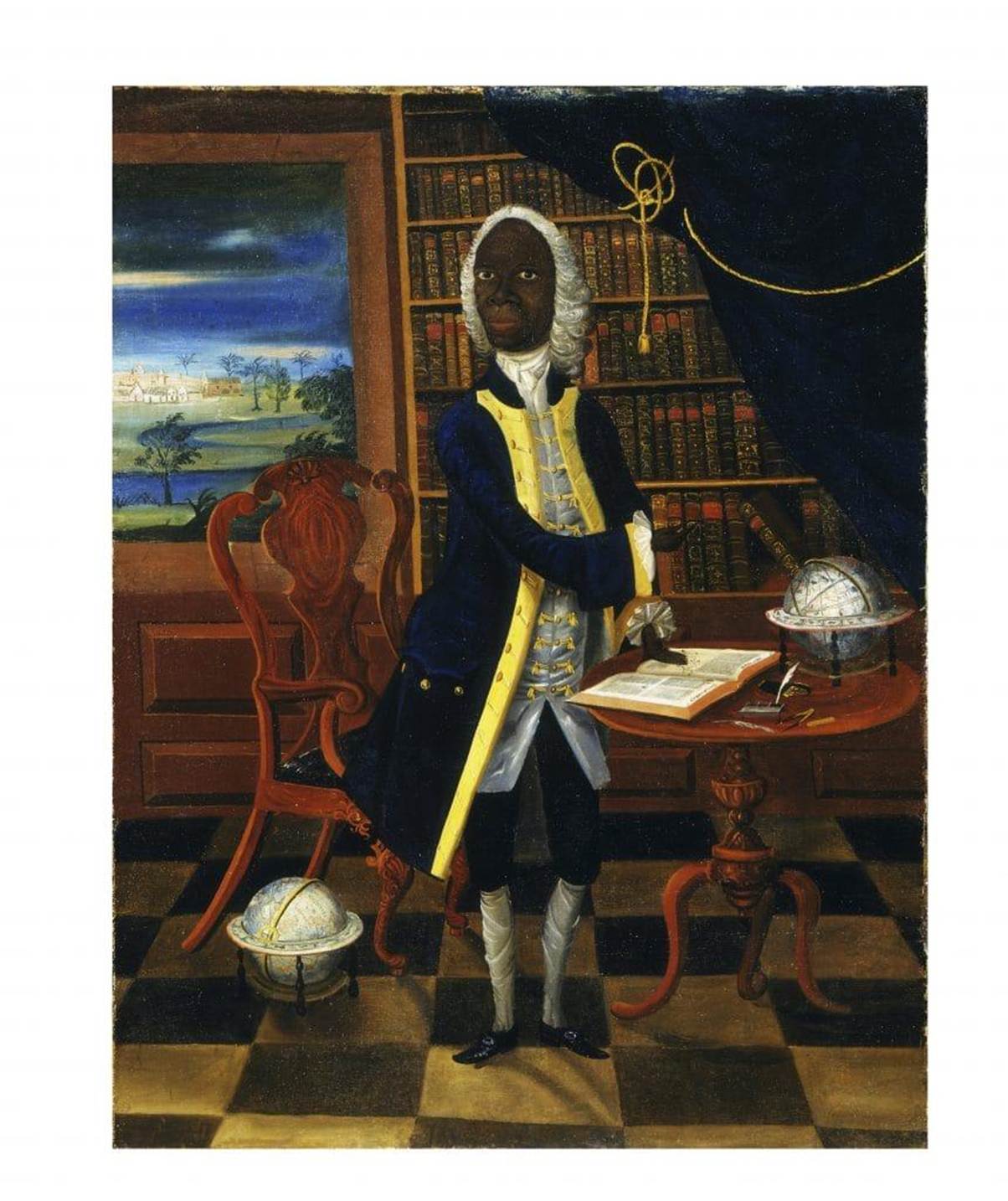
Long and his planter allies saw in Williams the terrifying spectre – even worse than the threatened abolition of slavery – of African claims for equality. The black polymath clearly disproved Long’s argument for racially determined capacity. One look at his accomplishments, and the key foundations of Long’s defence of black enslavement and white supremacy, crumbled.
It was, writes the historian Catherine Hall, “essential to undermine him, to pour scorn on all his pretensions”. This was why Long devoted an entire chapter of The History of Jamaica to demolishing Francis Williams’ reputation and character.
ENJOYING THIS ARTICLE? HELP US TO PRODUCE MORE
Receive the monthly Byline Times newspaper and help to support fearless, independent journalism that breaks stories, shapes the agenda and holds power to account.
We’re not funded by a billionaire oligarch or an offshore hedge-fund. We rely on our readers to fund our journalism. If you like what we do, please subscribe.
Racism Survives Abolition
The first major coup of the ‘intellectuals’ who followed Long was to enable Britain to emerge from three centuries of profitable African chattel enslavement with a self-image as a benign antislavery nation, rather than the perpetrator of one of the gravest crimes against humanity. As the gifted historian Eric Williams, later Prime Minister of Trinidad and Tobago, noted in 1964:
“The British historians wrote almost as if Britain had introduced ‘Negro’ slavery solely for the satisfaction of abolishing it.”
This same narrative is redeployed today in the face of demands for reparations.
As Britons supplanted the crime of slavery with the narrative of abolition, they developed a more clearly defined and articulated conviction of white supremacy. Thanks in part to the efforts of Long, pride in emancipation proved entirely compatible with the entrenchment of racism.
The evangelicals who had pushed for the end of slavery, such as William Wilberforce, saw emancipation as an opportunity for more humane white supervision and guidance of African people until they were Christian and civilised enough to determine their own fates.
Even these advocates of abolition grew disillusioned with the progress that emancipated black people made after ‘freedom’. Their critique increasingly centred on the supposed inherent incapacity of black people, rather than the shattering of enslaved people’s families and their restricted access to land, wages and political rights amid an entrenched white West Indian elite.
The racism that Long had urged in defence of slavery became the ‘common sense’ of the 19th Century, while the lesson that Francis Williams and Black abolitionists such as Olaudah Equiano and Ottobah Cugoano, both formerly enslaved, had provided was ignored.
As the historian of race science Nancy Stepan put it, “just as the battle against slavery was being won by abolitionists, the war against racism in European thought was being lost.” Although black people were “legally freed by the Emancipation Act of 1833 … in the British mind”, they were “still mentally, morally and physically a slave”.

The Holes in Policy Exchange’s Attack on the Church of England’s Slavery Reparations Plan
A privately funded, ‘anti-woke’ lobbying company has been in the forefront of the attacks, reports Alan Lester
Warding Off Black Immigrant Antiracism
The Second World War brought the greatest challenge to Long’s way of thinking since abolition. Racial science was – incompletely and temporarily, as it turned out – suspended in light of the Nazi regime’s ‘excesses’.
Stepan cautions, however, that “it was the Nazis who perpetrated the deed, but men and women everywhere believed in the distinction between races, whether white, yellow or black, Aryan or Jew … The deed was the single greatest crime in the history of mankind” and yet “what men and women everywhere believed, scientists believed also – that there was a hierarchy of superior and inferior races”.
Immediately after the war, British governments invited black and brown Commonwealth subjects to come and help Britain rebuild. The British Nationality Act of 1948 redefined British citizenship and nationality to include these former colonial subjects. It stimulated unprecedented immigration and the genesis of a far larger community of black people born and raised in Britain. This would present new challenges to a British society steeped in assumptions of white superiority.
In 1958, Britain’s first post-war ‘race riots’, in Nottingham and Notting Hill, saw white supremacists trying to resist further immigration. It took the 1963 Bristol bus boycott, a four-month, black-led civil rights campaign that overturned a bus company’s colour bar against employing Black and Asian crews, to prompt the Race Relations Acts of 1965 and 1968.
These first made racial discrimination in public places and employment illegal. In practice, though, as Jenny Bourne of the Institute of Race Relations points out, the legislation “relied more on conciliation than prosecution”.
Meanwhile, Britain’s black communities were concerned mainly about discrimination in the housing market that confined them to certain areas; a racist police force; a discriminatory educational system and a biased criminal justice system. Successive changes to immigration laws in the 1960s and 1970s, as Bourne notes, divided families and “fixed in statute black people’s second-class status”.
The trend towards more ethnonationalist definitions of citizenship accelerated when the 1981 British Nationality Act abolished automatic birthright citizenship and forced settled Commonwealth residents to formally register or naturalise. This planted the seeds of the Windrush scandal, in which Commonwealth-born people who had lived legally in Britain for decades were wrongly detained, deported or denied work, housing and healthcare.
Black inner-city youth reacted to discriminatory policing with a series of riots across major UK cities in the early 1980s. Lord Leslie Scarman’s inquiry into the 1981 Brixton riots was widely seen as a whitewash. Doreen and Neville Lawrence, the parents of the murdered teenager Stephen Lawrence, campaigned ceaselessly from 1993 until the Macpherson Report into the police’s handling of his murder at last declared in 1999 that “it is incumbent on every institution to examine their policies and the outcomes of their policies and practices to guard against disadvantaging any section of our communities”.
Yet the McGregor-Smith Review of race in the workplace, published 18 years later, found that people from black and ethnic minority backgrounds were still disadvantaged at work and faced lower employment rates than their white counterparts. An independent review of the Windrush scandal found that the Home Office showed “institutional ignorance and thoughtlessness towards the issue of race”.
Don’t miss a story
From ‘Political Correctness’ to ‘Woke’
Such reforms as the Macpherson Report prompted – now generally referred to as equality, diversity and inclusion (EDI) policies – set the scene for the backlash against Black Lives Matter. Macpherson, argues Jenny Bourne, spurred British conservatives “on to the offensive”.
Its recommendations were named and resented as ‘political correctness’ in the right-wing press well before the alt-right in the US weaponised the term ‘woke’ – originally African American slang for being alert to racial injustice.
Antiracist measures were recast, Bourne writes, “as a form of Stalinism”, with racism itself treated as “bogus unless it luridly presents itself in the form of a Nazi thug, in full regalia, dripping hate and yelling death threats”.
Further challenges would be necessary, and when they came, they would provoke yet more extreme culture war backlashes.
The antiracist Rhodes Must Fall challenge in 2015, when protestors inspired by South African students demanded the removal of the statue of the arch-imperialist Cecil Rhodes above Oriel College, Oxford, was a test case. Those defending the statue, Rhodes himself and Britain’s imperial record denied Rhodes’ record as a power- and money-hungry narcissist whose British South Africa Company killed tens of thousands of African people to create segregationist states.
They attacked the Rhodes Must Fall protestors as unreasoning extremists intent on undermining Britain and Britishness, while portraying themselves as the victims of woke cancel culture, their free speech suppressed despite their regular appearances in the Telegraph, the Daily Mail, the Times, the Spectator, UnHerd and the Critic, and on GB News.
Hundreds of well-publicised and orchestrated attacks followed, on museums, theatres, educational institutions, academics, reparations campaigners, the National Trust, English Heritage, the BBC, Channel 4 and any other organisation or individual claimed to be ‘trashing’ Britain’s history with well-documented truths about the racist colonial past.
The resort to culture war politics as the last bastion of defence for white supremacy intensified as the Brexiters’ promised ‘dividends’ and ‘levelling up’ shrivelled and disappeared. Even as it dismissed claims of structural racism with the widely derided 2021 report of its Commission on Race and Ethnic Disparities, the last Conservative Government appealed to ‘red wall’ voters in former Labour heartlands across the Midlands and the north of England, presuming that they could be easily manipulated into scapegoating black and brown immigrants.
During these tumultuous years, a new crop of ‘anti-woke’ culture warriors obtained full Government backing and seemingly limitless access to the conservative media.
The mechanisms, networks, funding, tactics and personnel for the backlash against Black Lives Matter were all in place by 2020. Transnational networks of support for racist culture war propaganda, fostered by the Conservative Government, were poised for action. British Conservatism had morphed into something much more authoritarian.
After Black Lives Matter protestors toppled the statue of the slave trader Edward Colston in Bristol in June 2020, the then Culture Secretary, Oliver Dowden, intervened personally to insist that the statue of another slave trader, Robert Geffrye, remain outside east London’s Museum of the Home despite the expressed wishes of local people.
He followed it with a diktat that museums “must defend our culture and history from the noisy minority of activists constantly trying to do Britain down”. The then Home Secretary, Priti Patel, included a clause in the Police, Crime, Sentencing and Courts Bill enabling a prison sentence of up to 10 years for anyone trying to overturn a statue, regardless of what the commemorated figure had done to the ancestors of black Britons.

Masks, Flares and Climbing Statues: The Protest Bans That Quietly Came Into Force This Week
New powers criminalise face coverings at demonstrations and ban protests outside politicians’ homes
Edward Long’s Heirs Turn on Jason Arday
Much of the British press was happy to follow in Long’s footsteps: identify a celebrated black example of excellence and undermine the progressive challenges he represented by discrediting him.
Like Francis Williams, Arday may have said things about his backstory that were difficult to believe or exaggerated, even if the ridicule has been shown to be unwarranted.
However, as an academic, he was clearly inspiring to many of those who met and learned from him and has been cleared of plagiarism by multiple formal investigations. The mockery was driven by those who wanted to discredit Arday as a tokenistic black appointment, promoted, in their telling, solely because of inherently unsound “DEI” policies that refused to recognise black people’s supposed limitations.
Stephanie Lamy traces Arday’s ordeal through a series of rapidly accelerating stages, which she frames as a hunt.
The campaign began in 2023, when David Harris, a professor emeritus at Plymouth Marjon University, began looking for faults in Arday’s work. Harris’ approach mirrored a tactic already in use in the US. There, as Lamy notes, “Christian nationalist organisations opposed to teaching and research drawing on Critical Race Theory (CRT) were already explicitly encouraging their supporters … to target academics and then identify, or manufacture, misconduct”. The US conservative activist Christopher Rufo even announced an initial $10,000 fund for “plagiarism hunting”.
Harris made little headway at first. Nathan Cofnas’ blog post identifying the citation mistakes in Arday’s thesis brought the US Christian nationalists to Harris’ aid.
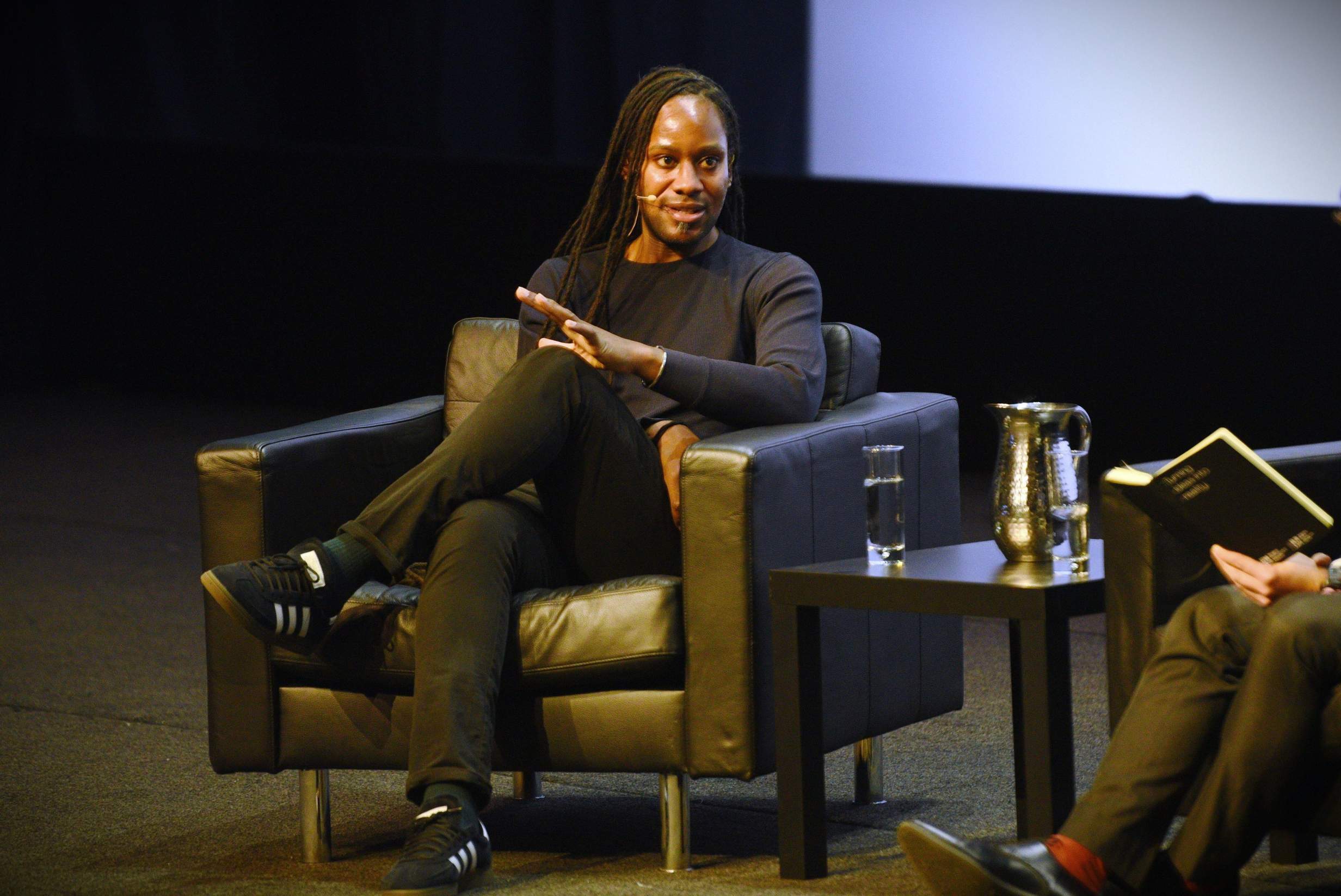
The Peter Thiel-Linked Race Science Network that Penetrated Cambridge University and Targeted Jason Arday
The media’s coverage of the academic’s life was fuelled by the campaign of an established far-right network
Cofnas and Rufo are both part of a network centred on the race-science-focused online magazine Aporia – the public face of the Human Diversity Foundation, a relaunch of the Pioneer Fund, an American eugenics organisation established in 1937. Aporia backed Cofnas as he pushed Harris’ allegations against Arday into the media spotlight.
The Telegraph and the Spectator were only too keen to pick up the trail, transforming Harris’ pursuit of Arday into a story of the corruption of universities by American-style ‘DEI’, accusing Cambridge of sacrificing academic standards for racial hiring and then trying to conceal the consequences.
In the three weeks before his death, the Telegraph alone published 43 articles attacking and mocking him. After his death, the newspaper quietly altered the headline ‘Jason Arday is living proof that you reap what you sow’, but only by removing the word ‘living’. It also removed the article it had published in January about Harris’ own misconduct review.
Twenty-one of the 274 articles Lamy counted appeared in the Spectator. In one, the Conservative peer and Oxford theologian Lord Nigel Biggar wrote, after Arday’s friends and supporters had warned of the effect of more commentary on his mental health, that “he’s trapped in a world of fantasy… when reality does finally break through, Nemesis will enter, too. A terrible reckoning will cause the self he’s constructed to disintegrate. I fear for his life”.
Even after his death, the Committee for Academic Freedom, which defended Arday’s accusers and is backed by Reform UK megadonor Ben Delo, commissioned an inquiry into his Cambridge appointment – in what looks to this author like a quest to ‘prove’ that his status was unmerited and to discredit equalities initiatives.
As Lamy writes, for the network behind the campaign against Arday, “race science, a belief system fundamentally untethered from reality, needs to be received as science. Its proponents crave legitimacy because their very existence depends on it. Without recognition from journalists, universities and the public, they remain … marginal and extremist. With it, they acquire the authority to police the boundaries of knowledge – to decide what counts as evidence, what constitutes merit, whose scholarship warrants investigation and whose testimony can be dismissed as mere grievance”.

Beyond Spectators: Following the American Money that Funded the Hate Against Jason Arday
How a well-connected think tank has helped bring culture wars to the UK. Nafeez Ahmed and Suha Kidwai report
Long’s Echo
Despite its obvious absurdity – its grounding in the denial and disavowal of reality and its ideological rather than empirical basis – Long’s underpinning argument has served to prop up white supremacist institutions for more than 250 years. How different is today’s Great Replacement myth – the far-right conspiracy theory that white populations are being deliberately replaced through immigration – from Long’s horror at the idea of a “numerous race of walnut-coloured beings” emerging from what he called “miscegenation”?
Long warned that Mansfield’s judgment in the Somerset case would open the doors to “thousands more Quacos and Quashebas”, flocking to ‘our’ shores, assisted by unpatriotic “Negroe solicitors”. He wrote of the whole nation in danger of becoming “like the … Moors, both in skin colour and in morals”, and every family within it threatened by an influx of freed black beggars, a burden on the poor rates, and a barrier to Englishmen “gaining employment”.
How far removed are the groups of men massing to terrorise black and brown people seeking asylum and their ‘lefty liberal lawyers’ today from the ‘patriotic societies’ that Long encouraged to resist the abolitionists?
The negation of prominent black people, seen as threats to white supremacist conviction, has persisted through the ending of slavery, through the independence of former colonies, through the mass migration of Black and Asian Commonwealth subjects into Britain itself, and even through their hard-won legalised equality.
Those who pursued Jason Arday could do so effectively because they were operating on relatively familiar and friendly terrain.
When people speak of ongoing structural racism, this is what they mean: a continuity of historical momentum, deeper than any visible edifice of explicit racial discrimination or the racist attitudes of individuals, a tradition of absorbing antiracist challenges without fundamentally upsetting the racial hierarchies that each generation has inherited.
Alan Lester is Professor of Historical Geography at the University of Sussex and the author of ‘Deny & Disavow: Distancing the Imperial Past in the Culture Wars’