
The Arday Affair
Beyond Spectators: Following the American Money that Funded the Hate Against Jason Arday
How a well-connected think tank has helped bring culture wars to the UK. Nafeez Ahmed and Suha Kidwai report
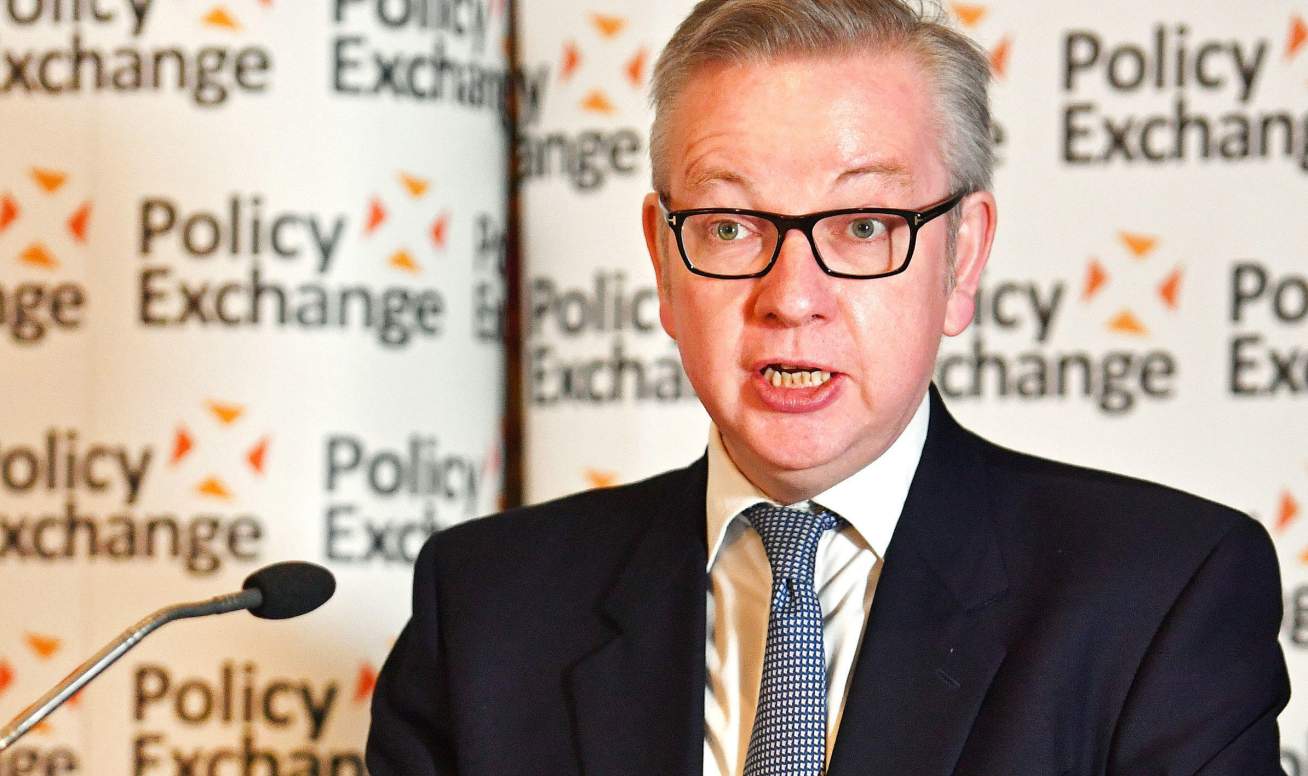
The media firestorm ignited by allegations of serial plagiarism against Jason Arday had severe criticism of DEI at its centre – ‘diversity, equity, and inclusion’ schemes that many commentators used to attack Arday’s position as Professor of Sociology of Education at Cambridge University.
Referred to as ‘EDI’ in the UK, such schemes are predominantly a feature of American public policy through affirmative action.
Arday resigned as Professor of Sociology of Education at Cambridge University on 5 August. at Reform UK – he later stepped down after undercover filming broadcast by Channel 4 News showed him discussing foreign funding for political polls, contrary to UK electoral law. The footage is now subject to a criminal investigation by the Metropolitan Police, and Cambridge University has said it is “looking into these matters”.
Of Arday, Orr wrote on X: “What terrifies me is if it turns out Jason Arday’s DEI qualifications were fake, his DEI chair was fake, his DEI discipline was fake, and his faculty and college were DEI bootcamps. Imagine the backlash against hardworking DEI hires?”
The American importation of a ‘culture war’ around DEI in the UK, specifically into the field of sociology and inequalities within education – a prominent feature of American hard-right politics – has been ongoing for some years.
Turning the ‘Culture War’ Transatlantic
One way this importation has occurred is through the right-leaning UK media, the think tanks aligned to these outlets, and the funding attached to the ideas these organisations advance.
Byline Times shows that Policy Exchange – the UK’s largest conservative think tank – contributed, through personnel and former staff, to the amplification of the campaign of serial plagiarism against Jason Arday through media channels including the Spectator magazine, the current Editor of which is one of the think tank’s founders.
Policy Exchange’s American fundraising arm sends money to the London-based organisation, and has links to the Trump administration.
Under this influence, Policy Exchange’s reports have been increasingly geared towards creating the appearance of evidence for ‘culture war’ arguments in the UK, which largely originate in the US.
These include attacking DEI and anti-racism, “gender ideology”, university “wokeness”, Islamophobia monitoring, and “two-tier” policing – the claim (dismissed as “baseless” by the UK Parliament’s Home Affairs Committee) that police and courts favour minority defendants over white ones.
Fellows and alumni of Policy Exchange bring those arguments into media columns, social media posts, and broadcasting, which are then leveraged by a wider number of politicians and commentators into pressure for institutional change – as was the case with Jason Arday.
Founded as a ‘policy shop’ for Conservative modernisers in the UK in 2002 – by Tory politicians and figures including Francis Maude, Archie Norman, Nick Boles, and (the now Spectator Editor) Michael Gove – Policy Exchange developed a ‘revolving door’ through which its personnel and proposals entered government, No 10, Parliament, and the media. Ministers have adopted or promoted policies first developed in its reports.
It is now working on the machinery of the next British government under its programme titled ‘Project 2029: A Plan to Reshape Britain’.
Policy Exchange’s US fundraising is run by major Republican donor and Trump administration advisor Robert Bishop, who has funded groups linked to ‘Project 2025’ – a 900-page policy plan for Trump’s second term published by the Heritage Foundation think tank, which included plans to roll back civil rights protections for black and ethnic minority people.
Project 2029’s launch panel included the then Conservative Shadow Energy Secretary Claire Coutinho, ConservativeHome founder Tim Montgomerie, crossbench peer Lord Edward Faulks, Policy Exchange distinguished fellow and crossbench peer Baroness Kishwer Falkner, and Keir Starmer’s ex-head of political strategy Paul Ovenden.
‘Merit Rather Than Melanin’
The DEI-infused commentary by those affiliated with Policy Exchange, past and present, could be seen both before and after Jason Arday’s resignation from Cambridge University.
Joanna Williams, Policy Exchange’s former head of education and culture – who also sits on the advisory council of the Free Speech Union, an organisation founded by Conservative peer Lord Toby Young purporting to defend free speech – wrote for the Spiked website that the allegations against the academic demonstrated how DEI had “warped” Cambridge and “destroyed” institutions from within.
She cited Nathan Cofnas, the race science advocate whose Substack post about Arday set off the campaign against him, describing him as a “philosopher”.
Paul Stott, Policy Exchange’s head of security and extremism, predicted on social media that “Jason Arday will have to go at Cambridge”.
Policy Exchange senior fellow and Free Speech Union advisor Eric Kaufmann wrote on X that the “Arday affair shows what happens when a society elevates empathy for subaltern groups above reason and objectivity”.
Spectator Editor Michael Gove’s podcast, released on the same day as Arday’s resignation, also asked whether his time was up and called him a “serially misleading individual”.
After Arday resigned, Ike Ijeh, Policy Exchange’s head of housing, architecture and urban space, acknowledged there was no evidence that he had been appointed to Cambridge because of DEI, but used the case to call for recruitment based on “merit rather than melanin”.
David Spencer, Policy Exchange’s head of crime and justice, proposed a police investigation into whether Arday had made false representations to obtain his post, conceding there was “no evidence” he had knowingly done so.
Trevor Phillips, a Policy Exchange senior fellow, blamed “fawning liberals” for the affair.
The modern Spectator magazine, first published in 1828, continues to wield cultural and political status and influence in Britain’s established press.
This year its coveted annual summer party was attended by BBC News Political Editor Chris Mason; Conservative Leader Kemi Badenoch; Reform UK Deputy Leader Richard Tice, his partner journalist Isabel Oakeshott, and James Orr; broadcasters Piers Morgan, Julia Hartley-Brewer, Nick Robinson, Amol Rajan, Emily Maitlis, Jeremy Vine, and Nicky Campbell; artist Grayson Perry; and Speaker of the House of Commons Sir Lindsay Hoyle, among many others.
Under Gove as her Editor, Policy Exchange senior research fellow Lara Brown is the Spectator’s Commissioning Editor. It published a cover story by Brown arguing that DEI had “warped intellectual standards to the point of madness” – describing Arday as “merely a poster boy” for what she called the “increasingly fetid system” of British higher education.
Lord Simon Woolley, Principal of Homerton College, Cambridge University, called the treatment of Arday a “lynching” and a “public assassination” by “rabid wolves” and “dogs of hell” who, he said, had decided “Jason doesn’t deserve to be alive”.
After Arday’s death, Andrew Gilligan, Policy Exchange senior fellow, described Woolley as “not fit” to lead a Cambridge college. His appointment, he argued, was proof that the university had made the same mistake twice.
Gilligan also said that the appointment of Dr Farah Ahmed, Assistant Research Professor at Cambridge University’s Faculty of Education, showed that its problems went “beyond Arday”. Calling the faculty “toxic”, Gove said it should be closed.
Eric Kaufmann also signed an open letter attacking Woolley for his description of the attacks on Arday as a “lynching”, arguing that the media scrutiny of him had been “legitimate”.
The letter’s co-signatories included two more Policy Exchange report authors, Nigel Biggar and Alka Sehgal-Cuthbert; as well as the Free Speech Union’s Lord Toby Young; and the latter organisation’s advisor, the controversial historian David Starkey.
In the Spectator’s 29 August issue, Michael Gove returned to Jason Arday. While cautioning against attributing suicide to any single cause, he rejected the press as the proper focus of an inquiry into the academic’s death, and argued that “the real focus” should instead be Cambridge University and its Faculty of Education, which he described as Arday’s “champions and cheerleaders”.
Charitable American Donations
Since 2011, much of Policy Exchange’s income has arrived from New York through the American Friends of Policy Exchange.
This is a US charity registered under section 501(c) (3) of the American tax code, with a declared purpose of raising money in the US and sending it to London.
American financier Robert Rosenkranz chaired the American Friends of Policy Exchange from its launch in 2011 until March 2024.
He also sits on the board of the Manhattan Institute, a New York-based think tank with a board which has direct links to the Trump administration through its individuals.
Byline Times’ analysis of the American Friends of Policy Exchange’s annual filings with the US Government’s Internal Revenue Service reveals an extensive funding pipeline into Westminster.
From 2011 to 2025, American Friends of Policy Exchange raised at least $6.2 million and paid at least $4.1 million in support of the London arm.
The London funding peaked between 2018 and 2020, at about $2.25 million. By 31 March 2025, it held $2,014,418 in assets, up from $1.4 million in 2023.
During Rosenkranz’s chairmanship, the charity kept its accounts at 590 Madison Avenue – the New York headquarters of Rosenkranz’s investment firm, Delphi Capital Management.
For much of that period, he was also a director of the UK arm of Policy Exchange, with Companies House records showing he was appointed to the role on 18 January 2010 and resigned on 29 August 2023.
However, his involvement with the organisation predates these positions.
The Rosenkranz Foundation provided major funding for ‘Million Vote Mandate’, a Policy Exchange report written for Boris Johnson’s incoming London mayoralty in 2008. It gave $130,000 to Policy Exchange between 2011 and 2015.
Rosenkranz is a consistent Republican donor, both politically and philanthropically.
Between 1994 and 2025, Federal Election Commission records show political contributions totalling $1,001,100 – 98.75% of which went to Republican committees.
His foundation has donated $50 million during the past 11 years or so, some of which funds the institutional core of the American right.
Rosenkranz’s sponsorship of Trump’s presidency has continued into his second administration.
‘The Arday affair shows what happens when a society elevates empathy for subaltern groups above reason and objectivity’ – Eric Kaufmann
In March 2024, Rosenkranz was replaced in his Policy Exchange role by American hedge fund veteran Robert “Bob” James Bishop.
Tax filings show the Bishop family foundation donated $100,000 to American Friends of Policy Exchange in 2023 and 2025.
In February, Bishop was appointed to the statutory advisory committee of the Export-Import Bank of the US, a US Government agency on export finance.
Like Rosenkranz, he is a major Republican donor who has also spent directly on Trump campaign vehicles, totalling some $5.29 million.
In 2023, Bishop also donated $50,000 to The 1065 Institute, which operates the Laffer Centre. Arthur Laffer, its namesake, advised Trump’s 2016 campaign. Trump awarded him the Presidential Medal of Freedom in 2019.
Between 2020 and 2024, Bishop also donated $47,000 to Hillsdale College – a partner organisation on the advisory board of Project 2025. Its president, Larry Arnn, is a trustee of the Heritage Foundation, which drafted the policy plan.
Understanding these extensive ties to American finance linked to the Trump administration, it becomes easier to make sense of how ‘culture war’ flashpoints around DEI are making their way to the UK – through influential think tanks such as Policy Exchange and their connections in Britain’s established press.
Together, using the tech platforms’ algorithms which are in their favour, they can credibly amplify the kind of attacks and allegations Jason Arday was bombarded with, as one strand of a wider campaign which ultimately resulted in his death. ●