
 Subscriptions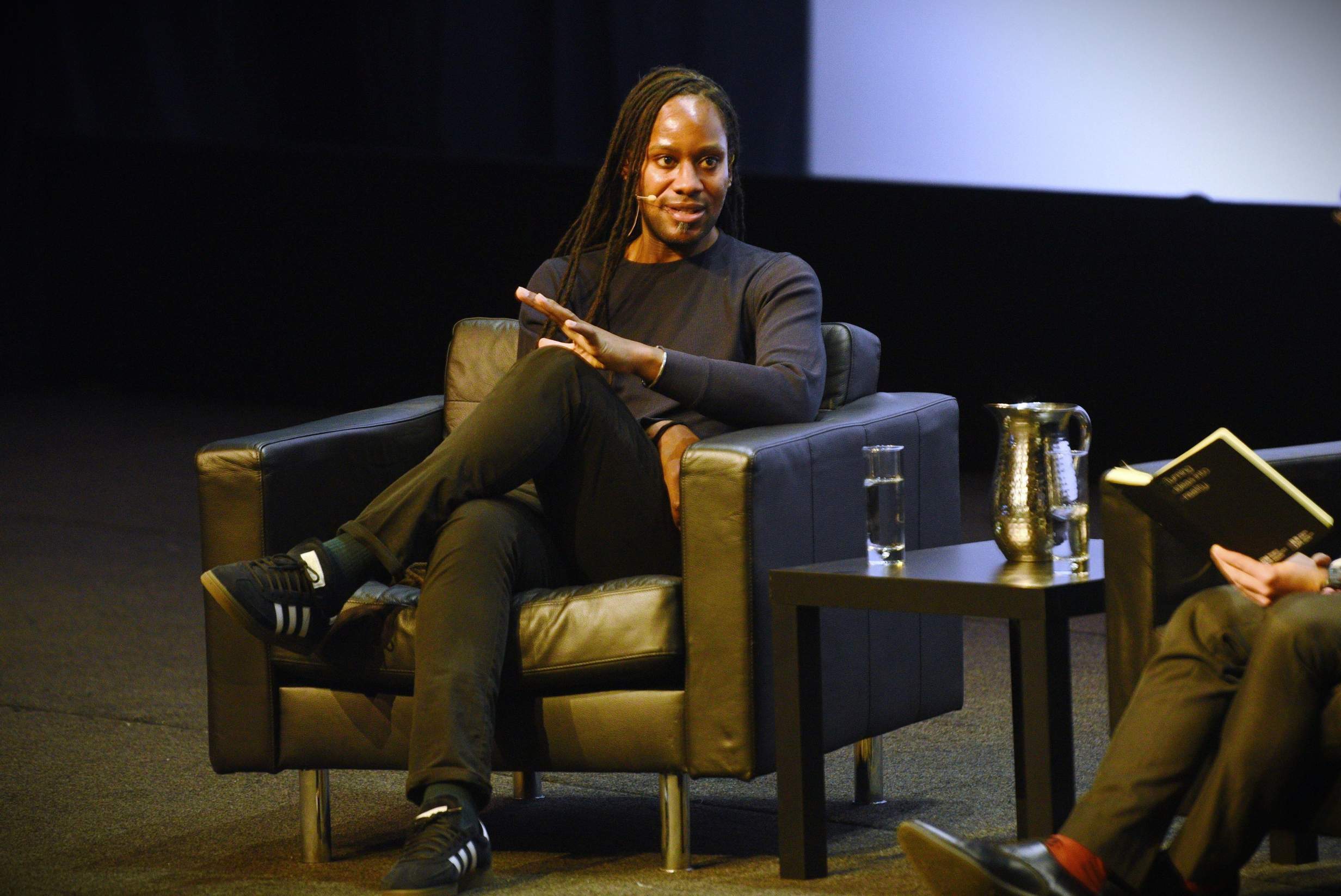

Read our Monthly Magazine
And support our mission to provide fearless stories about and outside the media system
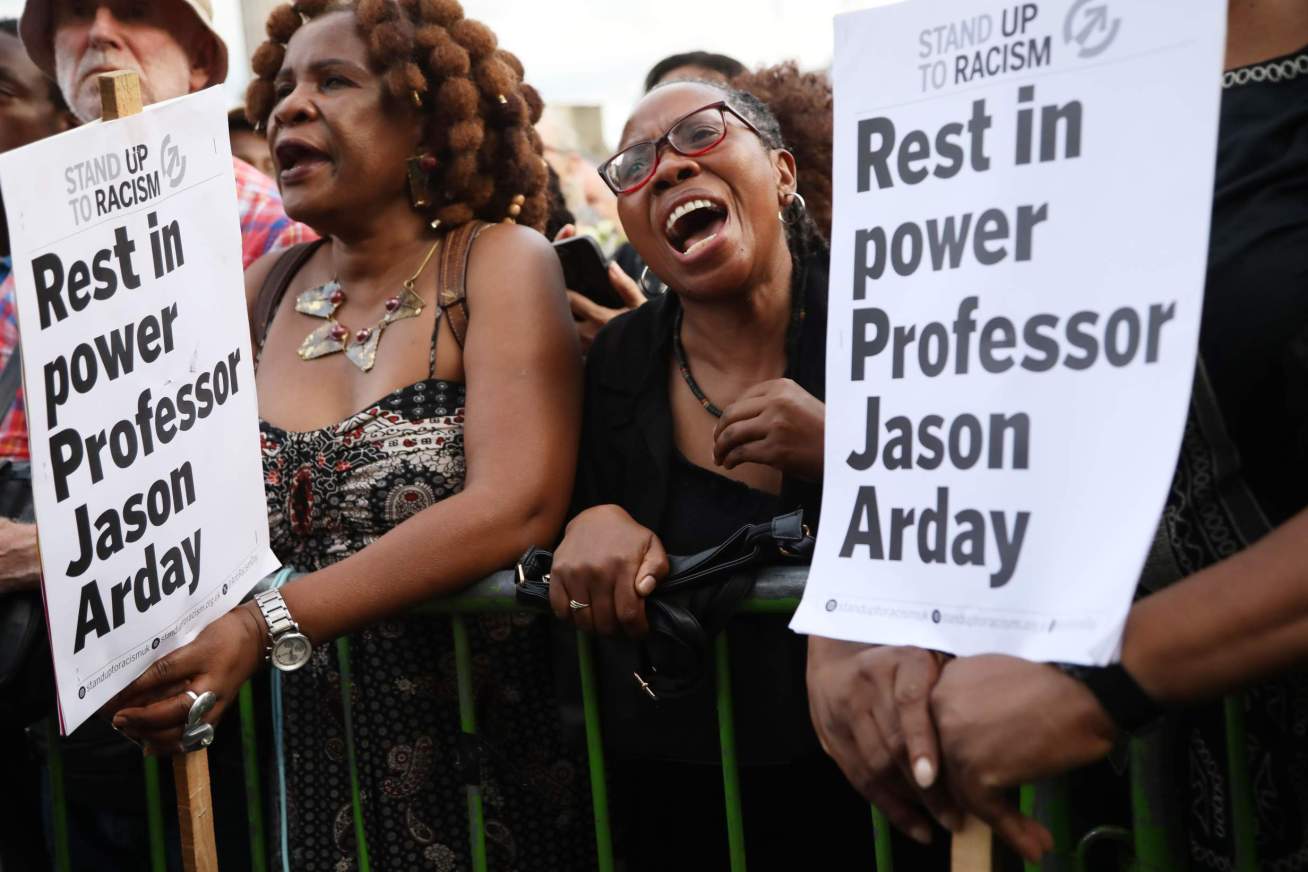
Jason Arday, a 41-year-old academic who resigned as Cambridge’s Professor of Sociology of Education, was found dead on Friday following intense scrutiny of many aspects of his qualifications and personal life by the majority of the established press.
His coordinated targeting by an explicitly anti-black race science network did not come out of nowhere, Byline Times can reveal.
Backed by the pro-Trump Silicon Valley billionaire Peter Thiel, this network has spent a decade penetrating Cambridge University before reaching Reform UK, Restore Britain, and the pan-European far-right.
This phase of the campaign against Jason Arday began when academic and anti-black racist Nathan Cofnas raised claims of plagiarism in Arday’s work in a Substack post last month.
The story it fuelled was then dissected in more than 200 articles across the majority of the British press in the weeks that followed, both in print and online.
It was striking that many of these articles did not acknowledge that the central accusations were being made by a man who believes that inherited racial differences make black people less intelligent and would leave black people absent from virtually every elite position in public life outside of sport and entertainment.
They also did not mention that Cofnas had used the terms “retarded”, “illiterate”, and “mentally disabled” to describe Jason Arday, while noting that he was “black”.
Cofnas said that an unidentified male Cambridge faculty member had supplied him with information about Arday. Before even examining Arday’s PhD thesis, completed at Liverpool John Moores University, Cofnas had dismissed him as “just another DEI hire”, referring to ‘Diversity, Equity, and Inclusion’ schemes.
At the ideological centre of the network is Aporia, an online magazine which serves as the public-facing arm of the Human Diversity Foundation – now known as Polygenic Scores.
The Human Diversity Foundation was a rebranded and relaunched version of the Nazi-era Pioneer Fund, which sought to mainstream its eugenics doctrines through Aporia.
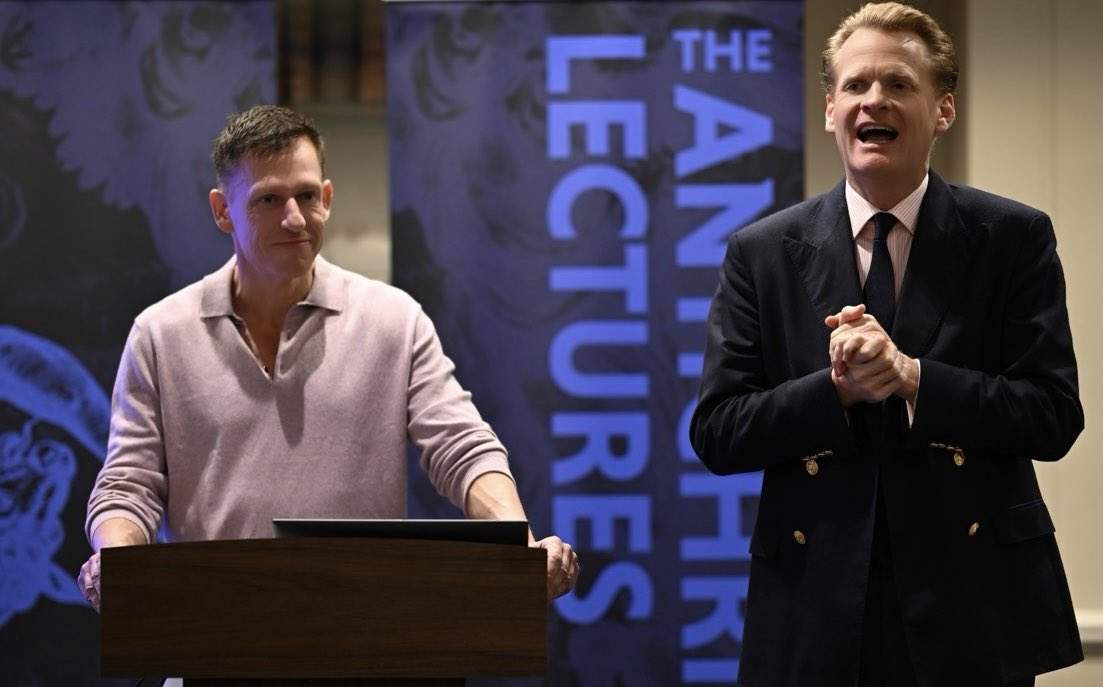
Tech billionaire Peter Thiel has cultivated ties to key actors in this network: to Cambridge Professor James Orr, through whom he channelled a donation to Cambridge; to Orr’s Cambridge circle; to online magazine Quillette which published attacks on Arday; and directly to Nathan Cofnas and Aporia senior editor Noah Carl.
Orr linked this infrastructure to politics. Reform UK’s Head of Policy, and an advisor to the Free Speech Union organisation, he invited Aporia into national conservatism.
At The Sanctuary, a right-wing hub in Westminster, the Orr-backed Cambridge Scrutonian Society has an office provided by crypto-billionaire Ben Delo; while Aporia is able to book spaces for events there through the venue’s internal booking system.
Delo gave Reform £4 million in early 2026. He has also sponsored the Free Speech Union.
By understanding this network and its ideology, a more accurate picture can be developed of the motivations behind the disproportionate attacks on Jason Arday that continued even after his resignation from Cambridge University.
‘A Random Black Person’
On 21 July, Nathan Cofnas published the article which launched the campaign against Jason Arday.
Titled ‘DEI Fraud and Cover-Up at Cambridge’, he portrayed Arday’s appointment to Cambridge University in 2023 as evidence that it had “grabbed a random black person” and abandoned academic standards in pursuit of diversity.
On 9 August, Cofnas said that a male faculty member at Cambridge University – who he said he was not allowed to name – had contacted him on 13 June with information about Jason Arday. He referred to this person as a whistleblower who feared professional retaliation.
Cofnas then examined Arday’s PhD thesis and published his allegations about alleged plagiarism.
Liverpool John Moores University (LJMU) had already formally tested the central allegation about Arday’s PhD the previous year, following claims by The Times and The Telegraph.
Its inquiry found citation defects but did not uphold plagiarism, concluding that the problems were caused by “honest and reasonable error”, compounded by inadequate supervision regarding Arday’s learning disabilities.
Arday told The Times that his autism affected how he processed information and that his early academic work relied heavily on mimicry to make sense of material. He accepted responsibility for mistakes but denied dishonesty.
LJMU reached its finding independently of this explanation. It is plausible that these issues may explain questions around some of Arday’s other papers.
The allegations drove a national news cycle of more than 200 articles across The Times and The Sunday Times, The Telegraph, the Daily Mail, The Independent, the Spectator, the Guardian, the Daily Express, The Sun, and Novara Media.
That volume cemented disputed or unproven claims about Jason Arday’s scholarship and biography far beyond the anti-black race science network that launched them.
There Will Be Another Jason Arday
There is no check to fetter power when unfettered power resides in the check
The Book that Wasn’t Published
A ‘double standard’ was applied to scrutiny of Jason Arday’s work.
One example of this was on the subject of Arday’s supposedly “phantom” book, Being Young, Black and Male.
It was initially described as a forthcoming Palgrave Macmillan title. But later academic and public biographies listed Arday simply as its “author”, alongside already published books.
Palgrave Macmillan nevertheless confirmed that it had accepted the proposal, Durham University recorded it as a “manuscript in preparation”, and it was still being described in 2022 as an upcoming book.
Compare this to James Orr, Associate Professor of Philosophy of Religion at the Faculty of Divinity at Cambridge University.
For at least six years, from 2019-20 through 2023 and 2025, public biographies repeatedly listed Orr’s apparently unpublished Being and Eternity: Phenomenology and Thomism in Edith Stein among his existing “publications and policy papers” – without describing it as unfinished or forthcoming.
In 2024, a podcast went further, introducing Orr as a “published author” who had “written” Being and Eternity (Orr did not dispute the characterisation).
Yet, Orr’s Cambridge University biography page still lists the unpublished title as “forthcoming, 2022”.
These repeated presentations of an apparently unpublished book as an established part of Orr’s publication record has not attracted anything approaching the scrutiny directed at Jason Arday.
Neither case proves dishonesty. Stalled books and recycled biographies are mundane features of academic publishing. But Arday’s discrepancy became national ‘evidence’ of fraud.
Charity Runs and ‘Seven Up’
The portrayal of Jason Arday as a dishonest fantasist extended to his charity running.
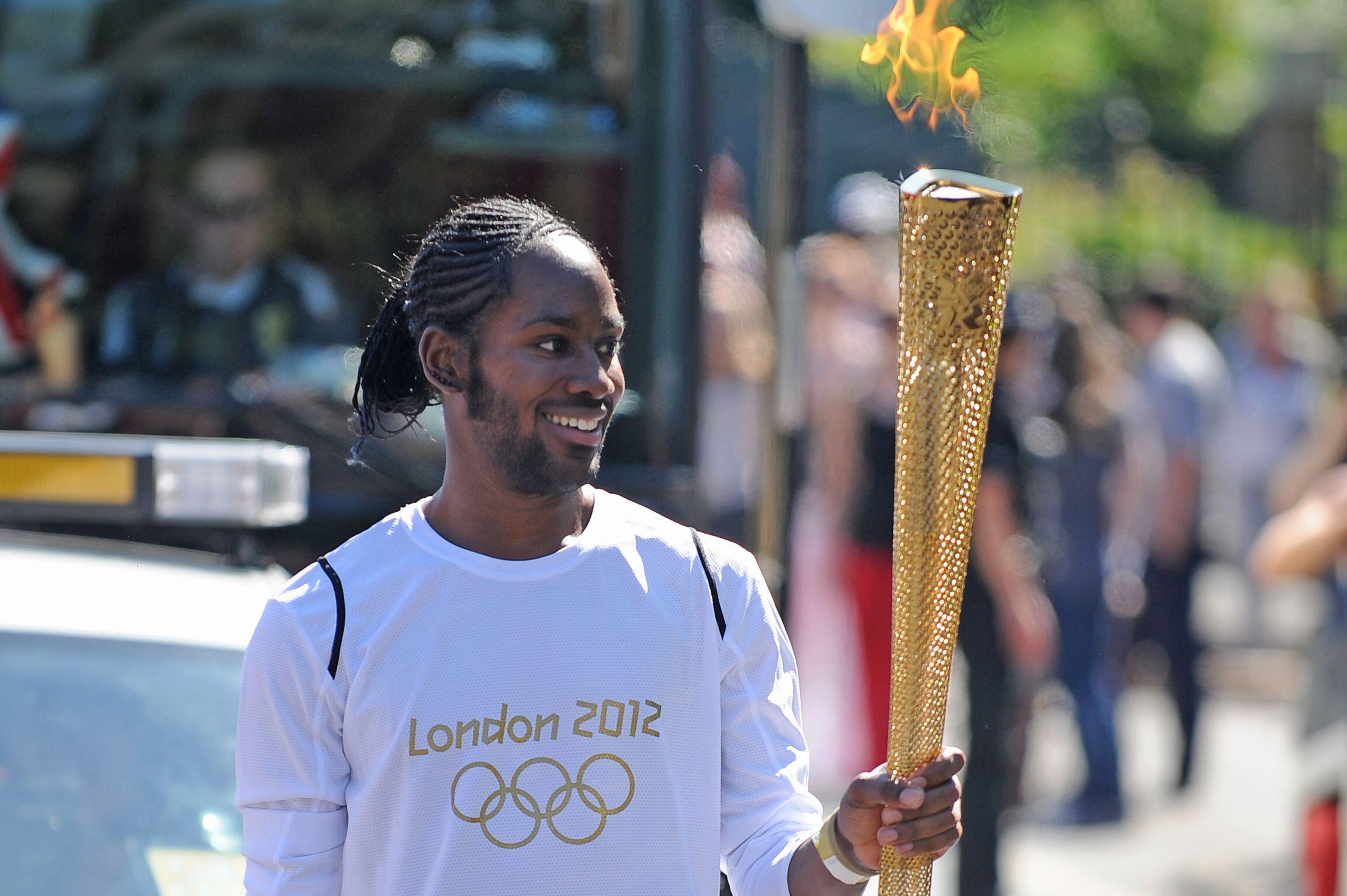
His claim to have completed 30 marathons in 35 days – ridiculed across dozens of articles (even after his death, for instance, in The Times by Sarah Ditum) – is supported by contemporaneous records.
A January 2010 JustGiving page announced the dates and route before it began. TES magazine reported on the challenge while it was underway. The Richmond and Twickenham Times reported its completion on 25 August.
Arday’s claim to have raised or helped raise £5 million for charity was also widely ridiculed by newspapers. When asked by the Guardian if his general figure of charity fundraising of £5 million was accurate, Arday said that the money had been raised through “many fundraising collectives over a two-decade period”, and that the other people who had taken part had signed NDAs to stop them from being identified.
A Byline Times analysis of the publicly identifiable charities Arday was associated with for two decades found that they had a combined gross income of approximately £1.4 billion to £1.5 billion – putting his £5 million collective fundraising claim at well under 1% of their overall income.
Arday had, for the most part, repeatedly described his fundraising in collective terms – referring as early as 2009 to what “we” had raised, and later to being “part of” fundraising initiatives and to “our fundraising projects”.
It is also clear that Arday did play semi-professional football, despite speculation in the press that he did not.
Another supposedly ‘impossible lie’ that the press accused Jason Arday of is notable when considered in a different context.
In a discussion at the University of Bath in 2022, Arday was asked to “take us back to the beginning” of his journey. He recounted his childhood developmental difficulties – including his diagnosis aged three of autism and global development delay, and the years he spent with behavioural psychologists and speech therapists.
He said: “I was part of a programme which doesn’t really exist any more, but was called Seven Up at the time. Seven Up is basically when they follow you over the duration of your life, so they follow you at seven, 14, 21. I was pulled out of the project when I was 14.”
The television programme Seven Up was first broadcast in 1964. The Telegraph claimed that Arday had said he “appeared” in Michael Apted’s famous series – but Arday himself had not said this.
His comment that the “programme” no longer existed also sits uneasily with that interpretation: 63 Up – presented by ITV as part of its continuing 7 Up Collection – aired in 2019.
Arday later told The Times that he had been referring to an informal community initiative supporting black mothers raising children with complex learning needs.
His wording was plainly confusing. But the claim on which the story rested – that he had said that he appeared in the television series – is not what he actually said.
Reporting also repeatedly blurred the quality of the evidence against Arday.
Accounts in the Guardian and elsewhere from former pupils who said they were in the year above Jason Arday at school, were presented simply as testimony from “schoolmates”.
Claims that he had spoken, joked, or sung with particular children were treated as disproving other credible descriptions of him as effectively non-verbal until he was 11 – despite the fact that autistic children and those with selective mutism or severe communication difficulties can speak in some settings while remaining largely silent in others.
Once plagiarism allegations emerged, these conflicting childhood recollections were simply folded into a wider narrative that Jason Arday had fabricated his entire life story.
Though unproven, the PhD plagiarism allegation circulated as fact, while the notion of Arday as a “fraud”, “fabulist”, and “plagiarist” hardened into supposed ‘hard-fact’ findings about the academic.
As Cambridge University announced that it would look into emerging claims about Jason Arday, media articles about his life were already loaded with the assumption of sustained and deliberate fraudulent dishonesty.
The potential impact of his learning difficulties and autism was ignored.
Arday had long reported being diagnosed aged three with autism and global developmental delay, including severe language difficulties, while people who knew him as a child recalled significant learning needs and additional support.
In his memoir, he described early memories as impressions of images, sounds and sensations rather than discrete events – significant because research has found that some autistic people can have greater difficulty retrieving and narrating specific autobiographical memories.
This potentially provided a plausible explanation for muddled recollections or inconsistencies that journalists should have considered, before treating them as prima facie evidence of deliberate deception.
‘Enjoying Vengeance’
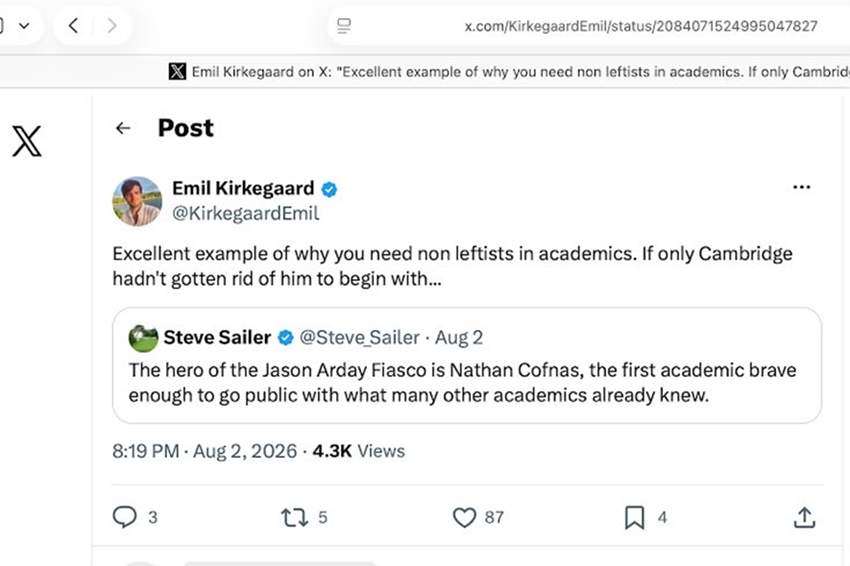
On 2 August, Steve Sailer – an advocate of “human biodiversity” whose work claims that black people are innately less intelligent and more criminal – hailed Nathan Cofnas on X as “the hero of the Jason Arday Fiasco”.
Emil Kirkegaard, who co-founded online publication Aporia, amplified the post, saying it was an example of why academia needed “non leftists”.
On 8 August, Aporia published an article calling Jason Arday’s case the “bitter fruit of equalitarianism”. The platform had already built Cofnas’ public profile through interviews, a podcast, a live debate, and an essay portraying opposition to Cofnas’ race science as persecution.
Five days before Arday was found dead on 14 August, in an interview with the historian David Starkey – himself renowned for a record of derogatory comments about black people – Nathan Cofnas said that Arday was “not intelligent in the way that a professor should be” and that “he’s not, like, that retarded that he can’t speak”.
Cofnas said he did not know whether Arday “could do addition”, called him “completely illiterate mathematically”, and later described him as “a black person who seems to be, in this case, literally mentally disabled”.
Cofnas suggested that Arday had merely “learned to talk their talk” and used accusations of racism to repel criticism. His comments fused Arday’s race, autism, and academic standing into a single racialised claim of innate incapacity.
Starkey praised Cofnas as the man who had defeated Cambridge’s “DEI” system and celebrated Arday’s resignation by stating that “the reason we are both grinning is that we are enjoying vengeance. Good, honest, straightforward and Christian vengeance… we can rejoice together”.
The historian racialised the onslaught, calling Arday a “professor draped in laurels as well as dreadlocks” and repeatedly describing him as stupid.
In 2024, Cofnas was dismissed from his role at Emmanuel College, Cambridge University (though the university faculty continued to sponsor his fellowship), after publishing a blog in which he argued that black people are less intelligent and that, in a meritocracy, the number of black professors at Harvard University “would approach zero percent”.
After supporting Nathan Cofnas through two university inquiries and sponsoring his unsuccessful legal action, the Free Speech Union – the organisation established in 2020 by journalist Toby Young to campaign for freedom of expression – turned its public advocacy against Jason Arday directly. (David Starkey is a Free Speech Union advisor).
On 10 August, the Free Speech Union attacked Arday over complaints he had made to the Metropolitan Police about the risks to his mental health following journalistic inquiries about claims of plagiarism.
Young wrote to the Met Police Commissioner, Sir Mark Rowley, asking for an explanation. Meanwhile, Jack Grove, an editor at Times Higher Education (known as THE), who had launched the original plagiarism dossier about Arday’s PhD, said that the academic’s complaints to the police were an illegitimate assault on free speech and important public interest journalism.
On 12 August, James Orr – a founding member of the Free Speech Union’s advisory council – posted on X: “What terrifies me is if it turns out Jason Arday’s DEI qualifications were fake, his DEI chair was fake, his DEI discipline was fake, and his faculty + college were DEI bootcamps. Imagine the backlash against hardworking DEI hires?”
At 5.51am on 14 August, before the news was reported that Arday had been found dead, the online magazine Quillette – whose editor Claire Lehmann is also a Free Speech Union advisor – published an essay calling Jason Arday a “fantasist, fabulist, fraud”.
A second article published on the same day defended research into group differences in intelligence and positioned Nathan Cofnas as its latest persecuted scholar.
Over six days, this network generated the same racial frame across race science media, a free-speech lobbying outfit, a political magazine, and Reform’s Head of Policy James Orr.
The Pioneer Fund Rebrands
The campaign against Jason Arday did not come out of nowhere.
The Cambridge network that Byline Times first exposed in 2021 began forming in 2016 and 2017, when Thiel Capital chief of staff, Charles Vaughan, attended meetings at the university. He encouraged conservative academics to build ties, recruit sympathetic people, and build media and political influence.
The clearest mass-market distillation of the Pioneer Fund’s worldview was Charles Murray and Richard Herrnstein’s 1994 book The Bell Curve, which argued that black people were less intelligent than white people partly for genetic reasons.
The Pioneer Fund, established in New York in 1937, harboured direct ties with Nazi eugenicists. Thirteen scholars whose work it relied on were Pioneer Fund grantees, while the Fund financed nearly all research cited for its central race and IQ claims.
James Orr hosted Charles Murray at Cambridge University in 2021.
In 2022, the Pioneer Fund relaunched under its new Aporia brand, incorporating the Fund’s old personnel, assets, and publications. Aporia‘s founder Matthew Frost said that the magazine wanted to “move the Overton Window” – the range of politically acceptable ideas – and gain “legitimacy via association”.
Peter Thiel – who, as Byline Times has revealed, made a secret five-figure donation to Cambridge University through James Orr at the time of Orr’s hiring – also harboured his own direct ties to the founders of Aporia.
Thiel sought introductions to Nathan Cofnas and Aporia editor Noah Carl before giving them what Aporia’s co-founder Emil Kirkegaard called the “Thiel treatment”.
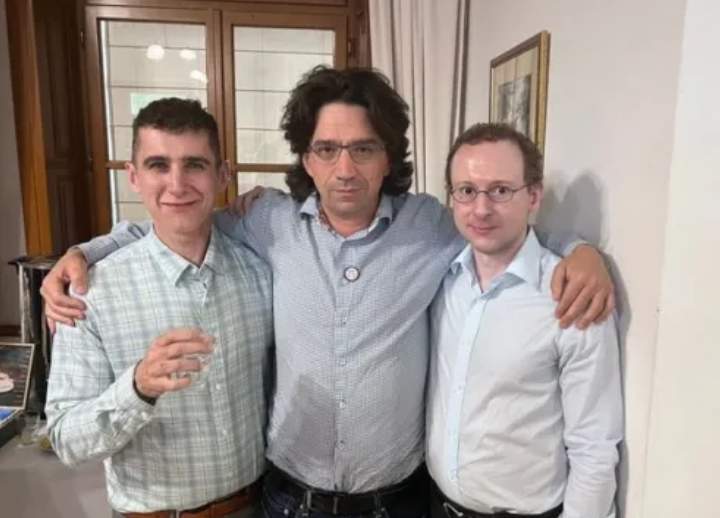
A July 2024 photograph posted by Richard Hanania – another race science sympathiser whose book, The Origins of Woke, was endorsed by Thiel – underscores Cofnas’ proximity to the wider Thiel-linked US right: it shows Cofnas arm-in-arm with Hanania and Curtis Yarvin.
Yarvin, whose software company was funded by Peter Thiel’s Founders Fund, claims that white people are genetically more intelligent than black people, whom he repeatedly calls “negroes” and casts as better off under slavery.
As Byline Times first reported earlier this year, the Free Speech Union is directly connected to Aporia. Companies House records list the Free Speech Union’s founding general secretary, Toby Young, and Aporia senior editor Noah Carl, as co-directors of Skeptics Ltd.
Alongside James Orr, David Starkey, and Claire Lehmann, another Aporia contributor Eric Kaufmann sits on its advisory council. Cofnas himself was a recurring contributor and guest at Aporia, while Lehmann’s Quillette lists six articles under his byline.
In 2021, Byline Times reported an allegation in Max Chafkin’s biography that Peter Thiel had also been “secretly funding” Quillette around 2016. Lehmann denied the claim.
The Sanctuary
It was James Orr who first opened Aporia’s route into mainstream national-conservative politics.
The magazine thanked him for “organising and inviting us” to the 2023 NatCon summit, documenting his direct role in giving the race science platform access to senior politicians and organisers.
The summit was attended by Cabinet ministers including Suella Braverman (now a Reform MP) and Michael Gove (now Editor of the Spectator), as well as figures such as David Starkey.
But James Orr’s role in bridging race science via Cambridge University into organised politics forms part of a wider approach that has alarmed students and academics across the world-renowned institution.
A six-month Byline Times investigation – based on interviews with nearly 20 current and former Cambridge students and academics – found that Orr has been using the university as a recruitment ground for a hard-right political project linked to his role as Reform’s policy chief.
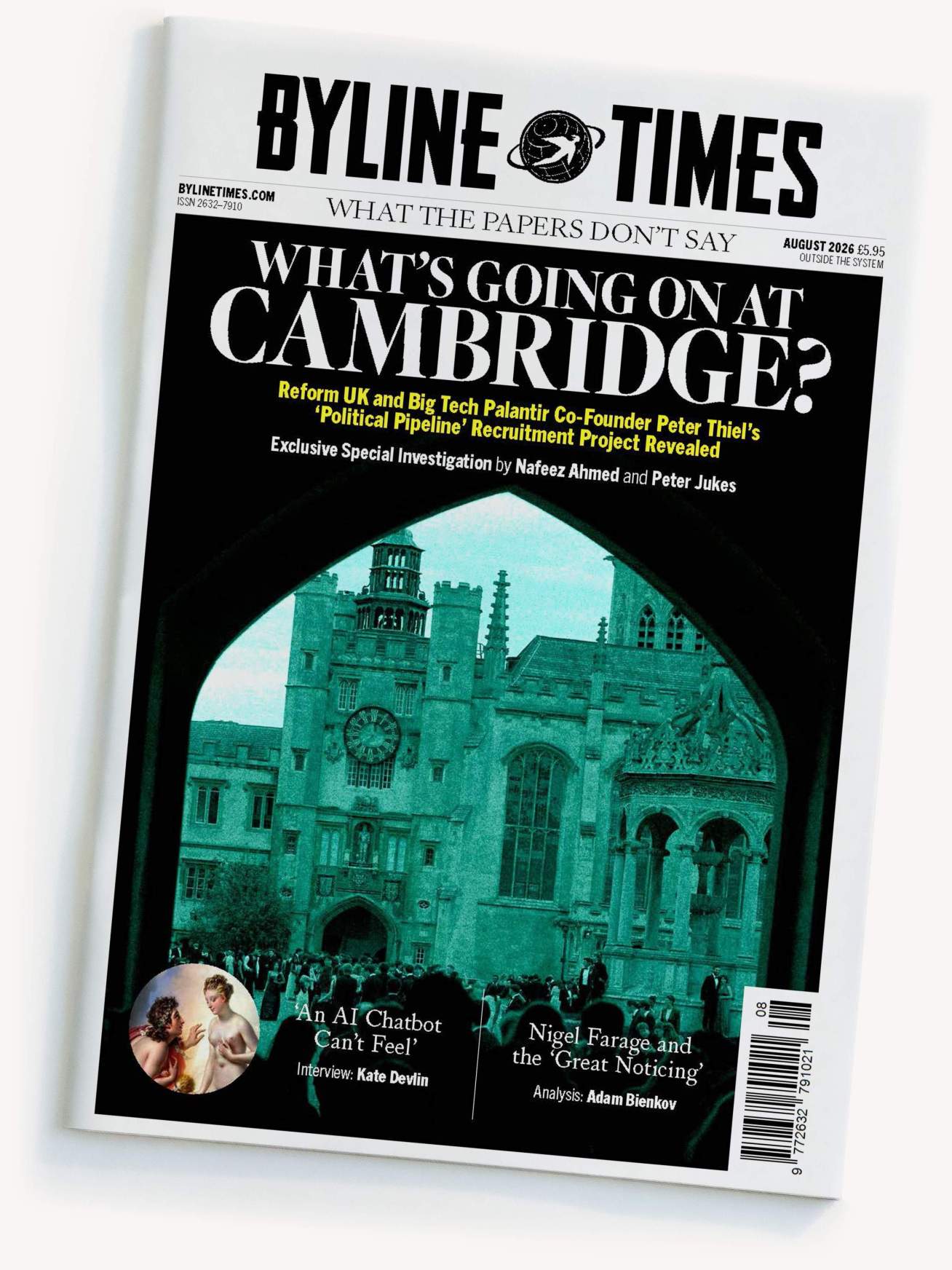
The investigation revealed activities including the housing of postgraduate students at his own home where they mingle with race science advocates and hard-right political figures.
Senior academics told this publication that the arrangement raised concerns over safeguarding, student welfare, and indoctrination. Several complaints about James Orr have reached Cambridge’s senior leadership, but no action has been taken.
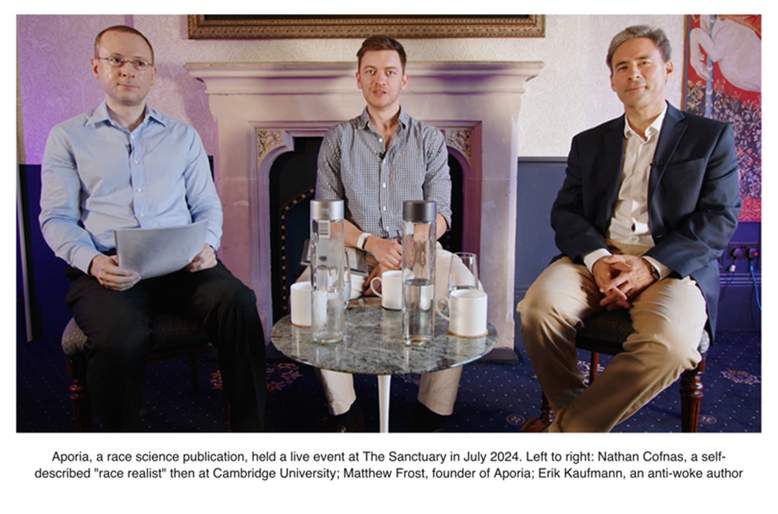
At a live Aporia event in July 2024, Nathan Cofnas appeared alongside Eric Kaufmann, a Free Speech Union advisory council member, and Aporia co-founder Matthew Frost. Kaufmann spoke at the event about “the problems with… black culture”.
The previous year, Frost had attended a notorious neo-Nazi gathering in Estonia known as the “Scandza Forum”, hosted by Scandinavian neo-Nazi Fróði Midjord and renamed “Guide to Kulchur” after a book by Nazi sympathiser and Holocaust supporter Ezra Pound.
The Aporia event hosted by Frost in 2024 was held at The Sanctuary, a discreet political hub overlooking Westminster Abbey, where major Reform donor Ben Delo funds office, events, and podcasting space. It is understood that Aporia has access to The Sanctuary’s internal booking system to secure office and events space on an ad hoc basis.
The Sanctuary gave Rupert Lowe’s Restore Britain party a free space to launch what it called the most comprehensive deportation policy produced in the UK, proposing to remove millions of migrants from the country.
The anti-extremism organisation Hope Not Hate has revealed that Delo has also helped fund the Free Speech Union.
The Cambridge Scrutonian Society, founded by two of James Orr’s students with his behind-the-scenes support, occupies a separate Sanctuary office underwritten by Delo.
Unanswered Questions
Cambridge University has questions to answer.
As Byline Times documented last month, it took no action after repeated internal safeguarding complaints about James Orr and his involvement with right-wing extremist groups.
Asked repeatedly to comment on the extensive findings of this publication’s six-month investigation, Cambridge University’s press office merely stated: “Byline Times has sent the university a slew of unsubstantiated allegations, wilful mischaracterisations, and falsehoods, which we strongly reject. The volume of misleading claims and conjecture means we are unable to engage with the approach as a legitimate media enquiry.”
The university had also retained Nathan Cofnas’ fellowship after Emmanuel College severed ties with him in 2024 over his debunked anti-black claims about intelligence and academic representation.
These decisions sharpen the questions for Cambridge.
Who in its faculty put Nathan Cofnas forward as a research associate?
What safeguards were put in place for Jason Arday as the news coverage and reputational attacks on his life story intensified?
Why was LJMU’s settled finding on the plagiarism allegations against Arday quickly displaced by public presumption in the eyes of the institution?
Nathan Cofnas denied coordinating with Aporia, James Orr, David Starkey, the Free Speech Union, or Quillette in his campaign against Jason Arday.
Claire Lehmann, Editor of Quillette, told Byline Times: “Quillette had no contact with Nathan Cofnas, Aporia, the Free Speech Union, or James Orr about Jason Arday before publishing either article. Neither piece was solicited, coordinated, or discussed with any of those parties.”
She added that, after Jason Arday’s death, she “sent Nathan Cofnas a private message asking whether he was alright”.
James Orr told this publication that he had not “amplified”, taken part in, or condoned “any alleged campaign against Jason Arday”.
“I have not communicated with Nathan Cofnas, with anyone at Aporia, or the Free Speech Union, or indeed with anyone else from any other organisation about my former colleague either before or after my social media post of 12 August,” he added.
The Free Speech Union did not respond to a request for comment.
This article was amended on 19 August 2026 to correct an error confusing the Times Educational Supplement and Times Higher Education; and on 24 August 2026 to clarify that Aporia does not have a designated office space at The Sanctuary.