
 Subscriptions

Read our Monthly Magazine
And support our mission to provide fearless stories about and outside the media system
“My name is Candice. I’m calling from Reform UK to see if you would consider standing as a candidate in the local elections in May…”
The voicemail came out of the blue (or turquoise).
I’m a journalist and former actor with absolutely no affiliation to Reform UK whatsoever. I’ve never been a member, donor or supporter. So why on earth was I being asked to stand as a candidate?
The cold call echoed reports from The Guardian that they had been “begging” strangers to stand, including one of their own journalists.
The Conservatives later released a recording of a cold call from a Reform representative asking someone to stand in Birmingham. Nigel Farage denied that the party was doing it, saying calls had been made to “paid-up members of the party” and that “begging” people to stand in the local elections would be “very, very fruitless”.
And yet, here I was, a non-member on the receiving end of a headhunting call from Reform UK, and I wasn’t alone. Sam Webber, a Lib Dem councillor in Bromley, posted on X:
“I received a call from 0116 4930076 at 2pm today asking if I wanted to be a paper candidate for @reformparty_uk in the local elections & I had a similar voicemail a few months ago.”
Just a few examples of the party calling unknown members of the public to be “paper candidates” despite knowing very little about them, seemingly unperturbed by their own colossal list of vetting failures.
ENJOYING THIS ARTICLE? HELP US TO PRODUCE MORE
Receive the monthly Byline Times newspaper and help to support fearless, independent journalism that breaks stories, shapes the agenda and holds power to account.
We’re not funded by a billionaire oligarch or an offshore hedge-fund. We rely on our readers to fund our journalism. If you like what we do, please subscribe.
As I write this, fresh stories about dodgy candidates emerge daily from the party set to sweep the local elections.
Farage is under mounting pressure to disown a string of candidates for unearthed racist, misogynistic, and homophobic social media posts, including Corey Edwards, who stood down last month after a photo resurfaced in which he appeared to be performing a Nazi salute. Corey, who condemned the “ordinary use of the appalling gesture”, said that he was “imitating a Welsh footballer’s use of it” according to The Independent.
“No disrespect but why can Black people use the word n***** but white people cannot? Seriously, why is this the case?” wrote Blackburn South East candidate Andrew Mahon, in a now deleted post.
The Telegraph reports one calling for “every Muslim” to be deported from Britain, claiming the public cannot distinguish them from terrorists, while The Times relays another accusing “the Jews” of “creating division by forcing other races on our societies” and complaining that immigrants breed “like rats”. In a separate post, another alleged fan of the Führer wrote: “Whichever group of people built this must have been real visionaries!” referencing Berlin’s Olympiastadion, built by Nazi Germany.
This is the party that wants to form the next government, yet its vetting process could be described as shambolic. If they are asking a total novice like me to stand for local election, could this explain the series of racists that have slipped through the net? Sure, I had never performed a Nazi salute in my life, but I could have been anyone.
More importantly, how did they get my personal data, and how were they using it?
Don’t miss a story
I contacted their press team. They said my number, email, and postcode had been obtained two years ago, through a website submission in February 2024. At the time, I was a journalism student, emailing politicians and the like to appear on our version of ‘Question Time’. Knowing that any contact from me would have been made in a press capacity (and not to sign up as a member… or potential candidate), I pressed for more detail, but they said they could not provide any more information on the nature of the submission.
Frustrated, I filed a Subject Access Request.
A Wider Pattern
I had reason to be concerned, conscious of the growing scrutiny around Reform’s data practices, including accusations in Byline Times of falsifying evidence it provided to the Information Commissioner’s Office, following allegations that it had breached data rules in a case involving a voter who had received unsolicited communications from them. An allegation rejected by Reform’s spokesperson as “a case of cock up and not conspiracy”.
According to The Guardian, the party had also faced criticism over how it conducted a campaign offering to pay for household energy bills, which experts warned could breach data protection laws by gathering sensitive political information.
To enter the competition, entrants had to disclose not only their name, email and telephone number, but also how they voted at the last election, and how they intend to vote at the next one. Political opinions are considered the most sensitive types of personal data, prompting calls for the Information Commissioner’s Office to investigate. A Reform spokesman defended the contest, saying: “We are entirely confident that this competition is legal”.
Will Farage ever learn? Allegations of data misuse seemed to follow him wherever he went. In 2019, when Reform was known as The Brexit Party, the ICO launched an investigation after complaints that it had failed to hand over personal data it held on voters.
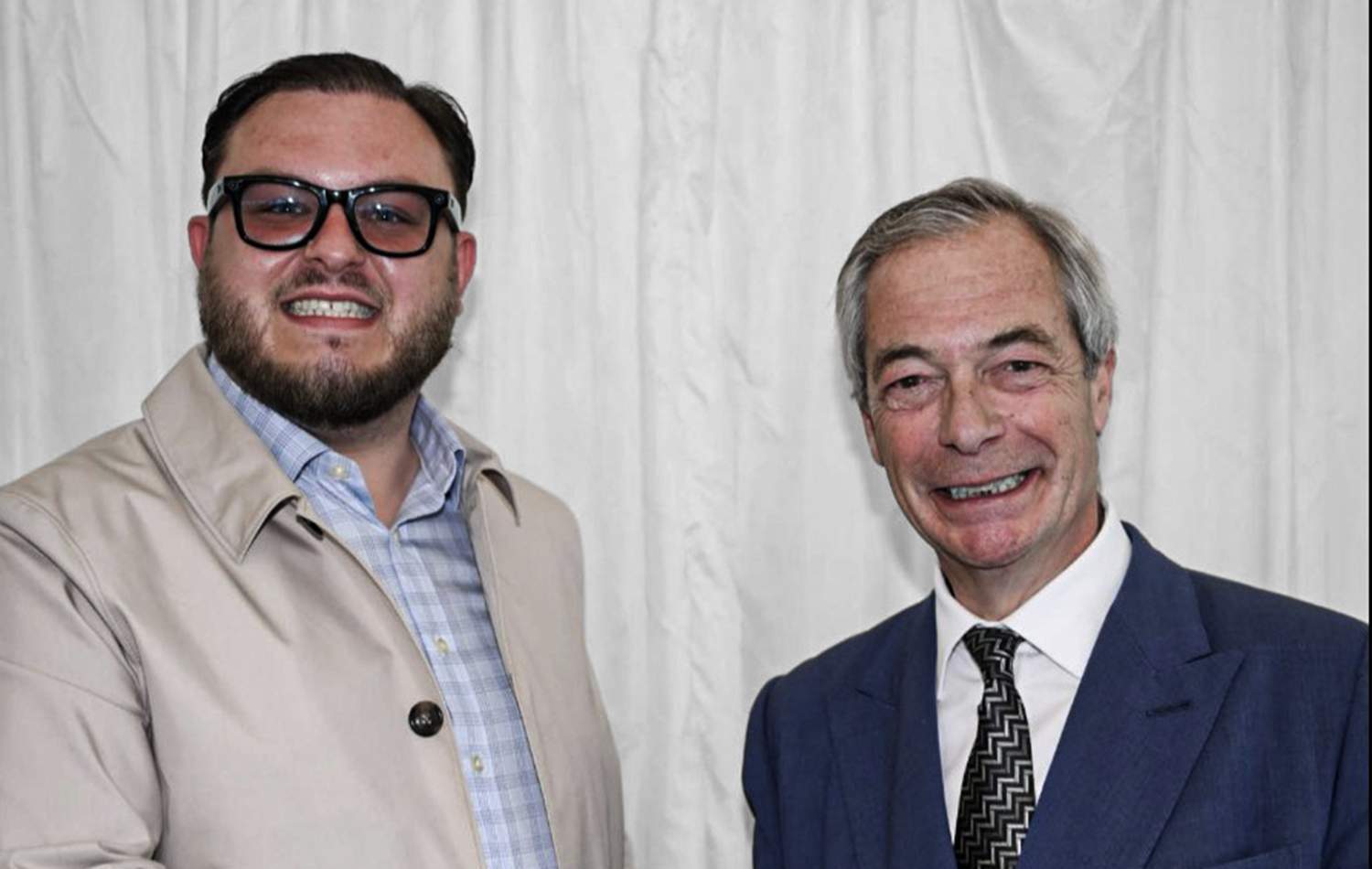
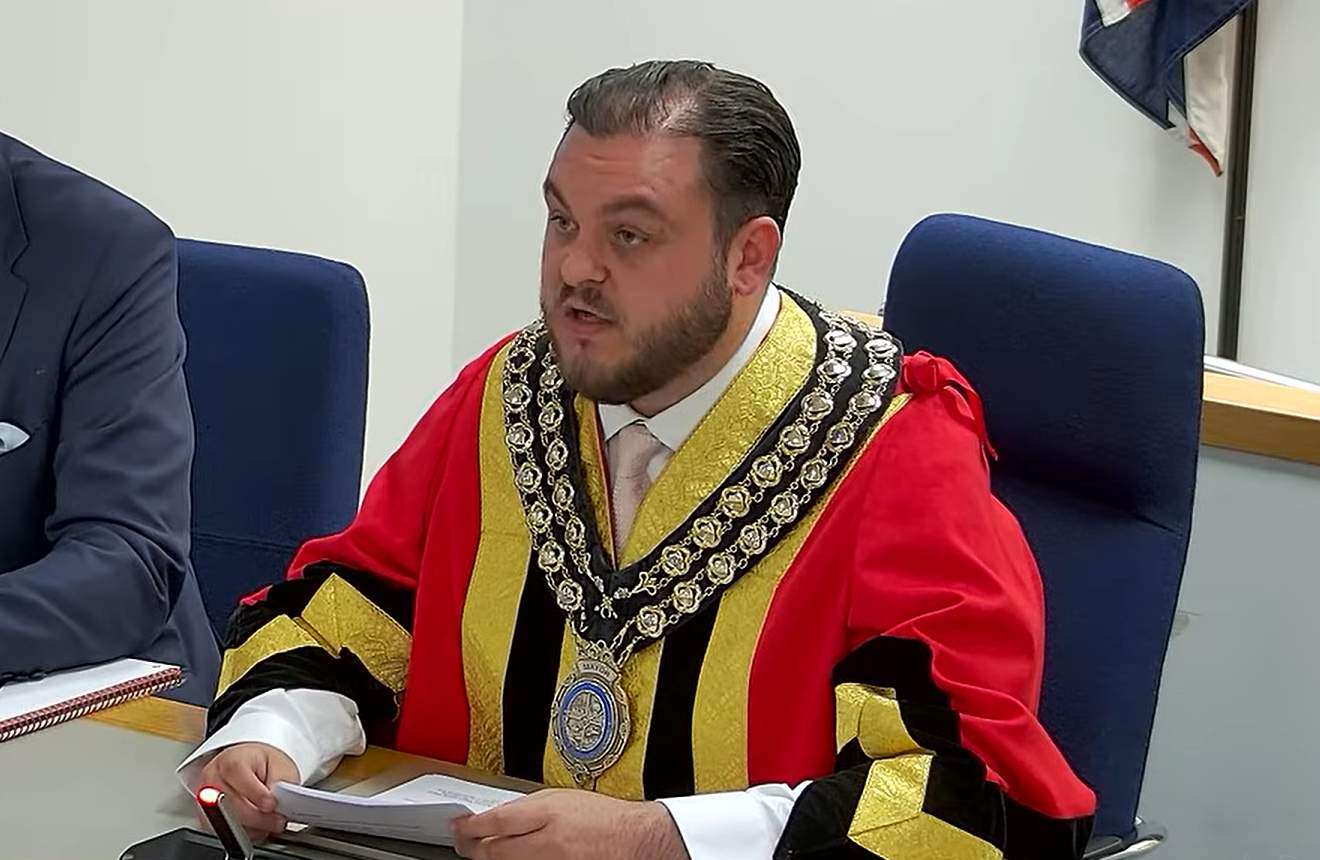
Reform UK’s Basildon Leader Accused of Bullying After Filming Council Staff and Residents With Meta-Style Smart Glasses
EXCLUSIVE: Cllr Sam Journet, who is leading Reform’s bid to take two Essex councils, was arrested last year following multiple complaints about him filming in private areas
Not to mention his association with Leave.EU, which was accused of “rife” misuse of data in 2018 due to its links to Cambridge Analytica, something the campaign group denied at the time.
This year, there was a challenge in court by the Good Law Project, which alleged that Reform UK had failed to properly respond to requests from individuals asking what personal data was held about them.
Reform admitted it was slow to respond to the requests, but defended the claim and denied that it had failed to comply with its legal obligations.
Following Reform’s barrister saying in court that they “delete electoral register data regularly in line with their Privacy Policy”, the Good Law Project said afterwards that if Reform was deleting data after receiving a SAR and then sending a blank response, then this approach risked undermining transparency, and added that “intentionally deleting data to prevent disclosure to a person who has asked for that data can be a criminal offence under the Data Protection Act 2018.”
“Reform say they want to profile millions of people, and then ignore them when they ask to see their data,” they said.
‘No Active Personal Data’
I was hoping to have better luck. But when the results from my SAR finally arrived, it only raised further questions.
The data protection officer stated they held “no active personal data” relating to me. The only information retained, they said, was a record on a “suppression list”, used to ensure I would not receive further communications. Something they said was “standard practice” following a SAR.
How was that possible? When just days before I received this response, I received two further calls in succession:
“Hello, this is Leighton calling from Reform UK… we’re looking for people to stand as candidates in your community…”
“Hi, my name is Ian from Reform UK… we’re looking for paper candidates in your local area…”
I was called twice despite them having “no active personal data” relating to me?

Reform UK Candidate Runs Firm Hired by Sanctioned Pro-Putin Bosnian Serb Leadership
Kenneth Morris, who is standing for the party in Erdington, Birmingham, co-ordinates the UK arm of a transnational far-right political network
When I challenged them on the phone calls, the data protection officer said they were made before my details were formally added to the suppression list. But my SAR had been confirmed over a week before I had received the calls, which raised questions about how their own “standard practice” procedures were being applied.
Their explanation left a glaring inconsistency: they acknowledged using my data to contact me repeatedly, yet said they did not hold an ongoing record of it, and could not fully account for how they had obtained it in the first place. This didn’t feel like transparency to me. Their responses felt evasive. At worst, they could leave the impression of data being deleted after receiving a SAR, thereby resulting in no disclosure to a Subject Access Request.
Suppressing my data, rather than providing it in response to a SAR, would be a breach of Article 15 of GDPR – contravening guidance from the ICO that it’s ‘unacceptable’ to delete information following receipt of a SAR.
Not only that, but failing to provide easy-to-understand information about how they’ve used my data would constitute a further breach of the GDPR transparency principle.
And, it’s worth noting that suppressing data with the intention of preventing disclosure would be a further offence under s.173 of GDPR.
Fitness to Govern
I was once guilty of treating personal data as small details stored on a system somewhere, unlikely to affect my life. This experience showed me that it can determine how people are contacted, categorised, and targeted by political parties, even shaping who gets asked to take part in democracy.
When that process is unclear or inconsistent, it raises a basic question of trust. If Reform UK cannot clearly explain how they held or used my information, what does that say about their fitness as a serious political organisation?
Is this the party ready to lead the next government? Candidate selection is part of how a party demonstrates readiness for that role. Yet for Reform UK, it appears to depend on systems of data collection and outreach that remain opaque, and vetting procedures that continue to fail.
Reform UK insists all data processing is carried out in accordance with applicable data protection law and that it does not suppress personal data for the purpose of avoiding disclosure.
Jointly published with The News Movement.
Got a story? Get in touch in confidence on josiah@bylinetimes.com
holding farage to account #reformUNCOVERED
While most the rest of the media seems to happy to give the handful of Reform MPs undue prominence, Byline Times is committed to tracking the activities of Nigel Farage’s party when actually in power




 Contribute to our #ReformUncovered crowdfunder