
Outside the system

Nigel Farage Took £50,000 from Crypto Firms Then Said He Was ‘Not Aware’ of the Industry Funding His Party

The self-proclaimed ‘straight-talking’ Reform UK leader has been far from straight about who is funding his attempted rise to power, reports Iain Overton
Read our Monthly Magazine

And support our mission to provide fearless stories about and outside the media system

Nigel Farage was paid £50,000 in personal speaking fees by two cryptocurrency businesses in October 2025 – one of them owned by Dragons’ Den investor Steven Bartlett – in the same month he told Reuters he was “not aware” of crypto businesses funding his party, Byline Times can reveal.

The Reform UK leader received £30,000 from Blockworks Inc on 13 October and a further £20,000 from Zebu Group Limited on 22 October, according to the UK Parliament Register of Members’ Financial Interests. Both payments were for keynote appearances at the companies’ crypto-industry conferences in London.

The interview with Reuters was on 22 October at Zebu Live, the London cryptocurrency summit for which Zebu Group was due to pay Farage £20,000 that same day. Asked by Reuters whether any crypto asset businesses were donors to Reform UK, Farage said: “not that I’m aware of”, and added that “we might have had some sponsorship at the conference”.

Despite the unclear mention of “sponsorship”, Farage did not clarify that Zebu Group itself – a crypto asset business providing marketing services to cryptocurrency and blockchain projects owned by Steven Bartlett – was at that moment paying him £20,000 personally to headline that very summit.

Nor did he mention that Blockworks Inc, another crypto asset business, had been due to pay him a further £30,000 for his keynote at its London Digital Asset Summit nine days earlier.

Both payments are recorded in the parliamentary register as “Speaking engagement” entries, with each sum listed as a “payment expected for services”. Farage submitted both entries himself on 12 November 2025.

In the weeks that followed, Farage repeatedly campaigned in public for Britain to loosen its approach to cryptocurrency regulation – in a City of London speech, in an article for City AM, on LBC and in posts on X – without referring to the £50,000 he had been paid by firms operating in the industry he was promoting.

Blockworks is a New York-based data, software and research platform for crypto markets. It runs the Digital Asset Summit, a cryptocurrency conference aimed at institutional investors, and operates a research division producing reports on digital assets and blockchain protocols.

Farage headlined the company’s London Digital Asset Summit at Old Billingsgate on 13 October, where he told the audience: “I am your champion”. He also pledged that Reform would “bring crypto in from the cold”.

Crypto Investor Donates £9 Million to Reform UK as Nigel Farage Plugs His Company and Tells Industry ‘I Am Your Champion’

The Reform leader recently used media interviews to back Christopher Harborne’s company while promising to cut taxes and regulations on crypto firms

Zebu Group Limited is a UK-based marketing agency providing services to cryptocurrency and blockchain projects, and runs Zebu Live, described by its organisers as the UK’s flagship Web3 – a term used for blockchain-based internet platforms – conference. In April 2023, the company was acquired by Flight Story, the marketing and communications group co-founded by Bartlett, whose Diary of a CEO podcast has become one of Britain’s most influential business platforms.

Farage gave the keynote at Zebu Live 2025 at Tobacco Dock on 22 October, telling attendees: “This is a trade that works for both of us”.

By 3 November, Farage was urging at a City of London event that Britain should embrace cryptocurrencies. “There’s a global boom in the trade in digital assets, in the use of stablecoins, in the usage and investment in all forms of cryptocurrency”, he said. Stablecoins are cryptocurrencies pegged to traditional assets such as the dollar or sterling. “We’ve literally turned our backs on it, both the Bank of England and the FCA being guilty of this”.

ENJOYING THIS ARTICLE? HELP US TO PRODUCE MORE

Receive the monthly Byline Times newspaper and help to support fearless, independent journalism that breaks stories, shapes the agenda and holds power to account.

We’re not funded by a billionaire oligarch or an offshore hedge-fund. We rely on our readers to fund our journalism. If you like what we do, please subscribe.

On 12 November, Farage warned in a post on X (formerly known as Twitter) that Britain “cannot afford to be left behind” on crypto regulation, describing “the Bank of England’s cap on stablecoin ownership” as “a poison pill for Britain’s financial sector”.

In a corresponding article in City AM the same day, he argued that stablecoins and cryptocurrency were central to the future of finance and that Britain risked being left behind global competitors.

On the same day, Christopher Harborne, a Thailand-based cryptocurrency investor, gave £3 million to Reform UK, according to the Electoral Commission’s donations register.

Farage did not respond to questions from Byline Times about whether the Blockworks and Zebu payments were contingent on his subsequent public advocacy for cryptocurrency, or about the apparent gap between his statements to Reuters and the entries in his own register of interests.

MPs are permitted to undertake paid work outside Parliament provided it is declared and does not involve paid advocacy in parliamentary proceedings.

EXCLUSIVE

Reform UK’s Crypto Provider on Register That Housed North Korean Money Laundering

Byline Times investigation prompts calls by MPs to ban crypto donations, as alarm is raised about the methods used to finance Nigel Farage’s party

The Parliamentary Commissioner for Standards is already investigating Farage’s failure to declare a £5 million gift from Harborne before entering Parliament. Harborne, a Thailand-based billionaire with major holdings linked to the stablecoin issuer Tether, has since become Reform UK’s largest financial backer, donating more than £22 million to the party and its associated campaigns.

Farage’s support for cryptocurrency predates the October events.

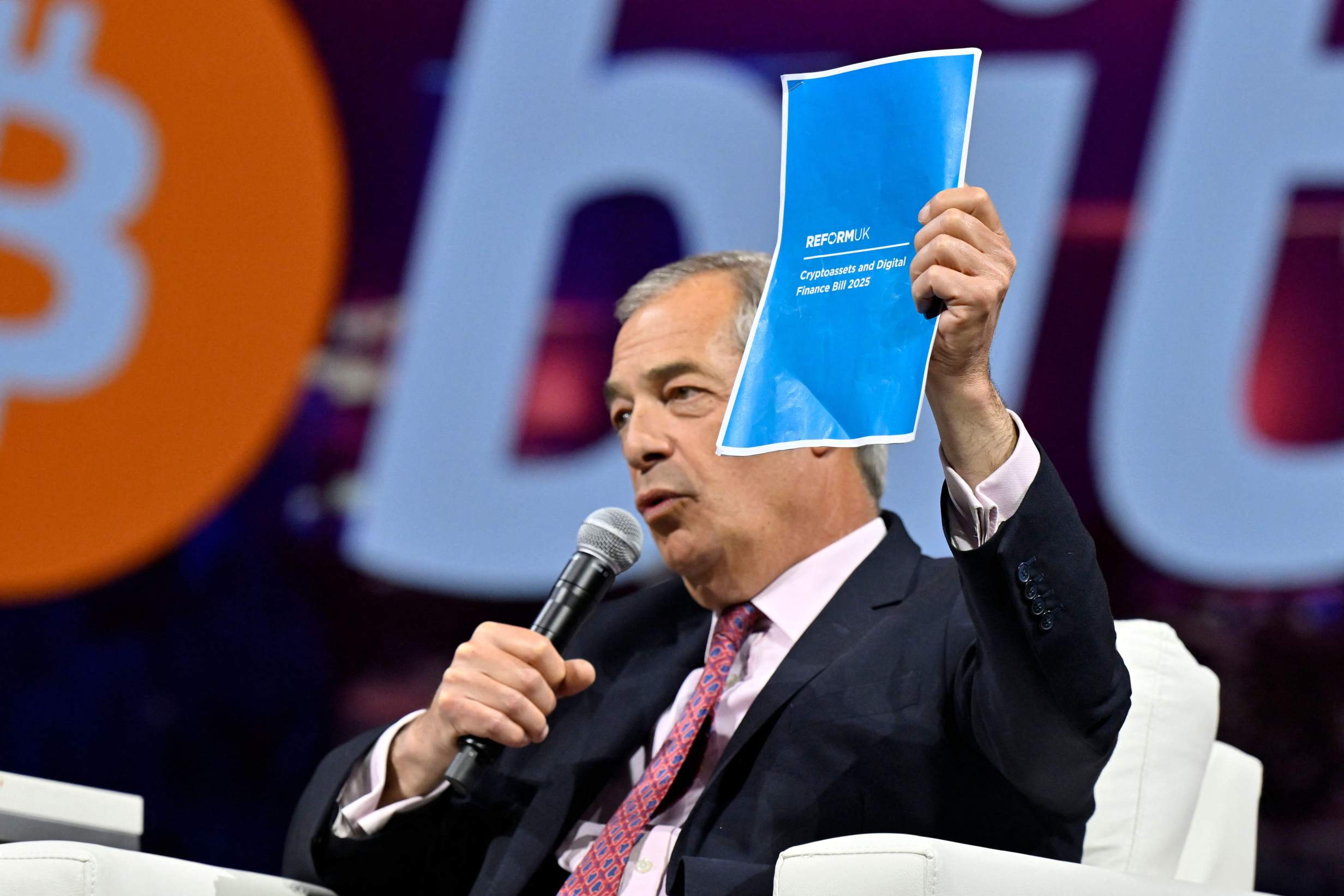
In May 2025, he told the Bitcoin 2025 conference in Las Vegas that, if he reached Number 10 Downing Street, he would cut capital gains tax on cryptoassets and establish a bitcoin reserve at the Bank of England.

In April, Farage also promoted on social media a £2 million bitcoin purchase by Stack BTC, a firm that describes itself as a “UK-listed company building a Bitcoin treasury for long-term shareholders” and in which he has previously invested £215,000. The company is led by former Conservative chancellor Kwasi Kwarteng.

Don’t miss a story

Professor Liz David-Barrett, director of the Centre for the Study of Corruption at the University of Sussex, told Byline Times: “The question is this: is Mr Farage advocating for crypto because it is in the public interest or because he is being influenced, consciously or not, by receiving large amounts from the crypto business?”

“What we want from our public officials is that they are working for the public interest and not personal interest”, she said. “MPs are not allowed to be paid advocates. That would be a breach of the MPs’ code”.

The timing of the payments, the alignment of Farage’s public campaigning with the interests of his paying clients, and the gap between his characterisation of the sector’s funding to the press and the entries in his own register of interests raise fresh questions about disclosure – questions the Parliamentary Commissioner for Standards is already examining in relation to a separate undeclared gift to the Reform UK leader from a major cryptocurrency investor.


Written by

This article was filed under
, ,