
 Subscriptions

Read our Monthly Magazine
And support our mission to provide fearless stories about and outside the media system
The Labour Government needs to do a better job of championing its landmark law to overhaul workers’ rights in order to counter Reform and the far-right, the deputy General Secretary of the Trades Union Congress has told Byline Times.
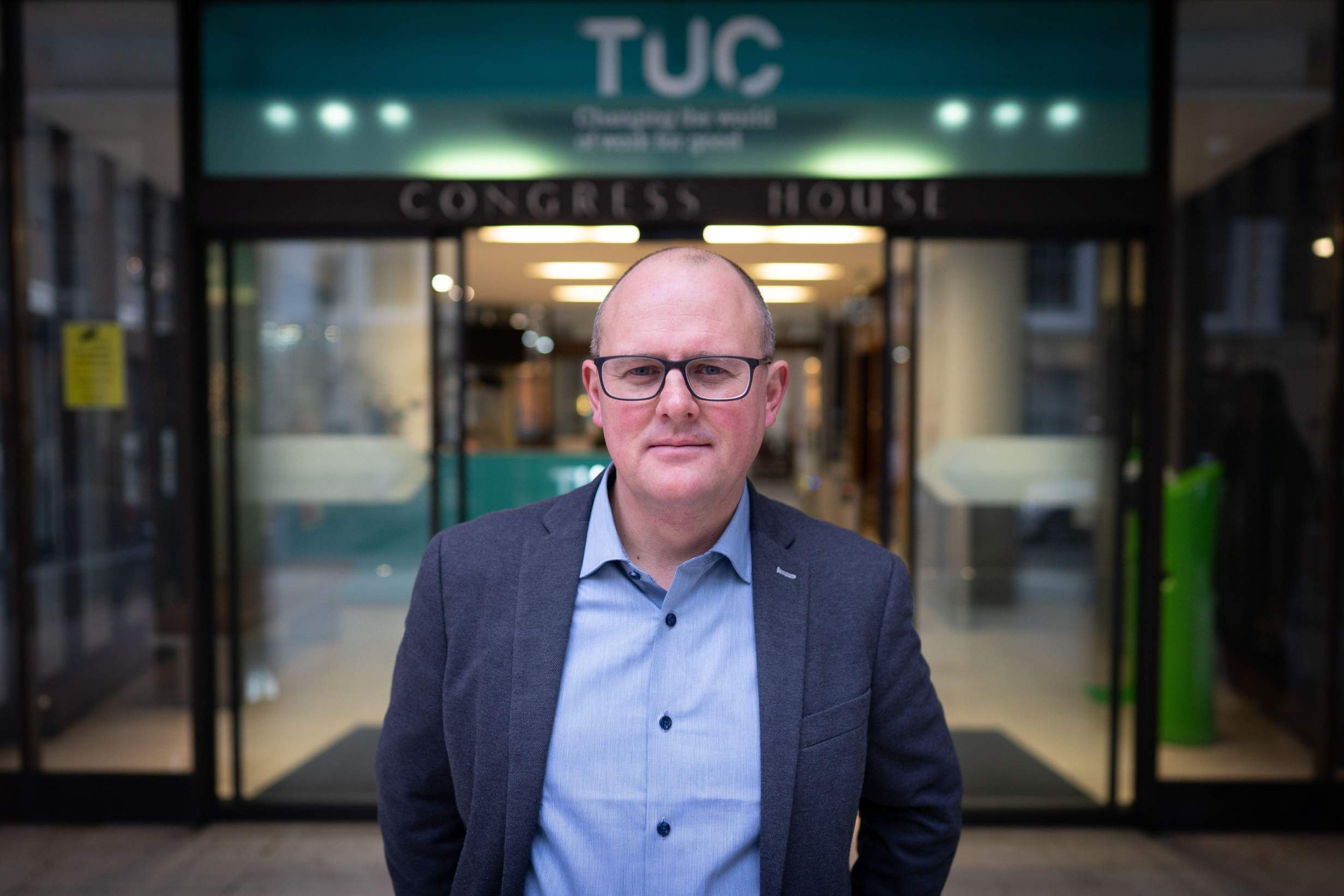
Kate Bell, the deputy leader of the TUC, spoke to this newspaper after getting back from the Global Progressive Mobilisation conference in Barcelona.
The conference brought together progressive leaders across the world, as well as campaigners and trade unionists, to “offer a necessary alternative to conservative and far-right forces.” The aim was to make “progressive solutions visible and credible.”
Bell notes that far-right nationalists are – perhaps ironically – adept at working across borders to achieve their goals – and that progressives must do the same.
In an interview with Byline Times, she discusses the union body’s plans to tackle the far-right, and why she is hopeful.
ENJOYING THIS ARTICLE? HELP US TO PRODUCE MORE
Receive the monthly Byline Times newspaper and help to support fearless, independent journalism that breaks stories, shapes the agenda and holds power to account.
We’re not funded by a billionaire oligarch or an offshore hedge-fund. We rely on our readers to fund our journalism. If you like what we do, please subscribe.
Josiah Mortimer: Let’s start with the Global Progressive Mobilisation conference. What is it?
Kate Bell: It was an effort to bring together progressive movements internationally — participants from Spain, Brazil, and across Europe — to think about how we work together at a moment when nationalist movements are organising very effectively across borders, often funded by big money. With international law facing real setbacks, it felt vital to show there is a coordinated progressive effort too.
JM: What were you there to get across?
KB: That an agenda which centres workers’ rights is massively popular. We’ve obviously got the rise of the far right in the UK, and we wanted to share that experience, but also to learn from countries delivering on a progressive agenda. When [Spanish PM] Pedro Sánchez came to our meeting, his key message — and I think it’s the right one — was that this isn’t just popular, it actually delivers results. Spain has moved quickly on renewable energy, and they’ve got strong economic performance now too.
JM: For union figures, the Employment Rights Act stands out as a flagship policy, but it doesn’t seem to have cut through to the public — there’s been no real poll bounce. Do you think the Government needs to sell it harder?
KB: I do. Every single measure in the Employment Rights Act polls off the charts in popularity. It is about a shift in power towards workers. Over the last decade, we’ve seen insecurity grow — 4 million people in insecure work — and this is something the Government should be really proud of. The job now is to keep promoting those messages, because we’re not going to hear them being championed by far-right politicians.
Don’t miss a story
JM: Is the reluctance about not wanting to look anti-business?
KB: We’ve seen aggressive pushback from business right through this process, from when it was first floated to every stage of the parliamentary process. There are concerns about the job market at the moment, but those are to do with global economic factors — Trump’s tariffs, the illegal war on Iran — and business is trying to exploit that to create anxiety. This isn’t an anti-business agenda. It’s against an agenda from businesses that try to compete by undercutting workers. I’m not in the minds of ministers, but what we’ve seen alongside this is growing employment and a fast-growing economy.
JM: How would you characterise the TUC’s relationship with the Government at the moment?
KB: There are areas where we agree and areas where we disagree. What’s important to us is the issues we’re pushing on. We’re pushing them to go further and faster on employment rights, further and faster on taxation of the wealthy and bank profits. We’ve called for further increases in capital gains tax, and for support with the energy crisis — the Government moved on that [earlier this month]. Our focus is on the issues unions and workers are bringing to us, not on giving a mark out of ten.
Countering Reform
JM: Do you see this agenda as a key plank in the battle against Reform?
KB: Absolutely. If you strip it back, you can see in Hungary [under outgoing PM Viktor Orbán], in the US, and elsewhere that the far right tries to dismantle trade union rights, because trade unions are a powerful force connecting workers across lines of difference and standing up for equality. You also have to look at who funds these parties — they are not friends of workers’ rights.
We’ve launched a campaign called Stop the Steal, about Reform’s plan to roll back the Employment Rights Act and the Equality Act, which is pretty stunning. That’s not what people want. People want a higher minimum wage, more security at work, the ban on zero-hours contracts, a voice at work. The sick pay changes are vitally important for millions of workers. We’ve achieved this by fighting hard, and there is a genuine threat it will be stripped away by Reform.
‘It’s Time for a Debate About Who Owns Our Media’ Says Leader of the UK’s Trade Union Movement
TUC General Secretary Paul Nowak warns that tech and media billionaires are threatening our democracy, as they campaign to destroy the BBC
JM: Tell me a bit more about the TUC’s anti-racism and anti-fascist work at the moment — it seems to be moving up the agenda.
KB: Trade unions have always had a responsibility to fight the far right. We’ve launched a campaign called Unity Works, which is about pushing a positive message. We understand people are concerned about economic insecurity, attacks on public services over the last decade, rising inequality, and the wealthy not paying their share of tax.
We want to put out positive messages about the change we need, and to demonstrate that we achieve change by working together — not by dividing workers from each other. Today’s working class is diverse, and it’s by working together as trade unions that we’ve won progress, and it’s by working together that we’ll win it again. It was very heartening at the conference to hear that message reflected — from Spain, from Brazil — that progressive forces are gaining in confidence.
JM: With local elections coming up and Reform expected to gain a lot of councillors, how should unions engage with Reform? Should they be talking to them at all?
KB: Every union will decid