
 Subscriptions
Read Our Monthly Magazine
And support our mission to provide fearless stories about and outside the media system
The weekend saw the largest donations to UK political parties ever made: £36 million each, from Reform-backing crypto billionaires Christopher Harborne and Ben Delo.
Both were reported as living – until very recently – overseas. Delo was based in Hong Kong and Christopher Harborne in Thailand.
This matters because the Labour Government’s current Representation of the People Bill going through Parliament places a cap of £100,000 a year on donors living overseas.
Crucially, this will be retrospective. Under the new bill, an individual is not a permissible donor if when the party receives the donation, they are an “overseas contributor” and their donations for that whole calendar year exceed £100,000. Assuming the bill passes as it is, this largely kicks in from when the changes were announced, 25 March 2026.
From my reading, under the Bill, anyone who moved back to the UK during 2026 remains capped at £100,000 until 1 January 2028. The clock starts ticking from the start of the calendar year before the donation, not from the date of return*.
Reform UK have cried foul, claiming that the policy is an attack on them and their latest donations. This appears to give the Government credit for inventing a time machine.
ENJOYING THIS ARTICLE? HELP US TO PRODUCE MORE
Receive the monthly Byline Times newspaper and help to support fearless, independent journalism that breaks stories, shapes the agenda and holds power to account.
We’re not funded by a billionaire oligarch or an offshore hedge-fund. We rely on our readers to fund our journalism. If you like what we do, please subscribe.
The retrospective element was already there in the bill, and runs back to the point of the Rycroft review into foreign interference.
The rationale is that without it, donors would have rushed money in, ahead of the legislation. Which seems to be what Reform UK are trying to do.
The 25 March is of course well before these donations were made over the weekend. That’s linear time for you.
It is quite odd then that Ben Delo and Christopher Harborne each made £36 million donations to Reform over the weekend.
Reform and the mega-donors almost certainly knew this law was coming (they would have to have been ignoring legislation that clearly affected them to have not).
Reform and in particular Robert Jenrick MP has been insisting that Harborne and Delo are living in the UK, and that the overseas donor cap supposedly won’t affect them.
In April 2026, while still apparently based in Hong Kong, Delo wrote in The Telegraph that he would move be moving back to Britain early so he could contribute more to Reform, framing Labour’s £100,000 cap on donations from Britons living abroad as a “rigged game”. If he was still living in Hong Kong in April, that is clearly after the 25 March donation cap implementation date.
And a claim form filed by Harborne in the High Court only this June lists his address as (still) being in Bangkok.
Don’t miss a story
A Narrow Route to Legality
There is a very narrow route in the bill where Harborne’s donation could be legal. From our reading, it requires three things to have happened by three dates.
- Firstly, his removal from the register as an overseas elector on or before 25 March 2026, when the cap was announced.
- Unbroken (not even for one day) UK residence from 6 July 2026 onwards.
- And registration as an ordinary UK elector by the date of the donation.
That means Harborne would have had to deregister as an overseas elector before the £100,000 was even announced, which suggests foresight that is unlikely to have existed. We know Harborne was registered to vote in February this year, as on the 19th he donated £25,000 (as a benefit in kind) to Nigel Farage for a trip to the Maldives, on a “humanitarian aid mission.”
And we know he gave a Bangkok address as recently as 9 June, from the High Court filing — so he surely cannot have returned before then. We also know that Companies House still records Harborne’s country of residence as Thailand, and has done so continuously since 2018. No change has yet been published for the two UK firms Harborne controls – despite a 14-day legal duty to notify the company regulator on a change in residency status.
So for his donation to be legal, Harborne would have had to have made that gift in kind – presumably as an overseas elector – then deregistered quickly as an overseas elector before 25 March – then moved back to the UK before the July cut-off, then quickly registered to vote in the UK. And, it seems, for the Companies House entries to be incorrect.
That’s a lot of ‘ifs’.
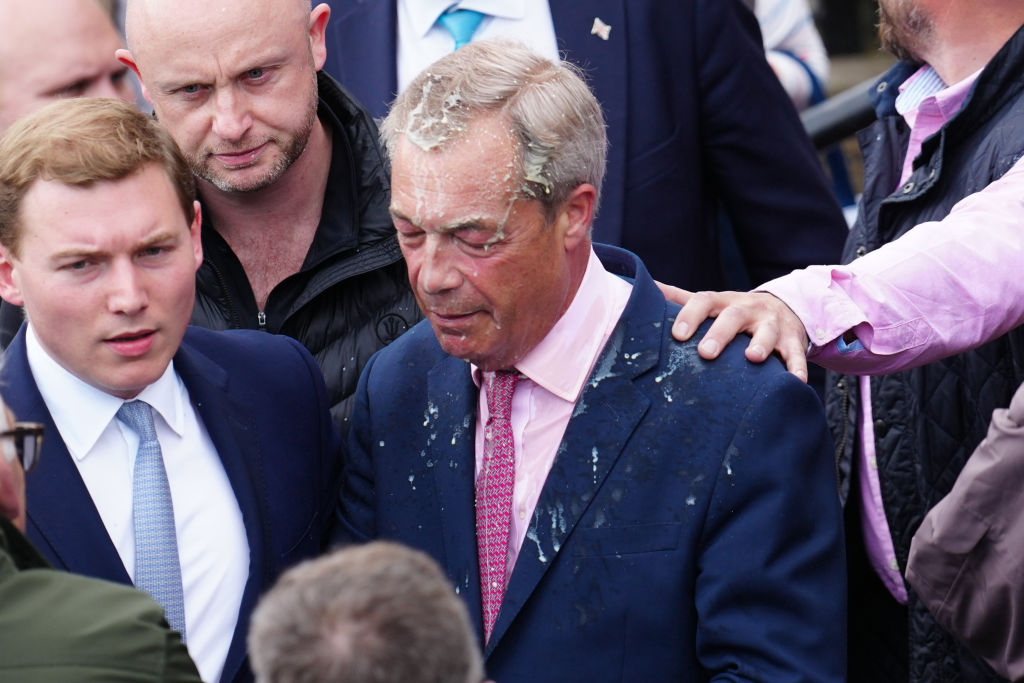
Nigel Farage Funder George Cottrell’s Inner Circle Hosted Indicted Cocaine Trafficker
Cottrell’s partner is the sister of two men indicted over an alleged operation involving 5,670 kilograms of cocaine, who are tied to one of the most powerful organised crime groups in the Balkans
On the morning broadcast round, Richard Tice couldn’t say when (or if) Christopher Harborne moved back to the UK from Thailand. You would think they’d be pretty clear about that if they were sure the donation was in line with the new elections bill.
Tice told the BBC the proposed change showed Labour was “terrified” of the party. “We believe that we’ve done everything in complete accordance with the laws,” he told BBC Breakfast. He also accused Labour of trying to “retrospectively introduce legislation in order to significantly disadvantage another political party”. Again, Labour would have needed a crystal ball for the legislation to have foreseen the weekend’s record-breaking donations.
So what is going on? My theory is that Harborne (and possibly Delo) are chancing it. They know the donations could be ruled illegal. But it creates a lot of headlines and turns the debate around the elections bill into one of Labour “targeting” Reform UK.
They know it will cause a headache for the Government if the law is passed and the Electoral Commission (or indeed police) must soon get into a fight with Reform to hand back over £70 million in donations.
It has already generated a lot of media attention, with Reform attempting to put ministers on the back foot. This morning’s Lobby briefing was dominated by questions – including from GB News – about Labour supposedly going after Farage’s funders but not the unions.
It may equally however be a dumb move on Reform’s part.
Because it is likely to push Labour closer towards introducing a domestic donations cap. If the donations are legal, simply because Delo and Harborne recently moved back to the UK, the question remains: why should crypto billionaires be able to (almost entirely) bankroll a political party?
Ordinary voters do not stand a chance at getting a fair hearing. Reform has already made extremely friendly noises about deregulating crypto. The word ‘donations’ when it comes to multi-million bungs feels misleading. They are tickets to influence.

‘A Cap on Donations Is Not Anti-Union — It Is Anti-Oligarchy’
New Electoral Commission figures show £14.2 million flowed into party coffers in three months, one day after ministers finally admitted mega-donations are a problem
What Canada Shows Us
I am reminded of a recent conversation I had with the former Chief Electoral Officer for Canada, Jean-Pierre Kingsley.
Kingsley recalled a memorable anecdote from an official visit to the UK during his time in office, when a prominent Conservative asked him three times what proof Kingsley had that money corrupts. The Canadian answered simply with Louis Armstrong’s apparent reply when asked to define jazz: “If you gotta ask, you’ll never know.”
On another trip, he shared that a senior Tory insisted that a £10,000 contribution held no sway over him. “I asked if he personally responded to all calls from constituents,” Kingsley said. No, there were too many, the MP replied. “I then asked him if he personally responded to all calls from persons who had made a contribution of £10,000 or more. He did not answer.”
Kingsley’s point is that money buys access, and access is influence. If Canada can fix this, why not the UK? After all, “our parliamentary system comes from yours”.
Without action to clean up parties’ coffers, British politics “will continue to flounder” with “as good a democracy as money can buy”.
Canada is an excellent case study showing that we can reduce the power of big money in politics.
Their parliamentary system closely mirrors the UK’s, for obvious reasons. Except in one crucial respect: they’ve totally clamped down on mega-donations.
Canada has a total ban on company donations. Only individuals who are Canadian citizens or permanent residents can make contributions, and it’s capped at $1,750 a year. They still have functioning parties and the sky hasn’t fallen in. Quite the opposite, in fact.
Canada does have a far greater share of public funding for parties to compensate for this low cap. There are generous tax credits for individual (small) donations, and rebates for parties’ campaign spending, based on a fair and transparent formula.
We would need to increase public funding in UK politics to have a cap approaching the Canadian level. But we do already have public funding – particularly Short money given to opposition parties. The question voters have never been asked is: How much should it be, to root out any whiff of corruption?
It is perhaps a price worth paying for ending the stench of cronyism in British politics once and for all.
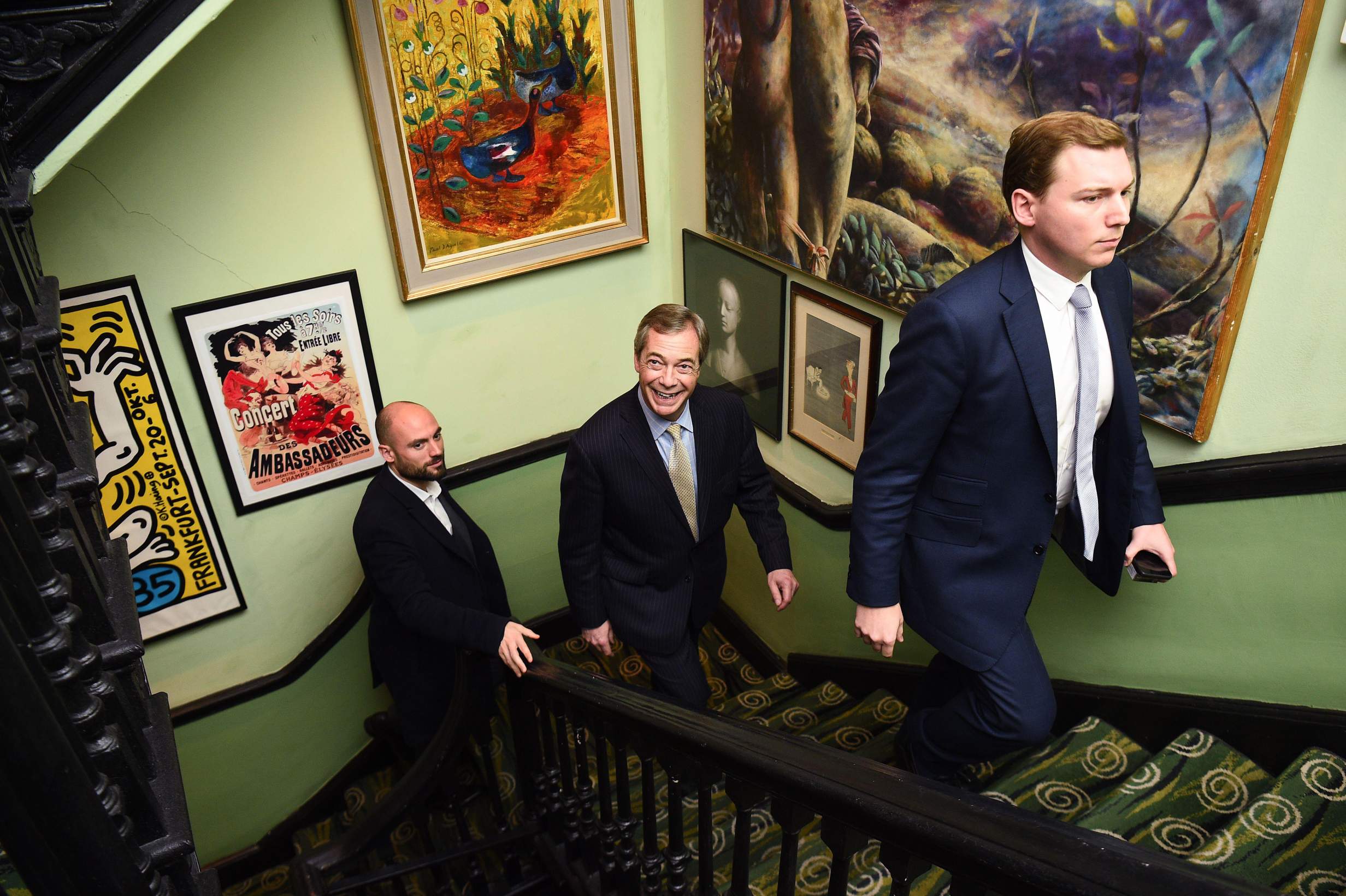
Reform UK Donations Overwhelmingly Have Overseas or Tax-Haven Ties
Analysis of the latest Electoral Commission filings shows 87% of the £5.4m in donations newly-declared by Nigel Farage’s party came from donors linked to offshore jurisdictions
The Unions Start to Shift
It seems that the trade unions, many of which have been lobbying hard against a UK donations cap in recent weeks, are starting to wake up to this fact. They stand no chance at competing with the likes of Delo and Harborne.
The GMB union, which has been lobbying against a UK donor cap, has given the Labour party just over £600,000 since last August. The GMB represents over 500,000 workers.
In over a year, they have given 0.8% of what just two individual oligarchs gave to Reform in a weekend, seemingly as loose change.
The unions are starting to shift. Today, TUC General Secretary Paul Nowak, who has opposed a UK donations cap, told the union federation’s congress: “This is a crisis for our democracy. We cannot allow our political system to be captured by corporate interests.
“Let no one tell you there is any similarity – any similarity – between care workers chipping in a few quid a year through their union and a party bought and paid for by billionaires.
“So, we need a proper conversation about how we clean up our politics that doesn’t push workers to the margins – but does stop the super-rich corrupting our politics.”
There is movement here, and it should be welcomed. After scuppering Labour MP Stella Creasy’s efforts to cap donations in the Commons last week, time is running out to introduce a UK donations limit in the House of Lords, where the bill has its second reading today. The public seems on board.
Any change will have far more credibility if, even knowing it may affect them, unions and major progressive organisations say: bring it on. This is bigger than us. It is about a principle. That democracy is too important to be sold down the river, or to be treated as a plaything of the global ultra-rich.
This is a chance that will not come round again soon.
*(At Monday’s lobby briefing, the Prime Minister’s spokesman used a different formulation, saying a returning overseas elector could not exceed £100,000 “until the point at which they had resided in the UK for a full calendar year after the date on which they returned”, which is not quite what the bill says. Either way, it’s bad news for overseas donors)
Got a story? Get in touch in confidence on josiah@bylinetimes.com
holding farage to account #reformUNCOVERED
While most the rest of the media seems to happy to give the handful of Reform MPs undue prominence, Byline Times is committed to tracking the activities of Nigel Farage’s party when actually in power




 Contribute to our #ReformUncovered crowdfunder
 Subscribers Get More from JOSIAH
 Subscribers Get More from JOSIAH
Josiah Mortimer also writes the On the Ground column, exclusive to the print edition of Byline Times.
So for more from him…
