
 Subscriptions

Read Our Monthly Magazine
And support our mission to provide fearless stories about and outside the media system
The convicted fraudster who secretly financed Nigel Farage is tied to a Montenegro circle whose members include two suspects charged with involvement in one of the Balkans’ most powerful transnational drug-trafficking organisations, Byline Times can reveal.
George Cottrell’s partner is the younger sister of two men indicted over an alleged operation involving 5,670 kilograms of cocaine – including a man US authorities believe is a senior figure in the Kavač clan.
The Kavač clan is one of the Balkans’ most powerful cocaine-trafficking organisations. It emerged when Montenegro’s Kotor organised crime ring split into two rival groups in 2014; the ensuing conflict has been linked to at least 60 murders across Europe.
Cottrell’s partner Andjela Vukadinović, is also plugged into a nexus of corporate services firms in Tivat representing Cottrell, which administer companies owned by several other Reform UK figures – including Mehrtash A’zami, the party’s former treasurer; Christopher Harborne, its largest individual donor; Gawain Towler, its former communications chief and board member; and Samee Bhatti, its former digital strategist.
That corporate overlap is significant for reasons extending beyond the organised crime connections. The Sunday Times has reported that a company owned by Reform UK’s data protection officer, Mowbray Jackson, unlawfully enabled British customers to move money into and out of tether.bet – a cryptocurrency-gambling platform linked to George Cottrell which was not licensed to serve customers in Britain.
Records seen by Byline Times now reveal a second Reform-related connection to the same platform through Mehrtash A’zami, Reform UK’s former treasurer for some six years. He was legally responsible for the party’s compliance checks on the Cottrell-linked donations now under police investigation.
ENJOYING THIS ARTICLE? HELP US TO PRODUCE MORE
Receive the monthly Byline Times newspaper and help to support fearless, independent journalism that breaks stories, shapes the agenda and holds power to account.
We’re not funded by a billionaire oligarch or an offshore hedge-fund. We rely on our readers to fund our journalism. If you like what we do, please subscribe.
Unexplained Wealth
George Cottrell has spent a decade inside Farage’s political circle and paid for staff, security and social-media filming while providing the use of his London home.
In 2024, Cottrell’s mother Fiona made three donations totalling £1.5 million into Reform UK and a fundraising company controlled by its Deputy Leader Richard Tice. The Guardian reported that George transferred $2,047,693 to her in three tranches, each arriving between 24 and 72 hours before she made one of those payments. The money passed through US cryptocurrency exchanges and some was routed through money-transfer services.
The Metropolitan Police is investigating whether the ultimate source of the donations was disguised.
The Electoral Commission says that, before accepting a donation of more than £500, a political party must take all reasonable steps to establish the donor’s true identity and confirm that the source is permissible.
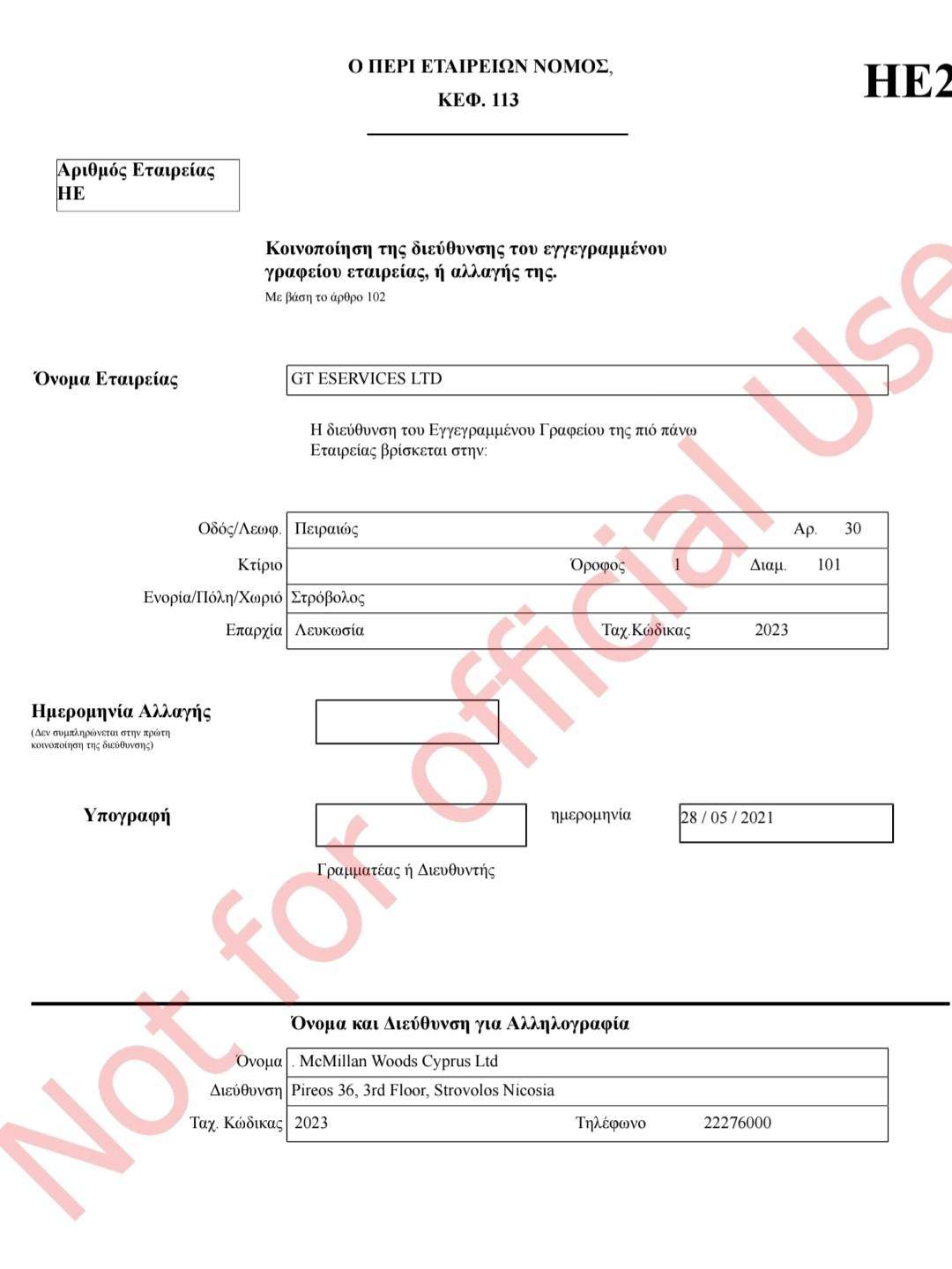
The Sunday Times reported that George Cottrell was involved with tether.bet, an offshore cryptocurrency-gambling platform, which Cottrell denied. Filings seen by Byline Times now show that a corporate services firm in Cyprus linked to Reform UK’s then treasurer Mehrtash A’zami incorporated the company handling tether.bet’s payments in 2021. That company is called GT eServices Ltd. The firm which set it up, McMillan Woods Cyprus, is a member of McMillan Woods Global, where A’zami is a partner. A’zami was Reform UK’s treasurer from 2019 to 2025.
“McMillan Woods Cyprus was engaged on a one-off basis in connection with the incorporation and registration of GT eServices Ltd in Cyprus”, the firm’s managing director Angelou Aristodimou told Byline Times. “Our involvement was limited to that corporate incorporation engagement. We did not provide ongoing accounting, audit, tax, financial, payment-processing or operational services to GT eServices in relation to its business activities. McMillan Woods Cyprus did not administer tether.bet or its payment arrangements.” He denied dealings with A’zami “concerning GT eServices or tether.bet” and said he had “no knowledge of him being involved in the work undertaken by McMillan Woods Cyprus.”
A’zami did not respond to a request for comment. Nor did McMillan Woods’ global and UK offices.
Alongside the alleged use of Jackson’s company, this establishes two Reform-related points of contact with tether.bet’s corporate and payment infrastructure. The platform shut down in late August following the scrutiny around its links to Cottrell.
Together, the findings raise questions about whether Reform figures helped provide the corporate and payment infrastructure surrounding Cottrell’s crypto-gambling activities.
Reform UK did not respond to requests for comment.
‘Posh George’, Two Passports, and a Fraudulent Identity: Convicted Fraudster and Nigel Farage Funder’s Connections to Reform UK’s Murky Financial Structures
Why did Reform UK change from being a privately-owned company to a non-profit company limited by guarantee in 2025? Nafeez Ahmed investigates a fraudulent identity used by George Cottrell – and how his former boss in the City became the party’s treasurer vetting donations
Cottrell’s Partner
Those questions give Cottrell’s Tivat associations wider public importance. His partner Andjela Vukadinović intersects directly with the corporate infrastructure surrounding Cottrell in Montenegro.
The connection has been hidden inside a glamorous public life played out around Porto Montenegro.
On 11 March 2023, after she had been with Cottrell for close to a year, Vukadinović was crowned Miss Montenegro at the Regent Porto Montenegro – the hotel complex that contains Cottrell’s penthouse. The pageant’s organiser thanked three main sponsors that evening, including Salon Privé, the casino downstairs owned by Cottrell’s landlord and longstanding associate, Hon Kong Yong, who had helped Cottrell get his first job under A’zami. Cottrell had used a fraudulent identity to get that job, along with a fake Swiss passport, adopting the same name as a former school friend. Yong had been fully aware of the false identity at the time.
Byline Times has tracked down Cottrell’s friend. He confirmed that the identity theft has been reported to the police and Swiss authorities.
The Sunday Times has also identified Yong as one of two men involved with tether.bet alongside Cottrell from an early stage.
Yong’s company Global Trust, which owns the casino, shows a rapidly expanding asset portfolio (including the flat where George Cottrell resides) funded by revenue far short of what the portfolio would require. It has accumulated €7.46 million in short-term liabilities.
But Vukadinović is connected to the same corporate services network that administers the casino, Cottrell’s flat, and which filed paperwork for his Tivat company, Private Family Office.
In July 2024, following a Guardian story citing her as telling the newspaper she had been present when Cottrell gambled and lost €20 million, Vukadinović publicly denied it and claimed she had ended her relationship with Cottrell months earlier.
Her statement was delivered to the Montenegrin newspaper Vijesti by her lawyer, the late Ratko Pantović. But Pantović had also acted as lawyer for George Cottrell and Hon Kong Yong, including during the 2023 controversy over a cryptocurrency ATM installed inside Salon Privé.
His son, Nino Pantović, owns Global Financial Solutions, part of an interlocking network of Tivat corporate services firms used by Cottrell, Yong and several Reform UK figures. The firms were mapped in a previous Byline Times report. Nino – who has flown on Cottrell’s private jet – personally filed October 2020 paperwork for Cottrell’s Private Family Office while it was being administered by another firm in the network, Artemon.
Vukadinović’s relationship with Cottrell, her legal representation and the corporate machinery surrounding Cottrell’s life in Montenegro therefore converge inside the same compact Tivat circle: her lawyer was Cottrell’s lawyer, and that lawyer’s son handled a critical filing for Cottrell’s company.
By 2025, Cottrell and Vukadinović were together again. At one point, they were taken to a police station in Tivat in April 2025 over an alleged domestic violence offence.
Cottrell’s lawyers described her as his “former partner.” However, Byline Times has established that they have continued their relationship since then into 2026.
The Brothers
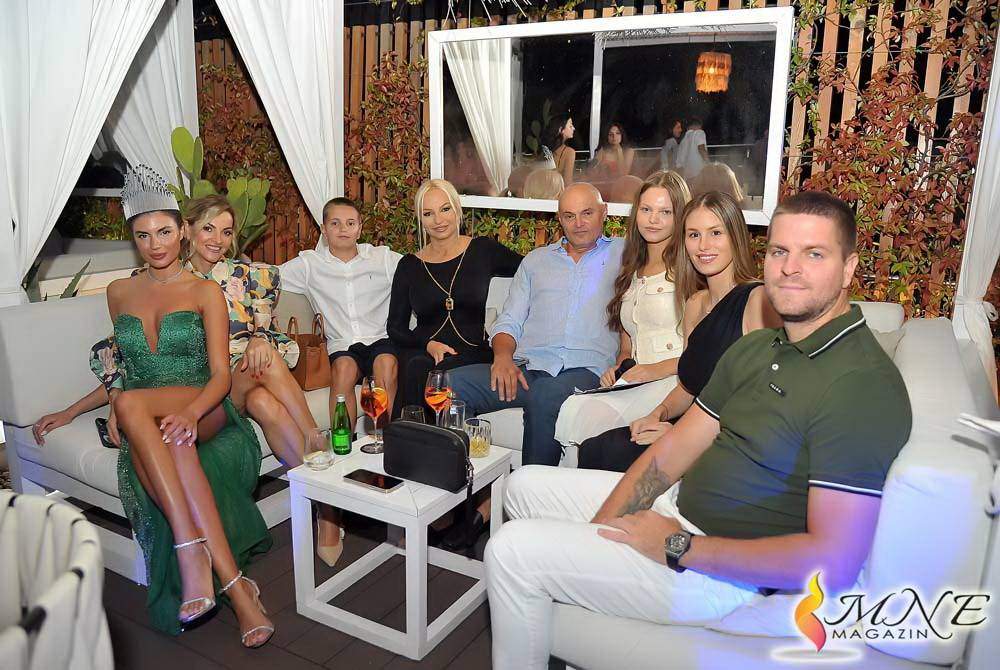
Vukadinović’s two older brothers are Marko and Miloš Radonjić, whom she has described as being like “second parents” and best friends to her, having grown up together in a family of five children.
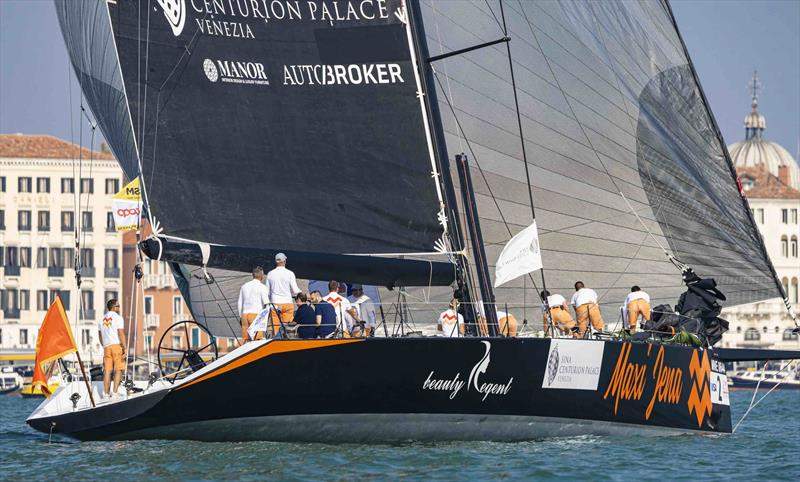
Marko and Miloš had developed a reputation for participating in regattas – sporting events featuring boat races. Marko served as tactician and Miloš as skipper for MM Sailing, a Montenegrin ocean-racing team.
Earlier this year, however, they were arrested on serious charges. On 6 April 2026, Montenegro’s Special State Prosecutor’s Office filed an indictment against 12 people over an alleged operation involving 5,670 kilograms of cocaine. Marko and Miloš were among the defendants, both charged with creating a criminal organisation linked to the notorious Kavač clan.
Two other defendants, Jovan Babović and Ivan Krsmanović, had crewed the MM Sailing team’s racing yacht, Maxi Jena, alongside the brothers in 2021 and 2022 regattas. Cottrell’s partner Vukadinović has previously publicly promoted the Maxi Jena yacht.
Marko Radonjić also attended a charity fundraiser organised by his sister at Salon Privé on 24 September 2023, placing the indicted Kavač clan drug-trafficker at the casino central to Cottrell’s Montenegro business and social life alongside several of the Farage funder’s closest associates: his landlord Hon Kong Yong, his personal assistant Katerina Djurovic and his legal advisor, the late Trump ally former Arizona Attorney General Mark Brnovich.
Miloš faces separate US charges. Italian police had arrested him outside a Trieste hotel on 6 October 2023, two days before he was due to captain Maxi Jena at the Barcolana, leaving Marko to take the helm instead. Miloš was extradited to the United States in July 2024 after a Montenegrin court confirmed his identity with fingerprint samples as well as the passport and telephone number flagged by US authorities. The case remains before a federal court in New York.
US prosecutors described Miloš as a high-ranking member of a transnational criminal organisation and accused him of organising three attempts to load more than 2,500 kilograms of cocaine onto a container ship. He denies the allegations and the US proceedings remain ongoing.
Vukadinović did not respond to a request for comment.
The Corporate Client List
Beyond the Radonjić family, Cottrell’s immediate Tivat circle connects to other figures caught up in organised crime investigations.
Byline Times revealed on 3 August that Artemon – the accountant and company administrator of Cottrell’s Private Family Office – is the registered contact for two companies belonging to indicted Kavač organised crime lord Mileta Ojdanić, and co-invested in a property development with a company owned by him.
Cottrell’s loss-making company was sustained by more than €400,000 in loans from unidentified sources, reinforcing unresolved questions about the beneficial ownership and origin of money controlled in Cottrell’s name.
Two weeks after Byline Times’ report, George Cottrell shut down the company.
Montenegrin prosecutors have named Ojdanić as one of the organisers of a wider Kavač clan network of 21 people accused of smuggling 4.3 tonnes of cocaine and laundering around €7 million.
Ojdanić is also one of four people placed under investigation in July 2026 over an alleged €1 million money laundering scheme.
A second Artemon client has also surfaced in a major organised crime case linked to the Kavač clan: the firm’s website publicly lists Modena Gradnja as a “major client”.
Nigel Farage Funder George Cottrell’s Accountant Co-Invested With Russia-Linked Indicted Cocaine Trafficker
The accountancy firm that administers George Cottrell’s Montenegro company, has invested in a property development with the alleged ringleader of the country’s largest money laundering cartel
Modena, a Serbian real estate firm, was the formal investor behind a luxury development in Budva, built using proceeds from drug-trafficking according to Montenegro’s Special State Prosecutor. A key figure linked to the development is separately accused of helping a fugitive Kavač clan leader.
Why Tivat?
Cottrell’s lawyers told Byline Times that Tivat is a small coastal town with a small community, making it unremarkable that people and companies should use the same advisors. They said that Artemon was one of Montenegro’s largest and most widely used corporate service providers, and that Cottrell had no knowledge of other connected corporate service providers, their clients or their alleged activities.
“The imputation our client has been involved in, or benefitted from, drug trafficking or organised criminal activity is categorically untrue”, they told Byline Times. “In the circumstances, the premise of your enquiry is utterly misconceived. It appears to be yet a further exercise in seeking to associate Mr Cottrell, and in turn Nigel Farage and Reform UK, with serious wrongdoing on the basis of nothing more than indirect associations that our client supposedly has with others.”
The evidence now reaches well beyond a shared accountant or the accidental encounters of a small expatriate community. Cottrell’s partner is the sister of two indicted members of the Kavač crime clan; his accountant has acted for, and co-invested with, another alleged organiser of a Kavač cocaine-trafficking network; and companies belonging to Reform UK figures sit inside the same corporate services infrastructure surrounding Cottrell and his unexplained wealth.
That infrastructure extends into cryptocurrency gambling. A company owned by a Reform employee enabled British customers to move money into and out of tether.bet, while the accounting group of Reform’s then treasurer helped incorporate tether.bet’s payment company. Hon Kong Yong – Cottrell’s landlord, casino-owning associate and the man who introduced him to that accounting group – was reportedly involved with tether.bet from an early stage.
Don’t miss a story
These intersections occur in a country long flagged by high money-laundering risk. The Council of Europe’s anti-money-laundering body, MONEYVAL, has identified drug trafficking, organised crime and misuse of companies among Montenegro’s principal threats. The Global Initiative Against Transnational Organised Crime describes the Kavač clan as both a major cocaine-trafficking organisation and a leading regional cryptocurrency player.
Nor is the role of Tether – the USDT stablecoin used by tether.bet – in moving drug money hypothetical. In 2024, US prosecutors alleged that an international network converted approximately $14.5 million in drug proceeds into Tether before moving it through shell companies. A separate US indictment alleges that a multinational cocaine organisation used a “sophisticated Tether network” of intermediary wallets to conceal the origin of its proceeds.
There is no evidence that tether.bet laundered money for the Kavač clan. But questions remain about the organised crime links around Cottrell. Whose money entered tether.bet’s betting accounts? What checks were conducted on its source? What prevented third parties from using the platform to convert or disguise criminal proceeds?
Cottrell has repeatedly refused to explain the origins of the millions he provided his mother before her donations to Reform UK. His lawyers told Byline Times: “Information relating to banking transactions is subject to strict obligations of confidence and can only have been obtained by unlawful means; that is, by someone acting in breach of obligations of confidence.”
Which still begs the question – where did the money come from?