
 Subscriptions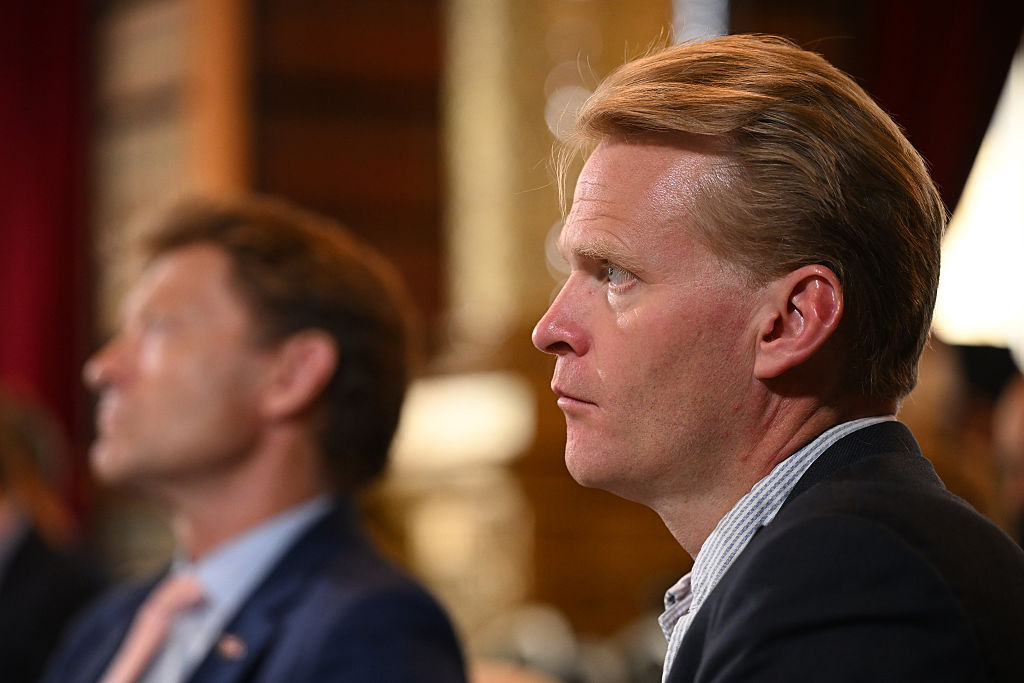

Read our Monthly Magazine
And support our mission to provide fearless stories about and outside the media system
Times Higher Education (THE), which also publishes the annual World University Rankings, has failed to provide coverage of the legal and misconduct allegations engulfing Dr James Orr, a Cambridge academic and suspended Reform UK policy chief – who is also chair of the Hungarian government-funded Roger Scruton Foundation – since THE signed a sponsorship agreement with Hungary in 2024.
Times Higher Education (THE) is best known for publishing the annual World University Rankings, which evaluate and compare higher education institutions globally.
Since 2004 THE has partnered with both Thomson Reuters and Elsevier using their data alongside reader input to rank the top 200 universities and 11 academic disciplines.
To be in the top 10 of Times Higher Education World University rankings, where the University of Oxford, University of Cambridge and Imperial College London, take positions, 1, 3 and 7 respectively is to be envied by higher education institutions around the world and is studied rigorously by ambitious parents.
That envy is no more evident and made tangible in its 2024 partnership with Hungary’s former Culture and Innovation Ministry, a new ministry that was created by Prime Minister Viktor Orbán’s administration in 2021.
The Times Higher Education-Hungary Partnership
During Orbán’s tenure his administration took control of large swathes of Hungary’s media landscape, altered judicial structures and placed political allies in key regulatory and institutional positions. Orbán himself declared that his government was building an “illiberal” state in 2014.
The partnership was announced with great fanfare. Phil Baty, Times Higher Education’s chief global affairs officer, said upon closing the deal that: “Hungary’s ambitions for its higher education and research sectors are impressive and inspiring and Times Higher Education is delighted to have been selected to partner with the ministry to provide our trusted data, global benchmarks and insights to support the sector.”
Balázs Hankó, then Hungary’s Minister of Culture and Innovation, said: “Our aim by 2030 is to have at least one university in the world’s top 100 and three among Europe’s top 100. […] Significantly, Hungary is already a prominent higher education hub in Europe, and through our HEIs’ performance in THE rankings we expect to attract even more attention.”
Times Higher Education’s website now also hosts a page called Discover Hungary.
THE introduces the advertorial as follows: “Higher education in Hungary reflects a deep tradition of academic excellence paired with a forward-looking commitment to innovation […] where scholarship, scientific progress and international collaboration can thrive”.
The Discover Hungary landing page links to numerous articles, each with its own link to the official Hungarian Government website. Each article on the page discloses that it is sponsored by the Ministry of Culture and Innovation, Government of Hungary, but not who wrote them.
In 2021, just three years before the long-term partnership was signed there had been global outrage, when it was revealed that Hungary had been attempting to place political ads in some of Europe’s most respected newspapers. Reuters reported that France’s Le Figaro, Spain’s ABC, and Denmark’s Jyllands-Posten were some of the recipients who agreed to publish the ads. Further to that in 2025 it was exposed that Hungary had spent 1.1 billion since 2015 on state advertising subsidies around the world.
Following Prime Minister Viktor’s landslide election defeat in April a House of Commons briefing notes that: “Controversial legislation adopted under Orbán brought Hungary into conflict with the EU, with the European Commission taking legal action against Hungary on several occasions. This included action in relation to judicial reforms, restrictions on civil society organisations and the refusal to implement EU migration policies.”
Writing in University World News about Hungary’s deal with THE, Ellen Hazelkorn and Philip G Altbach said “they are in business to make money for their owners. The rankings are only part of the total enterprise – and perhaps a ‘loss leader’” Since the acquisition of Times Higher Education, by the private equity group Inflexion in 2019 from TPG Capital who bought it in 2013 for £400 million THE has had more of a greater emphasis on consultancy and hosting events around the world.
Andy Burnham’s Labour Conference Speech Offers a Clear Break From the Politics of Despair
The Prime Minister’s emotional and expansive speech opened the door to a genuine shift in our politics, argues Adam Bienkov
Self-Censorship?
Before inking their agreement with Hungary, the tenor of THE’s reporting on their education sector was subjectively more hostile. A May 2023 article, ‘Scholars fear influence of Orbán-linked college (Mathias Corvinus Collegium) after expansion’, reported that the purchase was an attempt to spread the ideology of the populist leader abroad.
Since then, most reporting has focused on Hungary’s institutions climbing the ranks of Times Higher Education’s own World University Rankings. In October 2025, THE published an article highlighting that Hungarian universities had achieved their best-ever performance in the Times Higher Education World University Rankings. In February 2026, it published another article reporting that Hungarian universities had achieved their best-ever performance in Times Higher Education’s Subject Rankings. This recursive loop leaves little room for transparency, as THE appears to be marking its own homework.
In light of the UK’s Department of Education repeatedly legitimising the veracity of the Times Higher Education’s world rankings in some of their publications, Byline Times sought clarification as to whether the UK Government was aware of the Hungarian government’s partnership with Times Higher Education before or since the partnership began. There was no response at time of publication.
James Orr
Viktor Orban does have some admirers in the UK, however. Dr James Orr, the head of policy for Reform UK and an associate professor of the philosophy of religion at Cambridge University since 2019, has praised Orbán’s government, describing it at a 2025 political festival in Hungary as a “counterexample to the ideology in my own country that rejects national pride and heritage”.
Byline Times has reported on Orr since 2021, revealing his place in a network of Cambridge academics convened with the involvement of Peter Thiel’s chief of staff. Orr also serves as the UK Chairman of the Edmund Burke Foundation, which organises National Conservatism (NatCon) conferences where Orbán’s leadership has frequently been held up as a model for conservatives.
Orr is simultaneously a trustee of the Roger Scruton Legacy Foundation which has received over £512,500 (more than 90% of its funding) since 2023 from the very same Mathias Corvinus Collegium (MCC) think tank criticised by the Times Higher Education in May 2023 article. Under Viktor Orbán’s administration, MCC received an endowment valued at between €1.3 billion to €1.7 billion in assets and cash.
Byline Times’ most recent investigation published in early July revealed that Orr houses postgraduate students at his home, an arrangement that appeared to breach Cambridge’s staff and student relationship policy. It also revealed that Thiel offered Cambridge a five-figure donation through Orr around the time of his appointment, among other matters.
By September 3, the Financial Times (FT) had published its own profile of Orr, corroborating many of the findings first published by Byline Times, including the student housing and the Thiel donation. It also reported that the university’s complaints office partially upheld a former PhD student’s bullying complaint against Orr, with £5,000 in compensation and an apology from the chair of the Faculty of Divinity. The student is now reopening their case.
Later that day, Channel 4 News broadcast a stunning undercover investigation seeming to show Orr potentially breaching section 61 of the Political Parties, Elections and Referendums Act 2000. Their reporting has resulted in a criminal investigation by the police. If charged and found guilty Orr could face up to a year in prison, which is the maximum sentence for his alleged crime. Cambridge University confirmed that it is “looking into these matters”.
ENJOYING THIS ARTICLE? HELP US TO PRODUCE MORE
Receive the monthly Byline Times newspaper and help to support fearless, independent journalism that breaks stories, shapes the agenda and holds power to account.
We’re not funded by a billionaire oligarch or an offshore hedge-fund. We rely on our readers to fund our journalism. If you like what we do, please subscribe.
More Self-Censorship?
None of this has been reported on by Times Higher Education, the leading publication for higher education in the UK – which published at least six articles about Orr’s colleague at Cambridge, the late Jason Arday, Professor of the Sociology of Education.
In fact the last and only article that mentions James Orr, ‘Is it time for Universities to engage seriously with Reform UK?’ was published in September 2025.
In March 2024 Inflexion, the private equity firm that bought THE in 2019, appointed bankers from Harris Williams to find a new owner for the company. At the time they valued it between £270-360 million. There is no such transparency about the monies exchanged for Hungary’s partnership with THE. Public financial figures or specific contract amounts paid by the Hungarian government during Viktor Orbán’s term to Times Higher Education for its rankings and agreement have not been publicly disclosed.
In the UK, regulatory frameworks and industry codes overseen by organisations such as the Independent Press Standards Organisation (IPSO) and the Advertising Standards Authority (ASA) set expectations around transparency and disclosure in both digital and print publishing.
Articles on THE’s Discovery Hungary pages acknowledge sponsorship by the Hungarian government. However, in a Times Higher Education article published in October 2025 on the rise of Hungarian universities in the World University Rankings, Phil Baty, THE’s chief global affairs officer, was quoted as saying: “I can also predict further success in the forthcoming subject rankings. Watch this space.”
The article highlights improvements in the performance of Hungarian universities and their movement up the rankings, but does not disclose that Times Higher Education has a commercial partnership with the Hungarian government under which it was being paid to support the international profile of Hungary’s higher education sector, including through its own rankings.
THE did not respond to questions seeking clarity on whether the partnership is still ongoing since Orbán was ousted in April 2026, what the remaining deliverables are and if payment is dependent on Hungary’s universities moving up the rankings. Nor did THE respond to any other questions from Byline Times in the course of multiple enquiries.
Professor of Health Economics at Queen’s University Belfast, Christopher McCabe said on BlueSky: “Looking forward to Times Higher Education explaining how signing agreements with Orban aligned organisations was appropriate for an organisation that values truth and integrity so highly.”
Professor Cahir O’Kane a geneticist at the University of Cambridge, also commented: “Whatever the reasons for lack of reporting on James Orr by Times Higher Education, they seem to have definite conflicts of interest stemming from an agreement with the Orbán-era Hungarian government”.
When asked whether they intend to continue the partnership with THE including sponsorship of its Discover Hungary section, there was no response from Zoltan Tarr, Hungary’s new Ministry of Social Relations and Culture (which has replaced the Ministry of Culture and Innovation).
Balázs Hankó, the old Minister and Times Higher Education dealmaker, is now under investigation for the misuse of National Cultural Fund allocations during his tenure as Minister of Culture and Innovation. This month, prosecutors have applied to suspend his parliamentary immunity for alleged embezzlement.