
 Subscriptions

Read our Monthly Magazine
And support our mission to provide fearless stories about and outside the media system
Jason Arday, Cambridge University’s Professor of Sociology of Education, resigned in August after the institution announced it would investigate his appointment and work – following intense media scrutiny around allegations that parts of his 2015 PhD thesis had been plagiarised.
After stepping down, hundreds of articles were published on Arday – scrutinising many aspects of his life beyond academia, including his charity fundraising and his childhood mutism – across the established press in the UK and internationally. The 41-year-old was found dead at his home days later on 14 August.
One of the key articles which raised questions about the credibility of Arday’s work beyond his PhD – ‘Jason Arday: Times Analysis Finds “Impossible” Data in His Work’ by Emma Yeomans – was published by The Times on 5 August.
Cambridge University announced its investigation into Arday later that day. In a separate report on Arday’s subsequent resignation on that same day, The Times wrote that the institution’s investigation “came after The Times submitted fresh evidence to the university suggesting that large parts of his research were fabricated and contained ‘impossible’ evidence”.
The characterisation of Arday as a possible serial plagiarist was repeated by reporting in the Guardian and Washington Post. After his death, The Atlantic claimed that a “preponderance of evidence” showed that he was a “serial fabulist and unrepentant plagiarist” who had “conned” British academia.
The central claim in The Times article was built largely around a paper published by Arday in 2018 that had already been formally investigated by its publisher, MDPI. The Times reported that Arday had been “forced to retract and republish” it.
But a MDPI spokesperson told Byline Times that its investigation did not establish plagiarism or data fabrication in the paper or result in a retraction, finding that the article’s scientific conclusions were unaffected. It did identify problems with citations and the handling of interview data, which required corrections. These correctable errors did not invalidate the study.
The Times did not report this.
It explored the findings of its own “audit of five years of study” conducted by Arday. In addition to the 2018 paper, four other related studies by Arday were reported as possible evidence of fabrication and plagiarism.
It did not mention that one of these, a 2020 paper by Arday, had already undergone a similar formal investigation by another scientific publisher, Taylor & Francis, again resulting in a correction of errors with no finding of plagiarism or data fabrication.
In his career, Jason Arday authored 33 peer-reviewed papers and was one of the most cited scholars in his field.
While media organisations choosing one ‘angle’ over another to pursue in a story is not in any way uncommon – indeed, it is often the norm – the case of The Times is an important one to examine, considering the extent to which the narrative around Jason Arday being a serial plagiarist took hold in the media firestorm that followed, culminating in his death.
What is striking about The Times article is that it did not seriously examine the reasonable – or at least possible – alternative that problems in the papers it audited had resulted from the same kinds of error as the 2018 paper that had been investigated and cleared of plagiarism.
The academics The Times spoke to said that “the cumulative impact is pretty damning, even if some individual examples might have more innocent explanations in terms of sloppy work or coincidence”; that “the studies seemed to show signs of fabrication… which is far worse than plagiarism”; and “I can’t think of any alternative explanations of this… but maybe I just don’t have a good enough imagination”.
In contrast, Professor Colin Talbot, a Research Associate at Cambridge University’s Judge Business School and Professor Emeritus of Government at Manchester University, told Byline Times that the evidence offered by The Times against Arday appeared to him to be “extremely thin”, and that the problems in his papers amounted to, in his own analysis, “unintentional… correctable errors, at worst”.
Although The Times acknowledged that a Liverpool John Moores University (LJMU) misconduct panel cleared Arday of plagiarism in his PhD, it omitted the finding that citation problems in his PhD were due to “honest and reasonable error”, identifying seriously inadequate supervision as a contributing cause.
While LJMU, as the supervising body, could be viewed as an interested party ‘marking its own homework’ and thus having an eye on its own reputational considerations – it was the institution that awarded Arday with his PhD in the first place – its misconduct panel rules required three trained academic decision-makers, separation from Arday and his programme, advance conflict checks, and a separate presenting officer bearing the burden of proof.
The fact that two separate publishers, MDPI and Taylor & Francis, had also investigated and cleared Arday of plagiarism, makes it reasonable to suggest that the balance of probabilities tipped significantly in the academic’s favour.
While Byline Times cannot – and does not – rule out the possibility of plagiarism in Arday’s work, this publication raises the other possibility that no media outlet reported: that the problems reported by The Times may have been honest errors. It was a possibility considered plausible by many academic observers.
Wherever available evidence allowed for more than one explanation, The Times chose to put forward the version most damaging to Arday. Discrepancies in participant numbering and quotation attribution across the four further papers – similar to errors made in his cleared 2018 paper and therefore potentially explainable due to similar coding and cataloguing issues – became a sensationalist headline about “impossible” data.
The Peter Thiel-Linked Race Science Network that Penetrated Cambridge University and Targeted Jason Arday
The media’s coverage of the academic’s life was fuelled by the campaign of an established far-right network
The Original Critics
In 2023, retired Plymouth Marjon University academic Professor Dave Harris began questioning Jason Arday about his 2018 paper, ‘Understanding Mental Health: What Are the Issues for Black and Ethnic Minority Students at University?’, published in Social Sciences by MDPI.
Harris had identified similarities in Arday’s paper with a 2016 BMJ Open study led by Professor Anjum Memon into perceived barriers to mental health services among black and ethnic minority communities.
Harris, who has a PhD in sociology, is a critic of ‘critical race theory’, the academic field developed in the United States that examines how racial inequality can become embedded in institutions.
On his website, he annotated one of Arday’s articles recommending measures to confront racial inequality in universities with the comment: “What liberal shit.”
By this summer, Harris began promoting the work of Nathan Cofnas, who regurgitated the plagiarism allegations against Arday in a Substack post in July, framing the claims as evidence against ‘diversity, equality, and inclusion’ (DEI) policies and the appointment of black academics.
Cofnas, an advocate of race science and eugenics, describes himself as a ‘race realist’. His role at a Cambridge University college ended in 2024 after he wrote that, in a true meritocracy, black people would “disappear from almost all high-profile positions outside of sports and entertainment”.
It was Cofnas’ Substack post that triggered the far-right campaign which saw more than 200 articles written about Jason Arday in the weeks before his death. The page on Harris’ website links directly to Cofnas’ Substack post.
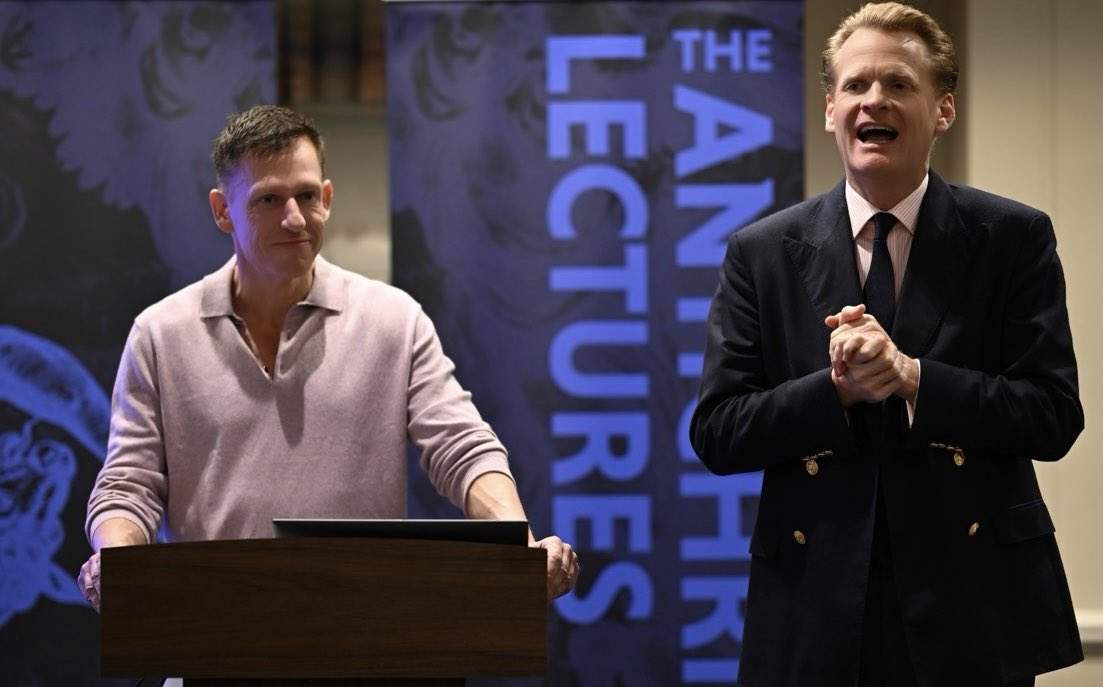
Byline Times has previously reported on the role of a far-right race science network around Cofnas, with ties to tech billionaire Peter Thiel and Cambridge University, in fuelling the media campaign against Arday.
Harris asked Professor Martyn Hammersley, an Open University social research methodologist, to review Arday’s 2018 paper.
Similarly to Harris, Hammersley is a sustained critic of anti-racist and decolonial fields in sociology. His 2024 paper questioned whether theories of knowledge and social science methods could ever be racially unjust, while a 2025 article criticised ethical arguments for “critical”, “activist”, and “engaged” social science aimed at social change.
In a 2023 email to senior Cambridge figures, cited by the website Retraction Watch – a blog and database that reports on the retraction and correction of scientific papers – Hammersley alleged “substantial plagiarism”, while acknowledging that Arday had cited relevant articles. His case was that passages, structures, and quotations were insufficiently attributed where they appeared.
The Times did not report in its article that both academics had originated the plagiarism allegations against Arday or that they held longstanding intellectual disagreements with central premises of Arday’s work on anti-racism, decolonisation, and activist research.
While The Times said that its audit of Arday’s work was a “new analysis” by an anonymous academic, it appears that much of it derived from the Retraction Watch article published on 27 July, citing Harris and Hammersley.
The Times article, which did not refer to that previous article, focused on the same papers and even referred precisely to many of the same citation and data anomalies, down to the same quotations and participant number issues described a week earlier by Retraction Watch. The website, however, is vulnerable to being gamed by anonymous sources.
According to Stephanie Lamy, a teacher at Sciences Po Toulouse, one of France’s most prestigious specialised public universities, Retraction Watch relies not only on academic databases, but also on “social media and tips from readers”.
“This creates a potential selection bias: organised or anonymous actors can repeatedly scrutinise and flag particular academics, making them appear unusually problematic when they may simply be unusually scrutinised [and] its public fields and filters do not appear to show how cases first came to its attention, making such patterns difficult to detect,” she said.
While retractions, corrections, and concerns “do not in themselves establish misconduct or poor scholarship, their accumulation can, however, create suspicion – and potentially make Retraction Watch an unwitting amplifier of an organised campaign,” Lamy told Byline Times.
There Will Be Another Jason Arday
There is no check to fetter power when unfettered power resides in the check
Similarities and Citations
Among the allegations made by these academics were questions around extensive passages in Jason Arday’s PhD that resembled the earlier doctoral work of Paula Zwozdiak-Myers, now a Reader at Brunel University, London.
Arday’s thesis – ‘An Exploration of Peer-Mentoring Among Student Teachers’ to Inform Reflective Practice within the Context of Action Research’ – repeatedly cites Zwozdiak-Myers’ work and lists her 2009 Brunel University thesis by title, as well as her subsequent book, in its references – undermining the suggestion that Arday had appropriated another scholar’s work while deliberately concealing its origin.
LJMU convened a misconduct panel to investigate the allegations in February this year.
It concluded that the PhD’s citation problems amounted to “honest and reasonable error”, and that the textual overlap between his work and that of Zwozdiak-Myers was “well within the accepted range of compliance with academic standards of the time”.
The panel also accepted that Arday had received seriously inadequate doctoral supervision.
The Times’ article did not state these details, which would have provided a more accurate context. It said only that Arday “denies plagiarism and was cleared by investigators at Liverpool John Moores University” and that his “PhD still stands”.
In terms of his 2018 paper, The Times described serious errors that went beyond attribution issues. Some passages, presented as the words of Arday’s own research participants, bore striking similarities to participant quotations in the Memon study.
One Arday participant was quoted describing clinicians as having the power “with the stroke of a pen” to have a person sectioned or sent for counselling and administer medication. An extremely similar formulation appeared in Memon attributed to a different participant. Another apparent Arday participant’s quotation about distrust of psychiatrists within West Indian communities also closely resembled Memon’s wording.
Yet, Arday’s 2018 paper cited Memon throughout, and stated clearly that its two broad themes were adapted from Memon and colleagues. The Memon study was also fully identified in his references. Neither of these would be expected had the intent been deliberate plagiarism.
What The Times failed to explore is the possibility that plagiarism or data fabrication were not the only reasonable explanations of what it had identified in Jason Arday’s work. This raises questions about the rigour of the journalism and reporting ethics employed by The Times.
A Correction, Not a Retraction
The 2018 Arday paper at the centre of The Times story had already been formally investigated by MDPI, and the errors identified were corrected, with no finding of plagiarism or data fabrication.
However, The Times reported that the publisher had been “forced to retract and republish” the paper “with corrections”. It had not. The Times conflated two fundamentally different things: ‘retraction’ and ‘correction’.
Misrepresentations by The Times, through error or otherwise, were stated on two other occasions in the article: once describing the 2018 paper’s methodology sentences as “corrected by one journal, due to plagiarism from Memon”; and describing their reappearance in four later papers as happening “despite him retracting them once”.
As with many scientific publishers, MDPI’s policy is to retract papers the findings of which are “unreliable”, where there is “detection of misrepresentation or fraud”, “extensive overlap with previously published content”, “unauthorised use of data and materials”, “copyright infringement”, and “unethical research” among other issues.
Alternatively, if “errors can be rectified without impacting the results or conclusion, a correction is sufficient to address the error”, according to Dr Ioana Craciun, MDPI’s scientific content lead.
MDPI’s record shows that Arday’s 2018 paper was never retracted, but “corrected” on 6 December 2023 and remained in the scholarly record. MDPI’s substantial correction found that the original article had acknowledged adaptation from Memon but had “inadvertently omitted overlap”.
Citations were inserted throughout the abstract, introduction, methods, results, discussion, and conclusions. Of 31 participant quotations in the original paper, 12 were trimmed or reworded and six were removed entirely. The methodology was also amended, in line with MDPI’s own published guidance on the difference between a correction and a retraction.
Arday’s paper had also repeated Memon’s description of using NVivo and independent coding – claims that were removed when it was corrected, and replaced with a simpler description of recording, transcription, review, and reflection. This did not establish that Arday had invented his interviews or data.
One reasonable explanation was that, while using Memon’s study as a template, he had imported its methodological language and thereby inaccurately described procedures he had not followed.
This would represent a serious failure of research reporting, but not necessarily deliberate data fabrication. Distinguishing between those possibilities would require the original transcripts, coding files, and records.
Asked to clarify the outcome of the review of the 2018 paper, an MDPI spokesperson said: “I can confirm that the article was not retracted; it was corrected.”
The spokesperson added that the purpose of the publisher’s review was “to verify the accuracy, integrity, and validity of the published article to ensure the accuracy of the scientific record. In line with the Committee on Publication Ethics guidance, MDPI’s focus was on evaluating the publication itself, and determining the appropriate editorial action needed to maintain the integrity of the scholarly record”.
The vulnerability of qualitative research to errors due to data-handling is well-established. It involves extensive interviews with groups of participants. That material is transcribed, and then its contents analysed and extracted into new documents or spreadsheets by which key points can be coded and categorised.
In a SAGE methods guide, UCL researcher Jon Swain describes how he “cut and pasted” interview extracts into a separate Word document and stresses that it is “essential to give each interview a number for identification purposes”. Errors can arise when interview material from multiple participants is mishandled when copying, coding, and processing across documents and spreadsheets. Inadequate record-keeping can lead to misattribution or what looks like plagiarism.
UK Research and Innovation, the UK’s national research funding agency, states that qualitative research can fall short for reasons “many of which do not reflect the intent of researchers”. It classifies “mislabelling” as an honest error and “inadequate documentation or record-keeping” as poor research practice that may occur inadvertently – separately from intentional fabrication, falsification, and plagiarism.
Oxford University guidance on plagiarism states that “poor working practices can lead to unintentional plagiarism”, with copied wording becoming so familiar that a researcher forgets its origin or becomes “unable to recall” its provenance, while insufficiently careful cutting and pasting can cause quotation marks and citations present in one draft to disappear from the next.
This can lead to confused attribution, recycled wording, and mislabelled material, producing the kind of errors seen in Jason Arday’s 2018 paper and beyond.
Such errors are not acceptable in academic research and reasonably raise questions around the credentials of those occupying leading academic positions. But they are not necessarily the same as fraud, fabrication, or plagiarism.
The US Far-Right War on British Institutions ##LIGHTUPTHEDARK
From the National Trust to the National Theatre, from the BBC to the Royal National Lifeboat Institution, Britain’s landmark institutions are locked in the sights of an extreme ideological network. With your support, Byline Times is launching a dedicated #LightUpTheDark investigative series into the people, money and institutions seeking to transform British public life.
 Contribute to our #LightUpTheDark crowdfunder
A Pattern Does Not Establish Its Cause
In addition to the 2018 paper, The Times focused on similar irregularities across four other qualitative studies by Jason Arday.
Participant numbers did not reconcile, and individuals were described inconsistently. The same or near-identical wording appeared in different papers as the testimony of apparently different participants, while material resembling quotations originally published by Memon and colleagues was reused or misattributed inconsistently. Methodological language from the same body of work was also repeated across several papers.
Again, these are clear failures of research practice. But the pattern does not in itself establish its cause.
Poor control of transcripts, coding tables, source material, and successive drafts could result in quotations being mistakenly copied, relabelled, or detached from their origins. Deliberate fabrication is another possibility.
In an interview with The Times as the story was beginning to dominate UK headlines, Arday said: “It’s more likely that I’ve made a mistake; there’s a clerical error. It’s not that I’ve fabricated.” His early writing had “relied heavily on mimicry”, he added, which he connected to how he learned to process and structure information as an autistic researcher.
The concentration of these errors could be consistent with that explanation – in the least, it cannot be definitively dismissed.
Arday’s published output spans other research methods and multi-author projects. The five papers singled out by The Times are clustered around a single methodological strand centred on qualitative interview and focus group research linked to the Memon paper that was so influential on that body of work.
The Times noted that the same problematic sentences found in the 2018 paper formed “the basis for his methodology section in four further papers”. That these may have occurred due to citation and data-handling errors around the same corpus of material related to Memon is a reasonable possibility The Times did not consider.
One of these papers, published in 2020 – co-authored by Arday with two other academics – had also already been formally investigated and corrected in 2024 by its publisher, Taylor & Francis, as follows: “A correction has been made to clarify the relationship between the study presented in this article and a prior study (Arday 2018), that utilised similar methodologies which in turn were based on Memon et al’s (2016) study.”
The publisher’s policy similarly distinguishes between ‘corrections’ and ‘retractions’, clarifying that while a retraction would result from fabricated data, plagiarism, or other misconduct, a correction addresses an “error or omission” where “the scholarly integrity or reliability of the original findings remain intact”.
No finding of plagiarism or data fabrication was issued in relation to the 2020 paper. But The Times suggested it as evidence of both, without reporting it had already been cleared in a previous formal investigation.
Following The Times’ reporting, this paper is now being re-investigated.
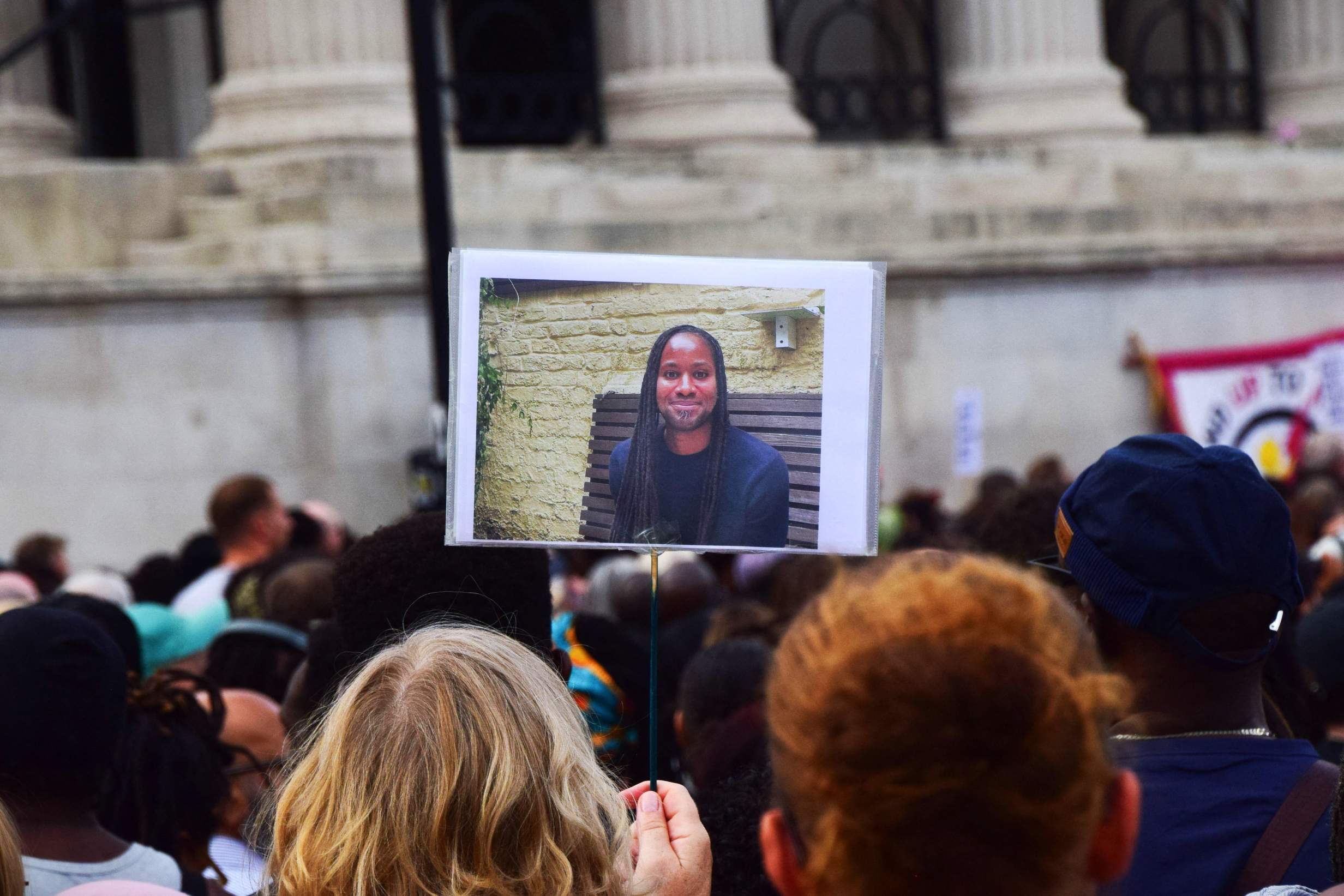
Jason Arday: We Must Rage – Rage Against the Journalism of Cruelty
The death of the academic shows the casual conversion of humiliation into entertainment by a media running on monetised hate and cruelty
‘The Press Effectively Answered Them in Advance’
To support its angle on Jason Arday’s work, The Times used quotations in its article from academics who also hold views that were not disclosed to readers. It is more accurate to state that there is academic disagreement about the serial plagiarism claims against Arday.
Several scholars have publicly stated that they appear to be evidentially weak, including Professor Jason Stanley of the University of Toronto; former Associate Professor of Philosophy at Felician University Irfan Khawaja; and Kehinde Andrews, former Professor of Black Studies at Birmingham City University.
In contrast to The Times, Byline Times spoke to three senior academics who all independently concluded that Arday’s errors were in citation and data-handling relating to a few papers using qualitative research methods.
Professor Colin Talbot, a Research Associate at Cambridge University’s Judge Business School and Emeritus Professor of Government at Manchester University, said: “The central issue seems to be the whole affair was successfully framed as a ‘plagiarism row’ when the evidence for plagiarism was extremely thin and only related to one strand of Professor Arday’s work.
“It is also clear most of the so-called plagiarism – which is a deliberate act – is actually unintentional mistakes, and not huge ones at that. Nor are they consistent or widespread across Arday’s body of work. So framing this as about plagiarism is, in my opinion, not sustainable. It’s about correctable errors, at worst.
“Most of the other main accusations were about his non-academic CV and directed at undermining his credibility. I’ve supervised and examined dozens of PhDs and refereed hundreds of articles and books and I have even had my own work plagiarised… There is nothing about this sad story that says to me it was a ‘plagiarism row’. It was certainly something, but not that.”
Eric Goodyer, formerly Professor at De Montfort University with decades of experience in technology data, told Byline Times that Arday had “an excellent mid-career academic record”, pointing to his papers listed on Scopus, the international abstract and citation database. “He has almost 1,200 citations, demonstrating how much his research is valued by his colleagues.”
“Contrary to media speculation, three claims of plagiarism and data fabrication have been formally investigated, one relates to his PhD and the others to papers published in 2018 and 2020,” Goodyer told Byline Times. “All claims have been rejected; not least because the sources he used were included in his list of references and cited throughout the texts.
“There have been no formal allegations of plagiarism made about his numerous other published works or against any of his many co-authors. There are issues with the management of some of his data, which may be due to his disability… Arday has 33 peer-reviewed papers, the majority co-authored. Why is it that he alone was singled out for manufactured accusations of plagiarism but none of his co-authors?”
A senior sociology professor working in race and criminal justice at a major British university, who only spoke on condition of anonymity, said: “The central point is quite straightforward: a formal process and two publisher reviews looked at the allegations against him, and none found plagiarism or fabrication. The questions raised about the later papers are serious and legitimate. But they are also the kind of questions that only a proper investigation, with access to transcripts and coding records, can answer.
“The press effectively answered them in advance. That is the real failure here, and it does not require anyone simply to take the work on trust.”
A number of academics Byline Times spoke to, especially those of colour, expressed fears of being subjected to unwarranted scrutiny by mainstream media organisations and therefore do not wish to speak out.
The Times, its publisher News UK, and Emma Yeomans did not respond to requests for comment.