
 Subscriptions
Read our Monthly Magazine
And support our mission to provide fearless stories about and outside the media system
The coverage of Nigel Farage and Reform UK by BBC News in recent years has raised some disturbing concerns about the corporation’s commitment to impartiality and its editorial standards.
The amount of airtime given to Reform (which has eight MPs in Parliament) and its leader is remarkable – on daily politics shows, news programmes, and, of course, Question Time, the party has been platformed to an extent that other parties such as the Liberal Democrats (71 MPs) and the Greens (five MPs), can only dream of.
The relationship between this and the role of influential figures within the broadcaster such as Sir Robbie Gibb – a non-executive director on the BBC Board, and a former Director of Communications for Conservative Prime Minister Theresa May – has been explored extensively in these pages.
Gibb – described by one former colleague as “an ideologically engaged operator”, and referred to by former BBC presenter Emily Maitlis as an “active agent of the Conservative Party” – has a key role in overseeing impartiality.
But there are others, closer to daily editorial decisions, who are also playing a key role in not sufficiently scrutinising hard-right narratives and potential wrongdoing – and I am sad to say that Chris Mason, BBC News’ Political Editor, is part of this problem.
Fifteen years back, I shared a desk with Mason at BBC Westminster’s Millbank office. I found him enthusiastic, engaging, and likeable. This was pre-Brexit, when the fissures in Britain’s politics and society that the vote to leave the EU would create and widen, were still to come.
When Mason replaced Laura Kuenssberg as Political Editor, I had high hopes for him. Those have been dashed.
One recent, striking, example of why this is was his interview with Nigel Farage ahead of the annual Reform Conference in Birmingham in September.
It was conducted and broadcast before the undercover investigation reported by Channel 4 News was aired, showing Reform’s Dan Dukes and James Orr, in discussions for polling favourable to Reform – later published in the Telegraph and The Times – funded by an American donor, contrary to UK electoral law.
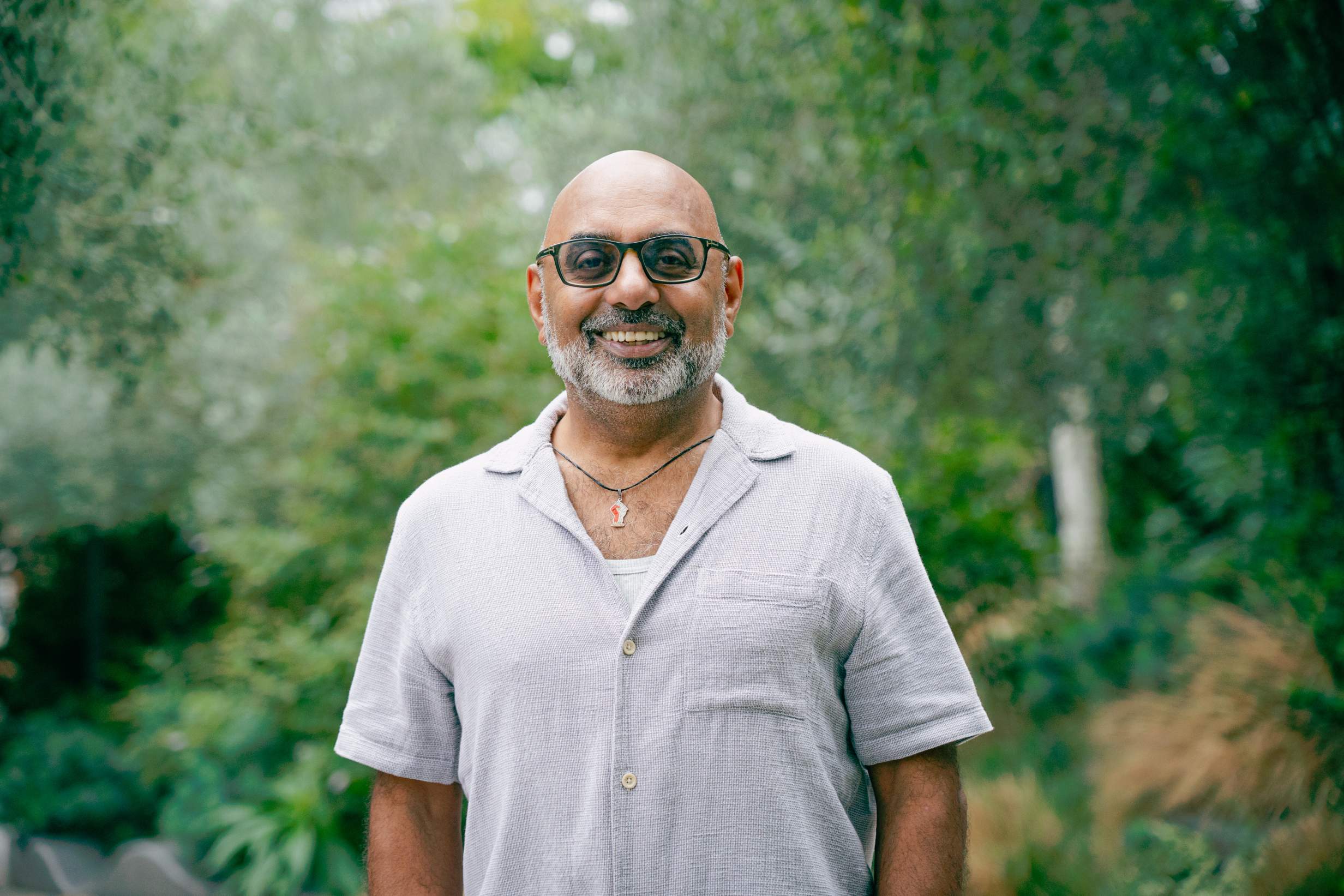
‘A Polar Bear on an Iceberg? Here’s This Picture of Catastrophe and You’ve Totally Depoliticised It’
The climate crisis can’t be solved without a commitment to fighting injustice at the same time – Asad Rehman, chief executive of Friends of the Earth, sat down with Byline Times’ Editor in Chief to explain why
The interview nevertheless took place in a wider context in which Farage’s relationships with donors had already come under extensive scrutiny.
Particularly an undeclared £5 million gift in 2024 to Farage from a British-born but Thailand-based crypto-billionaire, Christopher Harborne, which is being investigated by the Parliamentary Standards Commissioner. And the at least £500,000 worth of donations made to Reform by the mother of the convicted fraudster George Cottrell, which is being investigated by the Metropolitan Police.
In his interview with Chris Mason, Farage claimed that the £5 million had been given to him to pay for security – but he has not always maintained that line. He has also described it as “a personal unconditional gift”, and said “frankly, it was given as a reward for campaigning for Brexit for 27 years”. But Farage’s statement was not challenged.
Part of what I found so remarkable was Mason’s body language: he merely nodded along to Farage’s narrative.
“The thing is, we live in a complainant society,” Farage said. Mason lifted his head and nodded. “If you complain about me,” Farage continued, “automatically that triggers an investigation.” Mason nodded right back.
Nodding isn’t quite a universal signal of agreement, and it is extremely widespread, but it has an accepted meaning in the UK as something many journalists use during interviews – especially with nervous, shy, or traumatised interviewees – to create a warm rapport and a trusting atmosphere. It is not usually used while interviewing prominent politicians.
Farage, in full flow, continued: “The old two-party system, which has dominated, frankly, since the end of the First World War,” (Mason nodded) “feels for the first time that it faces an existential threat.” (Mason nodded).
I was not alone in my dismay. Annette Dittert, the London Correspondent of the German public broadcaster ARD observed: “This. Is. Not. Journalism. It’s letting Farage shine. I genuinely do not understand why the BBC does not seem to be able to competently challenge Reform and Farage.”
It was a poor interview amid poor coverage.
BBC News was so far behind the Channel 4 News investigation that it made no serious attempt at catching up, though it did take the time to dwell on the fact that the undercover reporters were from Verbatim, an independent group of investigative journalists founded by reporters from the Centre for Climate Reporting – amplifying Farage’s claim of a ‘smear’.
BBC presenters called leading Reform figures by their first name; reported a delay to Farage’s opening conference speech as owing to police concerns, which West Midlands Police later said they had not expressed (fitting into Farage’s security distraction strategy); and web articles headlining Farage’s “promise” to cut public spending.
This uncritical acceptance of hard-right narratives is a recent phenomenon. BBC News has not always been like this.
Yes, it has always been part of the establishment, but one of the things that I found so appealing when I joined the corporation as a trainee in 1989, was the foundational assumption that our job was to hold those who were in power, or who aspired to it, to account.
On the first day of our training, we were played recordings of Richard Dimbleby’s 1945 reports from the Bergen-Belsen concentration camp. He had been the first reporter to see it. There was no pussy-footing around, no attempt at ‘balance’, and no platform for Nazis. He called it out. The cruelty and the inhumanity. Britain was anti-fascist and the BBC was too.
My father joined the army at 17 because he wanted to fight fascism. He served in North Africa, where he was badly wounded and taken prisoner, and was scarred for life. But I don’t think he ever doubted that he had done the right thing. He and his generation stood up for what was right.
My generation, on the other hand – and with some honourable exceptions – my profession, smiles at hard-right figures when they walk into a TV studio and are given a disproportionate amount of air time to make their fact-free assertions while nodding along to their scapegoating of the weak, the disadvantaged, the foreign, and the displaced; and failing to rigorously scrutinise how their actions, on donations and conduct, is damaging to the idea of democratic politics overall.
I worked for the BBC for 24 years, risking my life by leading its global news-gathering teams in some of the world’s most challenging environments, including war zones, because I thought it stood for something. I thought it was a bulwark against extremism. I thought it was a force for good.
I was wrong. The BBC that I and so many of my colleagues loved has become an enabler.