
 Subscriptions
Read Our Monthly Magazine
And support our mission to provide fearless stories about and outside the media system
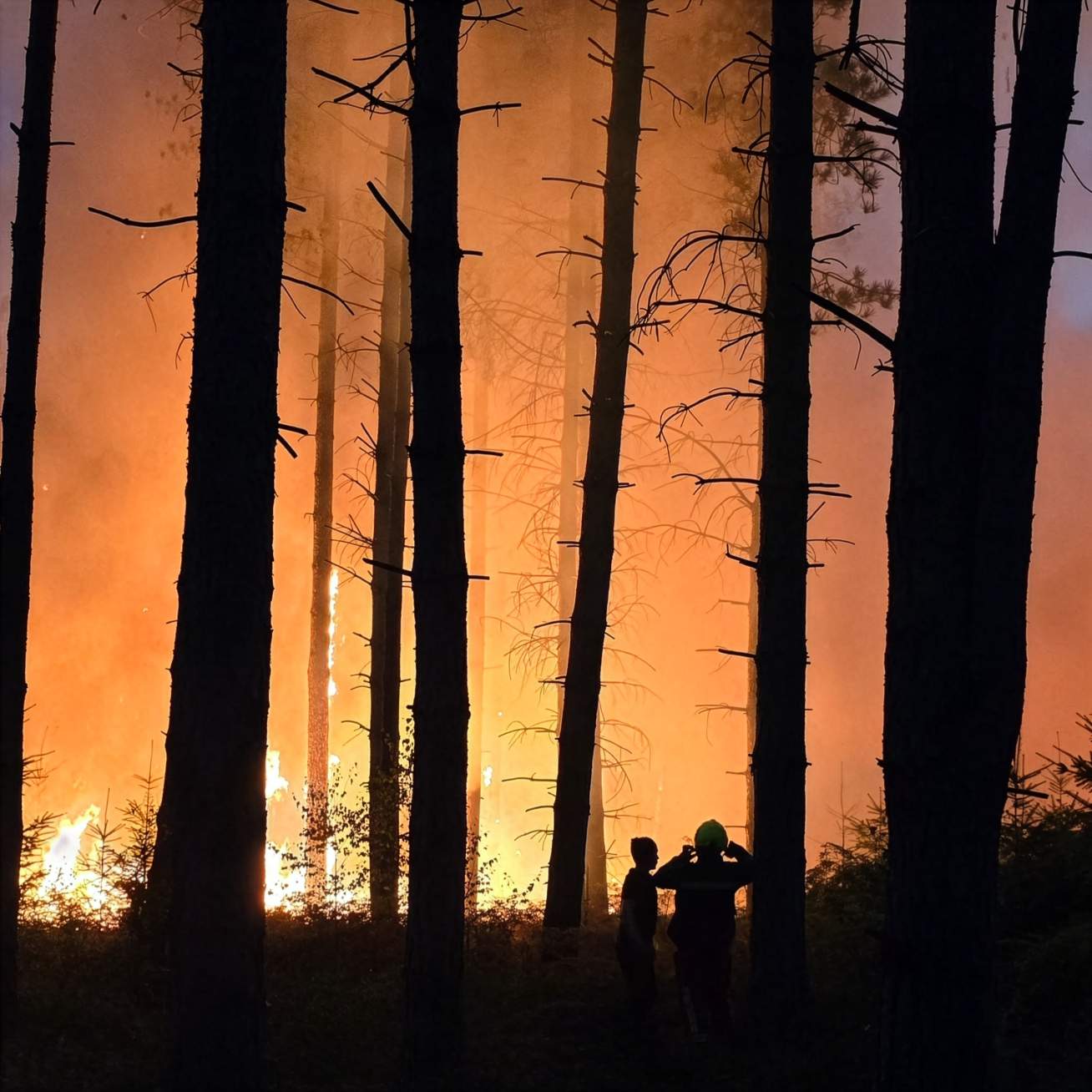
HM: Asad, last August you became the first person of colour to lead Friends of the Earth, as its chief executive, in its more than 50-year history. You’ve previously had roles at Amnesty International UK and War on Want. Fighting injustice is clearly threaded through your journey. How did your background and upbringing shape you as a political activist?
AR: I was born in Pakistan and my parents came to the UK as economic migrants. They ended up in the north-west of England, where a lot of people from our part of Pakistan, in the Punjab, were originally brought over to work in the factories and mills. We lived in Burnley, which was one of the places that was experiencing rapid deindustrialisation. It was a very white, working-class area, and I was one of the first non-white kids in my primary school. People often ask: how did you get political? And I say: I had no choice, because of the context and reality of racist violence I grew up in.
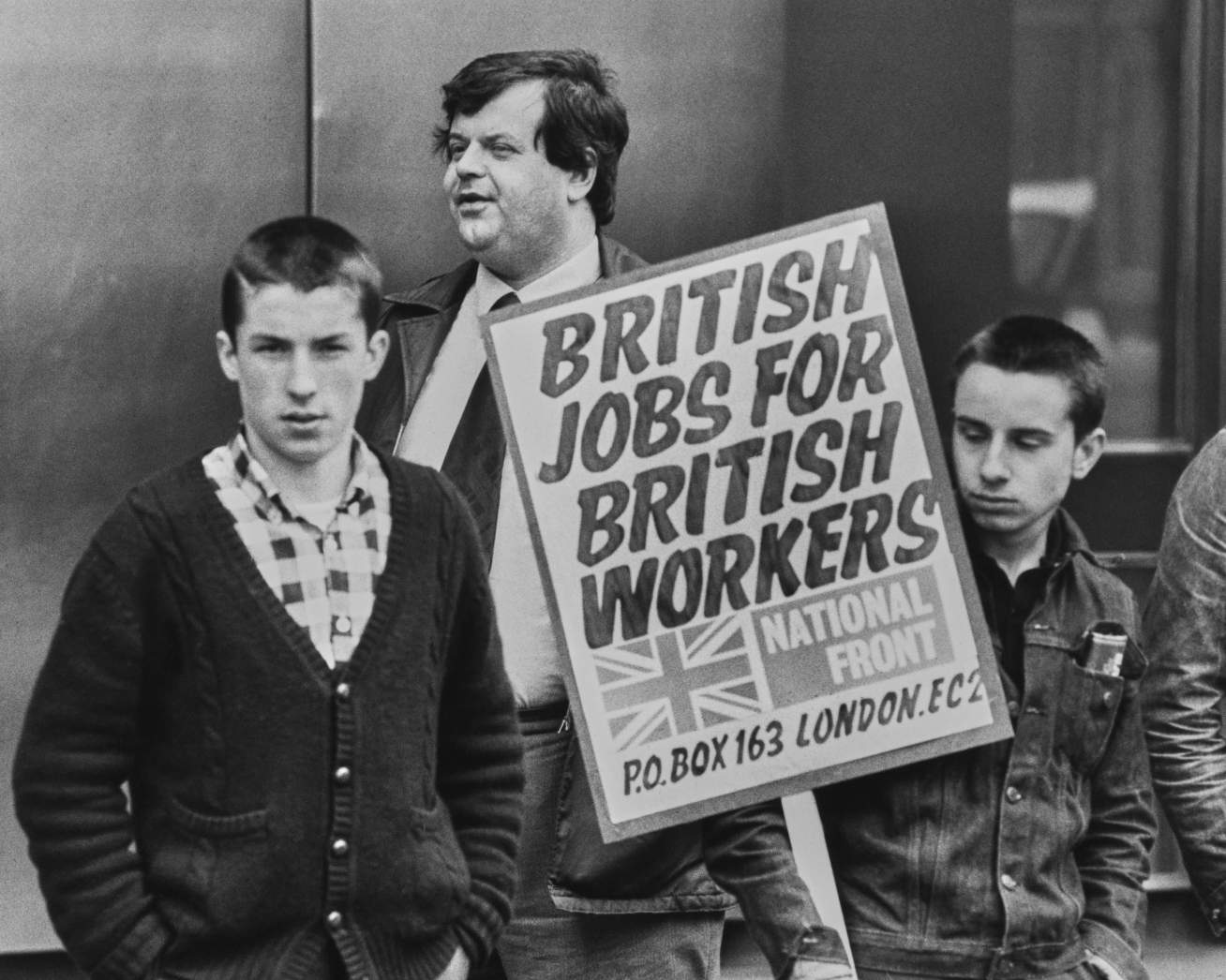
The National Front used to sell newspapers in my secondary school. Every day, there would be some form of racist abuse, some physical attack. People would pour beer on the Asian women. They would use dogs to terrorise them when their husbands went to work. The house we lived in was firebombed and constantly scrawled with swastikas. And the police weren’t doing anything. In school, it was basically paki-bashing. The break-time bell rang and all the non-white kids would pretty much barricade themselves into one classroom because, if you were down the corridors or in the playground, you would be attacked. Teachers were too scared to do anything.
Racists forced me to learn more about black history because of the stuff they’d say to us. You’d get beaten up, but it would spur me on. What was going on on television screens would play out on the streets and at school. When Roots first aired [in 1977], they’d say to us: ‘say your name is Kunta Kinte’. But then, when in the show [the character’s grandson is] given Chicken George as his slave name, the kids would say to us: ‘say your name is Chicken George’ – and we’d say, ‘no, it’s Kunte Kinte’. Apart from that there was Mind Your Language, Love Thy Neighbour, It Ain’t Half Hot Mum – popular, casual racism was on TV screens.
At 14 or 15, I organised a school strike against racist violence – we would go to school but not go in. It was a necessity just to organise. We moved to another area which had slightly more non-white people and an Asian community, because it was safer, but that area was close to the Burnley football ground – so on Saturdays, you’d get football fans come through doing a bit of paki-bashing, smashing a few windows. Every morning, all the kids going to school would get together – we’d put the younger kids in the middle, and then we’d head off – if you went by yourself, or one or two, you’d definitely be attacked. So it was organising without thinking it was organising – just for safety.
Being seven, eight, nine was different, because you felt totally powerless. An example of how random the violence could be… when I was in primary school, I was stood at the bus stop and somebody walked by with a cricket bat and smashed me right in the face. As a kid, you’re thinking, ‘I’m not going to go home because my parents will be more worried, I’ll go to school’. We didn’t want to tell our parents too much of what was happening because they then felt even more powerless. But when you got to 12 and 13, and a few more families moved in and they had kids who were 15 or 16, we suddenly became a bit more able to stand up for ourselves.
I joined the Labour Party Young Socialists, a youth wing controlled at that time by the Trotskyist Militants, and they were a whole bunch of lefties who were like ‘ooh, a non-white person and lefty who wants to talk about these things’. So I found an outlet. Then one day, an Indian nurse, who had come to my house to see my mum, showed me a [leaflet for the] Asian Youth Movement around the Bradford 12 [a group of young Asian and black men, many of whom were members of the United Black Youth League, who were charged in 1981 with terrorism offences after making petrol bombs to defend against racist attacks. In 1982, they were acquitted by an all-white jury on the grounds of lawful self-defence]. So I set up an Asian Youth Movement in Burnley.
That period was super-political. You’d turn on the TV and there was Boys from the Blackstuff, it was Thatcher, three million unemployed, riots on the streets in Brixton and Handsworth, Israel was bombing Beirut, Soweto… It was hard not to be political and draw these threads.
How do you think things have changed? The moment we’re in now feels very alienating for a lot of people. While people of colour might not face the same level of racist attacks in the streets or discrimination that is as overt, at the same time, the story of progress when it comes to racial justice in Britain is complicated…
When I was growing up and you’d talk to people in the Indian Workers’ Association or those kinds of organisations – people who came to the UK in the 1950s and 60s – they told a really horrific story of what it was like, and it was very different. My parents would constantly say ‘it doesn’t matter how long, but one day, they’ll kick us out of their country – like we kicked them out of our country. The only thing they can’t take from you is your education’. It’s the immigrant story, right? Your education is your way out of poverty. We were the first generation who said: we’re not like our parents – we’re not dreaming about going back home, we’re here.
My parents’ generation was deeply religious and had a sense of ‘everyone’s in our community’. Yes, there was all this horrific stuff, but there was also a quiet sense of solidarity amongst lots of people. I remember during the 1984 miners’ strike, my mum – who didn’t speak English – watched the television and turned to me and said, pointing at Arthur Scargill, ‘he’s a good man, he cares about ordinary people, they’re like us, it’s really bad what’s happening to them. Go and knock on the aunties’ doors and say I said we’ve got to give food for the miners’. So, even people who didn’t have English as a language had a political language. My parents would talk about themselves as being black – asi kaala haan.
I think the biggest change between then and now is that there were far more structures and institutions that allowed you to shape your values and stories – stronger trade unions, community organisations. That has hollowed-out. So people felt more agency. Even though we were being defeated, like in the miners’ strike, you still felt that this was a fight; and you still felt that you could fight and win things. We mobilised. We ran protests. In 1986, I spent my weekends going to Wapping from university to stand on the picket line with striking print workers. The first time I went, there were BNP members there and I was told ‘hey pakis we don’t want you’. But, by the end, the far-right had been driven off – and the print workers were saying this was about community and that they now understood what we [the black and Asian community] meant when we spoke about police violence.
So it always felt like there were real moments and bonds of solidarity. And much more of a sense of possibility. Places of community – they were being built and you never felt alone; you always felt like it was a collective experience, not that you were dealing with this in isolation. There was a subtle ‘black person’s nod’, which used to speak so much. We would see each other.
And that collective identity, that shared struggle which people from different minority backgrounds and working-class communities, found together beyond race has also fragmented…
It was deliberately engineered.
When I finished university, I was lucky enough to get a job at the Newham Monitoring Project in east London, an area that was at the heart of radical black institution-building. It came out of the murder in East Ham of Akhtar Ali Baig, who was stabbed to death for a five-pound bet on ‘who could kill the first paki’. There were huge protests. On the back of countless other racist murders and incidents – Altab Ali was murdered in Whitechapel – people in the community at that point said: we need something from ourselves. And so the Newham Monitoring Project became this incredible organisation – you could ring up at any point in the day or night and we’d have volunteers come to you. [Formed in 1980, the Project provided legal support, advocacy, and casework, as well as emergency helplines to minority communities dealing with racist violence or state misconduct]. It was building pressure and framing the state as having an obligation to protect us, which it was failing to do – at the same time, police were the instigators of violence against us.
[The establishment] were really fearful of this ‘lair’ of radical black organising. So, where we were fighting for an anti-racist society, they started talking about ‘multiculturalism’ – that we have to live and just be tolerant of each other. But, for us, the most important thing that mattered was the state’s ability to use violence against us and the economic and structural questions. They started saying ‘what we need is Afro-Carribean organisations and Asian organisations and then Muslim, Hindu, Sikh, Christian organisations. And then, if you’re Muslim, Gujarati and Pakistani Muslim centres’… The community was constantly being fragmented, while we were trying to consciously weave it together to create a positive collective identity. We used to run campaigns together and talk about our common experience: you had to forge blackness politically, it was not a given.
These were identities that were formed through struggle – and they were deconstructed in a very deliberate way.
Extremism always evolves. It seems paradoxical, but also logical, that at the same time that racism moved away from street violence such as the National Front, and conversations about multiculturalism and diversity went national, elements seen as fringe within the far-right 30 years ago have now entered the mainstream – both as a backlash and a continuation of what has always been there under the surface?
I’ve got an old National Front leaflet somewhere with a call for demands – and many of them are now being put forward as mainstream policy.
I remember Jean-Marie Le Pen said [in 2007 after finishing fourth in the French Presidential Election], ‘we have won the battle of ideas: the nation and patriotism, immigration, and insecurity have been put at the heart of this campaign by my adversaries’. In the 1970s and 80s, there was the threat of far-right violence on the streets from the National Front. From the 1990s to the 2000s, it was replaced by the British National Party, which didn’t have quite the same extent but was very violent in key areas such as east and south-east London – it used a ‘rights for whites’ campaign in a 1993 by-election in Tower Hamlets. But, at the same time, the state was saying that we now welcome and celebrate being a multicultural society (they didn’t say we should celebrate being an anti-racist society).
Now, for the first time, we’ve got them not just on the streets, not just in Parliament, but also controlling the public square – in a way that the far-right have never been able to do. I know to some this will sound like an analogy too far, but when people ask ‘is this like the 1970s?’, I say: no, it’s more like the 1930s, where you’ve got a large part of the establishment willing to go along with far-right ideas.
When you see the ideas of displacement, the ‘Great Replacement’ conspiracy theory, remigration – these [used to be seen as ] nutty far-right, and now they are mainstream. You won’t destroy your career if you say these things – you can be on television every other day and say these things; you can have a television station like GB News and radio stations all saying these things, because it’s all valid now. And in that way, fundamentally, the terrain and the landscape is very different now.
I’ve long explored how ‘identity’ is complex and how we all have more ‘multiplicity’ within ourselves even if we don’t think about it like that. But most political and media discussion of identity is reductive and binary, feeding ‘identity politics’ and ‘culture wars’. One example is how those on the right are increasingly making the distinction between ‘Britishness’ as a civic national identity that everyone – including people of colour who have ‘assimilated’ – can have; and ‘Englishness’ as a distinct ethnonationalist identity that only people with ancestors born here carry.
The past year has also seen ‘Operation Raise the Colours’ putting St George’s and Union flags on display in towns across England – a campaign with ties to far-right networks. Yet, this summer’s World Cup reflected modern England in the way only our national team can do. How do you feel about where we are at with Englishness?
The Englishness debate sits alongside interesting other debates about the nation we’re in. Scottish nationalism, for example, went through a sense of Scotland and Scottishness being an ethnicity to now saying it’s about ‘are you in this place?’ That was a big debate I remember having with the SNP at the time – between the old SNP traditionalists and the new, who said: if your feet are on the soils of Scotland, you are Scottish. We used to remark how interesting it was that you’d get Asians in Scotland in kilts and turbans singing the Scottish anthem in a way that was more inclusive than English nationalism had been.
It’s hard for some generations. It’s hard for me personally because I grew up always being told ‘you are not English, this flag isn’t yours – “there ain’t no black in the Union Jack”’. But now, I also see my nephews in England tops, cheering for England, saying: that’s my team – ‘look, this team is full of black and brown people, this is our team’. It is strange, because I have no problem holding the Saltire or the Welsh flag, yet I do have a problem holding the cross of St George because of what it meant to me throughout my life. But I also understand that that’s not now the experience of young black people who see in that flag something different; who see Bukayo Saka and Jude Bellingham. That’s great.
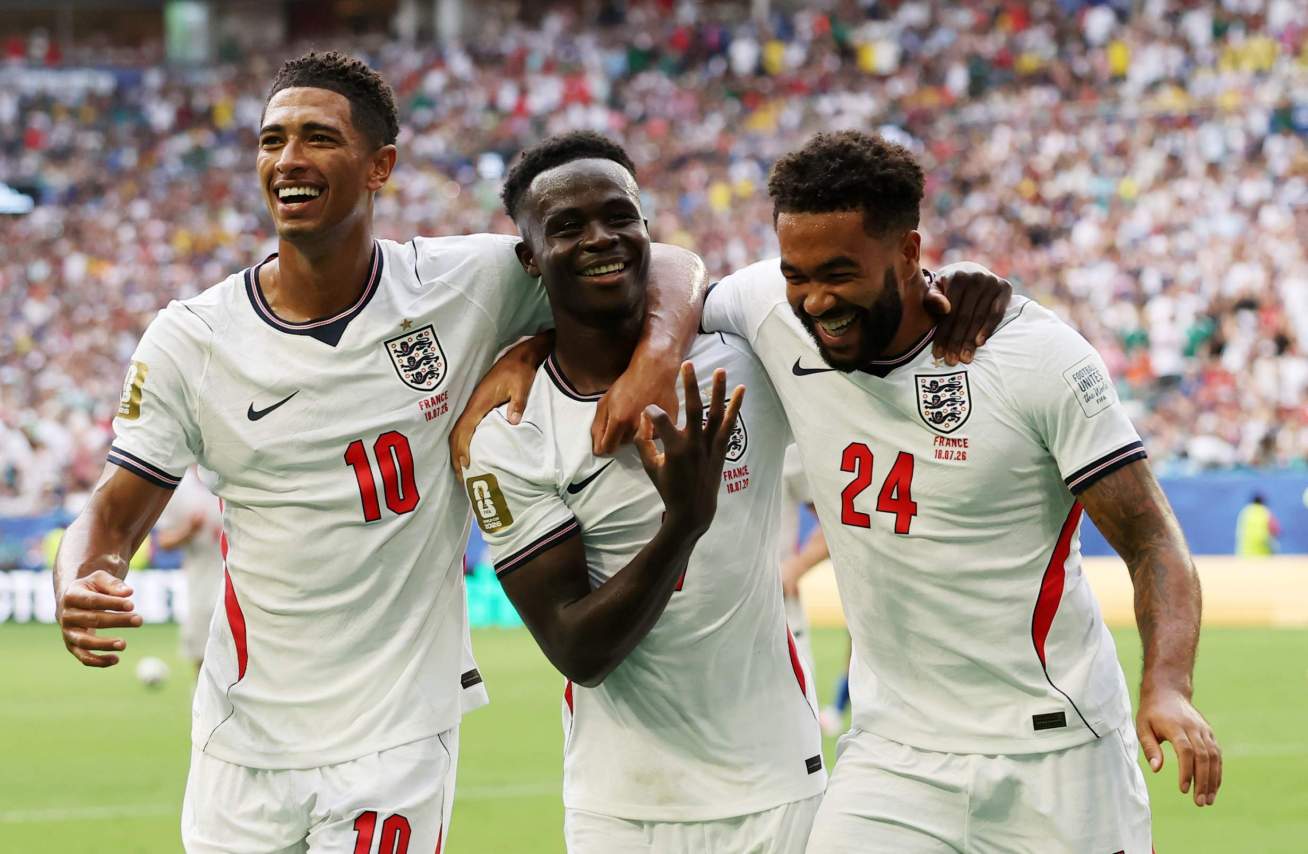
If someone says to me ‘where are you from?’ I say Burnley – I still have a strong identity with the town even though the experience for me was horrific. But I can live with that. But, if someone says ‘you’re English’, I say: no, I’m not. But I’m also not willing to cede the ground that Englishness is purely about a form of ethnonationalism.
I think what the left or progressives have failed to do is understand how much place matters to people in their identity. We talk often in very universal ways, which is right, but for a lot of people whose lives are within a 40-minute radius of where they were born, and all their friends and family live there and they work there, that’s their world – that is the lens through which they look at absolutely everything. Sometimes, what we talk about doesn’t land with them and the far-right can talk to them about place. And often in a way that’s nostalgic – about what the flag represents, which is contested.
For me, it’s about: how do we capture that moment at [the opening ceremony of the London 2012] Olympics and say: that’s our nationalism? There is so much about solidarity [in our shared history] that is more than the flag. I’m not interested in the flag – I’m interested in the story of who we are, however we have come together.
Race, class, inequality: this is the political lens you have brought to your role leading Friends of the Earth. Why is this intersectional approach to the climate crisis so key – at a time when the right is framing net zero as antithetical to the very real struggles people are dealing with in their everyday lives?
I used to say many years ago that I’m a reluctant environmentalist, right? Because I didn’t come to environmentalism through the environment. I came to it because originally I was very active in the anti-globalisation movement [an international network of organisations fighting for global justice and highlighting the impact of neoliberal policies]. As somebody who had come through radical black and progressive politics, I was an internationalist and suddenly in these spaces I met all these movements from all around the world and they would talk about what was happening to them. For them, the climate crisis was a systemic problem… There was a weaving together [of issues] and the anti-globalisation movement tried very hard to bring together the labour, human rights, and the environment movements, finding commonalities and connections…
We were always thinking intersectional. Our lives are not experienced in this way that the mainstream left or progressives think of as – poverty ‘over here’ and environment ‘over there’. So through that experience, I came across the issue of climate. And I would be like: how is it that this thing which everyone says is potentially going to devastate the world, which is going to unravel everything we’ve ever fought for, [is being talked about] as being for your grandchildren [to deal with]? And they’re talking about it with a polar bear on an iceberg? And they’re talking about it in such ways that it’s about a plastic bag and a fucking plastic straw? To me, it just made no sense at all. Here’s this picture of catastrophe and you’ve totally depoliticised it.
Through that experience, I came across Friends of the Earth, and it’s not like other environmental groups – it talks about environmental justice. We recently released new data which showed people of colour and those on lower incomes are twice as likely to live in neighbourhoods most at risk of flooding, extreme heat, noise pollution, and lack of green space. Twenty years ago, this mapping told the same story – the idea that there are ‘sacrifice people’ and ‘sacrifice zones’. So it’s never simply about what [climate injustice] is doing in the rest of the world, but also what is being done here; that some people’s lives are just not seen as worth it. That was my experience of growing up in Burnley – there were whole groups of people’s lives [where the state said] ‘you don’t count’.
So when I came to work in climate, I said, no: we’ve got to stop talking about carbon and start talking about justice. This is a structural question. It’s not just a matter of temperature levels. We need to ask not just why is it happening, but why can’t [those in power] stop it? Because they are calculating that the people dying of it are the people they think are expendable.
Many years ago, I remember being in a room full of NGOs and government – I couldn’t tell the difference between who was in government and who was in the NGOs – and everybody was white and middle-class and talking in a very similar way. It was all alien to me. I challenged the UK government on its position from a Global South perspective, and somebody apologised to the minister in front of me. I was told ‘the problem is Asad, you’re not being pragmatic’ – [what they meant was] that I should not ask for what was needed, but was feasibly possible in the politics of what the government was comfortable with. And I said ‘yeah, you know why I’m not being pragmatic? Because I’m not white and middle-class. If you were the ones dying you wouldn’t be pragmatic, you’d be saying “let me tell you the truth”’… [There was a sense of] ‘don’t push the government too much, let’s recognise what it can do, and then celebrate that as a great win’.
But I said: that’s not enough because you know what is going to happen. The climate justice movement was calling for a global average temperature rise of below 1°C above pre-industrial levels, whereas the mainstream was calling for 2°C – because economists had worked out that the cost of keeping temperatures below 1°C would be too much of a disruption to the economy, whereas with 2°C they could accommodate those costs – as most of that damage would be done in the Global South and not to European and Western economies. They were literally sacrificing lots of people for economic interests. And I would ask: how are you talking about a world where you are accepting this idea that black and brown people in the Global South are expendable?
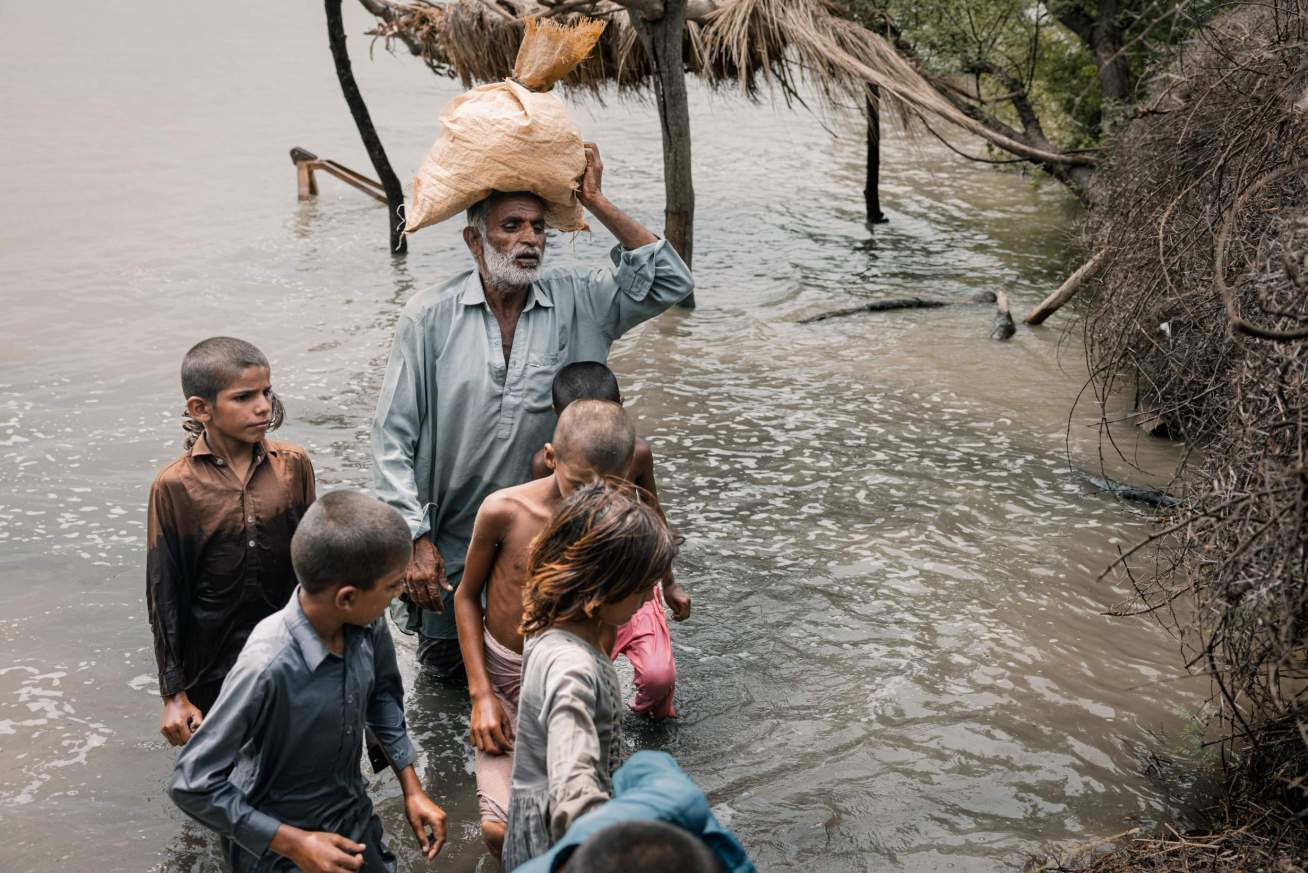
I’m from Pakistan. Large parts of it are agricultural. Four out of 10 people live in multidimensional poverty. When these extreme weather events happen, they’re not in abstract. In a heatwave, no one escapes to air-conditioning, sits at a fountain, or eats an ice cream – you’re out in the fucking fields and the Pakistan government starts digging mass graves for people because there’s just nothing you can do. I would be struck by this reality; and then this comfortable reality which kept saying to people ‘it’s your plastic bags’. It did not make sense to me. So, our movements were saying that you cannot allow the narratives of climate to be shaped by this kind of lens; we must bring this justice lens into it.
Friends of the Earth – which I’ve worked at before, I previously led its international climate and environmental justice work – was the only brand organisation that sided with the climate justice movement on a slightly more radical position.
Then, after working at [poverty and human rights charity] War On Want for 10 years, and with movements all around the world – whether they were fighting for economic justice, trade unions, farmers, garment workers – the question we would always have was: we can fight, but the decisions are being made in the Global North, so where is the movement in the Global North that is standing with us? How are we weaving this story together? Because our story is of justice and being able to live with dignity; and your story is about carbon tonnes.
If you look at the rise of the right, the fact that they’re weaponising inequality, anti-Muslim, anti-migrant, anti-climate [sentiments]… it’s part of the playbook everywhere in the world where the right are growing because they’re weaponising inequality against climate. They’ve put us into their story – we’re the villains in their story; we’re the middle-class, woke literati who are making people’s lives too expensive. And, to some extent, the climate movement is tone deaf if it talks about carbon and doesn’t talk about the fact that people can’t afford energy, or to buy a home or pay rent, when they’re talking about ‘warm homes’ – it just doesn’t connect to where people are.
Even though the UK has been experiencing continuous extreme heat this summer, it still feels as if the climate crisis is ‘far away’ when it comes to political and public perception of its impact and where it is on our list of priorities. How can this human instinct to not look at something because it’s ‘over there’ or at some distance be countered?
The climate science tells us that we have breached the critical 1.5°C guardrail [of global warming above pre-industrial levels]. We are heading towards 2°C in the next 20-25 years. A child born today will live in a world of 3°C. People cannot comprehend what that will mean. Everything that has been predicted to happen in the future is already happening – and it’s landing in an unequal world. Not just between societies, but within societies. Working-class and minority communities are on the frontline.
We’re being told that the climate crisis is something ‘over there’. So, first, we’ve got to tell a very different story, about people, and we have to start with inequality – which means that, when the heatwaves happen, [you’re much worse off temperature-wise] if you live in a council estate in blocks of concrete. If you’re living in an area with high air pollution, it’s the air pollution that’s making heatwaves even worse. If you’re living in areas vulnerable to flooding, for some people, it’s more of a financial problem and they can ask their insurance to take care of it; but for a lot of other people, it’s devastating – they lose everything. Flooding in this country is devastating lots of communities. Now, of course, their experience is very different from the experience of people in Pakistan who are flooded – but there are a lot of commonalities. If you’re poor, you’re experiencing this in a profoundly different way.
But, if you say to people in working-class areas like Burnley, ‘tell me about climate’ – they’ll say ‘yeah, we need to do something about it. Nature? We should have these things. But what matters to me is I can’t pay the bills. What matters to me is the cost of living’. Opinion polls tell us that, if you ask people what is the one thing that is shaping their lives, [the majority of] people will say the cost of living. That forces us as an environmental movement to say: actually, if you want to win, where the right have weaponised inequality against climate action, we have to connect inequality to climate and nature. We have to say it’s not an or, it’s an and.
So, yes, we should have warm homes – but first of all, let’s build affordable homes, let’s put rent caps on homes, let’s put homes in the right places, let’s build homes with nature all around them, and let’s make sure they’re retrofitted. Why aren’t we doing street by street retrofits by local authorities? Why aren’t we planting trees by neighbourhood? Yes, we want energy to be clean, but does it matter if it’s renewable energy if I’m still paying bills where the money goes to the offshore account of a sovereign wealth fund somewhere? Why can’t I own it or my community own it?
The challenge also seems to be about community-building – especially when it comes to tackling the weaponisation of the right, which is pitting different groups and issues against each other?
Something very profound that the climate scientists have said is, yes, you need capital investment in things like seawalls and flood defences, but just as importantly, you need social investment – investment to make communities stronger because, what matters when a crisis happens is whether those communities are resilient enough to withstand it. The social indicators of that are whether you have social protection and social housing, whether you have a health service that works – whether you have these basic things is what determines how crises are experienced by communities. So, no longer can you say that you want to cut emissions, it’s also about how we can adapt to a warming planet and build the resilience of a community given the fact that these things are now a reality.
So, as Friends of the Earth, yes, we should be campaigning for green spaces for every kid. Everyone should have access to green spaces – we saw that during the pandemic; those people who had access to green spaces or had a garden, generally had a far better life than if you were on the 24th floor of a tower block with no access to green space. We know it’s good for your mental health and wellbeing, and that it cools your area. But, if I say this to people who are working three zero-hours contracts and struggling, what matters to them is whether their kid can have a free school meal. So why aren’t we saying: your kid should have green spaces and a free school meal? How are we connecting and rebuilding this sense of community?
Only this way will we be able to stop the rise of the right in our communities because they are using the fact that too many people feel forgotten and left behind. I’m heartbroken when I look at the people going on Tommy Robinson’s marches because I think, 30 years ago, we would have all stood on the same picket lines together. Now, they are angry and marching with these people, and they should be marching with us – because we’re fighting for the same thing. And that’s our failure, not their failure. How are you hard on the politics but soft on the people? How do we connect and think of a new kind of story that puts people in the centre and is about democracy and being proud of the places we live in?
Who tells you the story of who you are and where you came from? The trade unions used to tell you that story, the working men’s club used to tell you that story… there were institutions in a community that told you ‘these are our values’ and ‘we’re the people who did this a hundred years ago’. They gave a sense of who you are in a changing world, and drew from the past to give a shape to the future. But they’re not there anymore. And the people who are now telling you a story are in your algorithms saying: remember when you used to have dignity? Remember when people gave a shit about you? That was before, innit? ‘Let’s return to that nostalgic world when being white meant something and you could be proud of being white’. [Going from dignity to whiteness] it’s quite a jump.
We have to say everybody has a right to live with dignity. And we know that, when people don’t feel economic uncertainty, they are generally more accommodating. If people aren’t struggling to pay their energy bills, they can lift their heads up. In Burnley, we’re in a valley with some of the most beautiful landscapes. People say it’s a beautiful, beautiful countryside – and I always say: the problem is, when you’re struggling, you can never lift your head up to look. It’s only when you’re not struggling that your head can begin to lift, and you begin to notice the beauty of nature. People innately want that.
Friends of the Earth has put ‘postcode gardeners’ into working-class communities, into places where people don’t have social capital, or time, or groups of guerilla gardening, planting things out in the street – and it’s been transformative. Not just because people have been able to grow things together, but because people see they can do things together. Our postcode gardeners can bring groups of pensioners, mums, and migrants together to plant something. In that action, they see each other, and then they see something they’ve planted which grows – they can feel that ownership.
We’ve been given a sense of having no agency, that nothing changes, that nobody gives a shit, which has been deliberately engineered. So I think this moment of crisis actually is a profound moment of hope and justice: we can fix the problems, because the answers to the climate crisis are the answers to the inequality crisis; the answers to the inequality crisis are the answers to creating better communities.
Which is why, as Friends of the Earth, we’re committed to building safer, greener communities – putting deep organisers into communities to bring people together around a common agenda. But, at the same time, we need to tell a story about who’s to blame – it’s the billionaires, who say ‘blame your neighbour, don’t blame us’. We have to shift that.
You ask a Reform, Labour, and Green voter about water companies and they all say the same thing: that that’s what is broken about this country – that people can poison your rivers for money. In some senses, they are way more progressive than where our politicians are. How can water be owned by a private company? These are the commons, the things we need to contain for ourselves because we are living on a planet with finite resources, and yet we know we’re over-consuming. The same 1% who have accumulated the world’s wealth are the same 1% whose carbon footprint is as much as two-thirds of the world’s population.
So this forces us into building what I would call ‘the movement of movements’, and a positive vision. If I can’t talk about a positive vision, I can’t fight for it. If I can’t see myself in that vision, why am I going to fight for it?
Hardeep Matharu is the Editor in Chief of Byline Times