
 Subscriptions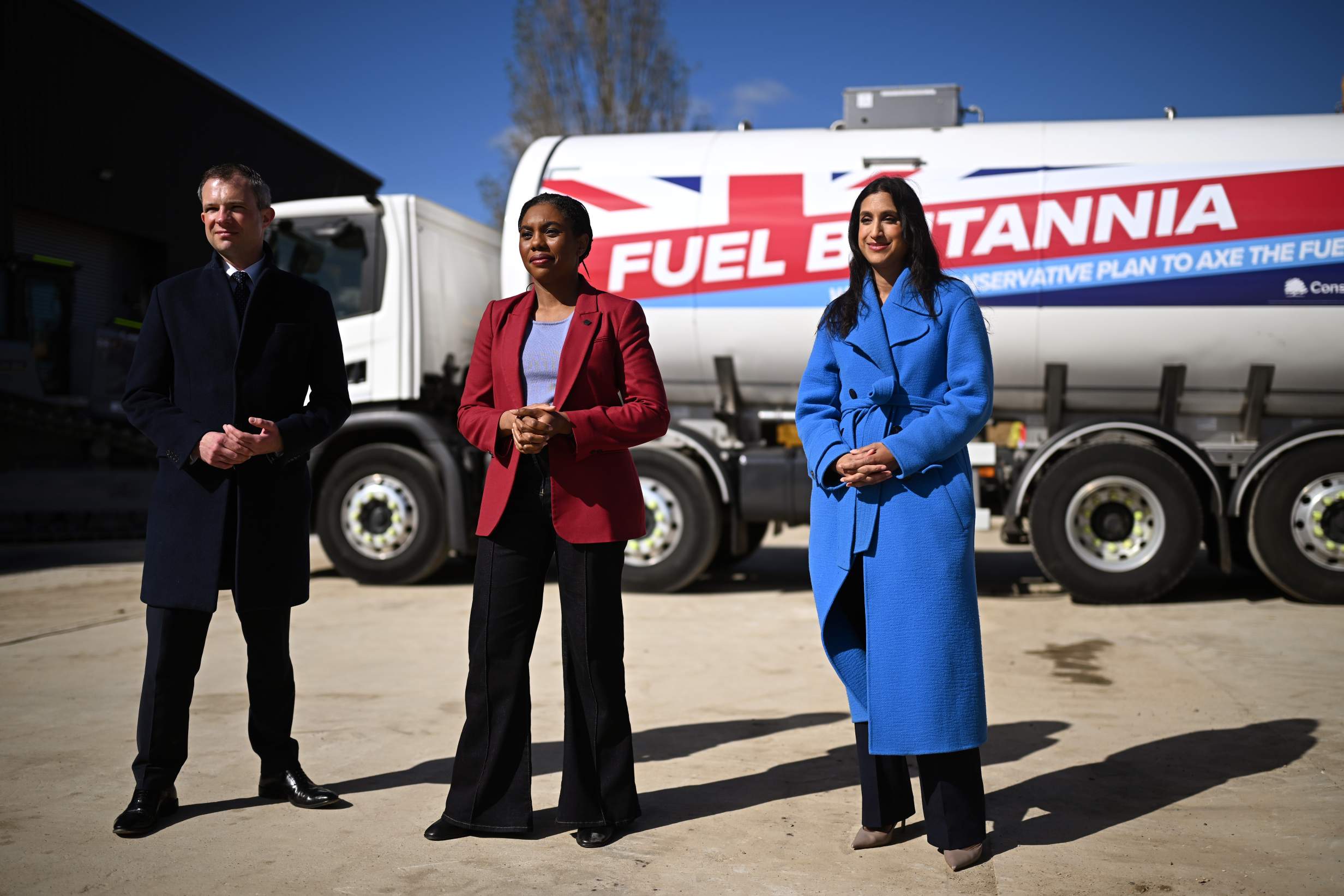
Read our Monthly Magazine
And support our mission to provide fearless stories about and outside the media system
A call came in from GB News late on Tuesday 18 August, asking whether I would come on their midnight show to discuss an embargoed speech on climate action by the Conservatives, to be given the following day by the Shadow Energy Secretary Claire Coutinho.
As I embarked on some last-minute research, I did not realise I was about to be plunged into another row over dark money think tanks, which our Media Sovereignty Act Campaign seeks to ban.
The speech was an announcement by Coutinho on how the Conservative Party proposed to tear up its own Government’s legislation for a carbon-free target date for 2050.
The press release had a covering statement by the Conservative Leader Kemi Badenoch, which also committed the party to maximising new North Sea oil and gas, despite the field being already 93% depleted.
This follows Badenoch’s extraordinary ruling that no Conservative Party member who supports the party’s previous commitment to a carbon-free 2050 could stand for selection as a party candidate. Yet polling shows a majority of members support climate action.
The International Energy Agency has stated that new oil and gas would mean the world cannot remain under the Paris Climate Agreement’s mandated maximum global temperature rise of 1.5C.
ENJOYING THIS ARTICLE? HELP US TO PRODUCE MORE
Receive the monthly Byline Times newspaper and help to support fearless, independent journalism that breaks stories, shapes the agenda and holds power to account.
We’re not funded by a billionaire oligarch or an offshore hedge-fund. We rely on our readers to fund our journalism. If you like what we do, please subscribe.
Coutinho’s speech was based on the new report by the Conservative-aligned think tank Onward called “Firm Foundations” on the costs of removing carbon pollution from the electricity grid.
I quickly searched online for Onward’s donors.
Onward is better than most right-wing think tanks, as it reports donors to the end of the previous year. But it is dark on donors since 1 January.
Last year’s major donor list shocked me more than I expected.
It included the privatised National Grid plc, now owned by Abu Dhabi and US, Norwegian and other investors.
National Grid plc is one of the key stakeholders in the recommendations of the Onward report on cutting electricity costs.
Another major donor that shocked me was Equinor, co-owners of the controversial Rosebank oil field, that Kemi Badenoch’s speech on the Onward report gave full backing to.
Other fossil fuelled donors included billionaire oil giants Shell and BP.
Don’t miss a story
Polluters’ Charter
When I reported the various perceived conflicts of interest on the show, the GB News presenter dismissed the conflict of interest point, stating that what mattered was not who funded the report but what it contained.
I only had time to scan the report summary before the television interview.
But once I had time to read the full report, one of its main theses was that electricity prices could be cut by ending most government policies to cut fossil fuel consumption in the UK.
It calls for ending the UK’s participation in the Emissions Trading Scheme, which puts a price on carbon pollution, the ending of incentives to electrify heating and cars, tearing up the Climate Change Act – the law which commits the UK to cutting its emissions – and the retention of 85% of current fossil gas power production up to 2050.
It admits that this would emit up to 500 million more tonnes of carbon pollution. But the “economic” arguments also alarmed me.
The assertion that ending decarbonisation investment would result in cheaper electricity was founded on two outrageous assumptions: that fossil gas prices would be significantly lower than at present for the next three decades, and that nuclear power costs could be reduced radically.
Neither of which has happened in the real world for decades.
Onward’s Response
We put these points to Onward. In response to the alleged conflict of interest due to National Grid being a donor, it replied: “It is unclear why they would favour report drawing attention to cost of transmission. Networks make returns based on asset base size and arguably incentivised to build more infrastructure.”
It added: “The report accepts the current network market structure as is.”
Yep. Onward accepts the massive costs added to electricity bills that pay for the profits of its donor, the privatised National Grid plc.
Unite, the trade union, has estimated that there is an effective ‘privatisation profit levy’ on every electricity bill of £500.
In response to the analysis that its conclusion that abandoning new renewables would be cheaper was based on presumptions that the cost of both new gas and nuclear are lower for the next 25 years than they have been recently, it accepted that it was reasonable for us to point out the role of gas spikes and the “mixed” track record of recent nuclear projects.

Where Are the Climate Protests? Human Rights Group Warns Government Crackdown Is Silencing the Green Movement
Liberty says a slew of new anti-protest measures, including a ban on ‘cumulative disruption’ are silencing calls for government action to prevent catastrophic climate collapse
The Climate Change Committee, the Government’s independent advisor on emissions, has reported that every international fossil fuel price spike crisis costs the UK economy about £100 million.
The Hinkley Point new nuclear plant is currently projected to cost £49 billion, up from an original budget of £18 billion.
Onward said the gas price assumption was based on the Department for Energy Security and Net Zero’s central price forecast. It pointed out Sizewell B as a “successful” British nuclear project. But it was completed in 1995. It hoped the recent Fingleton report (backing extensive deregulation and planning reform in the sector) would reduce nuclear costs.
Its answer ignores the enormous insurance costs and the nuclear waste disposal cost over-runs, covered by the taxpayer for nuclear power, which are now estimated to be as high as £253 billion.
The report also ignored the cost savings for decarbonising the national grid, arising from the collapsing price of grid-scale battery storage.
Dark Money and Democracy
It is crucial for a transparent democracy that our political systems are not only free from being bought by vested interests but do not have the perception that they have been bought.
We reached out to Claire Coutinho with the same queries about conflicts of interest and wild assumptions involved in the report they were promoting. We got no reply.
Onward refused to say who its 2026 donors were and so we have no idea if there are further potential conflicts of interest.
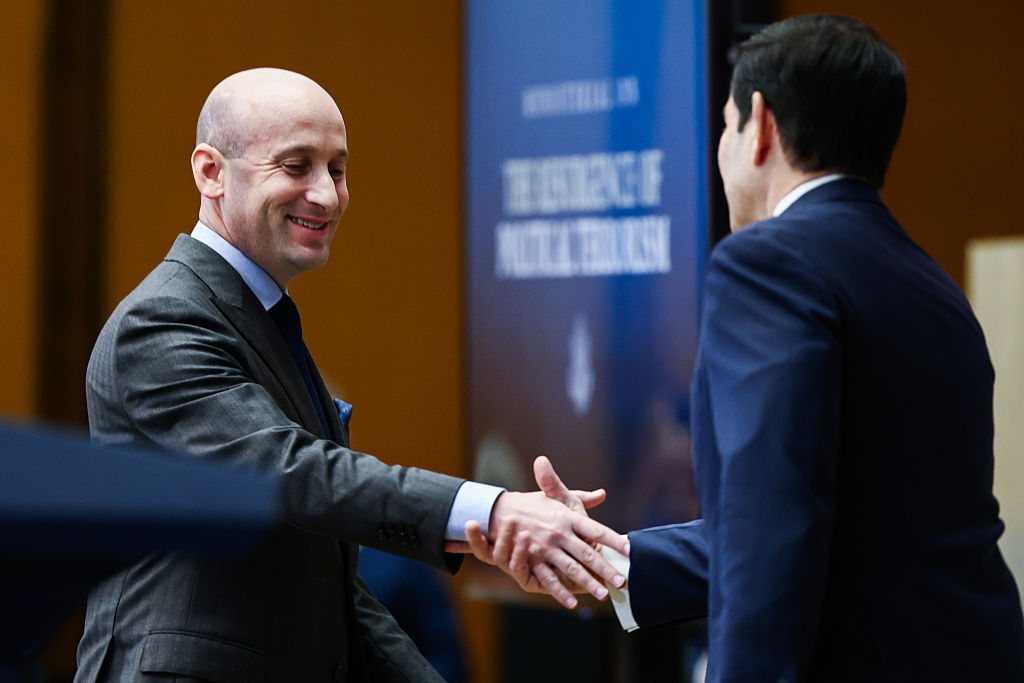
UK Sent Top Security Chief to Trump’s Left-Wing Crackdown Summit
The US is turning domestic and global counter-terror systems against political opponents – how is Britain responding?
Think tanks, due to their direct access to our media, government and political policy makers, are a core part of Britain’s democratic process and so must be required to declare in real time who funds them.
This is why the Media Sovereignty Act campaign’s five key measures include a statutory requirement for think tanks to report donations in real time.
Our recent YouGov poll showed a huge 78% majority from across the political spectrum support a ban on dark money think tanks.
Our parliamentary petition to trigger a Westminster debate on the Media Sovereignty Act, which ends media billionairism, requires a mandatory independent media complaints commission and bans dark money think tanks, has a deadline of 18 September.
Donnachadh McCarthy is a director of the Media Sovereignty Act Campaign and a former climate columnist for The Independent.
Got a story? Get in touch in confidence on josiah@bylinetimes.com
holding farage to account #reformUNCOVERED
While most the rest of the media seems to happy to give the handful of Reform MPs undue prominence, Byline Times is committed to tracking the activities of Nigel Farage’s party when actually in power

 Contribute to our #ReformUncovered crowdfunder
 Subscribers Get More from JOSIAH
 Subscribers Get More from JOSIAH
Josiah Mortimer also writes the On the Ground column, exclusive to the print edition of Byline Times.
So for more from him…
