
 Subscriptions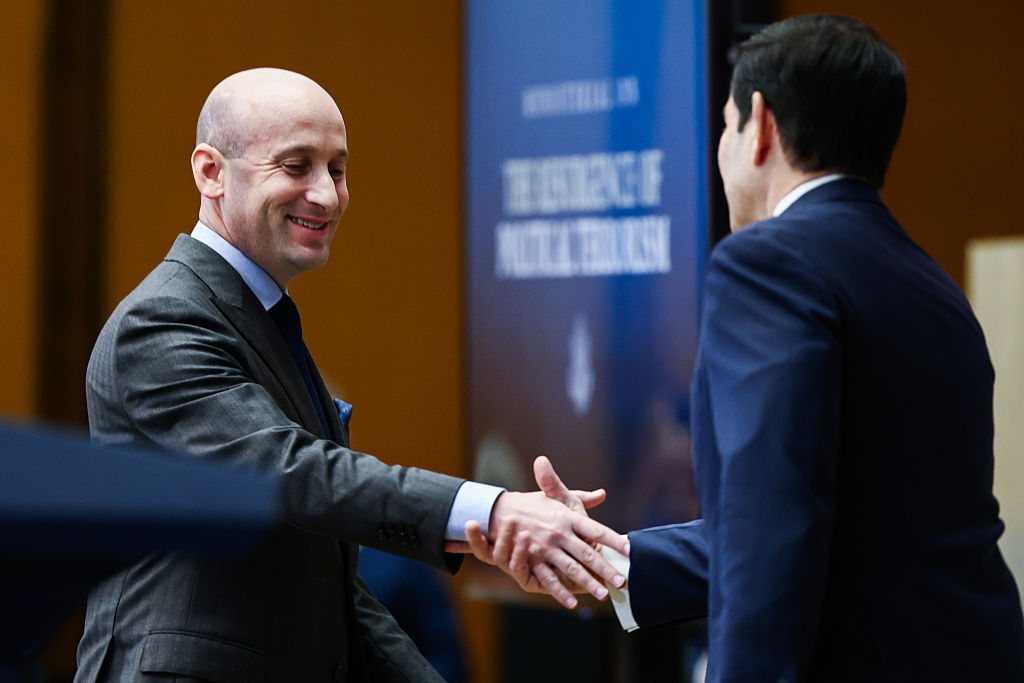
Read our Monthly Magazine
And support our mission to provide fearless stories about and outside the media system
The UK quietly sent one of its most senior security officials to a Trump administration summit which proposed to turn global counter-terrorism infrastructure against the political left, Byline Times can reveal.
Responding to a Freedom of Information request, the Foreign, Commonwealth and Development Office (FCDO) confirmed to this newspaper that Director General of Defence and Security Jonathan Allen attended US Secretary of State Marco Rubio’s ‘Ministerial on the Resurgence of Political Terrorism’ in person in Washington, D.C. on the 16th of July following an invitation from the US State Department.
This was no typical international security summit. Framing the issue in explicitly political terms, Rubio – standing alongside White House policy advisor Stephen Miller, Treasury Secretary Scott Bessent – proposed a new global counter-terrorism doctrine targeting expansively defined left-wing “political terrorism,” urging allied governments to coordinate intelligence, law enforcement and financial powers against the emergent left-wing threat.
The meeting was accompanied by the announcement of a new visa policy, in which the State Department will target “far-left terrorist and other aligned groups”, for violent actions as well as “economic sabotage including against public and private property” – which could encompass certain recognised forms of protest.
The ‘Ministerial’ has been heavily criticised as an attempt to internationalise a law enforcement strategy already being pursued domestically, where the Trump administration has cast an extraordinarily broad range of political opponents and protest movements as potential security threats – and completely omitted any mention of rising far-right violence.
Britain sent a top security official with decades of experience spanning counter-terrorism, intelligence and national security. Allen’s attendance is, of course, not proof of UK compliance with Rubio’s expansive new doctrine – but it is emerging evidence of serious high-level engagement with it.
Allen previously served as the Foreign Office’s Director of National Security and, more recently, Director General for Defence and Intelligence. Earlier in his career, he worked in the Home Office’s Office for Security and Counter-Terrorism, where he established and led the Research, Information and Communications Unit (RICU), a controversial counter-extremism strategic communications operation associated with the Prevent programme.
Trump’s Crackdown on Dissent Won’t Stop With Antifa
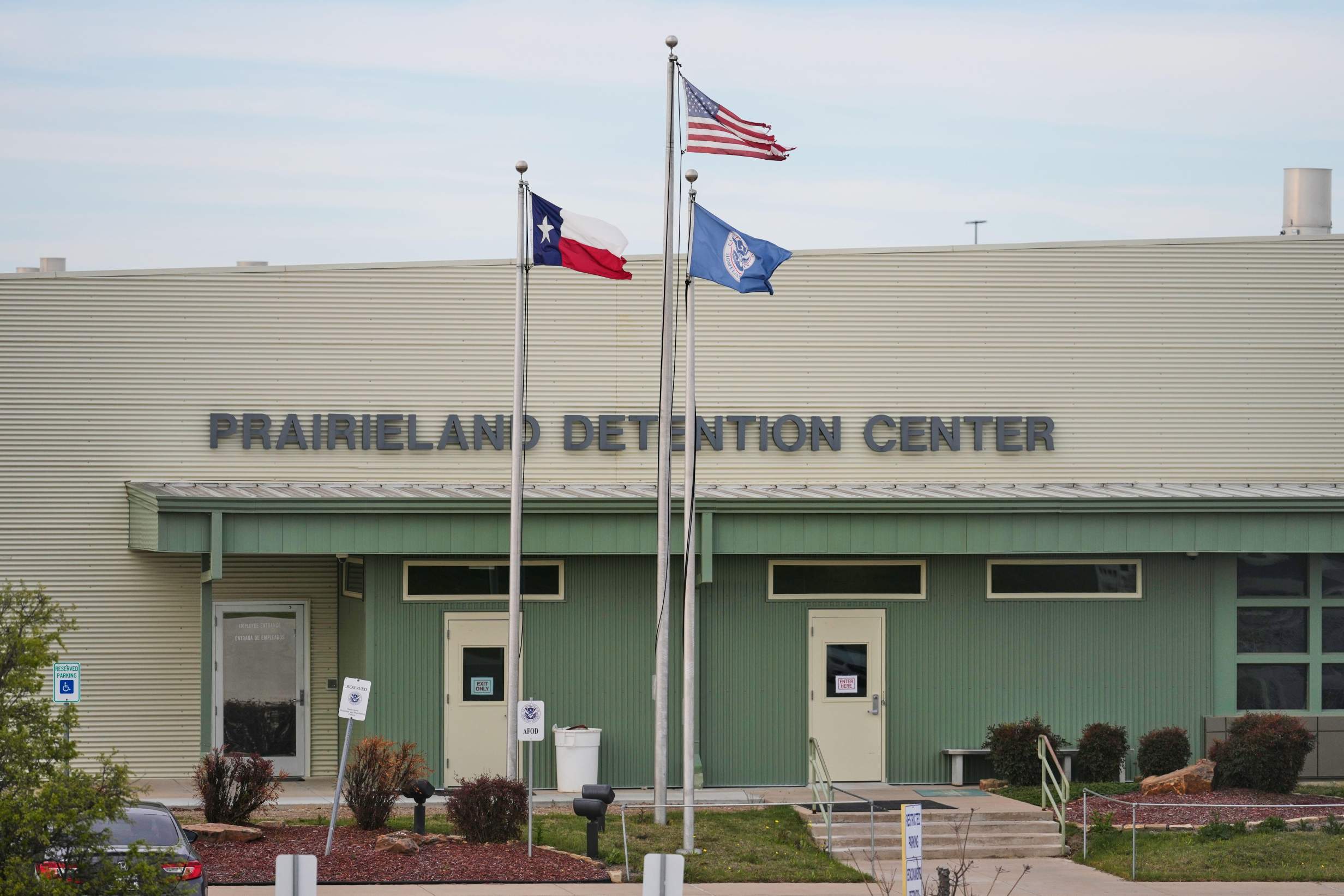
The sentences handed down to protestors at an immigration detention centre were all more severe than even the longest prison sentence given to any of the January 6 insurrectionists
Thomas Renard, Director of the International Centre for Counter-Terrorism (ICCT), told Byline Times that Allen’s attendance can only be understood in the context of considerable European uncertainty and “unease” over the Trump administration’s new “politicised” direction.
US State Department officials had spent months touring Europe seeking support for the initiative, he said, leaving allied governments with an awkward diplomatic calculation. European counter-terrorism services recognise that violent far-left extremism warrants some attention, but Renard said that “no one that I’m aware of shares the perception of the United States that left-wing extremism has become the main threat” – certainly not in Europe.
Beyond concerns about stifling lawful opposition, “politicising counter-terrorism is the main risk of this whole circus,” Renard said. “If this politicisation reaches further into the actual daily work of European intelligence services – they will end up completely neglecting the far-right violent extremist threat and some other threats on the horizon.”
Neither the Foreign Office, Cabinet Office, nor Allen himself directly addressed this newspaper’s queries about the impact the meeting had on Britain’s security and counter-terror strategy going forward.
Don’t miss a story
‘Enemies of Civilisation’
From the day Donald Trump took office in January 2025, the executive branch has been sidestepping Congress to turn law enforcement and counter-terror infrastructure against political enemies – including the administration’s many lawful dissenters. Rubio’s Ministerial sought to bring in international allies (potentially including the UK) to help enforce this new framework globally against the “blind spot” of “left-wing terrorism.”
Speaking in sweeping ideological tones, Rubio condemned all left-wing ideology as “a hatred for civilisation itself.” “It is a revolt of the worst against the best, a revolt of the weak and the cowardly against the strong and the good.” The left, he said, has “an overwhelming need to tear down what greater men have built.”
Rubio cited a wide array of disparate cases that he implied fit the bill for the emergent terrorist threat he was talking about: George Floyd rioters, cross-border “Antifa militants,” transgender shooters, Luigi Mangione (who has pled guilty to the murder of health insurance CEO Bryan Thompson), Tyler Robinson (the alleged killer of Conservative influencer Charlie Kirk), and those who obstruct Immigration and Customs Enforcement (ICE).
There is no clear ideological or organisational link between these groups and individuals. The Trump administration has sought to frame ‘Antifa,’ for instance, as a singular, organised, leftist paramilitary operation – but security experts describe it as a decentralised assortment of individuals opposed to racism and authoritarianism. Data analysis from the Centre for Strategic and International Studies (CSIS) shows that Antifa “poses a relatively small threat in the United States, particularly compared to violent white supremacists.”
Data from the United States more broadly shows that right-wing violence is far more prevalent than left-wing violence – and that state violence, particularly from ICE, is on the rise. Leftist and anarchist networks have carried out more attacks in Europe in recent years, though EuroPol found that they overwhelmingly targeted infrastructure and private property rather than human beings.
Speaking at the Ministerial, White House deputy chief of staff Stephen Miller boasted that Trump had “taken the necessary and essential action of formally recognising left-wing violence as a form of political terrorism.” He was referring to an executive memo signed in September 2025, known as NSPM-7.
In Miller’s own words, it “directs, for the first time in American history, all of our law enforcement and intelligence agencies to work together to disrupt, identify, defund, debank, arrest, and prosecute these political terrorists that are operating in our country.”
The memo’s broad definition of “domestic terrorism” encompasses labels including “anti-Americanism”, “anti-capitalism”, “anti-Christianity,” “extremism on migration, race, and gender,” and opposition to “traditional American views on family, religion, and morality.”
That framework has continued to expand into areas of ordinary political dissent. The administration has sought to draw pro-Palestine activists into its counter-terrorism dragnet, and opponents of the ongoing Iran War have faced accusations of effectively aligning themselves with a hostile foreign power.
Even the rising local backlash against AI infrastructure has now come under the national-security umbrella, with federal agencies circulating warnings about a new category of “anti-tech extremism” encompassing opposition to data centres, Flock surveillance cameras, and the tech industry more broadly.
Appeals to civil liberties by this array of alleged left-wing extremists, Miller told delegates at the State Department summit, “must fall on deaf ears,” because when a leftist claims their rights are being violated, governments must understand that “he is lying.”
This is America’s new framework, a radical and ideological re-orientation of the national security counter-terrorism system. The question that remains – given America’s enduring geopolitical dominance over European security – is the extent to which Britain and the continent will play along.
ENJOYING THIS ARTICLE? HELP US TO PRODUCE MORE
Receive the monthly Byline Times newspaper and help to support fearless, independent journalism that breaks stories, shapes the agenda and holds power to account.
We’re not funded by a billionaire oligarch or an offshore hedge-fund. We rely on our readers to fund our journalism. If you like what we do, please subscribe.
A Transatlantic Feedback Loop
On August 26, the Trump administration followed Britain’s lead and designated UK-based direct action group Palestine Action as a terrorist organisation. Announcing the move, the State Department explicitly linked it to commitments made at the July Ministerial.
Defending their original designation of PA, the UK Government argued that the group’s actions – activists breaking into RAF Brize Norton and damaging two military aircraft they believed were related to ongoing military operations in Gaza – crossed the threshold into terrorism. Critics view this use of terror legislation as a dangerous escalation threatening civil liberties, with Home Office figures showing that 86% of Palestine Action-related arrests were for peaceful displays of support. The UK categorisation is currently up for appeal before the Supreme Court.
There is no evidence that Allen’s attendance had any connection to the State Department’s new designation, nor that Palestine Action was a topic of discussion at the meeting. Further documents and meeting details requested in this newspaper’s original FOI request were withheld under national security and international relations exemptions.
What it shows, however, is that both the US and UK have been expanding the national-security architecture into contested areas of political activism well before this Ministerial took place. Both countries’ terrorism designation powers broadened massively during the global War on Terror, and US and UK governments have both been accused by civil liberties groups of using those powers to stifle political perspectives.
Asked by Byline Times whether Britain shares Rubio’s assessment that counter-terrorism has a “blind spot” towards left-wing extremism, the Foreign Office did not answer directly. Instead, it pointed to the Government’s recently published Protecting What Matters counter-extremism strategy.
That strategy adopts a broad, non-statutory definition of extremism originally put forward by former Communities Secretary Michael Gove, encompassing those who “create a permissive environment” for others seeking to undermine liberal parliamentary democracy and democratic rights. The strategy proposes embedding this definition more deeply across government and policing, allowing authorities to identify and disrupt supposedly extremist activity even where it falls below the threshold of criminality.
Muslim advocacy groups have described it as “Prevent on steroids”.
Britain’s framework, then, is still not America’s. It recognises the existence of far-right extremism, and – while it was accused of excessively targeting and surveilling Muslim communities – it does not have such an official and binding bias against the political left.
But with the Trump administration exerting tremendous pressure, Britain is continuing a historic tightrope walk – balancing between the existing areas of convergence while attempting to steer clear of an official political crackdown.
It’s worth noting that other nations, including Claudia Sheinbaum’s Mexico, opted to boycott Rubio’s summit entirely. “It was not prudent to attend,” the Mexican President remarked, adding that the meeting had a “predominantly political character” and that from her administration’s perspective, it was not a productive space to cooperate on genuine security issues.
“Some people argue that, as with Mexico, Europeans could be confronting the United States a bit more on a lot of these positions, but at the moment that is obviously not the position that Europeans have been taking,” Renard told Byline Times.
Additional reporting by Caroline Orr Bueno