
 Subscriptions
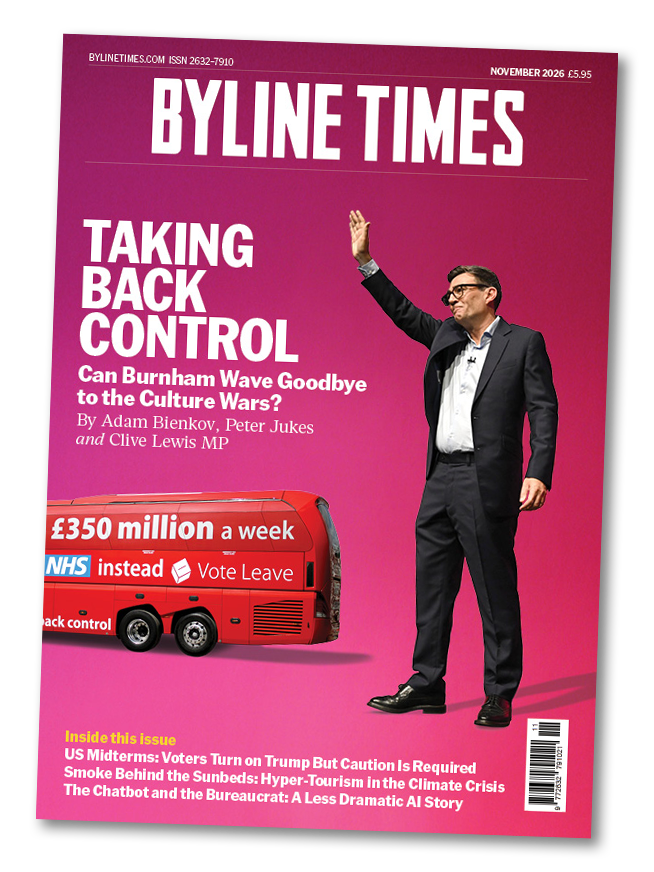
Read Our Monthly Magazine
And support our mission to provide fearless stories about and outside the media system
Standards watchdogs should publish a “red list” of former ministers who have broken lobbying rules, according to a new report calling for an overhaul of the system.
It follows a string of lobbying scandals in recent years, with former ministers who’ve broken the rules by lobbying former contacts or taking up privileged roles after leaving office facing zero sanctions.
The recently-established Ethics and Integrity Commission has published a review with recommendations into Lobbying, Business Appointment Rules and Disclosure.
The EIC report proposes a centrally published register of individuals and companies found in serious breach of the rules, as well as far tougher punishments when the law, and appointments advice, is broken.
The much-criticised revolving-door regulator ACOBA was abolished on 13 October 2025. It was meant to stop former ministers taking advantage of their privileged contacts and knowledge of Government for profit after leaving office, but was roundly slammed as toothless. But the system does not appear to have improved since then.
Its functions were split across eight different bodies — Independent Adviser on Ministerial Standards, Civil Service Commission, MOD, Scottish and Welsh governments, GCHQ, MI5, MI6 — with no central coordination.
ENJOYING THIS ARTICLE? HELP US TO PRODUCE MORE
Receive the monthly Byline Times newspaper and help to support fearless, independent journalism that breaks stories, shapes the agenda and holds power to account.
We’re not funded by a billionaire oligarch or an offshore hedge-fund. We rely on our readers to fund our journalism. If you like what we do, please subscribe.
The report finds that current enforcement is essentially non-existent. Legal advice has found any sanctions would currently be unenforceable “unless the government committed to instituting criminal sanctions”, meaning the entire system currently runs on reputational risk alone.
Britain has a lobbying register, but it is estimated that it covers less than five per centof lobbying activity.
Just 249 organisations are registered with the Office of the Registrar of Consultant Lobbyists. In Canada, the figure is 7,957, the EU 17,067, and in the US it’s 13,699. Even in Scotland, with a population a tenth of England, the figure is over 1,400.
The maximum penalty for organisations breaching lobbying rules is just £7,500, compared to Germany and the EU £50,000, Canada £113,000 and the US £154,000. That’s despite there being a circa £1,000 registration fee in the UK, compared to none in those states.
Don’t miss a story
The report itself recommends a tenfold increase in the maximum fine for rule-breaches, to £75,000.
Since the Office of the Registrar of Consultant Lobbyists was established, only 31 penalty notices have ever been issued – all for lobbying without being properly registered.
The maximum fine has been used just once in that entire period.
And no criminal prosecution has ever been brought under part one of the Lobbying Act, despite that route existing on paper.
‘A Quick Win’ for Burnham
Labour’s Baroness Hayter, who has her own backbench bill in the Lords now to attempt to tighten up lobbying rules, told Byline Times: “Before I met the Ethics and Integrity Commission, I’d hoped my bill might actually become law — that the government would say, ‘We need to do something; this is a quick and dirty one, let’s give it some time.’ It would have been difficult for them to argue against it, since it was our policy in opposition.
“But given what’s happened, and the [EIC] report, I’m now, in a sense, quite happy if the government says, ‘We like your approach, but we want to do the bigger job and do the whole lot.’”
Hayter was involved in passing the original Lobbying Act in 2013. She said: “What I think the government, and everyone else, would like is for me to remove the existing exemption in the Act for consultant lobbyists who aren’t registered for VAT. That exemption was originally meant — with no hostile intent — for small organisations. But in practice it means lobbyists based overseas don’t have to register, not because they’re small, but because they’re not VAT-registered here.”
But she urged the next PM, Andy Burnham, to look at her bill. “This would be a quick win for him. My bill needs no public money.”

A Hostile Foreign State Could ‘Buy A UK Election For Just £25m’
A former UK diplomat who spent a decade tracking Russian influence operations explains how open our politics is to foreign capture
Baroness Hayter also backed proposals for sanctions if former ministers break lobbying rules after leaving office, saying the current system “clearly isn’t working.”
“There are no real sanctions… Boris Johnson took the Daily Mail job [in 2023] without going through the process properly, and all they could say was, ‘You’re a very naughty boy’.
“He just shrugged it off. Perhaps we should take away their pension or something, but we really do need to say something much stronger than that.”
“I’m worried about democracy. There’s too much suspicion of dirty money, of undue influence, of people appointing their friends, and that’s bad in itself… I also worry that any whiff of cronyism at the top makes people think all politicians… are the same.
“We need to put our house in order… Let’s not wait for lessons to be learned — let’s stop it happening in the first place.”
Labour’s Phil Brickell MP told the inquiry that without higher fines, non-compliance is treated as “nothing more than a risk that individuals are willing to bear… it drives a culture of impunity.”
Broken Promises
The lack of transparency over who is lobbying who was meant to be fixed by now. In July 2023 the then government committed to building a single searchable database of departmental transparency releases, following a recommendation from the then-Committee on Standards in Public Life (now the EIC).
The EIC report reveals that no funding was ever allocated and no work was ever commissioned to build it under the Conservatives.
At present, independent research for the EIC found 114 transparency declarations – such as ministers’ meetings with major firms – in the sample period still used banned vague descriptions like “introductory meeting”, despite explicit Cabinet Office guidance against it. Manually collecting one quarter’s transparency data across up to 72 files would take 11–18 hours, given it is split up into hundreds of PDFs and webpages.
The Commission backs a single centralised Lobbying Register to make disclosures easier to track and report. It also calls for making lobbyists and government departments submit transparency returns on a monthly basis, instead of the current quarterly one.

Parliament’s Standards Watchdog Rejected Complaints About Farage’s ‘Hidden Property Empire’ Months Before Times Exposé
It exposes a glaring loophole in Parliamentary transparency rules, reports Josiah Mortimer
The current lobbying register also only requires VAT-registered entities to register, meaning a minimum threshold of £90,000.
But because non-UK organisations don’t have to register for VAT, this inadvertently exempts foreign-based lobbying firms entirely. It is effectively an incentive for lobbying to come from overseas.
Despite covering government lobbying in detail, the review explicitly declined to bring MPs, peers or local authorities into scope – meaning Nigel Farage’s lobbying of the Bank of England boss for crypto deregulation would likely have gone unreported, even with these reforms, without media digging.
The Government has just launched a separate independent review into the use of non-corporate communications channels, such as WhatsApp, in government.
In a side-note, the EIC publication also reveals that the Independent Adviser on Ministerial Standards is reviewing how to handle ministers’ cryptocurrency holdings in public declarations.
More To Do
Doug Chalmers, Chair of the EIC, said: “Lobbying is a good thing and an important part of the democratic process, but it must be open. The current lack of transparency and openness around lobbying fails the Nolan principles.
“A key theme of the recommendations in this report is openness. Transparency is one of the key drivers of public trust. This report provides the Government with an opportunity to build a more trustworthy system, one that the EIC believes will increase confidence in its decision making, however this requires early and positive action to our recommendations.”
He added: “Openness in lobbying cannot be achieved without primarily legislation, but much can, and should be done, whilst a new Bill is being drafted.”
The APPG on Anti-Corruption and Responsible Tax has welcomed today’s Access to Government Decision Making review by the Ethics and Integrity Commission.
The review into lobbying activity in UK politics follows a lengthy consultation process in which the APPG was a key participant. The newly published review contains 37 recommendations, many of which are policies the APPG has long campaigned for.
Spotlight on Corruption, Transparency International and Unlock Democracy have also welcomed the Ethics and Integrity Commission’s (EIC) recommendations to overhaul the UK’s lobbying rules, but say ministers should go further by closing the remaining loopholes and creating a truly comprehensive transparency regime.
The groups are urging ministers to consider introducing a mandatory code of conduct on lobbying, following the example of Scotland, Ireland, Canada, and the EU, to govern lobbyists’ behaviour.
Sue Hawley, Executive Director of Spotlight on Corruption, said: “It is critical that the new Burnham government adopts these recommendations in full, including through legislation at the next King’s speech. In the meantime, however, the government should crack on with quickly implementing the measures that do not need legislation, including ensuring transparency releases are made monthly, as well as including meetings with special advisors and informal communications in these releases.”

The Missing Part Of Keir Starmer’s Plan To Clamp Down On Foreign Election Meddling
The UK Government has announced a series of major reforms designed to prevent foreign interference in our politics, yet campaigners fear they have left the “biggest loophole” of all untouched
Hall of Shame
James Heappey (former Conservative Armed Forces minister) signed a contract with defence firm HPO Technologies in September 2024 without first seeking ACOBA’s advice. ACOBA told him he was “unambiguously in breach” of the rules, noting an “obvious overlap” between his four years as a defence minister and his new role at a firm operating in the defence sector. They had no powers to sanction him or the firm.
Huw Merriman (former Conservative rail minister) had his appointment as chair of the Liverpool to Manchester Railway Partnership Board announced in October 2024 before ACOBA had given advice — a “clear and unambiguous breach” of both the rules and the Ministerial Code, though the committee judged it low-risk given the role was unpaid.
Ruth Edwards (former Conservative whip) set up a public website and updated her LinkedIn for a new venture, “10 Years Ahead”, before ACOBA had responded — again a breach, with ACOBA declining to give advice at all once the role was already public.
Lord Harrington (former Conservative business minister) failed to notify ACOBA of two roles — with law firm Stephenson Harwood and with Regal Holdco — only coming to light after a member of the public made an FOI request. ACOBA called it an “unambiguous breach and clear disregard” of the rules.
Boris Johnson has a string of rule-breaches under his belt. The most recent involved a trip to meet Venezuelan president Nicolás Maduro alongside the co-founder of hedge fund Merlyn Advisors, where ACOBA said he had “avoided answering specific questions” and “refused to be open about his relationship” to the firm.
Anne-Marie Trevelyan (former Conservative Foreign Office minister) took a strategic adviser role at defence contractor Babcock in September 2025, then contacted a serving defence minister in ways deemed to have breached the no-lobbying condition attached to her appointment. She described it as a “naïve mistake” done out of personal friendship rather than deliberate lobbying, but ACOBA regarded it as a breach. Again, they had no powers of sanction.
Peter Mandelson — the case that directly triggered this whole EIC review — retained a roughly 21% stake in Global Counsel, the lobbying firm he co-founded, while serving as UK Ambassador to Washington, a stake worth around £6 million at its last valuation before he was bought out in February 2026, long after he was fired (he was not alleged to have broken lobbying rules).
These are just a smattering of rule-breaches that went unpunished over the past few years. The EIC will be hoping that, at some point in future, actions have consequences.
Got a story? Get in touch in confidence on josiah@bylinetimes.com
holding farage to account #reformUNCOVERED
While most the rest of the media seems to happy to give the handful of Reform MPs undue prominence, Byline Times is committed to tracking the activities of Nigel Farage’s party when actually in power


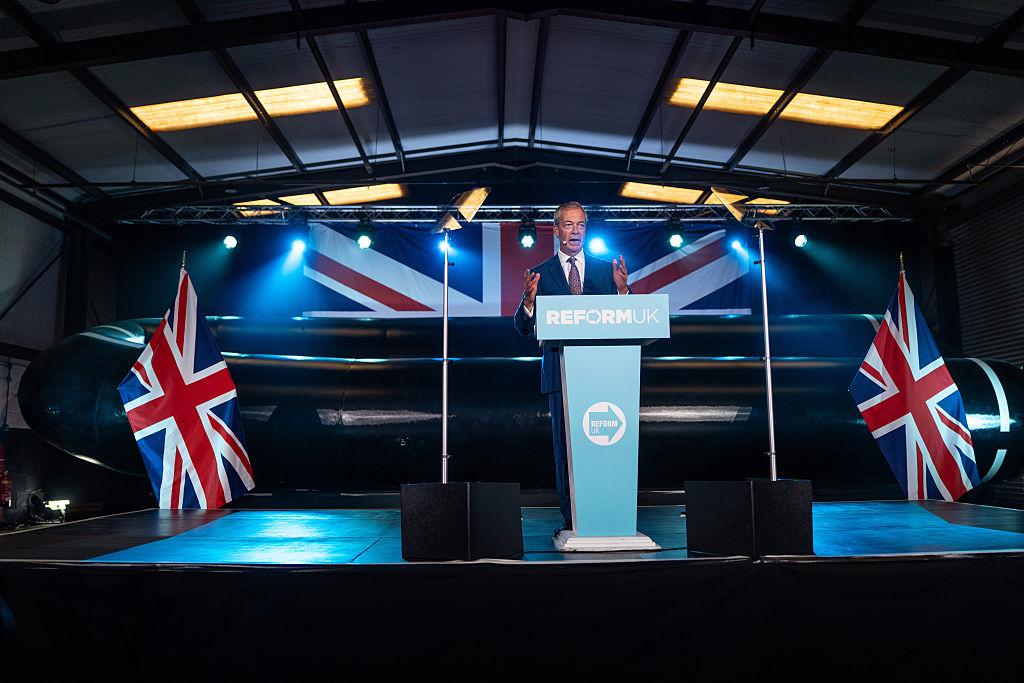

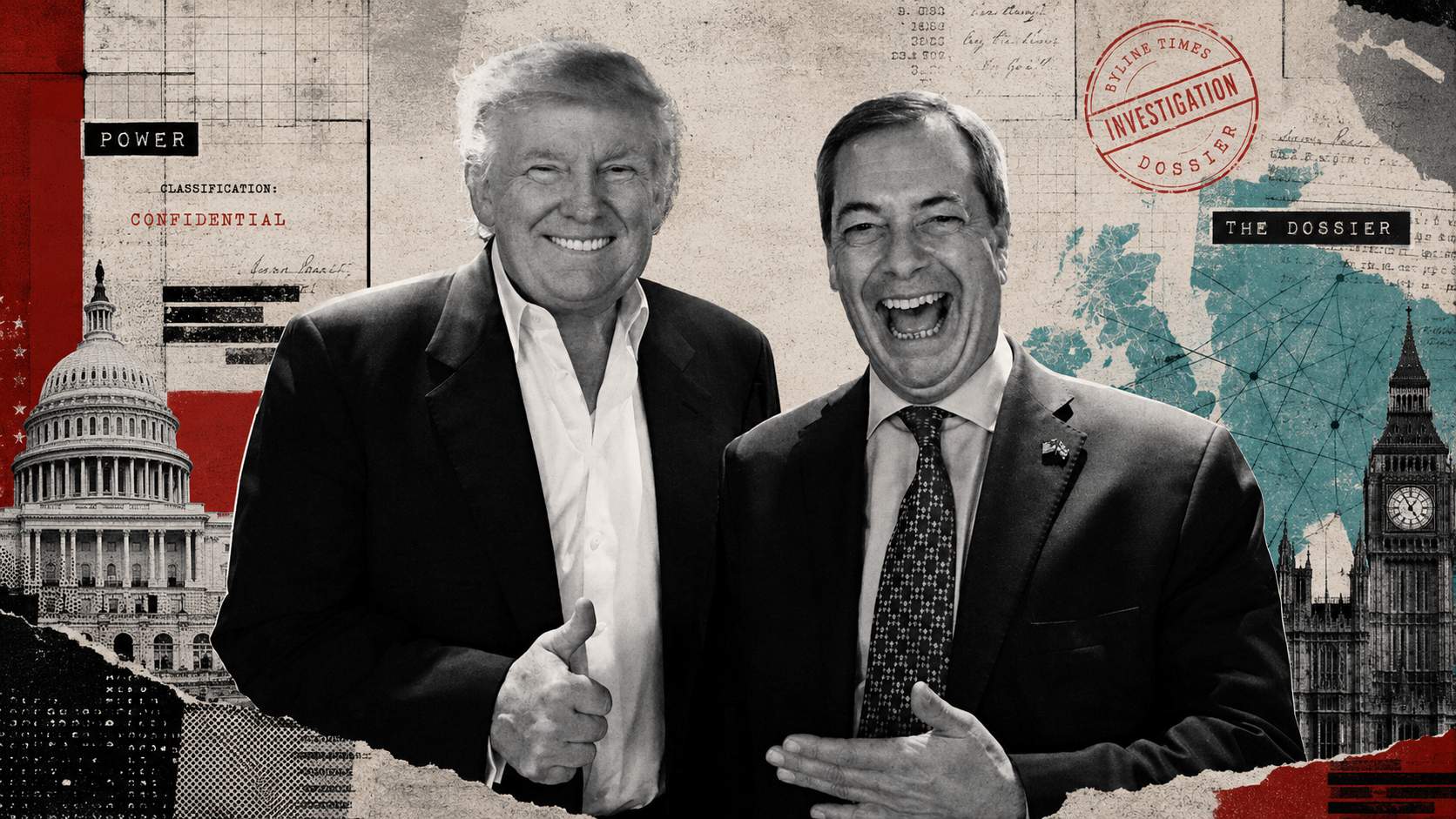
 Contribute to our #ReformUncovered crowdfunder
 Subscribers Get More from JOSIAH
 Subscribers Get More from JOSIAH
Josiah Mortimer also writes the On the Ground column, exclusive to the print edition of Byline Times.
So for more from him…
