
 Subscriptions

Read our Monthly Magazine
And support our mission to provide fearless stories about and outside the media system
I’m a recovering diplomat. For the last decade of my career I focused on cognitive influence. That work began in earnest for me following Russia’s invasion of Crimea in 2014, when I started working on the Russian file with an emphasis on cognitive influence.
I realised that we are defending our democracy through arbitrary definitions of categories of activity that our adversaries do not recognise. We generally define things as narrowly as possible, and do very good work within it across the civil service and elsewhere — precisely because we’ve defined it narrowly enough to achieve political moments, summits, and to expose adversaries in a fairly limited way.
But that’s not a way to win if you’re subject to cognitive warfare. We did not ask for cognitive warfare. We are subject to it.
We separate out electoral finance, misinformation, cyber activity, corruption, media influence and subversion. I was looking at the range of parliamentary activity that would amount to cognitive warfare — there are around twenty different lines of effort in this space.
ENJOYING THIS ARTICLE? HELP US TO PRODUCE MORE
Receive the monthly Byline Times newspaper and help to support fearless, independent journalism that breaks stories, shapes the agenda and holds power to account.
We’re not funded by a billionaire oligarch or an offshore hedge-fund. We rely on our readers to fund our journalism. If you like what we do, please subscribe.
The issue is: if you’re sitting in the presidential administration in Moscow, you are not running your activity on the basis of how we bureaucratically divide our work. You don’t run “a disinformation campaign” or “an influence campaign” — you want an effect, and a great deal of activity goes into achieving that effect.
Think about the case of the individuals sentenced a few weeks ago who were funded by cryptocurrency and committed an act of sabotage against our Prime Minister — that activity was accompanied by a disinformation campaign [about supposed ‘Ukrainian rent boys’].
We are looking at multiple vectors and channels, working toward one effect. There’s a mismatch in how we conceptualise this. We have the capability, in many different areas, to deal with these threats — what we lack is scale of response, and some of the legal permissions needed to respond adequately.
Ministers and the Chiefs of Defence Staff talk about a “whole of society approach” to this conflict, but I don’t think many people in this building actually know what a whole-of-society approach looks like in practice. Look at how it’s done in Finland, and in Estonia. Ukraine has developed exceptional resilience to what’s happening to that country.
Siloed and Split
I have three propositions. First: our threat is an integrated influence ecosystem, not a collection of separate acts. My suggestion is: build an integrated ecosystem to defend ourselves, which we currently lack.
A minister who appeared before a parliamentary select committee recently was unable to list every Government department that counters disinformation — which tells you how divided, antiquated and unresponsive our current set-up is.
Second: the Government’s proposed election-finance reforms are necessary, but they only protect one part of this ecosystem. Time and again we put patches on individual areas.
Third: Britain needs a democratically-governed national capability that connects detection, disruption, public explanation and local resilience. We need a Cognitive Defence Agency.
It needs to be funded. It needs to be empowered. Some elements will still need to sit within Government departments and relevant agencies — including the ability to disrupt adversaries — but we need that national capability, and we need it now.
Don’t miss a story
Sun Tzu wrote that supreme military excellence lies in breaking the enemy’s resistance without fighting. That plays out in practice through finance, media, technology and so on.
Russia has built a mature influence architecture across the whole of Europe: state institutions, intelligence services, commercial contractors, media outlets, and a whole series of proxy think tanks.
Given our role in NATO, our nuclear capability and our support for Ukraine, it’s prudent to assume Britain remains a priority target. Recent evidence from BBC Monitoring, and my work with the Centre for Information Resilience, shows the UK is being cast by Russian state media as enemy number one right now.
That’s a real problem, because the full scale of operations directed specifically at the UK isn’t well understood, and the Government isn’t communicating adequately about it relative to the rest of Europe. There’s a way to do that without panicking people.
Civil society organisations have insufficient funding to match the scale of defence needed. Part of the answer is funding researchers and civil society groups who can provide independent evidence and push back against bad actors.
Ukraine has organised itself around decentralised civil-society resilience since the full invasion began.
The way to do this here would be to have, in every town across the country, some form of civil-society organisation with the credibility to investigate bad actors.
And if the next Government devolves more power to local Government and local politicians, that resilience needs a local foundation. Our strategic importance is well understood in Moscow, and there are real gaps our adversaries exploit.

‘There’s No Money In Politics If You’re Straight’: How Farage’s Words Are Coming Back To Haunt Him
The Reform UK leader once claimed that only the corrupt could make money in politics. Now questions about his own multi-million pound fortune threaten to bring him down
The £25m Playbook
I imagined myself as someone working in the Russian presidential administration, thinking through how I’d buy influence in the UK. My conclusion was that it would cost around £25m to do it properly.
The first thing I’d do is fund think tanks, because I’d want to intellectualise my arguments and build support that friendly political parties could rally around. I wouldn’t be foolish enough to fund [the likes of] Nathan Gill directly — I’d fund relatives, companies, and other routes designed to get around existing legislation.
I welcome the Government’s recent proposals on election law, but the point is: we’re tightening the lock on the front door while leaving the windows and the back door wide open — the whole range of cognitive-influence activity that stronger, more joined-up legislation, a Cognitive Defence Agency, and proper funding for civil society could address.
Trust in central Government is low in the UK right now. So we need well-funded local and regional media able to tell these stories impartially, since that’s often where these narratives first take hold.
A couple of case studies. Firstly, the Tenet Media case and US indictment. US prosecutors set out evidence of around $10m passed through intermediaries to an ostensibly independent American media company, which funded social-media commentators who already had large, trusting audiences, used to inject Russian-aligned narratives into their content.
It’s easy — any company worth its salt does something like this to sell a product, so if you’re running propaganda, you buy influencer time and use influencers as a channel, because they have loyal audiences.
I’ve also covered Nathan Gill. Our work at the Centre for Information Resilience on a related crypto-funded network shows the range of activity that can sit behind a single operation. This kind of activity is simultaneously criminal, it’s about narrative. And if you only look at what’s happening around elections, you miss the point: this is constant, not seasonal.
In one case there’s strong evidence of cross-funding — political parties, ostensibly civic organisations, paid activists, paid voters — a full range of activity funded through one network. There are a lot of very wealthy backers behind this kind of activity, and if we have strong evidence of one or two of them running these operations, you can assume there’s a great deal more that we haven’t yet identified.
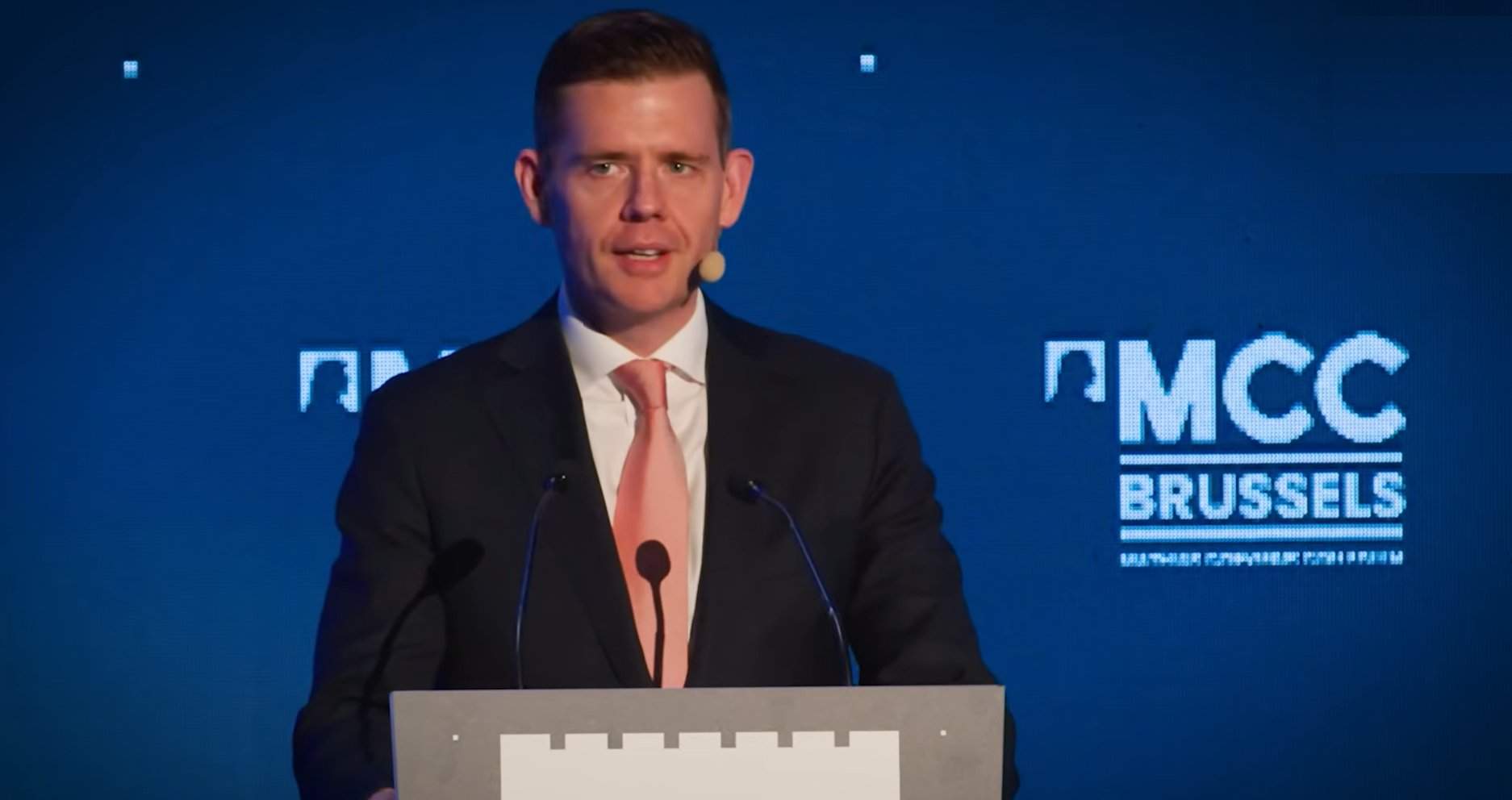
Matt Goodwin’s Lucrative Hungarian Fellowship Could Be in Line for the Chop Following Orbán’s Defeat
The Orbán-controlled body for which the Reform UK and GB News commentator is a ‘visiting fellow’ is facing investigation over alleged misuse of public funds
There’s also a Brussels-based case in which investigators showed Viktor Medvedchuk and other associates secretly financing political activity.
All the cases I’ve quoted are high-confidence cases which have been actively prosecuted by the relevant authorities — this isn’t sketchy open-source material, this is proven.
The last one I’ll mention: a Hungarian think tank, MCC, that ran a fairly open operation. There may also be parallel, less visible channels of influence that Viktor Orbán’s Government was running while in office.
There are members of the House of Lords who reportedly received funding through that initiative and are now in quite prominent positions, which shows how a state-supported ecosystem across Europe can run conferences, secure media exposure, and sell ideas that are then artificially amplified.
Part of my £25m estimate was this: I’d fund a think tank to get an intellectual argument going, then I’d fund digital amplification. Anyone with £20,000 could stand up a troll farm to push whatever narrative they wanted.
If I were pushing a particular argument in Parliament, I’d have a think tank make the legislative case, then get my troll farm to amplify it, so that everyone in the UK starts seeing it in their feeds. These ecosystems need to be met with an equally joined-up response.
Government cannot prevent every lie or every act of hostile influence. The real test is whether our institutions can understand the scale of what we’re facing, communicate that to the public effectively, build resilience and understanding, and construct an ecosystem capable of responding in kind.
Andy Pryce is Senior Non-Resident Fellow with the Democratic Resilience Program at the Center for European Policy Analysis (CEPA). He previously served as Head of Public Diplomacy at the British Embassy in Washington and at the UK Mission to the EU in Brussels.
Got a story? Get in touch in confidence on news@bylinetimes.com
holding farage to account #reformUNCOVERED
While most the rest of the media seems to happy to give the handful of Reform MPs undue prominence, Byline Times is committed to tracking the activities of Nigel Farage’s party when actually in power




 Contribute to our #ReformUncovered crowdfunder
 Subscribers Get More from JOSIAH
 Subscribers Get More from JOSIAH
Josiah Mortimer also writes the On the Ground column, exclusive to the print edition of Byline Times.
So for more from him…
