
 Subscriptions
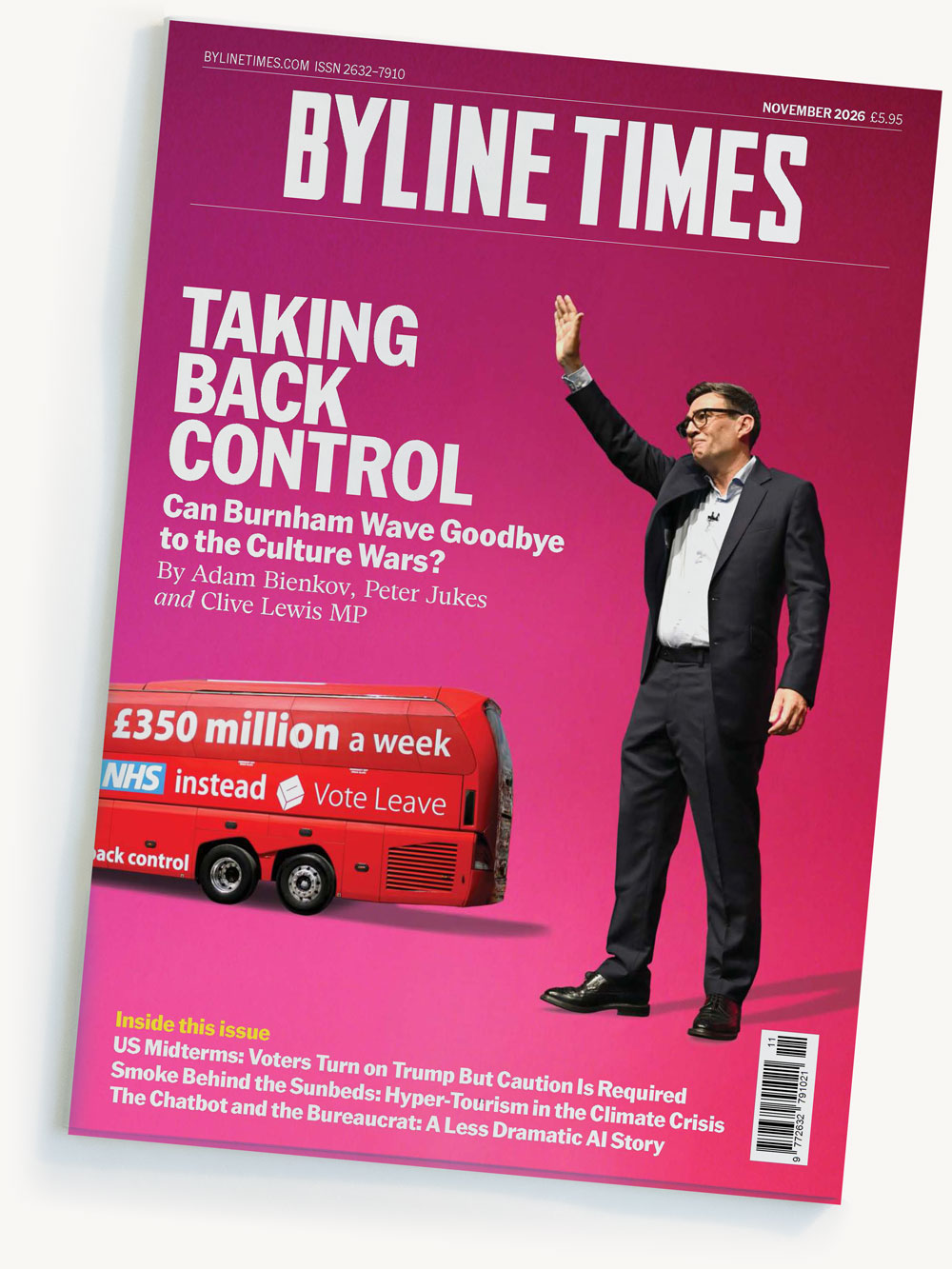
Read our Monthly Magazine
And support our mission to provide fearless stories about and outside the media system
In February 2025, Reform’s then-Chairman Zia Yusuf wrote: “We are pleased to announce that, as promised, Nigel Farage has handed over ownership of Reform UK to its members.
“Reform UK is now a non-profit, with no shareholders, limited by guarantee.”
Previously, Nigel Farage literally owned Reform UK. He held the vast majority of shares, in a highly unusual arrangement for a political party.
Farage pledged to change that. The party remains a company, but the majority-shareholder model is gone, and a formal constitution, member conferences, and voting rights are now in place. Up to a point.
Byline Times has got hold of a copy of Reform UK’s constitution, adopted in September last year, and it shows that Reform UK is still not the member democracy its leading lights have suggested.
ENJOYING THIS ARTICLE? HELP US TO PRODUCE MORE
Receive the monthly Byline Times newspaper and help to support fearless, independent journalism that breaks stories, shapes the agenda and holds power to account.
We’re not funded by a billionaire oligarch or an offshore hedge-fund. We rely on our readers to fund our journalism. If you like what we do, please subscribe.
The resolution adopting Reform’s new constitution states that it “robustly democratises participation within the party by the membership.”
What the actual constitution itself suggests however is that Reform UK is a DINO – Democracy in Name Only.
While the new governing document introduced a party Board, containing (some) elected members, and formalised member ballots for the leadership, Nigel Farage retains an extraordinary degree of power.
Some of the arrangements will be familiar to frustrated members of other parties. Motions carried at Reform’s conference are advisory only, and simply have to be discussed by the Board.
Members vote in internal elections – but those are at the whim of the party Board. Article 4.3 of the constitution notes the Board has absolute discretion over party ballots.
But the democratic sheen comes off completely when we look at how Farage could be removed. The answer is: it’s almost impossible.
To call an emergency general meeting or to issue a vote of no confidence in the leader, requires written requests to Farage’s appointed Chairman, currently ex-Conservative MP Lee Anderson, from at least 50% of all members “in good standing” (There is another mechanism to call such a vote, but only once Reform has over 100 MPs).
Reform has around 270,000 members, according to recent tallies, meaning around 135,000 members would have to write to Anderson, within 60 days, to demand a no-confidence vote in the Chairman’s boss.
Imagine, if you will, Lee Anderson combing through 135,000 hand-written letters and deciding if each of the writers are a) members and b) in ‘good standing’.
Don’t miss a story
The Chairman’s Gatekeeping Powers
Members are deemed of ‘good standing’ if their subscriptions are up to date, they are not subject to any suspension or exclusion by the party, and they owe no debts to the party older than 30 days and more than £100.
The leader-appointed Chairman has extensive powers over what counts as ‘good standing’. He can refuse new membership and renewals, revoke membership in specified circumstances, exercise emergency disciplinary powers “in cases of exceptional gravity and urgency”, suspend candidates (subject to Board approval after the fact), oversee the membership database and exercise overall responsibility for party organisation.
The Discipline Committee of the Board, composed of serving members, calls most of the shots on member suspensions or expulsions – and it is chaired by the party secretary. That role is appointed by Nigel Farage. (There is an appeals process which is more independent, for those who want to keep fighting).
Should a no-confidence motion in Farage be called – after meeting that impossibly-high bar – the decision goes to the Board.
Farage sits on that Board, and there’s no requirement to recuse himself from the vote. He also has an in-built majority on the body.

Reform’s Nadhim Zahawi Accused of ‘Fantasy’ After Falsely Claiming Labour-Backer Dale Vince Bankrolled Count Binface
The former Chancellor told ITV viewers that Dale Vince gave Count Binface hundreds of thousands of pounds for his Clacton campaign. Both say this is completely false
An In-Built Majority
The Board does have power. But only three of its eight places are actually elected by members.
Three members are appointed by the party leader – while the leader himself and the party Chairman he appoints also sit on there. That gives an inbuilt five-in-eight majority for Farage – or any successor – on the party’s governing body.
The Chairman does not usually vote, so in practice the leader’s in-built majority is usually 50% – with the chair (who can be sacked by Farage) casting any deciding vote.
It is the Board which approves policies and manifestos, while the leader directs policy development with the Board’s agreement.
Article 6.20 of the constitution is particularly telling. And it was, strangely, left off the summary handed to members at Reform conference last summer.
It states: “In between meetings all powers of the Board are delegated to the party leader who may exercise those powers at his discretion.” That bears reading again.
“Any decision made by the party leader that would have been made by the Board is subject to ratification at the next meeting of the Board or, should the party leader consider it necessary, by email.”
The Board ordinarily meets just twice a year. Between meetings, the leader can make any decision the Board can, ratified after the fact – by a body he controls.
The Board’s powers – and therefore the leader’s between meetings – are sweeping. It manages party funds and structure, policy and manifesto approval, party discipline and procedural rule-making. The board can establish, suspend or disband branches.
The resolution adopting the constitution in September 2025 states: “A well-structured Constitution is essential for maintaining internal democracy, transparency, and the effective functioning of the party.” Readers can decide whether the rhetoric matches the reality.
Should the shine continue to fade from Nigel Farage – despite his recent re-election in Clacton – he will not be removed by party members. That decision will be made by one man: Mr Farage himself.
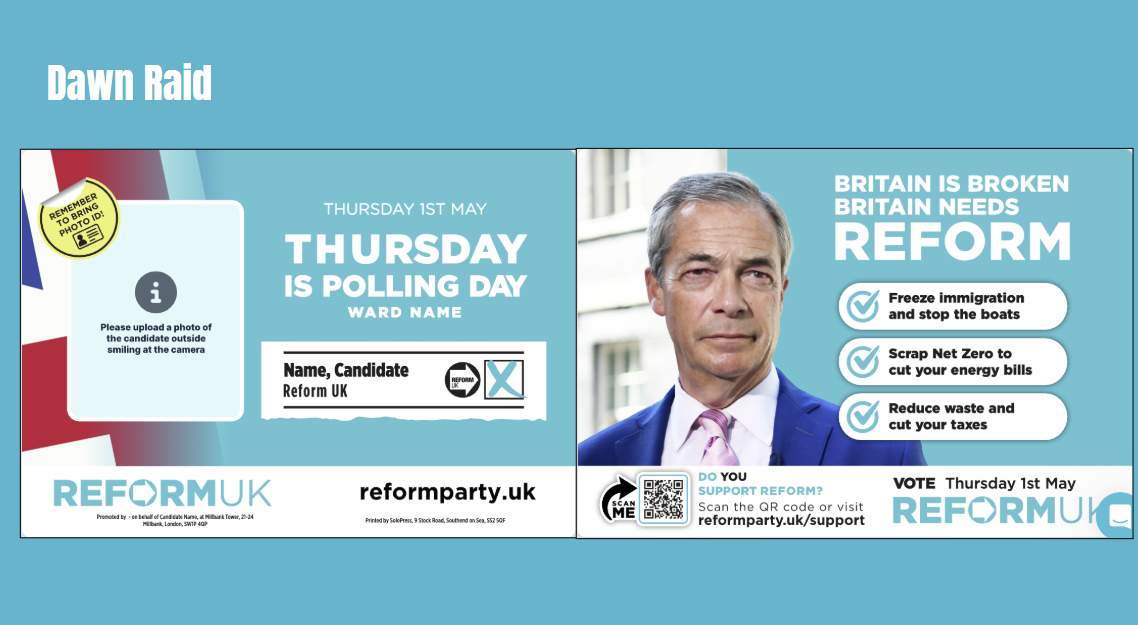
Reform UK Tells Its Activists ‘Don’t Drink and Tweet’ Because ‘The Biggest Threat to Reform Is the People in It’
EXCLUSIVE: “If this was sat on the desk of an anti-Reform journalist, what are they going to do with it?” the leaked internal training course warn its members
A Snapshot of Nigel Farage’s Powers Within Reform UK
Policy and political direction
- Farage gives political direction to the Party and is responsible for developing its policies, with the agreement of the Board — Art. 7.1 of the constitution
- Farage makes or approves national statements of Party policy and how they’re communicated — Art. 7.3.3
- Farage may form advisory groups at his discretion on any matter pertinent to his functions, informing the Board of their membership — Art. 7.2
- Farage has the right to be a full member of all sub-committees and working groups set up by the Board (Art. 7.3.1), including finance, discipline, policy, standing orders and members liaison
Appointments
- Farage appoints three ordinary voting members of the Board; at least two must hold or have held elected public office in the UK — Art. 6.3.2
- Farage appoints the Party Treasurer, Party Secretary, Party Chairman and Deputy Leader — Arts. 6.5, 7.3.2, 7.11. The Chairman appointment is subject to Board approval
- Farage may make such other appointments as he thinks fit, informing the Board at its next meeting — Art. 7.3.4
- Farage fills casual vacancies on the Board (even if the vacancy is of an elected member) — Art. 6.18
- Farage renews the terms of Board members. All serve two years, renewable without limitation “at the discretion of the party leader” — Art. 6.15. On a plain reading this captures the three member-elected seats
Executive authority
- Farage, between Board meetings, holds all powers of the Board, exercisable at his discretion and subject to later ratification — Art. 6.20. The constitution doesn’t specify any consequence if ratification is withheld
- Farage must be present for the Board to meet — Art. 6.21. The minimum attendance (quorum) is four voting members “including the party Chairman and party leader”
- Farage selects candidates for parliamentary and other non-local by-elections, in consultation with the constituency association or branch — Art. 12.12
Joint and veto powers
- Farage, jointly with the Board he controls, determines co-operation with other parties, institutions and organisations (such as electoral pacts) — Art. 3.3
- Farage holds an effective veto wherever unanimity of the Board is required: admitting an otherwise-prohibited member (Art. 4.9), amending the constitution without a members’ ballot where legally required (Art. 13.6), and correcting “errors in logic, numbers, grammar, or spelling” (Art. 13.7)
- Farage sits on the Board, which determines a motion of no confidence in him, with no recusal provision — Arts. 6.28–6.31
Got a story? Get in touch in confidence on josiah@bylinetimes.com
holding farage to account #reformUNCOVERED
While most the rest of the media seems to happy to give the handful of Reform MPs undue prominence, Byline Times is committed to tracking the activities of Nigel Farage’s party when actually in power


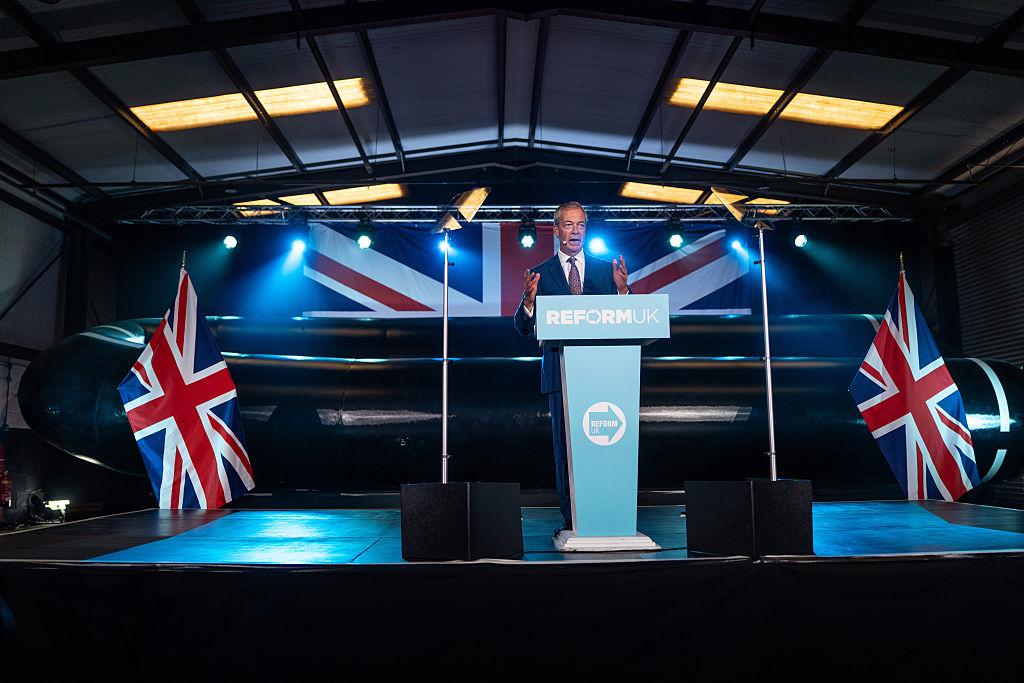


 Contribute to our #ReformUncovered crowdfunder
 Subscribers Get More from JOSIAH
 Subscribers Get More from JOSIAH
Josiah Mortimer also writes the On the Ground column, exclusive to the print edition of Byline Times.
So for more from him…
