
 Subscriptions
Read our Monthly Magazine
And support our mission to provide fearless stories about and outside the media system
There have been many attempts to get inside the mind of Andy Burnham in recent weeks, and it has ramped up in recent days with the knowledge that he will almost certainly become Britain’s next Prime Minister in July.
But aside from Burnham’s own words, one report perhaps offers the best glimpse we have yet of what a Burnhamite – to coin a word – policy agenda might look like.
The report from the Burnham-aligned ‘Mainstream’ group, which works closely with centre-left groups like Compass and Open Labour, looks at ‘Manchesterism’, i.e. Burnham’s approach to governing in Manchester. It sets out a vision on a range of issues for radical economic and political change.
Co-authored by Mathew Lawrence and Alex Williams of the Common Wealth think tank, ‘The Productive State’ was drafted independently of Burnham. But it is likely to be front of mind for the new Makerfield MP, given how close Mainstream are to the outgoing Greater Manchester mayor’s team.
The report could be read as a policy menu for the first months of a Burnham premiership.
So how would it be different to what Keir Starmer has been doing?
ENJOYING THIS ARTICLE? HELP US TO PRODUCE MORE
Receive the monthly Byline Times newspaper and help to support fearless, independent journalism that breaks stories, shapes the agenda and holds power to account.
We’re not funded by a billionaire oligarch or an offshore hedge-fund. We rely on our readers to fund our journalism. If you like what we do, please subscribe.
Cost of Living and Tax Reform
That plan starts with an immediate cost-of-living package – fully tax-funded with no new borrowing to keep bond markets calm (there were jitters last year when Burnham said the UK should not be “in hock” to lenders).
The call draws on Centre for the Analysis of Tax analysis, which suggests a comprehensive reform of capital gains tax – currently branded “complex, inefficient and unfair” – could raise an additional £14bn in annual revenues, whilst simultaneously taking over 100,000 people out of CGT altogether. In other words, this form of wealth tax (levied when investments and assets are sold) would vanish for those on the bottom end, and be hiked for those at the top.
The authors say the cost of living package would include “stripping the remaining levies off household and business energy bills with cheaper pricing on an essential block of consumption.” That ‘essential block’ (or ‘lifeline tariff’) idea comes from the left-wing New Economics Foundation, and is potentially a cheaper alternative to a universal subsidy for all home-energy use as backed by the Green Party.
A Burnham Government might then introduce an “emergency brake on rents” so they can’t outpace earnings.
And it backs a lower national bus fare cap (it’s currently £3 in England) with even lower fares for under-25s. A close Burnham ally recently suggested to Byline Times that Burnham may even offer free bus fares for under-25s.
Don’t miss a story
Public Ownership and Energy
After the cost of living package, public ownership. The near-collapse of Thames Water is flagged as the obvious starting point here. It could be taken into public control (if not technically government hands) through the ‘special administration’ regime and restructured, without upfront pressure on the public finances.
Labour’s year-old GB Energy would be powered-up further to become more of an owner in energy assets, something it has already started through the linked ‘Great British Energy – Nuclear’, which will own the Small Modular Reactors being built by Rolls Royce upon completion.
A “properly empowered GB Energy” is one of the first concrete moves under Mainstream’s energy plan, gradually increasing the role of public ownership in an expensive and complex sector.
As well as being a direct energy producer, GB Energy could also be an energy “dealer” — buying energy when prices are low, releasing supply when they spike, building strategic reserves itself, and stabilising prices from within the market.
Mainstream also wants to see national public corporations for energy and water, regional public housing corporations borrowing at the public cost of capital, and much more building on public land.
The care sector could be overhauled through setting up new municipal and co-operative providers, eventually taking the care sector out of the hands of (increasingly private-equity dominated) private firms.
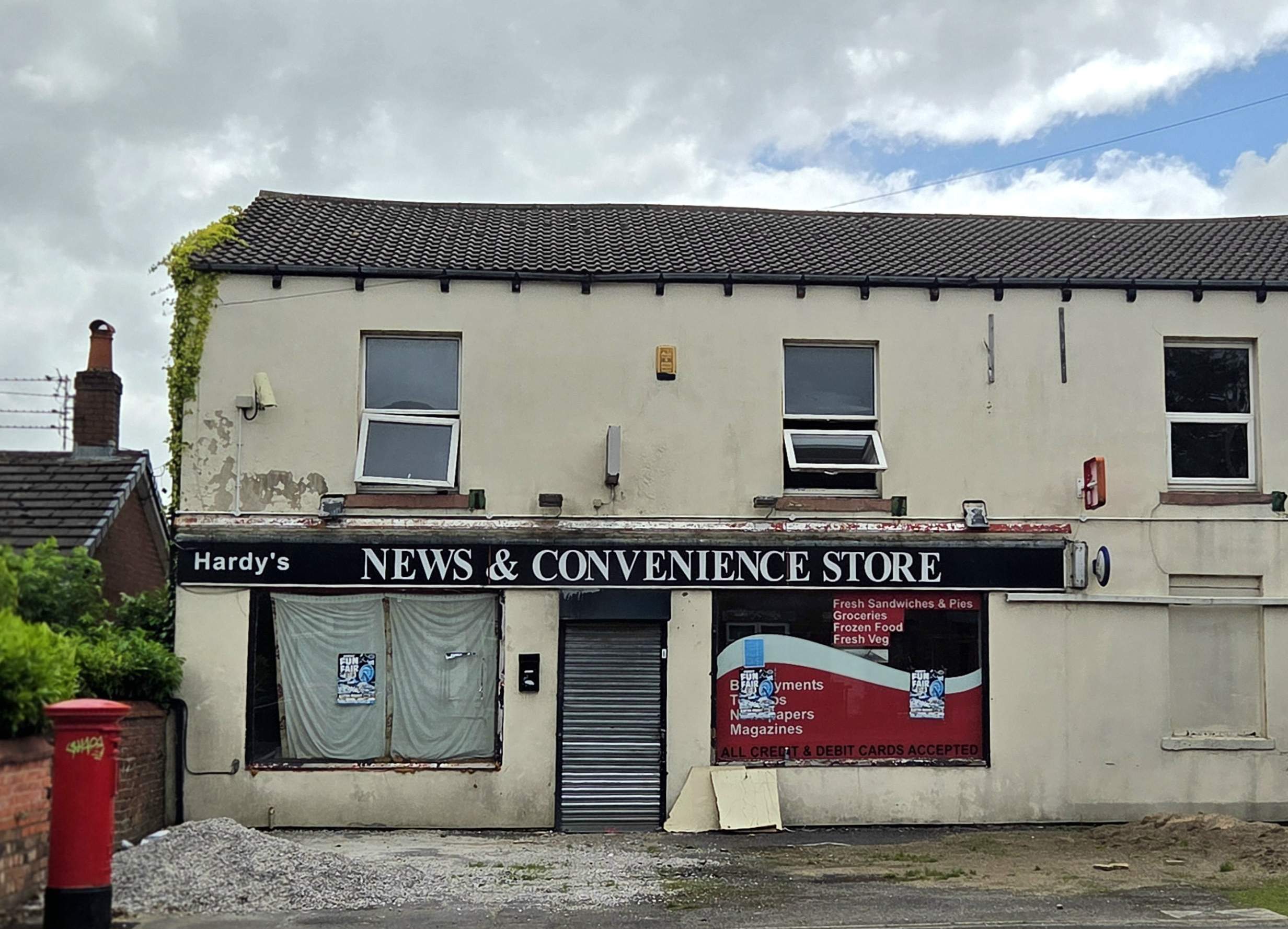
Burnham Wins in Makerfield: Can the ‘Politics of Place’ Now Offer an Antidote to the Poverty of Possibility?
Having been on Reform UK’s target list as a winnable seat, Andy Burnham’s new constituency is a microcosm of Brexit Britain and the failed legacies of Thatcher and Blair. Peter Jukes and Hardeep Matharu paid a visit ahead of its seminal by-election
Fiscal Rules and Devolution
Then there’s some fiscal jiggery-pokery, which may allow Burnham to stay within his fiscal rules while simultaneously being able to borrow billions more.
How? To simplify, it would involve reassessing how the Government sets out its balance sheet and borrowing.
Chancellor Rachel Reeves has already done this to an extent. In 2024, she moved to include financial assets and credit the Government owns (such as student loans) on its books. It has the effect of making debt as a percentage of GDP seem lower.
The Mainstream report suggests going further, moving from a ‘Public Sector Net Financial Liabilities’ (PSNFL) model to a full ‘Public Sector Net Worth’ framework.
Under that model, acquiring a productive asset (like the water industry) shows up as what the report argues it actually is: “a swap, not expenditure.” Buying up a water firm means swapping cash or bonds for an asset of comparable value, so net worth barely moves. Rather than, say, £100bn (or whatever nationalisation costs) being formally added to the Government’s overall debt tally with no visible gain.
And it proposes a major expansion in devolution, something for which Burnham has made his desire clear. Backers foresee devolved areas being granted major tax and borrowing powers, control over water or energy pricing, and new public housing corporations.
Manchesterism, the authors argue, stands against “Westminster’s hoarding of power.”
City-regions could be given new “constitutional protection to build and sustain public institutions without fear of future dismantling.” This is tricky, to say the least, when Westminster remains sovereign and can repeal any law it likes, but it is a statement of intent. Regions could be granted far greater borrowing and tax-raising powers, putting them closer to the German model of devolution than England’s current fragile patchwork.
Transport and the Burnham Legacy
On transport, Burnham’s Bee Network of publicly-controlled buses is now seen as his flagship policy. Could it be rolled out across the country – ending (or at least mitigating) decades of bus privatisation that started under Margaret Thatcher?
Labour is already nationalising passenger rail, but a common critique from rail-watchers has been that the actual rolling stock – the trains themselves – will remain privately owned, often leased at exorbitant rates. The Mainstream report suggests changing that, arguing rolling-stock leasing companies (ROSCOs) have no incentive to invest in long-life trains.
The proposed fix is the “producer” model — track and operators (the current Great British Railways plan) joining rail stock in one coherent unit.
If that sounds too in-weeds, together the proposals would represent a “restoration of public control over essential goods”. Keir Starmer has arguably got the ball rolling on many of these changes, often without many people noticing. Under a ‘Productive State’, Britain’s next PM could go further, and make clear what these changes are really all about.
If ‘Manchesterism’ was previously a vague buzzword, it is no longer. With just a few weeks to prepare for power, Andy Burnham might be grateful for that.
The report is available to read here.
Got a story? Get in touch in confidence on josiah@bylinetimes.com
holding farage to account #reformUNCOVERED
While most the rest of the media seems to happy to give the handful of Reform MPs undue prominence, Byline Times is committed to tracking the activities of Nigel Farage’s party when actually in power

 Contribute to our #ReformUncovered crowdfunder
 Subscribers Get More from JOSIAH
 Subscribers Get More from JOSIAH
Josiah Mortimer also writes the On the Ground column, exclusive to the print edition of Byline Times.
So for more from him…
