
 Subscriptions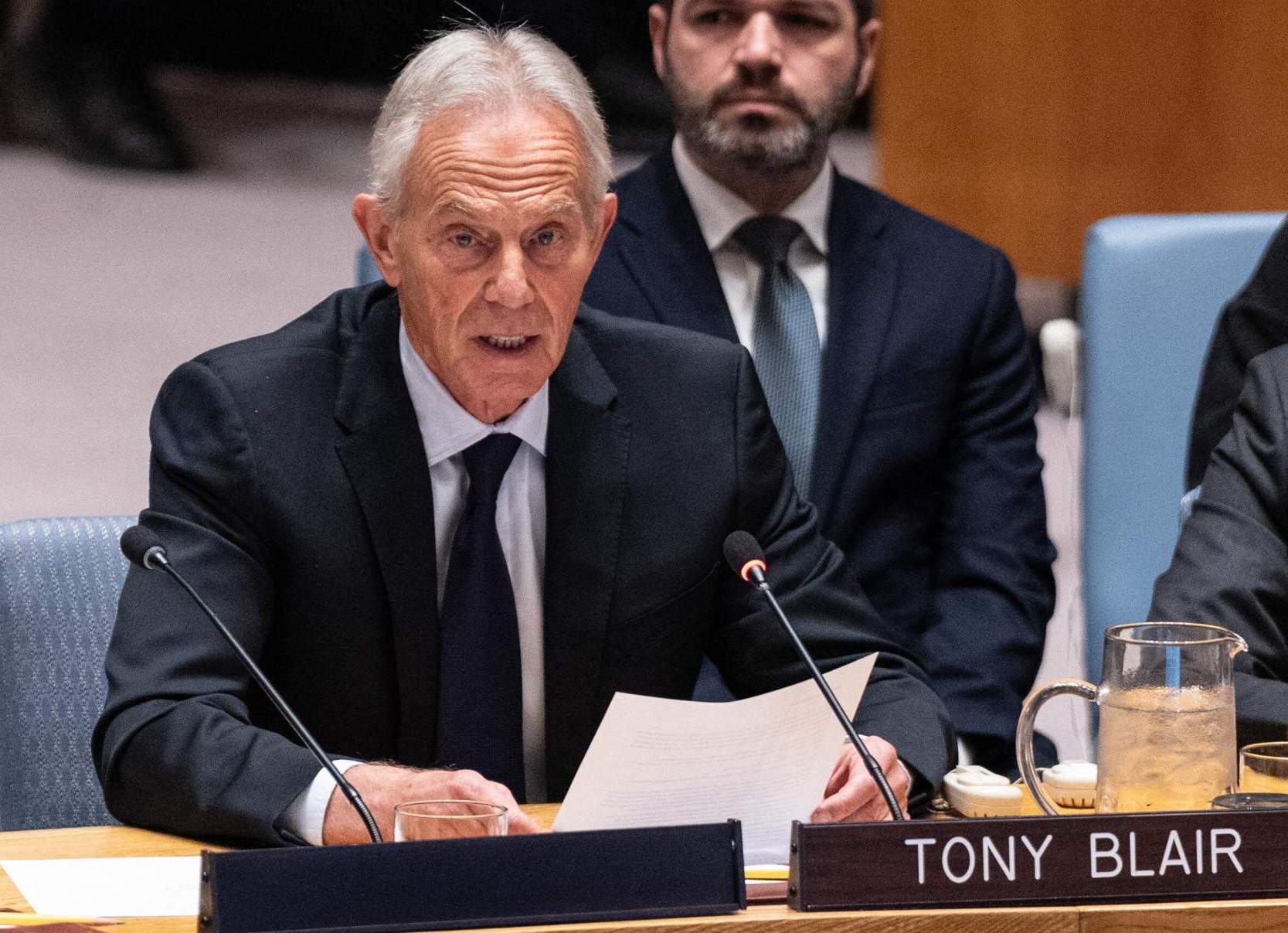

Read our Monthly Magazine
And support our mission to provide fearless stories about and outside the media system
The former Prime Minister Tony Blair’s new essay on the Labour Party asks the right question. Britain is drifting. The Labour Government has no governing project. Something fundamental has to change. Then Blair hands the reader the wrong map.
The pushback has been swift and, in its way, telling. The Mayor of Greater Manchester, Andy Burnham, has attacked Blair for not mentioning inequality once in 5,700 words. The Treasury minister Torsten Bell has defended the Government’s net zero plans – but defended them as a cost the country can bear, rather than as the cheapest energy strategy on offer. Senior Labour figures have dismissed the essay as “reheated Blairism with no answers”. Each lands a punch. None lands the one that matters. The whole argument is being fought on a 1990s map of Britain that no longer resembles the reality of the country.
Blair’s essay is fluent, articulate and internally coherent. It is also a Victorian document, built around a view of how technological civilisation works that belongs to the age of steam, coal and empire. A clever Victorian reformer in 1888 might have looked around and declared the railway to be the thing. He would have been right – and he would have missed that the railway was one component of a far wider transformation, and that the next century would belong to whoever understood the whole.
Blair has done the same with artificial intelligence (AI). He calls it “the thing” and says it will change everything. He is right that it will – and he has missed that AI is one of five interlocking technological revolutions reshaping the entire economy of every country on Earth. Because he cannot see the whole, his prescriptions for the parts do not add up. His “Radical Centre” turns out to be the most conservative political settlement on the table – the late reflex of an old order trying to manage a transformation it cannot perceive.
Britain cannot afford to take Blair’s path. Burnham’s offer – a redistributive 1980s Labourism – cannot get there either. The argument requires a new horizon.
The Five Revolutions
I set out this framework in detail in my 2024 Foresight paper ‘Planetary Phase Shift’. The argument, in plain English: civilisations behave like other living systems. They grow, mature, break down, and either reorganise into a new form or collapse. We are in the breakdown stage – a moment when the way societies generate energy, move people and goods, feed themselves and process information is coming apart, even as a new way of doing all of that is being born in its shadow.
Five sectors of the global economy are crossing into new configurations at the same time. Each on its own would be a generational story. Together, they reshape everything.
Energy – Solar panels, wind turbines and batteries are now the cheapest source of electricity on the planet, on a cost curve that has been stable for two decades. Since 2011, onshore wind costs have fallen 59%, offshore wind 61%, solar 89% and batteries 83%. Some 84% of new global power generation in 2023 was renewable. Two trillion dollars a year now flows into clean technology investment – double the amount going into fossil fuels.
Transport –Electric vehicles, and behind them autonomous vehicles, are following the same cost curve. The internal combustion engine is heading the way of the horse and cart.
Food –Precision fermentation and cellular agriculture – using engineered microbes to produce proteins and fats at scale – are projected to make protein production five to 10 times cheaper than industrial animal agriculture by 2035. As the think tank RethinkX has documented, industrial livestock is heading for the same collapse that wiped out the kerosene-lamp industry in a decade. Up to 2.7 billion hectares of freed land could become available for rewilding, regenerative farming and carbon drawdown.

How to Stop Billionaires From Buying British Politics
Nigel Farage’s £5 million handout from a crypto billionaire is a worrying sign of things to come. We must act now to prevent a complete oligarch takeover, argues Oliver Bullough
Information – This is the part Blair has noticed. AI is following a much steeper cost curve. The cost to train a model such as GPT-3 fell from $4.6 million in 2020 to a projected $30 by 2030. What Blair has missed is what AI is connected to.
Materials –Advanced materials, 3D printing, robotics and circular-economy chemistry are converging into a different industrial base that uses far less mining, land and brute-force extraction. The Congolese cobalt mine belongs to a world on its way out.
These are five threads of a single story. Cheap clean electrons make precision fermentation viable. AI optimises the grid that carries those electrons. The grid powers the AI. Autonomous electric vehicles become moving batteries that stabilise the grid. New materials make the batteries lighter, cheaper and recyclable. The loop closes.
Together, these revolutions amount to what physicists call a phase transition – a system flipping from one form into a fundamentally different one, the way water flips into steam. The cascading crises everyone now talks about – the cost-of-living crisis, energy shocks, geopolitical fractures, the wars in the Middle East and Ukraine – are the noise of the old system coming apart. The five revolutions are the outline of what is being born in its place.
Blair sees AI. He misses the four others, and the connections between them. That single gap organises every error in the rest of his essay.
The Cheap vs Clean Fantasy
Blair’s most consequential line is rhetorical: “Does our economy need right now the goal of clean energy or cheap energy?” It is a question from 1995. Cheap and clean are now the same thing. Treating them as alternatives is akin to asking, in 1985, whether an office requires a typewriter or a word processor.
The North Sea cannot save Britain, and the numbers are devastating. Between 2010 and 2024, 14 years of Conservative drilling policy issued around 400 new exploration licences. Twenty fields were actually built. Their total lifetime production, at full exhaustion, will deliver the equivalent of six months of UK gas demand – two hours and 12 minutes per licence. The most recent renewables auction will offset 50 times that, every year, indefinitely. The Office for Budget Responsibility (OBR) has calculated a £364 billion fiscal hit from Britain’s continued reliance on global gas markets through 2050. Modelled across every realistic price scenario, the Treasury loses money on a typical new North Sea field. New licensing fails on its own chosen criteria: a wealth-transfer mechanism dressed up as energy policy.
The reason runs deeper than politics. For decades, every barrel of oil or cubic metre of gas pulled from the ground returned many times the energy it took to extract. That ratio – what researchers call the energy return on investment (EROI) – is collapsing for fossil fuels and rising for renewables. Britain’s national EROI peaked in 2000 at 9.6:1 and had fallen to 6.2:1 by 2012. An industrial economy of Britain’s complexity requires a ratio of at least 10:1 to function comfortably. Britain has been below that threshold for nearly two decades, hiding the deficit with imports that are becoming more expensive and more politically fragile – as the attack on Ras Laffan and the closure of the Strait of Hormuz have just demonstrated.
Work by Paul Brockway and colleagues at the University of Leeds, published in Nature Energy, shows that fossil fuel returns globally are dropping roughly 10% every quarter-century at the point the energy is actually used – the plug, the pump, the boiler. Solar and wind at the same point of use already do better than fossil fuels, and they are getting better still. Britain has crossed the line. Almost nobody in Westminster has noticed.
The Superabundance Britain Refuses to See
The other half of the story is what becomes possible when energy stops being a scarce input and starts being an abundance to be designed. The research is now strong enough to be treated as settled.
The reframing came when researchers asked a different question. Instead of asking how much solar and wind capacity is required to meet average demand, they asked what happens if enough is built to meet demand on the worst days – the cloudiest weeks of winter when wind drops off. The result is an enormous surplus of generation for the rest of the year. RethinkX’s Adam Dorr and colleagues ran the numbers on what that surplus makes possible. The more solar and wind capacity built above existing demand, the less battery storage is required. Panels and turbines are now cheap; batteries remain expensive; supersizing generation collapses the overall system cost. Dorr calls it the Clean Energy U-Curve.
The finding is corroborated across independent research. Marc Perez at Columbia University found that building solar and wind capacity to three times peak load cuts battery requirements by 90% and electricity costs by 75%; the Finnish energy firm Wärtsilä found that overbuilding by four times peak load requires only four to 10 days of storage. The International Energy Agency’s Task 16 Firm Power report has established that this is the cheapest route to round-the-clock clean electricity at any scale.
Optimise the system properly and the result is virtually free clean energy in vast surplus, for most of the year. RethinkX calls this clean energy super power. I call it superabundance, because that is what it is.
Applied globally, the numbers are larger still. RethinkX’s 2025 Understanding Stellar Energy report modelled every region of the planet. Ethiopia – often portrayed as a byword for energy poverty – could generate up to 414 times its current output. India could produce 66,000 terawatt-hours per year, almost 10 times current US electricity generation. A team at the Swiss Federal Laboratories for Materials Science, led by Hubert Desing and published in Energies, found the planet’s total physically possible renewable generation is around 71 terawatts. Current global energy consumption is about 6.7 terawatts. Humanity has 10 times more clean energy potential than it uses.
Britain’s share is exceptional. With roughly 800 GW of wind, 600 GW of solar and around three days of grid-scale storage, the country becomes a clean energy superpower in the literal sense – producing two to three times what it currently consumes, at near-zero marginal cost for most of the year and exporting the surplus into a Europe that needs it.
This is the potential suberabundance Blair refuses to see – the foundation for genuine industrial revival. Virtually free clean electricity at vast scale decarbonises existing industry and unlocks industries that were previously beyond reach: desalination on a scale that can re-green drylands; pulling carbon out of the air at industrial throughput; clean steel and cement at competitive prices; green hydrogen for heavy industry; precision fermentation that displaces industrial livestock; mining waste rather than digging new holes in the ground; AI data centres that do not have to fight farmers for water; a re-industrialised north of England powered by the wind off its own coast.
Blair’s prescription to drill the North Sea harder and slow down the clean build-out is industrially suicidal. He proposes to choke off the foundation of the next economy in order to defend the last one.
The response to Blair on energy has been revealing. When Bell pushed back, he defended net zero as something Britain can afford – a worthy cost, prudently managed – which concedes Blair’s entire framing, in which clean energy is a price the country pays and cheap energy is the thing it sacrifices. The reverse is true: clean energy, built at the right scale, is the cheap energy, and defending it as a cost is defending it on the opponent’s terms. The whole of Westminster, Blair and his critics alike, is still arguing about how much the future will cost, when the real question is how fast Britain can collect the windfall.
I have set out the alternative in detail with colleagues in the Club of Rome Earth4All paper Electrified Sovereignty as Solution to Iran War Energy Shock, co-authored with the former Shell executive Divyesh Desai, Gerard Reid of the World Economic Forum’s Future Energy Council, Sandrine Dixson-Declève of the Club of Rome, and Vicente López-Ibor Mayor, formerly of Lightsource BP. Britain and Europe can build energy systems that produce many times current output, eliminate exposure to fossil shocks, and unlock entirely new electrified industrial economies – faster, cheaper and safer than any drilling alternative on the table. This is what Blair’s “Radical Centre” wants to slow down.
AI Without Its Body
Blair calls AI “the thing” and proposes to “reorganise the whole of government” around harnessing it. He then proposes to power it with an energy system that physically cannot run it.
A standard Google search uses about 0.3 watt-hours. A generative AI query uses 10 times that. The Electric Power Research Institute projects that AI-related US power demand could rise tenfold by 2030. Frontier training costs have grown 2.4 times every year since 2016. Amazon, Google, Meta and Microsoft will spend $700 billion on capital expenditure in 2026, most of it on AI data centres – more than the GDP of all but the top 20 national economies.
Such demand cannot be met by a centralised, fossil-fuelled grid running on the dwindling energy returns described above: the cost of electricity from a degrading fossil system rises while the cost of the AI on top of it is forced to fall.
A different physical configuration works. Solar panels, wind turbines and batteries are themselves semiconductors – close cousins of the chips the AI itself runs on – and they share the same exponential learning curves. Pair the solar revolution with the AI revolution and the result is a virtuous cycle: cheap electrons train the AI, and the AI in turn coordinates a grid of millions of intermittent renewable sources – rooftop panels, wind turbines, electric-vehicle batteries, smart appliances – at a speed no human-managed grid could match.

Fake Ads and Weak Regulations Are Creating a ‘Perfect Storm’ for Election Disinformation
A new report exposes the glaringly misleading political campaign ads threatening to derail our democracy
A British AI strategy that does not begin with the energy question amounts to a slogan. Blair’s version is exactly that.
Whose Revolution? The Missing Rulebook
Every technological revolution comes in two parts. There is the hardware – the steam engine, the power grid, the printing press, the microchip. And there is the software: the rules, laws, institutions, ownership patterns and democratic norms that decide who the hardware actually serves. The hardware sets what is possible; the software decides who benefits, and in my work I have argued that it is the software that determines whether a transition ends in liberation or domination.
History makes the point. The printing press could have served literacy or surveillance. It did both. Electricity could have been a public utility or a private monopoly. The internet could have stayed a decentralised commons or been captured by a handful of platform companies. We know which way that one went.
The same choice now faces every one of the five revolutions at once, and the window is closing fast. Cheap clean energy can be a public abundance or a private monopoly; AI can serve citizens or surveil them; precision fermentation can break the cruelty of industrial livestock or hand it to three patent-holders; autonomous transport can free cities from the car or lock them into platform rents. The technology does not decide. The rules around it do.
Britain’s rules were written for a 20th-Century economy of stable mass employment, predictable demand and growth-as-usual. They are hopelessly miscalibrated for an economy in which energy is becoming nearly free, intelligence nearly free, and the central question is who owns the abundance.
Blair’s essay barely touches this. He offers administrative reorganisation – technocratic civil servants, ministers drafted from outside Parliament, departments run as change-management consultancies. That is fine as far as it goes, and nowhere near the scale of the task. The settlement around steam – the trade unions, the vote, mass education, the regulatory state, ultimately the welfare state – was the software of the industrial revolution, and it took a century of struggle by Chartists, suffragettes, trade unionists and reformers, and finally the post-war Labour Government that Blair himself emerged from, to write it.
Britain does not have a century. It has a decade, probably less. The new rulebook is being written right now, by default – through platform mergers nobody is policing, energy markets designed for the past century, AI contracts signed behind closed doors, planning rules that entrench the old infrastructure. If the rules are not written deliberately, the incumbents will write them. We already know what they will say.
Blair’s “Radical Centre” bolts the new technology onto the old rulebook and hopes for the best. That is the express route to the future the public says it dreads: AI surveillance without rights, energy abundance captured by monopolies, automation without redistribution, a platform economy charging rent on every interaction. The country wants a serious politics of the new rulebook. No one has offered it – not Blair’s wing, not Burnham’s, not anyone currently in the Cabinet.
Tying Britain to a Sinking Ship
The heart of Blair’s geopolitical pitch is that Britain should anchor itself to the United States – repair the alliance, stay close, bet on American power. This is the single most dangerous idea in the essay, because it misreads what the United States now is.
In the past 18 months, America has shown what it now is. In December 2025, the White House published a National Security Strategy built around a doctrine it called “Civilisational Realism” – language that echoed the far-right “Great Replacement” conspiracy theory, declared Europe lost to migration, and announced that the old alliances were dead. In January 2026, US forces raided Caracas and seized Venezuela’s president; the US President Donald Trump dropped the old language of democracy and talked instead about oil: “We will run it. We will control it.” Then came 25% tariffs on America’s own NATO allies – Germany, France and the UK – open talk of annexing Greenland and Canada, and the war on Iran, launched a day after Tehran reportedly agreed to stop storing enriched uranium. The Republican Senator Lindsey Graham, who lobbied for the strikes, boasted that taking Iran would hand the US and its partners control of “31% of the world’s oil reserves”, adding: “We are going to make a ton of money.”
This is the conduct of an empire that has worked out it can no longer solve its own problems and has started seizing other people’s energy instead, rather than a confident superpower offering Britain a stable berth. American shale is past its peak. The debt is unpayable. The grid is creaking. Faced with the hard work of rebuilding – the energy transition, the crumbling infrastructure – Washington has reached for the easy options: invade, annex, tariff, grab. This is what an empire does when its problem-solving capacity collapses. It stops innovating and starts preying.
The grabs are failing even on their own terms. Venezuela’s reserves are extra-heavy crude with a punishing energy return – the US spent blood and treasure to seize what is, in physical terms, closer to a liability than an asset. The Iran war spiked oil prices, shocked the world economy and lit fresh fires across the region. Each “solution” accelerates the breakdown it was meant to halt.
Blair wants to lash Britain to this. He is asking the country to tie itself to the one ship in the convoy that has started firing on the others and is taking on water. The serious move is the reverse: cut Britain’s exposure to an unstable hegemon, build its own energy base so no foreign power’s convulsions can hold it hostage, and deepen the European relationship that Blair himself admits is needed. Energy sovereignty is national security. Blair has it exactly backwards.
Why the Centre Cannot Hold
Blair’s argument is that the centre is the place where policy comes first and politics second: find the right answer and then persuade people of it. The unspoken assumption is that the right answer can be worked out from inside the existing way of looking at the world, and that it merely requires leaders brave enough to face down the politics.
That assumption fails in a phase shift. The “right answers” by the lights of the old paradigm – drill more, chase growth-as-usual, cut welfare, defer Europe, double down on Washington – are the moves a failing system reliably produces when the ground shifts beneath it. They feel sensible because the people producing them still mentally inhabit the world of 1998. Inside that bubble they feel “radical” because they require defying current left-wing pieties. They are in fact the most predictable response available.
The real radicalism the moment requires is at the level of how the world is seen, rather than where one sits on the left-right spectrum. The metrics and instincts of the long boom no longer track reality: GDP captures nothing of what is happening to the country’s energy foundations, and the welfare debate, framed as “fiscal sustainability versus generosity”, misses that rising mental-health and disability claims are symptoms of a failing economy rather than the cause of the failure.
Burnham has been right to hammer Blair on inequality. Blair’s essay treats the British economy as an engine that simply needs the brakes off, with no curiosity about why ordinary people’s lives have come apart. But Burnham’s own frame is also too small for the moment. He sees what is being taken from people, but cannot yet name what is being built that could give it back to them at scale. A redistributive Labourism without a clean energy industrial strategy is a politics of slicing a shrinking cake. The phase shift opens a different horizon – one where electrified abundance generates the surplus that funds the resilience and public services Burnham wants. Neither Blair nor Burnham has joined those dots. Whoever does will define the next decade of British politics.
What Britain Needs to Do
Treat energy as the foundation of everything else. Make electrified sovereignty the explicit organising doctrine of British economic and security policy: a Britain that produces several times its current energy consumption from its own coastline and rooftops, at near-zero marginal cost, and exports the surplus into Europe. This, rather than any drilling programme, is the actual industrial strategy.
Build the capital architecture to fund it. Establish a Green Sovereign Bond Fund – a state-backed vehicle that raises capital at sovereign rates from pension funds, insurers and household savings and channels it directly into the electrified infrastructure the private market is underfunding. The Treasury already underwrites bond issuance for fossil-era purposes; doing the same for the energy system of the next 60 years is overdue catch-up.
Pair AI with clean energy. Build compute infrastructure alongside the renewables build-out, locate data centres where the clean electrons are generated, and treat grid optimisation as one of the highest-value applications of frontier AI. Britain has world-class universities, a deep AI research base and a wind resource the rest of Europe envies – none of them deployed coherently.
Lead European clean-energy integration. The route back into a structured European relationship runs through infrastructure rather than trade talks: a North Sea super-grid, shared offshore wind, joint hydrogen corridors, integrated clean-steel and carbon-border policies, joint critical-minerals processing. The political relationship will follow the physical one.
Reframe welfare as resilience. Through a turbulent decade the priority is managing the transition safely – building shock absorbers, protecting the vulnerable, investing in the energy, food, housing and mental-health infrastructure that lets a society navigate change without fragmenting. Cutting incapacity benefits to fund defence increases is exactly the wrong move: it transfers cost from the state’s balance sheet to the body of the citizen, and the OBR picks up the bill later, with interest.
Renew the political operating system. Britain needs to use deliberative democracy as a serious governance tool – the way Ireland did to resolve its abortion deadlock, France did on climate, and Scotland and the Netherlands now do as routine; the Organisation for Economic Co-operation and Development (OECD) has documented more than 600 such initiatives globally. Citizens’ assemblies on energy, on the constitution and on the welfare-resilience question can do work the existing party-political system literally cannot.
Hold the long horizon. The 2030–2032 window will be the most volatile period of this decade. The cost of getting British strategy wrong now is generational. So is the upside of getting it right.
Playing With Which Fire?
Blair titled his essay The Labour Party Is Playing With Fire. The fire Britain has been tied to for two centuries is the combustion of fossil fuels. That fire is still burning, and it is now the principal source of structural risk to the British economy. Price shocks. Imported inflation. Geopolitical exposure. Climate damage. The £364 billion fiscal hit the OBR has modelled. The country is playing with fire, and the fire is the system Blair wants to preserve.
Blair’s cure is wrong because the model is wrong. He can see the new technologies clearly enough; he simply cannot see that they belong to a different system, with different physics, politics and geopolitics from the one he is trying to preserve. He wants to bolt the data centre onto the oil rig and tie the whole thing to Washington. None of those pieces fit together any more.
What Britain needs is a serious politics of transition: one that names what is ending, builds what is beginning, and treats its citizens as adults capable of being told the truth about both. A redistributive left that refuses to engage with the structural change under way is no closer to the answer.
That conversation has not yet begun. It needs to start.
Nafeez Ahmed is Head of Investigations at Byline Times and the author of Alt Reich: The Network War to Destroy the West From Within published by Byline Books.
ENJOYING THIS ARTICLE? HELP US TO PRODUCE MORE
Receive the monthly Byline Times newspaper and help to support fearless, independent journalism that breaks stories, shapes the agenda and holds power to account.
We’re not funded by a billionaire oligarch or an offshore hedge-fund. We rely on our readers to fund our journalism. If you like what we do, please subscribe.