
 Subscriptions
Read our Monthly Magazine
And support our mission to provide fearless stories about and outside the media system
It may not seem like it, but British politicians are cheap dates. Nathan Gill, former leader of Reform UK in Wales, worked for Russia for just £40,000; Neil Hamilton took £2,000 per question, which wasn’t much of a price for someone’s honour, even in 1994. Sir Peter Viggers’ floating duck island, symbol of the excesses of 2009’s expenses scandal, cost a mere £1,645.
This is all to say that when you step back and look at Nigel Farage’s £5 million gift from Christopher Harborne, even when you compare it to illegal donations, you can see clearly how unusual it is. There has never been anything like it in British politics, and people are right therefore to be more than usually concerned about where it came from, why it was given, and how it was spent.
But step back further still, and Farage’s gift looks as quaint as a 1960s Bond villain. All the parties’ spending in the last British general election added together came to barely one-hundred-thousandth of the total for America’s presidential and congressional races that year. Fairshake, which is just one lobbyist for crypto in the US, has $165 million to spend on this year’s midterms, enough on its own to more than double the cost of a UK-wide contest.
You don’t have to be a conspiracy theorist to think that some US billionaires might be looking across the Atlantic right now and wondering why they should bother chucking so much money at SuperPACs when they could, for the cost of a single senate seat in Texas, buy a whole G7 country. And, let’s face it, that money wouldn’t be going to the Greens, to Labour, or even to the Lib Dems.
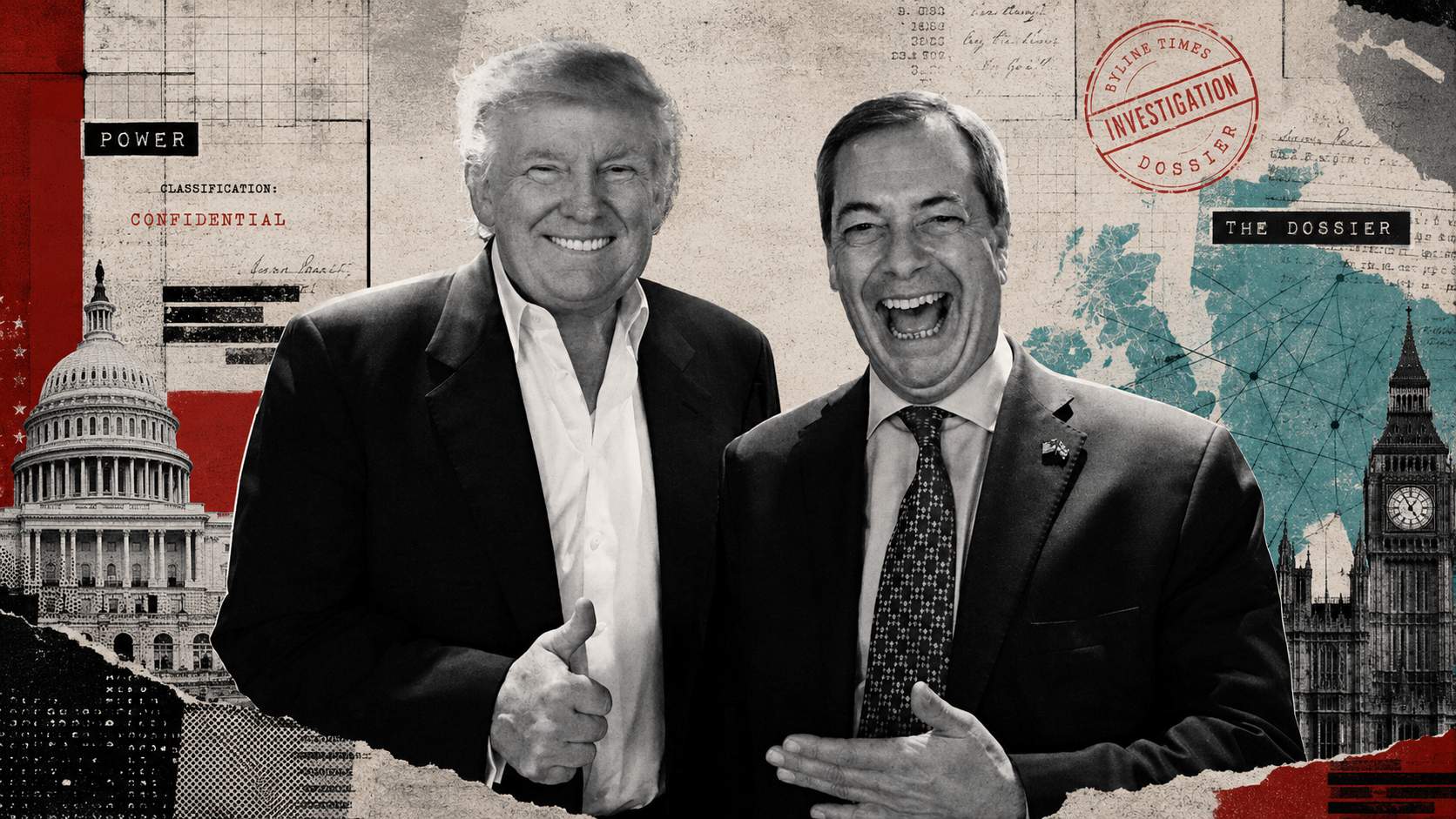
Rick Wilson’s Warning From America: Nigel Farage Will Be Your Donald Trump, Unless You Act Now
The former Republican strategist and Lincoln Project founder has some hard lessons for Conservatives and Labour alike
I know there are lots of crises clamouring for your attention right now, but the threat posed by electoral funding should trump them all because without negating it, there is no way to solve the others. Without a fair political system, we cannot elect politicians who will represent everyone, rather than just their donors; without adequate enforcement of the laws, there is nothing to stop politicians from cheating their way to victory and, once they’ve won, retrospectively approving their own triumph.
If we don’t get big money out of democracy therefore, there will eventually be no democracy. Once a political system has started to accept the kind of money that flows into American elections, there is precious little you can do about it. If a democracy has become a plutocracy, it is well on its way to oligarchy, and oligarchs don’t give up their power without a fight.
The government has made some moves in this direction, but its efforts are inadequate and lack the urgency required. They must be strengthened, and then the rules must be robustly enforced by ambitious, independent and powerful investigative agencies.
The first threat is from money. Billionaires are accustomed to getting their way, and are highly skilled at obscuring their wealth behind shell companies, foundations, associations, and other structures, and spreading it among multiple jurisdictions, in order to do so. But these time-honoured ways of escaping detection are a clunky old video store compared to the streaming service smorgasbord that is provided by digital currencies that can be programmed to evade detection.
It is good that the government has announced a moratorium on any donations made in cryptocurrencies, and tightened restrictions on how money can flow via companies, but that’s not enough. Only people can vote in elections, so only people should be able to fund them; and those people need to be taxpayers in the UK, on the electoral register.
This radical but simple reform would sweep away every available loophole, and every trick, and force political donors to be open and transparent about who they are, what they’re doing, and where their money comes from.
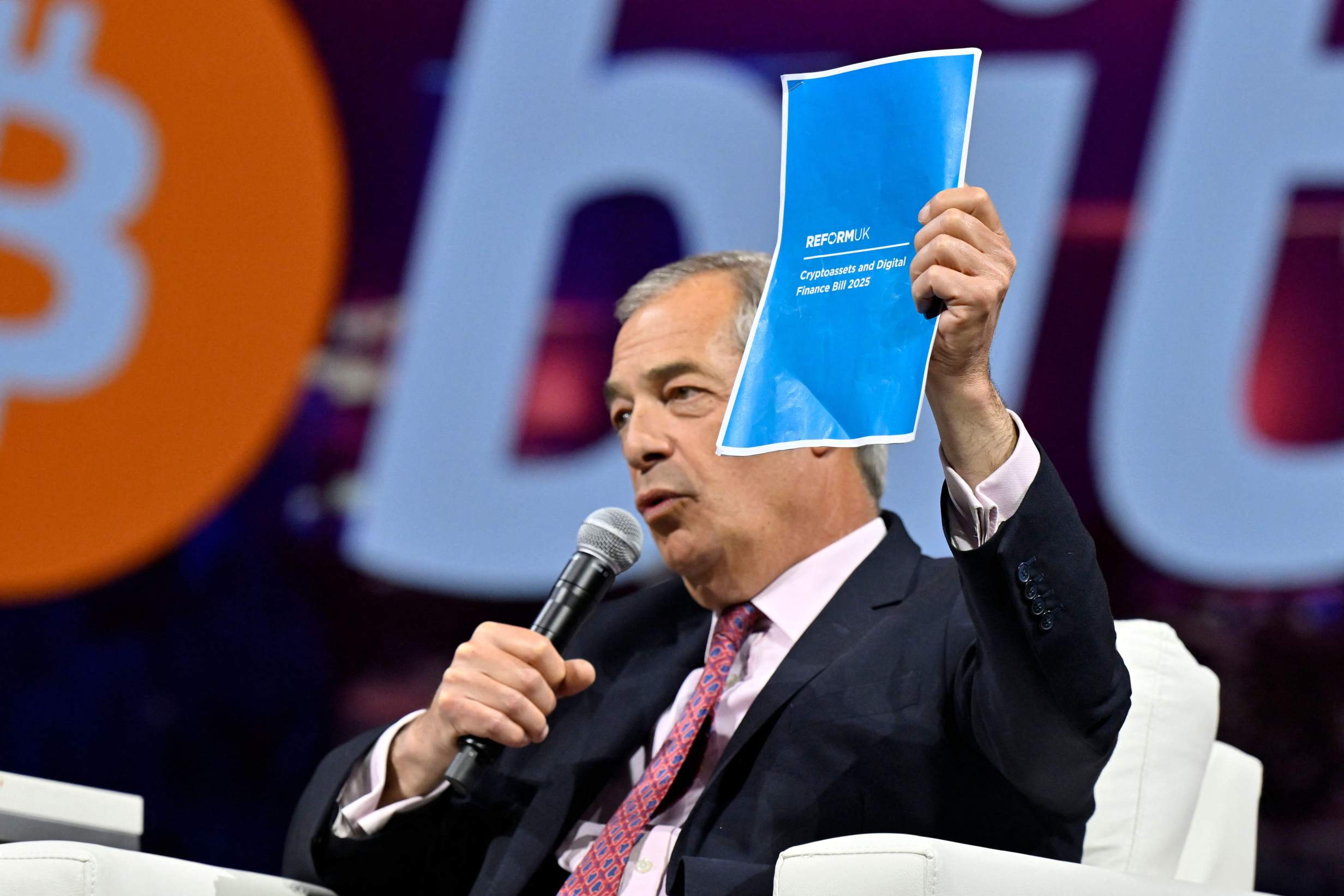
Nigel Farage Took £50,000 from Crypto Firms Then Said He Was ‘Not Aware’ of the Industry Funding His Party
The self-proclaimed ‘straight-talking’ Reform UK leader has been far from straight about who is funding his attempted rise to power, reports Iain Overton
Political donations should be made, in sterling, from a British bank account (with the sole exception, for obvious reasons, of Northern Ireland), to make sure their origins are checked as thoroughly as can be. And there should be restrictions on how much any one person can give: £100,000 seems like a good limit to me, but I don’t mind as long as it’s comfortably in the low six figures. In recent elections, British parties have become increasingly dependent on large donors to fund their operations, which is a trend we need to reverse, if we want a healthy democracy. These rules should apply not just to the period before an election, but all the time.
The second threat is from cheats. Too often in the UK, parliament has passed strict rules to protect us – against sewage in our rivers; against money laundering on our high streets; or against bias on our airwaves – but those rules have not been enforced. Regulatory bodies are underfunded, demoralised, and lack the political support they need to do the jobs they’ve been given. This legalisation by under-enforcement needs to stop.
In 2022, Boris Johnson’s Government stripped the Electoral Commission of its powers to prosecute wrong-doers and undermined its independence by forcing it to follow a government-imposed strategy, with many Conservatives at the time angry that the commission had fined Vote Leave for breaking funding limits during the Brexit referendum.
But the lesson to draw from that episode was that the commission had too few powers, not too many: what’s the point of fining a political party or campaign after it’s already won? The obvious lesson that politicians drew from such a futile punishment was to cheat. The body defending our democracy needs to be able to act quickly, decisively and robustly to keep corruption out of politics, and to make sure our politicians serve only the interests of their constituents.
In short, we need a good referee. Referees may lack the glamour of the players on the pitch but, if they’re incompetent, corrupt or unfit, no amount of skill will win a game.
ENJOYING THIS ARTICLE? HELP US TO PRODUCE MORE
Receive the monthly Byline Times newspaper and help to support fearless, independent journalism that breaks stories, shapes the agenda and holds power to account.
We’re not funded by a billionaire oligarch or an offshore hedge-fund. We rely on our readers to fund our journalism. If you like what we do, please subscribe.
Finally, we need to remove one final avenue of influence-buying, which is the media contract. Although all politicians are technically able to earn money from media companies, in reality, only those on the far right do so in large quantities. Although it is well-known that GB News likes to send its billionaire proprietor’s money overwhelmingly towards politicians on the right, there are also reasons to be concerned about payments from social media companies, like X.
They pay politicians depending on how popular their posts are, but the posts’ popularity is determined by the companies’ own algorithms, which is to say they are deciding how much money to give politicians just like any other media firm, with a few extra steps added to give it spurious legitimacy. And this is not small change: hard right MP Rupert Lowe has recently been earning more than £3,000 a fortnight from X, which comes closer to doubling his salary.
But banning media contracts is just one way of stopping money from creeping into politicians’ pockets and, as ever with complex or incomplete prohibitions, would just create further loopholes. Politicians work for the people and, as with any other employment, should not be being paid by anyone else while on the job. Perhaps they need a payrise but, once they’ve got it, that must be MPs’ only income.
The aim is to make the laws around how politicians are paid logical, simple and easy to enforce, so voters can trust their reasons for making decisions. That would create a firm foundation on which democracy can rest long into the future, safe from the interference of billionaires, whether local or foreign, and able to respond to everyone’s needs, not just those of the deepest-pocketed.