
 Subscriptions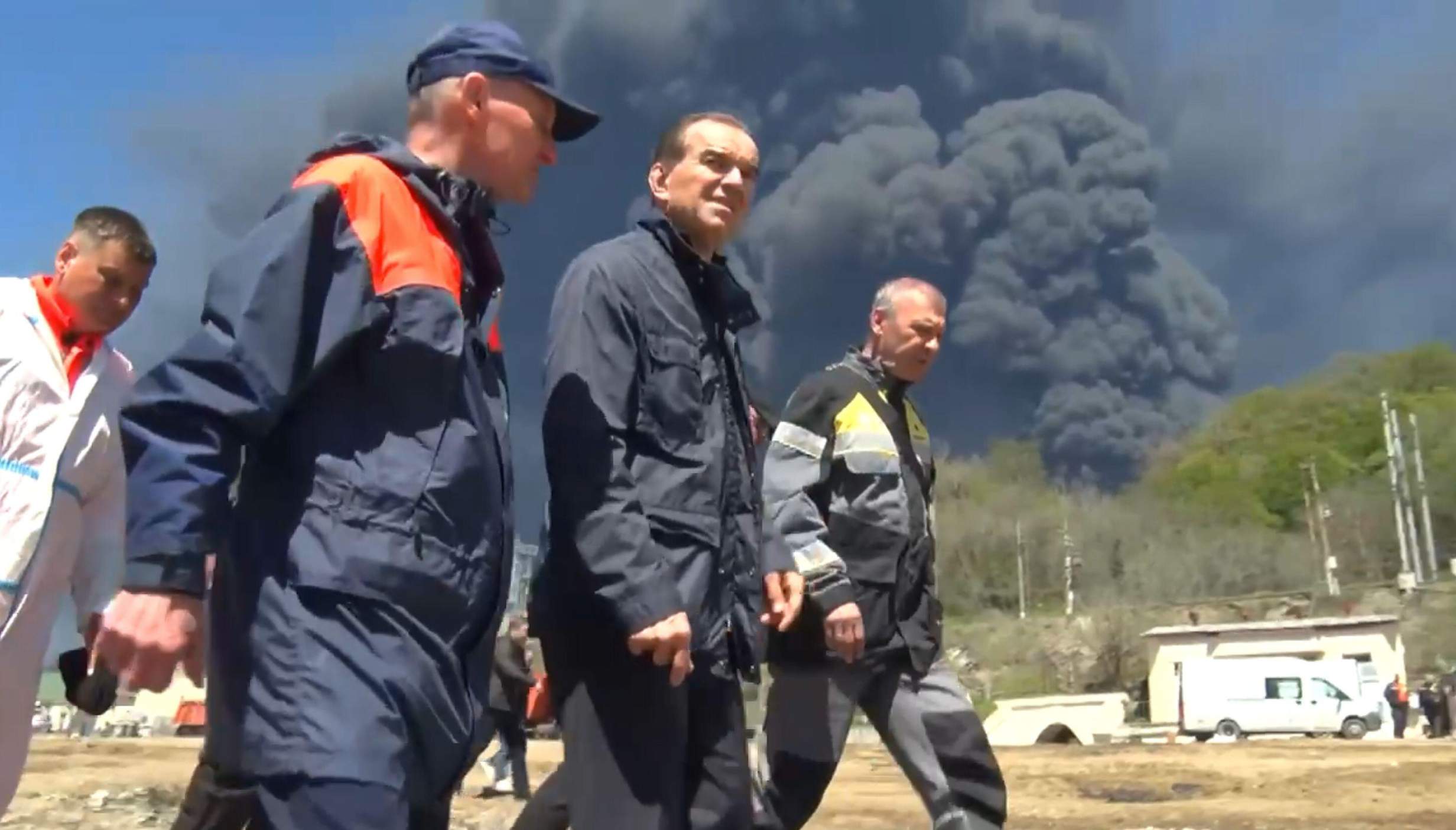

Read our Monthly Magazine
And support our mission to provide fearless stories about and outside the media system
For some time now it has seemed that the frontlines in the war between Russia and Ukraine have been stuck where they are. Neither side is making much progress in either taking or re-taking land. Such thinking invites a mentality that, if the war is stuck where it is, better to sue for some kind of peace, any kind of peace, than to continue the fighting. But keen observers of the war are noticing that the frontlines have not actually frozen; they have shifted significantly, right into the heart of Russia itself.
Where Ukraine has excelled has not only been in heroism and sheer tenacity, but also in ingenuity and innovation. The results of this are now being seen across Russia, as far as the Ural Mountains. A key to the recent most explosive events in this war has been Ukraine’s domestic development of drones and other long-range fire technologies.
Ukraine has developed a strategy to end this war on its own terms. That strategy depends on collapsing the Russian economy. With no income, and the state’s Sovereign Wealth Fund being depleted and bullion being sold off, Russia will no longer be able to finance the continuation of the war they started.
The Russian plan to dominate Ukraine failed a long time ago, and the Russian military has suffered a series of defeats and setbacks that should have persuaded them to quit.
But Putin cannot quit – even after having lost over 1.3 million troops, either dead or maimed. His ability to hold on to power requires his population to believe that they are sacrificing something (from quality of life, access to indoor sanitation, freedoms in general) for a greater good, for the motherland.
But now Ukraine has taken the war to Russia in ways both unexpected and spectacular, many Russians will be questioning the Faustian bargain they have made.

What Putin Really Wants From Trump’s Ukraine ‘Negotiations’
For the Russian leader, Trump’s proposed ‘peace deal’ is merely a way to continue his war by other means, writes Denis Mikhailov
Ukraine’s Strategic Onslaught
Early on in the war, Ukraine made a series of key decisions to invest in drone technologies. We are now seeing the dividends of that strategy, and the result is the absolute destruction of Russian oil refineries, storage facilities, export infrastructure, and key pipeline intersections. The timing for this, as oil markets are already rocked by the closure of the Strait of Hormuz, is not ideal for some, but ending this war cannot come soon enough for the long-suffering people of Ukraine.
Two most recent examples of the effectiveness of Ukraine’s onslaught against such facilities can be seen in the Russian cities of Tuapse and Perm. The first is located some 400 kilometres from Ukrainian territory, and the second is located 1,500 kilometres from Ukraine’s borders. The ability for Ukraine to strike at targets at a 400 km distance is not new, but the absolute destruction of the Tuapse facility and the significance that carries is unprecedented in scale.
The port of Tuapse is responsible for exporting about 10% of all petroleum-based products produced in Russia, about 12 million tons per year. This facility has been struck several times in the last month. The first wave of drone strikes hit the facility on 16 April, and the resulting fires were only extinguished 3 days later, so Ukraine hit it again on 20 April.
A follow-up strike on 28 April demonstrated the accuracy of Ukraine’s weapons systems, as it struck a part of the facility that had been untouched by the earlier two waves. To make sure the job is done, Ukraine hit Tuapse again on 1 May.
What is also very notable about this campaign is that it is highlighting Russia’s lack of air defence capabilities. This could be due to a combination of factors, but as Putin’s billion-dollar palace on the Black Sea reportedly has 21 air defence systems protecting it, naturally, other sites have less coverage.
Also notable, particularly to the Russian population, is that they are told the lack of access to the internet they have to endure is to protect them from such strikes, but they aren’t protected at all. And black oil-laden rain is falling across Tuapse to add to the apocalyptic scene and hammer that message home to them.
Tuapse is (was) not even the largest of Russia’s Black Sea export terminals. It was the next in line. In early April, Ukraine took out the terminal located at Novorossisk, which handled as much as 14% of Russian exports. In this series of attacks 6 of the 7 loading jetties were obliterated, rendering all operations from the terminal impossible.
Combined, almost 25% of Russian petroleum-based product exports passed through these facilities in Tuapse and Novorossisk. That is probably a more significant blow to the income Russia needs to support their war machine than Western sanctions have managed.
There are upstream implications, too. The wells from which Russia is extracting the raw product that would normally flow out through those terminals run at a steady production rate; the taps can’t just be turned off or on, or even regulated very much. In order to keep a well active, it must work at an optimum level, with nowhere for that raw product to go, the oil fields will face very significant problems very soon. If they are not already.
Ukraine was not, and is not, done here. More audacious attacks have followed, on 28, 29 and 30 April, this time at a distance of 1,500 kilometres from Ukraine’s borders, where waves of drones have attacked a key processing and distribution artery located next to the city of Perm, close to the Urals.

Ukraine Launches Landmark Legal Action to Hold Russia Accountable for ‘Ecocide’
With environmental damages now estimated at £108 billion, Ukraine is hoping to pioneer the global prosecution of ecocide as a weapon of war
Once again, while the Russian population is told that they have to live without internet access to keep them safe, wave after wave of Ukrainian drones flew through 1,500 km of Russian airspace seemingly without challenge. (As a side note here, in a recent telephone conversation between Vladimir Putin and Donald Trump, the Russian leader asked his counterpart to secure for him a temporary truce so that Moscow would be allowed to hold their 9 May parade on Red Square without any embarrassing incidents. Those internet restrictions are not in place to keep anyone, except for the occupants of the Kremlin, safe. Moscow needs help from Washington to secure their skies.)
While the massive fire engulfing Perm has sent smoke clouds as far as 130 kilometres from the impact site, that site had been responsible for refining another 13 million tons of petroleum-based products per year. Adding to the 24-million-ton capacity loss caused by the destruction of the Tuapse and Novorossisk facilities, Ukraine’s drone and missile “sanctions” have now eliminated 35% of the single biggest sector of the Russian economy.
The impact on the local population is worthy of note, too. In a video from Tuapse posted on X (Twitter) on 28 April, a young man says the following. “There’s a growing realisation that this is already a real war, that these are no longer games, but actual combat operations so to speak.”
This has been a real war for many years already. It has not been a game for the people of Ukraine. Actual combat operations have resulted in the deaths of many tens of thousands of Ukrainians. And now Ukraine is going to see the war through to the end, and if it takes the annihilation of all cash-generation resources the Kremlin has, so be it.
Of the approximately 45 major oil facilities that exist(ed) in Russia, only 1/3 are unscathed, so far.
These actions are not isolated. Prior to the period discussed in this article, Ukraine had been targeting Russian oil export terminals located in the Baltic Sea, with the Primorsk terminal taking significant damage. This single facility handles 40% of all of Russia’s oil exports. While that facility is not completely destroyed, Ukraine retains the ability to go back time and time again until it is. As the port is located just 75 miles from Vladimir Putin’s hometown of St. Petersburg, that may be something of an embarrassment to the Russian dictator.
What may also prove to be an embarrassment to him, and we have to wait and see, is that it is possible that Ukraine may rain on his 9 May parade on Moscow’s Red Square. The Russian capital has not seen many incursions by Ukrainian drones or missiles so far. Putin had requested that a brief (8-9 May) ceasefire be observed. That request came through US President Donald Trump and was backed up by threats from the Russian Ministry of Defence if it was not adhered to.
Ukraine’s President Volodymyr Zelensky responded with a counter proposal that the Russian side should observe a ceasefire beginning at 00:01 on 6 May, as of the time of writing Reuters reports that Russia breached the ceasefire proposal by the use of 108 strike drones and 3 missiles. So what may happen in Moscow in the next few days is an open question. Watch this, or that, space.