
 Subscriptions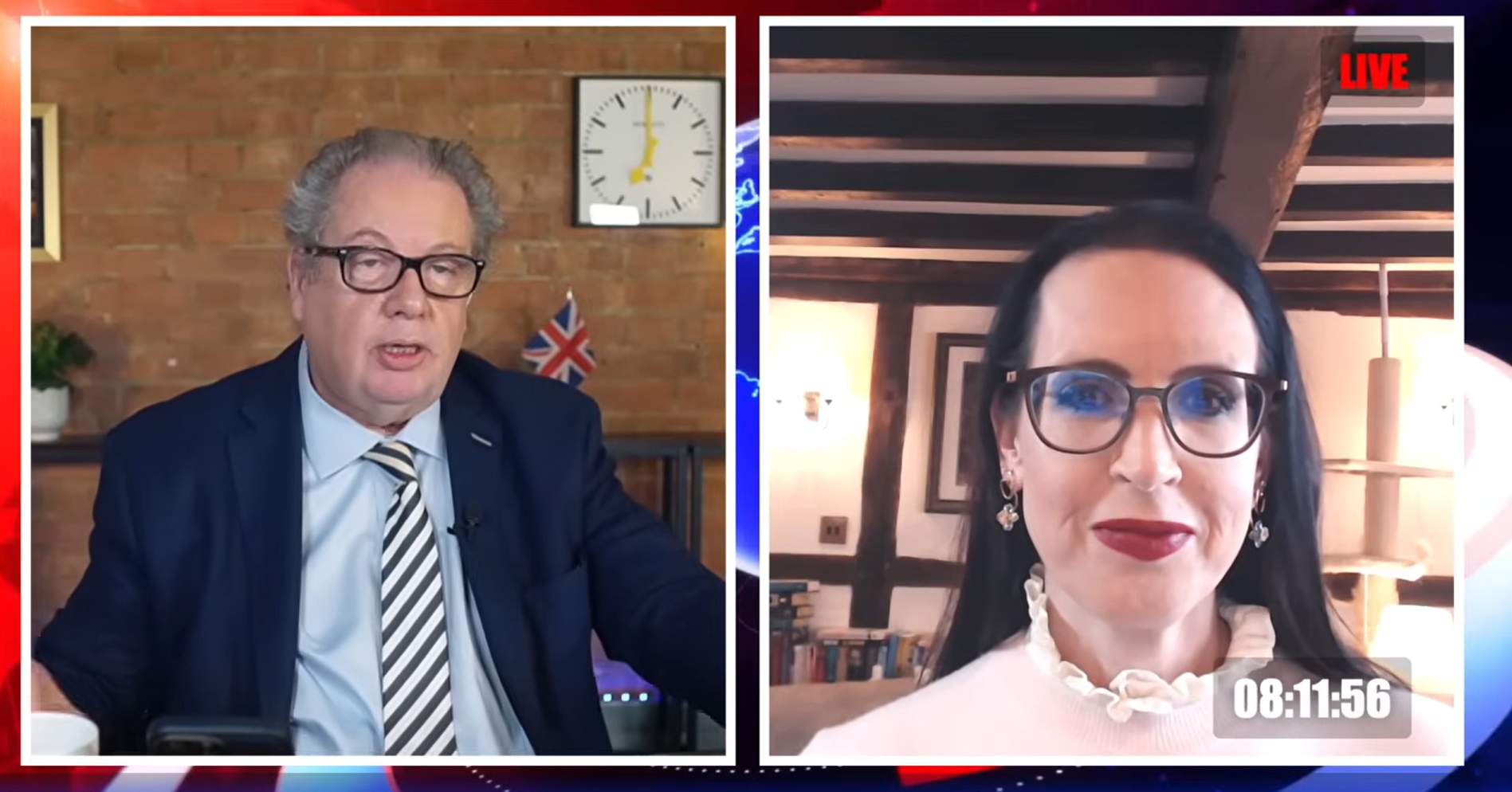
Read our Monthly Magazine
And support our mission to provide fearless stories about and outside the media system
The broadcasting regulator has upheld a complaint by the Met Office against Rupert Murdoch’s Talk TV channel over misinformation it spread about the public body’s climate monitoring data.
Ofcom upheld the complaint about a show hosted by the channel’s presenter Mike Graham (who has since been removed from the channel), after he and Kathryn Porter, an “independent energy consultant”, claimed that Britain’s world-renowned Met Office had made up temperature data.
It is believed to be Ofcom’s first upheld complaint on a climate-change related story in years. The complaint was upheld on the grounds of “unfair or unjust treatment” of the Met Office by the programme.
Kathryn Porter had referred to an article which originally appeared on the Daily Sceptic website (run by climate ‘sceptic’ Lord Toby Young), to argue that the Met Office had deleted temperature data following claims that it had been fabricated.
Porter went into detail on the programme about this supposedly “junk data” and went unchallenged by Graham.
The Met Office successfully argued to Ofcom that this view had not been sufficiently challenged on the programme, they had not been invited on the show to defend themselves, and that Porter’s claims were deeply misleading.
ENJOYING THIS ARTICLE? HELP US TO PRODUCE MORE
Receive the monthly Byline Times newspaper and help to support fearless, independent journalism that breaks stories, shapes the agenda and holds power to account.
We’re not funded by a billionaire oligarch or an offshore hedge-fund. We rely on our readers to fund our journalism. If you like what we do, please subscribe.
The ruling states: “Ofcom’s role in this case is not to determine the accuracy or otherwise of the statements made about the complainant in a programme”; but it also makes clear that: “We considered that the comments made in the programme were likely to have given viewers an overall negative impression of the complainant’s competence and its data collection practices.
“[It] had the potential to lead viewers to believe that the Met Office was not a reliable source of information on temperature data. In our view, therefore, the comments made in the programme had the clear potential to materially and adversely affect viewers’ opinions of the complainant in a way that was unfair.”
Kathryn Porter is a prominent media commentator, with a regular column in the Daily Telegraph writing about energy issues. According to media monitoring analysis by climate campaigners, she has been featured in national UK newspapers 191 times since the start of 2025, as well as at least seven standalone interviews on BBC TV and radio.
Kathryn Porter is understood to be acting as an unofficial adviser to Claire Coutinho, the shadow Energy Secretary. Coutinho launched Porter’s report about grid electrification in January this year, writing in an X thread that it proved why Ed Miliband’s energy plan risked leading to blackouts. Porter stated last month that the numbers in Coutinho’s policy plan “actually add up”, with Coutinho offering her further praise in a follow-up post.
Beyond Coutinho, Porter has links to, and has written multiple papers for, the Global Warming Policy Foundation (GWPF), the UK’s main climate science denial group. She has previously described the UN’s Intergovernmental Panel on Climate Change as “unscientific” and suggested that their “climate models overstate global warming”. She has also worked for gas company Centrica, energy company EDF and others.
This latest Ofcom ruling, finding that Porter spread misleading information about the Met Office taken from a climate denial website, raises tricky questions for Talk and for the Conservatives.
Don’t miss a story
Responding to the ruling, a Met Office spokesperson told Byline Times: “We welcome Ofcom’s decision to uphold our complaint under the Broadcasting Code’s fairness rules. This recognises that the Met Office was treated unfairly in the broadcast, without a timely or appropriate opportunity to address serious and misleading claims.
“We support debate and work with journalists every day to enable public discussion around weather and climate science. However, fairness is important as it helps ensure that topics are discussed on an informed and balanced basis. We will continue to work with media organisations to support accurate and fair reporting.”
This is understood to be the first time the Met Office has complained to Ofcom regarding inaccurate reporting.
How the Data Actually Works
The accusations aired on Graham’s programme centred around a specific webpage, which is not used for formal climate monitoring and is provided to the public for general interest.
On that webpage, to ensure continuity of long-term datasets, the Met Office says it uses a peer-reviewed science method that, where weather stations have closed, draws on observations from other nearby stations to help inform long-term average figures.
The Met Office argues this method is necessary as stations move or close over long periods of time. When a station closes, it is not part of their live operational network anymore.
The Met Office has also rubbished the ‘junk science’ claim, pointing to a ‘world class’ network of over 350 land-based weather observation sites.
Each station is located in accordance with World Meteorological Organization (WMO) best practice.
Officials say the sites are regularly maintained and inspected by dozens of engineers and inspection officers using ‘rigorous’ quality assurance systems and a long-established inspection methodology. Met Office data is widely viewed as among the most reliable in the world.
In September, the WMO released a statement noting the quality of Met Office observations in response to the kind of misinformation Talk aired.
The Met Office has also created a suite of resources to address ‘common misinformation themes’.
Kathryn Porter, Mike Graham and Talk were contacted for comment. Porter was unavailable, while Graham and Talk did not respond.
‘Weak Broadcasting Code’
Richard Wilson, director of Stop Funding Hate, told this outlet: “Given Ofcom’s repeated failure to act, any move by the regulator to actually enforce its rules is a positive step. Equally, it’s important to be clear that this complaint was upheld on the basis that the ‘reputation’ of the Met Office had been unfairly attacked, not because the programme had aired false claims about climate change. For Ofcom, a public body’s reputation matters. The public’s right to accurate information, apparently, does not.”
Bob Ward, a director at the Grantham Research Institute on Climate Change and the Environment at the London School of Economics, said: “While it is welcome that Ofcom has called out Talk TV, albeit very tardily, for its abysmal coverage of climate change, the ruling underlines the weakness of the Broadcasting Code.”
He argues the comments made by Kathryn Porter were “demonstrably inaccurate”, yet the ruling was made on the grounds that they were “unfair” to the Met Office.
“Ofcom considers Talk TV shows to be current affairs rather than news. Ofcom’s interpretation of the Broadcasting Code is that current affairs programmes do not need to be accurate, but ‘must not materially mislead the audience,’” Ward added.
“Ofcom has persistently applied a very lax definition of ‘materially mislead’, which has allowed many broadcasters to promote a steady stream of misinformation about climate change and other important issues. Unfortunately Talk TV and other broadcasters, including GB News, continue to exploit this blindspot in broadcasting regulation which clearly harms the public interest.”
The Ofcom ruling is available here.
Got a story? Get in touch in confidence on josiah@bylinetimes.com
holding farage to account #reformUNCOVERED
While most the rest of the media seems to happy to give the handful of Reform MPs undue prominence, Byline Times is committed to tracking the activities of Nigel Farage’s party when actually in power

 Contribute to our #ReformUncovered crowdfunder
 Subscribers Get More from JOSIAH
 Subscribers Get More from JOSIAH
Josiah Mortimer also writes the On the Ground column, exclusive to the print edition of Byline Times.
So for more from him…
