
 Subscriptions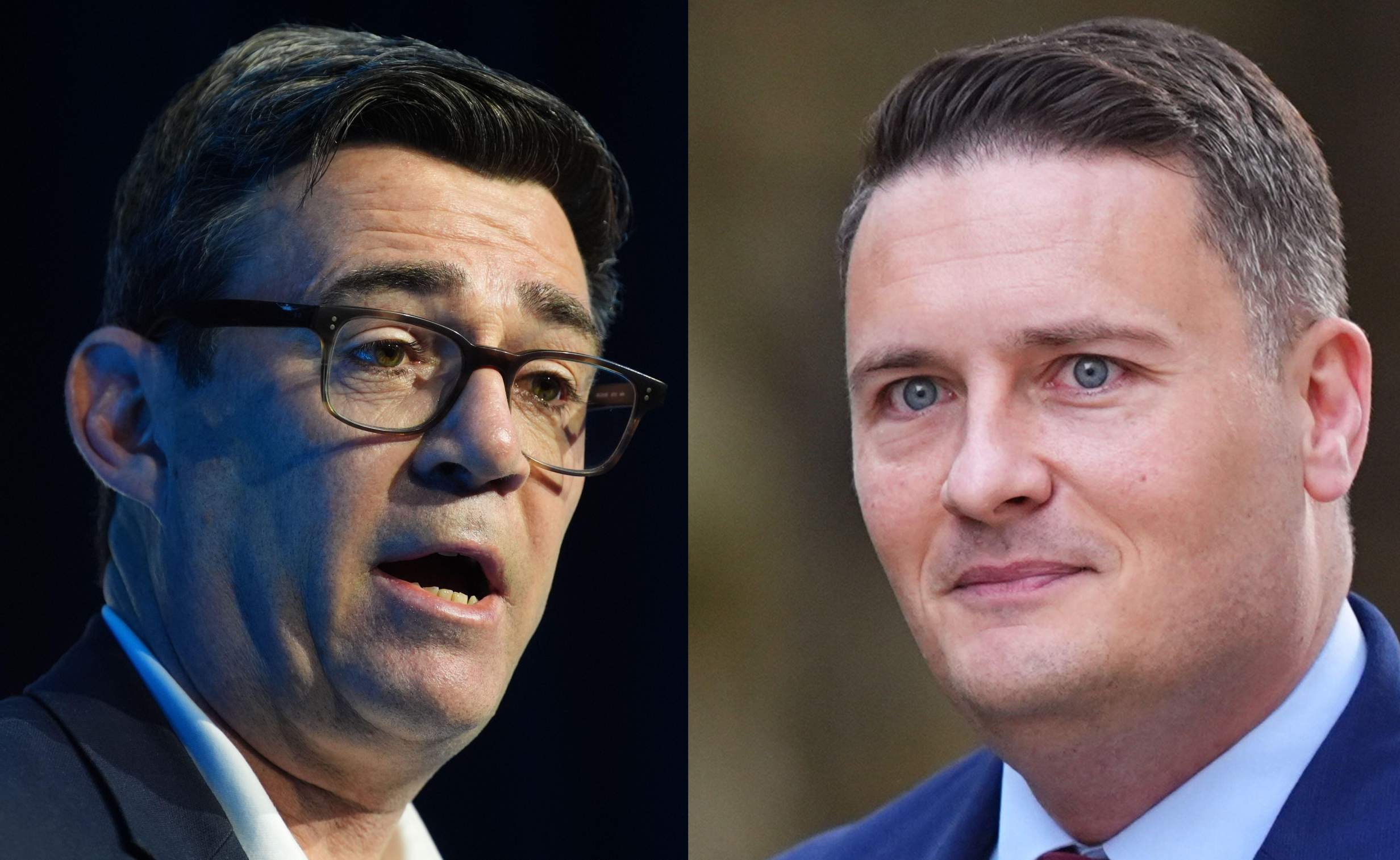
Read our Monthly Magazine
And support our mission to provide fearless stories about and outside the media system
Wes Streeting’s comment that Brexit was a “catastrophic mistake” has been portrayed as having reignited the debate about leaving the EU. In truth, it is a debate which has never really gone away, and Labour’s leadership crisis merely gives renewed focus to it.
For the truth is that being for or against Brexit has proved to be an enduring source of political identity. It has also influenced voting patterns, so that in the recent English council elections high levels of support for Reform UK were closely correlated with areas which voted ‘leave’ in the 2016 Referendum.
It is that correlation, specifically, which has led allies of Andy Burnham to depict Streeting’s intervention as being a wrecking tactic. Makerfield, the constituency which Burnham must win in order to become an MP and, subsequently, a challenger for the Labour leadership, voted about 65% for leave. It also followed the general pattern of correlation in the local elections, with Reform winning over 50% of the vote in the area.
So, the argument goes, Streeting has sought to increase his own leadership chances by pulling the focus on to Brexit, making it harder for Burnham to win the seat and to become a rival candidate. Already Burnham has been forced to make his own statement, confirming his previous commitment to rejoining the EU “in the long-term” but insisting he is “not advocating that in this by-election”.
If this is some Machiavellian ploy by Streeting it would actually be rather foolish. If successful, and Burnham loses in Makerfield, it would bolster the position Labour has taken under Keir Starmer that reopening Brexit is electoral arsenic, undermining precisely the leadership pitch to which Streeting has now committed himself. And if he became leader without facing Burnham, the legitimacy of his premiership would be questioned from the beginning. So, if Streeting is playing political chess, he is only looking one move ahead.
But whatever Streeting’s intentions, the reality is that Brexit would have figured strongly in this by-election even if he had never said a word. Nigel Farage and the Reform Party would have made sure of that, since Burnham’s opposition to Brexit is not a new discovery.
And whether at the behest of Streeting or Farage, focusing on Brexit will not necessarily play in Reform’s favour. It will require Farage to discuss it, which he has generally tried to avoid. And that may remind :eave voters that the promises he made for Brexit have not materialised whilst he has personally done rather nicely out of it, even claiming to have been gifted £5 million as a reward for his efforts. It might also make Reform seem to be harking back to old battles.
Equally, Brexit was always going to feature prominently in the Labour leadership contest which, although that contest has not formally started, is already underway, regardless of the by-election.
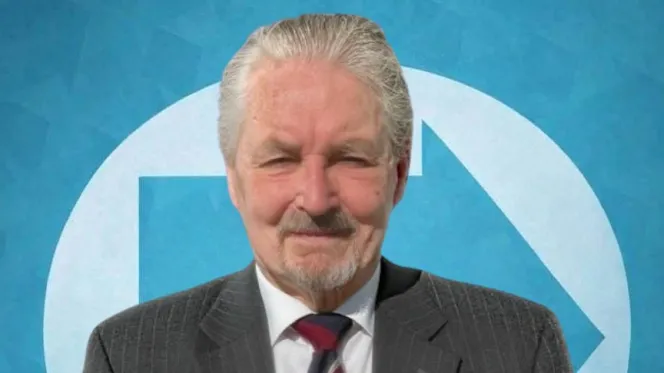
Reform UK Councillor Who Claimed Social Media Post Had Been ‘Misinterpreted’ as Racist Shared Multiple Other Offensive Posts
Posts uncovered by Byline Times show newly-elected Reform UK Councillor Ken Tranter comparing Muslims to cockroaches, who would “take over” the country
One reason for that is simply the coincidence of the approaching tenth anniversary of the referendum. That is already provoking a rash of evaluations, which will intensify over the next month or so, making it an unavoidable topic. This partly shows the persistent divisiveness of Brexit. But it also reflects the fact that there is now so much evidence about the damage that Brexit has done to the British economy.
Whilst diehard Brexiters will never accept that evidence, the settled public narrative is that Brexit has been a failure, even though there are big differences between those who think this was inevitable and those who think it was because it was mishandled or even betrayed. Additionally, the new international situation of Russian aggression, American unreliability, Trump’s hostility to Britain and, especially, the disastrous effects of his war on Iran have all combined to make the geo-political folly of Brexit obvious to a clear majority of voters.
This has also brought to the fore the simmering debate within the Labour Party so that, even if it were not the tenth anniversary, Brexit would be subject to renewed attention. It is not just that Starmer’s ‘reset’ policy to ‘make Brexit work’ has never been popular within the party. It is also that it has become increasingly indefensible because the Government has started to acknowledge the scale of the damage of Brexit.
Indeed, Starmer himself has recently declared the need for a far more “ambitious” approach at the next UK-EU Summit which, by another coincidence, is likely to be held around the tenth anniversary and during the leadership contest. Yet he has provided no detail of this approach, or how it would be compatible with his avowed ‘red lines’, precluding rejoining the EU, the single market, or a customs union.
So the conditions for a fresh debate about Brexit were already coming together, but the leadership contest provides a new, potentially crucial, arena for it. And, given the unpopularity of Brexit amongst the vast majority of Labour members electing the leader, it is difficult to see that contest being won by a candidate who is not far more convincingly anti-Brexit than Starmer. That might not mean advocating seeking to rejoin the EU in this parliament and, notably, Streeting has not done so. But it probably means committing to make doing so, or at the very least rejoining the single market, the policy for the next general election campaign.
From that point of view, Streeting may have done his leadership rival a favour. After all, Burnham can hardly remain silent or equivocal about Brexit in the by-election and then immediately pivot to an anti-Brexit position in the leadership election. And if he wants to prove that he can lead a party with such a position to victory in a subsequent general election, how better to do so than by defeating Reform in a place like Makerfield?
Yet, within hours, Burnham indicated it is not an opportunity he will take, retreating instead to something very much like the Starmer line of attempting to push Brexit once again into the undergrowth of undiscussability. Any talk of rejoining, he suggested, meant being “stuck in a permanent rut” where we are “constantly arguing”. Instead, the priority should be to “fix our own country”.
This leaves unanswered the problem of whether and how ‘fixing our own country’ can be achieved without addressing Brexit. It also seems politically maladroit. Reform will continue to hammer him about Brexit during the by-election campaign anyway and will be able to use his own previously stated desire to eventually rejoin the EU to dent his biggest electoral asset, his perceived ‘authenticity’.
ENJOYING THIS ARTICLE? HELP US TO PRODUCE MORE
Receive the monthly Byline Times newspaper and help to support fearless, independent journalism that breaks stories, shapes the agenda and holds power to account.
We’re not funded by a billionaire oligarch or an offshore hedge-fund. We rely on our readers to fund our journalism. If you like what we do, please subscribe.
However, if he manages to win Makerfield, then he will already be on the wrong foot for the leadership election, outflanked by the appeal of Streeting, and perhaps others, to the anti-Brexit membership. Flip-flopping to court them would, if successful, simply mean that his own premiership would be tarnished from the outset by accusations of dishonesty and opportunism. In this sense, Burnham, too, seems unable to see more than one move ahead on the chess board.
No doubt there are many more twists and turns to come in this saga. For now, what is clear is that the Labour Party is still a long way from overcoming the Brexit neuralgia it has suffered throughout the ten years since the referendum result.