
 Subscriptions
Read our Monthly Magazine
And support our mission to provide fearless stories about and outside the media system
Last week’s local elections ushered in yet another bout of intense political instability. They showed that long-standing Brexit faultlines still persist, fuelling the success of Reform. Yet with Nigel Farage’s party only winning 26% of the vote in mid-term, having already peaked in local elections a year earlier, this was hardly a convincing platform from which to build a general election victory.
However, the remainder of the vote was split virtually equally between four other political parties in England, crucially with Labour’s support running at only half the level achieved in the 2024 general election.
Adding to that complex mix, with the success of Plaid Cymru in the Senedd, the SNP at Holyrood, and Sinn Féinn’s ongoing dominance of the Northern Ireland Assembly, political parties opposed to the Union now form the principal force in three of the four constituent parts of the UK.
Not only does this multi-party configuration present a minefield in trying to assemble any winning electoral coalition, but a toxic political environment is a recipe for recurring leadership crises, in which media focus plays no small part. And this latest bout of political uncertainty kicked in just as the legislative programme for a new parliamentary session was about to be unveiled in the King’s Speech.
It’s hard to find anything comparable to the recent toll of casualties in Downing Street since inception of the Office of Prime Minister without delving way back into the 1760s and 1780s. Even superficially similar periods in the 19th and 20th centuries involved the same leader(s) forming more than one Administration, as in the case of Stanley Baldwin and Ramsay MacDonald during the dark inter-war decade from the mid-1920s to mid-1930s. In more recent historical memory, the Thatcher and Blair years provided remarkable beacons of electoral continuity. That stability began to fray after the 2007-08 financial crisis, becoming chronic since 2016, post-Brexit.
But it’s the politics of displacement that is most disconcerting, short-sightedness an ever more dominant frame through which the public square is refracted. Nothing encapsulated the myopia of UK media coverage of domestic politics more starkly than the Peter Mandelson saga.
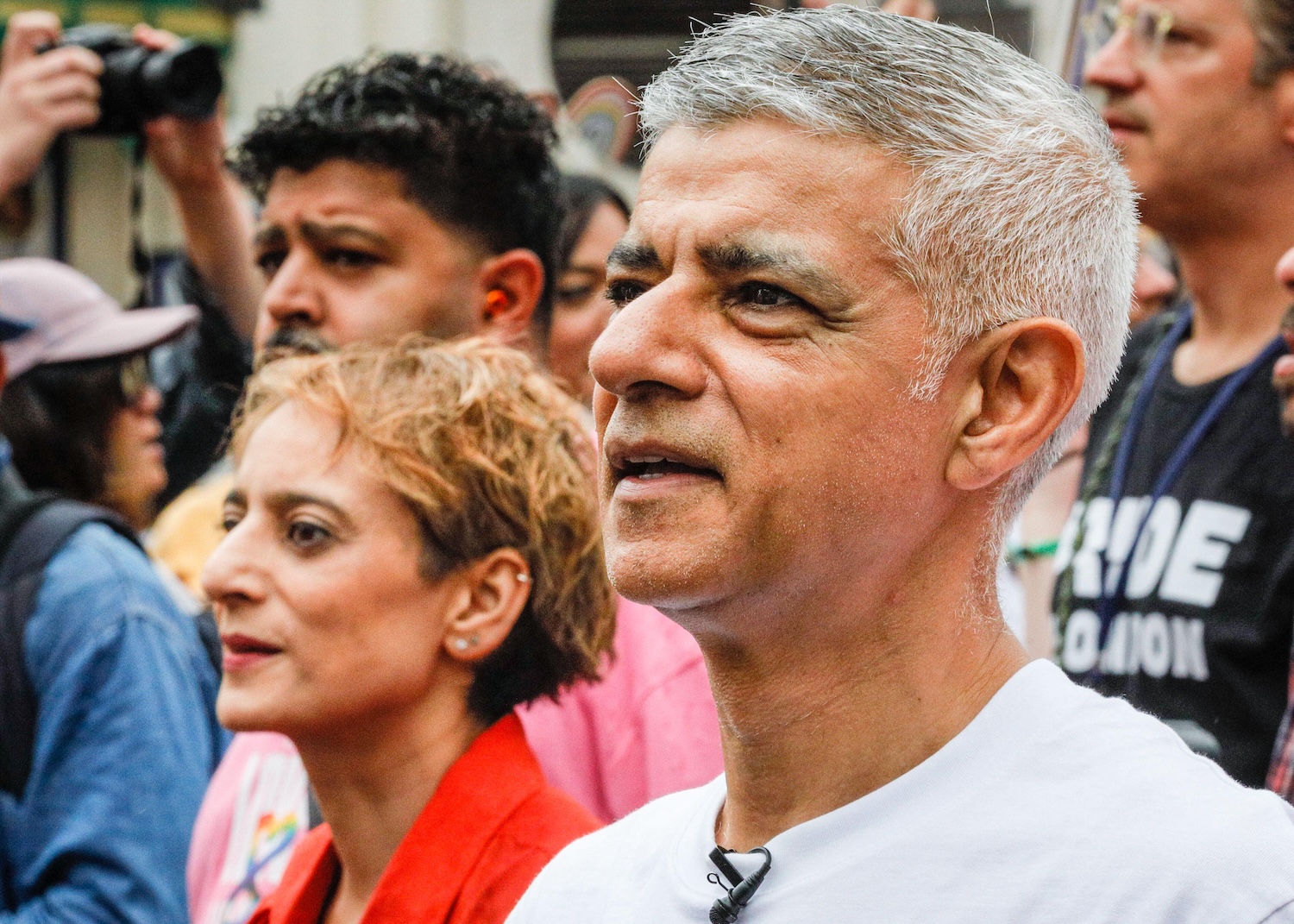
Sadiq Khan Interview: ‘I Know I’m Clickbait, I Know I’m Being Monetised’
The London Mayor talks to Byline Times about how ten years of rising algorithmic online hate has transformed our politics and put his own safety at risk
Faux Outrage
Paroxysmal outrage enveloped the political system for weeks on end, fuelled by saturation media coverage. Mandelson’s political appointment, an act of poor political judgement, nonetheless was perfectly explicable as a piece of realpolitik, given the nightmare prospect of handling a second Donald Trump presidency, and which many commentators at the time regarded as an inspired choice in the circumstances.
There were also double standards on display. Nigel Farage’s funding by crypto tycoons simultaneous with his related advocacy for, and personal investment in, that business, provides a new low for integrity in British politics. Yet, that was just one of many scandals festering around Reform’s leadership circle, receiving scant media attention by comparison.
Of even more significance, though, with 24-hour news cycles and social media clickbait, is the loss of all perspective in an era of global disorder. There has been a stark contrast between the visceral domestic criticism directed towards Starmer and the applause for his calm demeanour in navigating multiple international crises expressed by several of his European counterparts.
Policy Conundrums
The paradox of ever-contracting premiership timelines and the deep structural nature, both domestic and international, of challenges that they face was captured elegantly by a recent BBC interview with the former Prime Minister, John Major.
One issue of inter-generational justice that he singled out was climate change, given a probability that irreversible tipping points will be reached from carbon emissions sooner rather than later. Nonetheless, on the right of British politics there is a strategic failure to grasp that the future lies with electro rather than petro states, as fossil fuel interests re-assert their sway over the political process.
Security of supply of those energy sources is being disrupted for the second time in five years by geopolitical conflict, as the post-1945 international order and associated institutional frameworks badly fray. Despite critiques of globalisation following collapse of the Soviet Union and incorporation of China into the global trading system, interdependence raises the alternative spectre of interruption to many other supply chains.
Indeed, recalling the lessons of history, Yale University Professor Odd Arne Westad, in his most recent book, The Coming Storm, compares the current breakdown of multilateralism with the Great Power rivalries preceding the First World War, when nationalism, populism and protectionism were also on the rise. This new multipolar world is incentivising reorganisation of alliances. The UK Prime Minister’s principal response, having expended much of his political capital on international affairs, is pivoting back towards Europe, drawing in other like-minded medium-sized powers as required. This more dangerous international environment also demands a corresponding national resilience to counteract, not least, hybrid warfare from hostile states.
ENJOYING THIS ARTICLE? HELP US TO PRODUCE MORE
Receive the monthly Byline Times newspaper and help to support fearless, independent journalism that breaks stories, shapes the agenda and holds power to account.
We’re not funded by a billionaire oligarch or an offshore hedge-fund. We rely on our readers to fund our journalism. If you like what we do, please subscribe.
Embedding Political Instability
Those are just two examples of public policy issues with enormous ramifications. Others readily come to mind. The risk of another global financial crash because of sovereign indebtedness; languishing productivity rates; under-preparedness for future pandemics; fiscal dilemmas that stem from ageing demographic profiles; managing economic drivers of net migration whilst containing associated political fallout; damage to mental health because of social media algorithms and malign influencers; or balancing the opportunities and threats from artificial intelligence.
Intractable policy issues undermine political leadership. That same volatility makes successful policy solutions ever more problematic. It’s a vicious cycle, especially when the rough and tumble of daily UK politics is what monopolises most media attention, as if still in the political circus generated by Boris Johnson’s premiership. The constitutional historian, Peter Hennessy’s Land of Shame and Glory saw ‘the Boris question’ in these graphic terms: “a misuse of the highest office in the land beyond all previous imaginings.” Reform’s leadership are in the process of debasing standards in public life even more than Johnson did.
Nevertheless, here we go again. Following May’s elections, we enter a third spasm of leadership speculation in 2026 alone, with the future of the sixth Prime Minister in ten years in a perilous situation. A village hall couldn’t be successfully run on this basis, let alone a country trying desperately to redefine its place in a turbulent international world. The Conservative Party under David Cameron became panic-stricken because of a perceived threat from Farage’s then Ukip party. The rest is history. History is in grave danger of repeating itself, but this time with the Labour Party self-immolating.