
 Subscriptions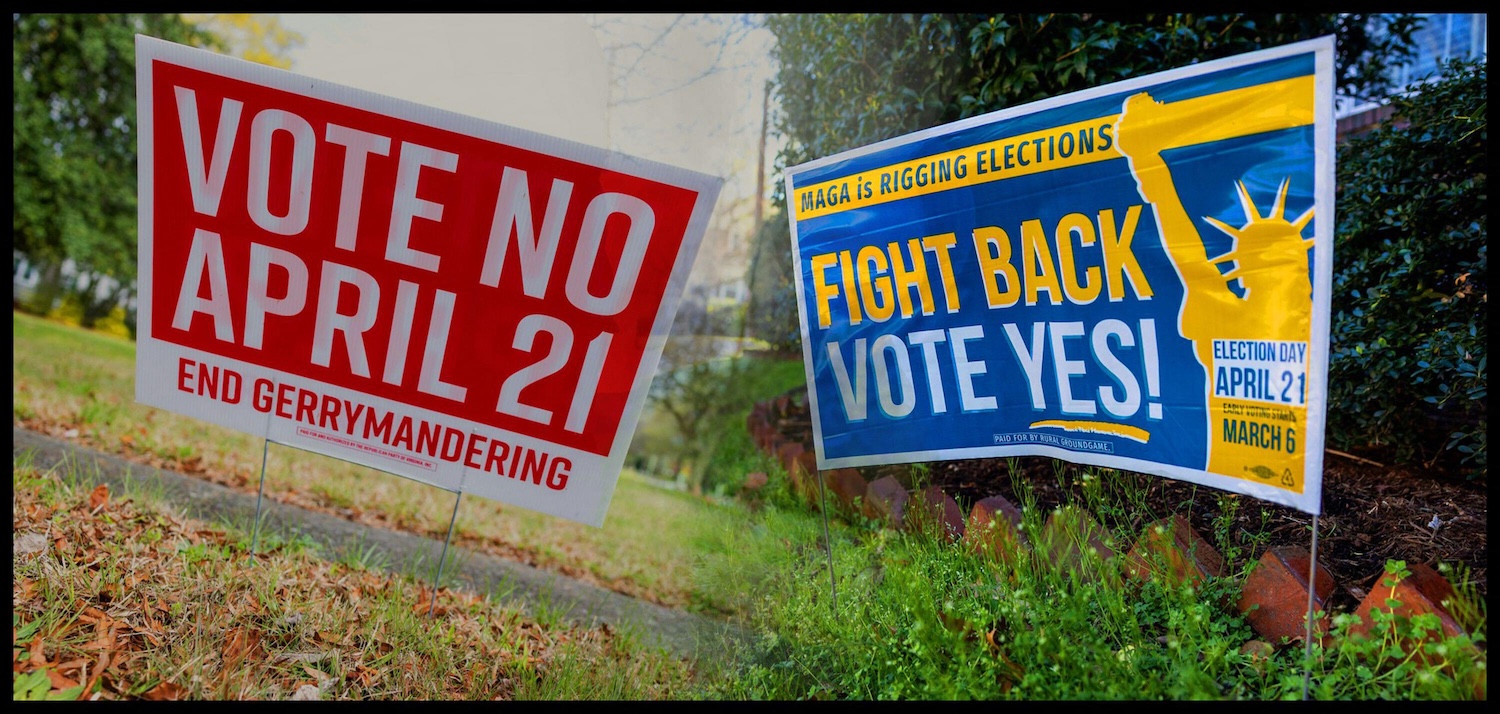

Read our Monthly Magazine
And support our mission to provide fearless stories about and outside the media system
Last month I served as an election official for a special ballot in the state of Virginia, on whether to allow an exceptional redrawing of Virginia’s electoral districts in time for the upcoming November mid-term Congressional elections. The referendum was passed, by a very narrow majority of 51.69% to 48.31%, meaning the Virginia Assembly can now adopt a skewed political map almost certain to give the Democrats four more seats, and reducing Republicans to just one safe seat in the State, where previously they had held five.
The Democrat-led Assembly and Governor of Virginia justified the measure as a response to equally partisan gerrymandering conducted outside of the usual political cycle, and not in response to any court order, in Republican-led states, such as Texas, North Carolina and Missouri. Virginia’s initiative came on the heels of a similar Democrat-led one late last year in California, and has since been followed by a new redistricting effort in Republican-leaning Florida.
Now, a Supreme Court ruling last week concerning the electoral map in Louisiana risks triggering a veritable frenzy of even more partisan gerrymandering across the whole United States, to a degree which jeopardizes the very integrity of American democracy.
The Supreme Court, by a majority vote of all six of its conservative judges, against the dissent of its three liberal judges, rejected Louisiana’s latest electoral map on the grounds that its creation of two districts in which black voters formed a majority was a form of racial discrimination outlawed by the Constitution.
The Court’s ruling centered on an interpretation of section 2 of the 1965 Voting Rights Act, the culmination of the civil rights movement led by Martin Luther King, which was designed to facilitate the ability of black voters to vote and be represented in Congress. For decades, States had interpreted this as meaning electoral districts needed to be drawn up in such a way as to allow black voters a fair shot at being represented, in practice by creating black majority districts.
Arch conservative Justice Alito, who wrote the opinion, argued that this violated the terms of the 14th amendment to the constitution, which prohibits racial discrimination – even though the whole point of the 14th amendment, passed immediately after the Civil War, was to ensure equal protection for vulnerable minorities, with former slaves, mostly black, particularly in mind.

Trump: ‘When You Think of It, We Shouldn’t Even Have an Election’
As his approval ratings slide amid growing discontent over his unpopular war in Iran, the President is looking at multiple ways to subvert the mid-term elections, reports Owen Bennett-Jones
Alito contended that it was not a violation of the VRA to redraw electoral districts in a way which effectively resulted in racial minorities being outnumbered, so long as racial discrimination was not the explicit purpose of the redistricting. Put another way, if the redistricting could be justified as being done for purely partisan purposes, which the court (equally astonishingly) has in a previously ruling declared is allowed under the Constitution, then the fact that it might in practice lead to the marginalisation of minority communities would not be a valid objection in itself.
The Court’s ruling is truly Herodian in its handwashing of the consequences. Justice Alito, airbrushing out of existence the entire history of electoral discrimination against blacks in the South, blithely declaimed that racial relations in the US had vastly improved since the passage of the Voting Rights Act. He seemed blissfully unaware of, or perhaps deliberately obtuse, about the inherent irony in writing an opinion which simultaneously celebrated the achievements of the VRA, whilst also serving to gut them. As one wit on X observed, this is like throwing away an umbrella, because it has stopped raining today.
Alito also blandly asserted that it was open to individual states to pass local laws banning redistricting which penalised minorities, or requiring more geographically coherent districts, ignoring the fact that Republican-dominated legislatures are hardly likely to do so out of the goodness of their hearts, given most black voters still tend to vote Democrat.
It was particularly nauseating to see the conservative majority on the court pitch their ruling as a high-minded effort to merely clarify the circumstances in which the Voting Rights Act would apply, when its practical effect is in fact to neuter it. The ruling now sets an almost impossible threshold for complainants to prove that a district has been drawn deliberately with the aim of discriminating against blacks, as opposed to merely advantaging Republicans, because, in large swathes of the south, voting choices and racial make-up are closely aligned.
To be fair, it is true that the conflation between race and voting preferences has created a situation where there is an incentive for Democrats to use the Voting Rights Act to insist on black majority constituencies, purely in order to secure their own partisan advantage. The Court probably rightly observed that, under the VRA, just because a black majority constituency could be created in a particular state, did not mean it always should be created. However, its interpretation that the VRA only applied when an electoral district had been deliberately designed to discriminate on race, as opposed to merely causing that effect in practice, runs completely counter to the purpose of the law. Indeed, following contentious debate on this issue, Congress had even passed further legislation making it explicit that the law was intended to cover racial impact, not just discriminatory intention.
Writing the dissent, liberal Justice Kagan noted there was now nothing to stop states with large black communities redrawing their districts so that they are outnumbered in every single one, making it almost impossible for them to secure fair representation. Describing the practice as “racial vote dilution in its most classic form” she noted that while members of the racial minority can still go to the polls and cast a ballot, “in a State with a history of racially polarised voting, “they cannot hope to elect a person whom they think will well represent their interests. Their votes matter less than others do; they translate into less political voice.”
In her withering final paragraph, she concluded that the Voting Rights Act was “born out of the literal blood of Union soldiers and civil right marchers. It ushered in awe-inspiring change, bringing this nation closer to fulfilling the ideals of democracy and racial equality. And it has been repeatedly and overwhelmingly reauthorized by the people’s representatives in Congress. Only they have the right to say it is no longer needed – not the Members of this Court. I dissent, then, from this latest chapter in the majority’s now completed demolition of the Voting Rights Act.”
The very circumstances of the Louisiana case bear out the validity of her concern – since Louisiana had originally tried to draw its electoral map in such a way that the vast majority of the state’s black voters were stuffed disproportionately into one district, and the rest divided between five other districts, where they would be a minority. This had been successfully challenged in court as being a violation of the Voting Rights Act, forcing Louisiana to come up with a new map, creating two black majority districts, which had then been challenged by white plaintiffs.
The Supreme Court’s ruling now gives the greenlight for Louisiana to revert to its original map, and for all other Republican-led states with significant black populations to break up their majority black districts too. If they succeed, not only will millions of black voters across the South likely have their votes become meaningless, but the number of black members elected to Congress is likely to plummet also, taking their representation levels back to where they were before the Civil Rights movement.
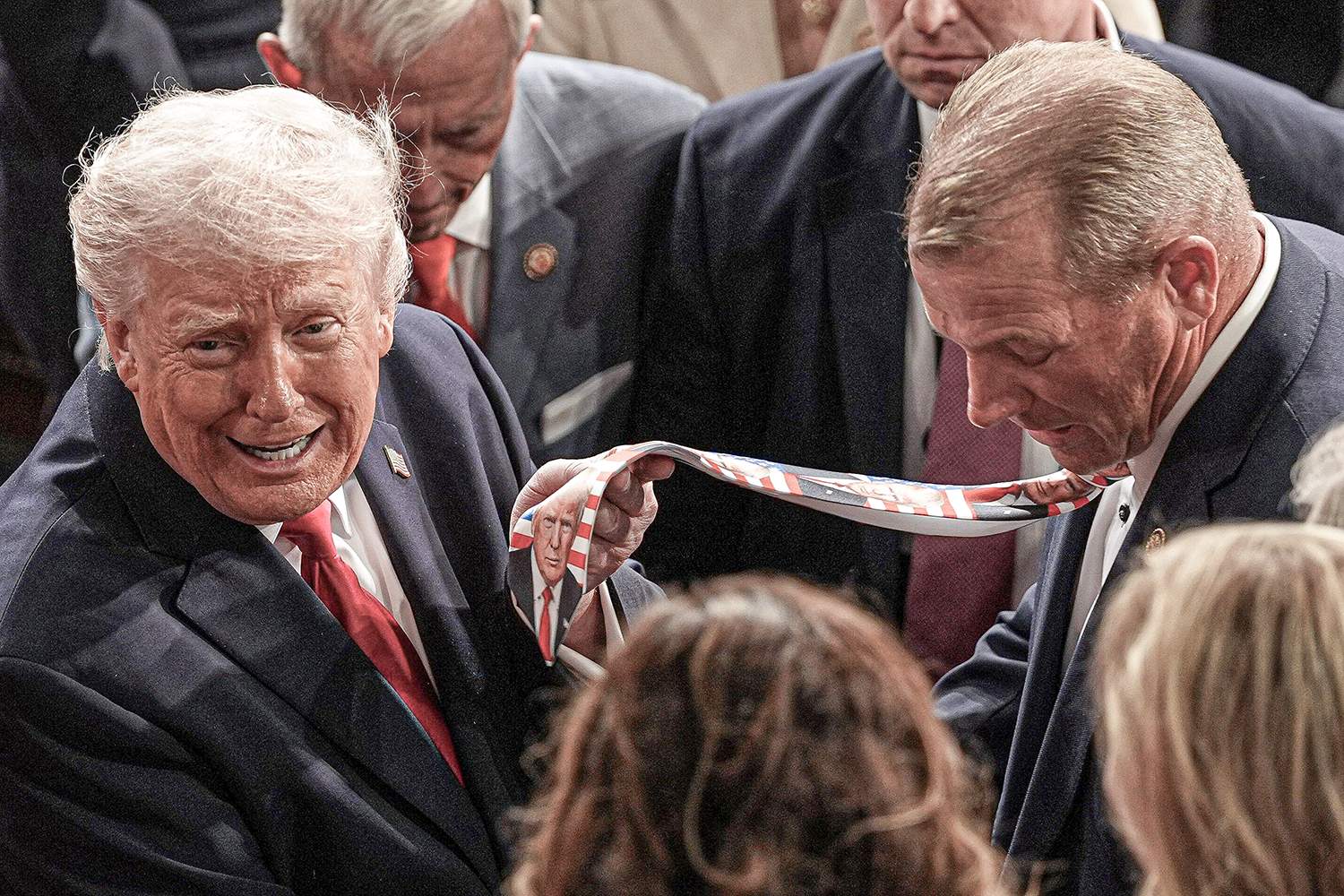
Trump’s State of the Union Address: The Purest Ugliest Vaudeville
Nakedly exploitative and grimly partisan, this was US politics at its worst, argues Alexandra Hall Hall
Indeed, within days of the ruling, several Republican-led States, including Florida, Mississippi and Tennessee, and Louisiana itself, announced plans to redistrict, while others have come under pressure from the Trump administration to follow suit.
This has inevitably prompted Democrat groups to suggest they should pursue more gerrymandering of their own in other Democrat-led states, such as New York, Colorado, Oregon, Maryland, Wisconsin, Pennsylvania and Minnesota.
They can certainly claim that they are only doing this in order to “level the playing field.” After all, it was the Republican legislature in Texas which began this latest round of gerrymandering. Democrats can also point to the fact that they have for years tried to pass legislation through Congress outlawing all partisan gerrymandering, and delegating districting decisions to independent bodies, while Republicans have always blocked this.
But the reality is that both sides are playing with fire. Not only would a gerrymandering race to the bottom infuriate the millions of voters who would be left stuck in constituencies where their votes would effectively count for nothing, it would also risk breaking up traditional communities and deprive current congressional incumbents of their existing bases of support. Republicans could eliminate most Democrat districts in the South, and Democrats could eliminate most Republican districts along the coasts, or in states with large urban populations. The electoral map of the country as whole would be solidified into red or blue blocks, marginalising millions and entrenching divisions and polarisation.
Perhaps most pernicious of all, extreme gerrymandering could lead to a situation where the vast majority of electoral districts across the country would effectively become one-party fiefdoms, with only a handful of competitive districts left across the country. In that scenario, the fiercest electoral competitions would take place at the primary stage, between competing candidates from the same party, who would be incentivised to appeal most strongly to their party’s base to secure the nomination. This in turn would lead to more extreme representatives being elected to Congress, with fewer incentives to work “across the aisle” or forge bipartisan political compromises. In a narrowly divided Congress, legislation would become even harder to pass than it is now; in a Congress dominated by one party, legislation would become even more politically one-sided.
Most members of Congress, and most voters, know in their hearts that extreme gerrymandering is wrong. For that reason, up until now, many states have resisted the temptation, or even passed laws consciously preventing them from doing so. Unfortunately, with so much at stake in the upcoming mid-terms, and the next Presidential elections in 2028, the Supreme Court’s ruling may cause the gloves to come off, with devastating consequences for the effective functioning of American democracy.
ENJOYING THIS ARTICLE? HELP US TO PRODUCE MORE
Receive the monthly Byline Times newspaper and help to support fearless, independent journalism that breaks stories, shapes the agenda and holds power to account.
We’re not funded by a billionaire oligarch or an offshore hedge-fund. We rely on our readers to fund our journalism. If you like what we do, please subscribe.