
 Subscriptions
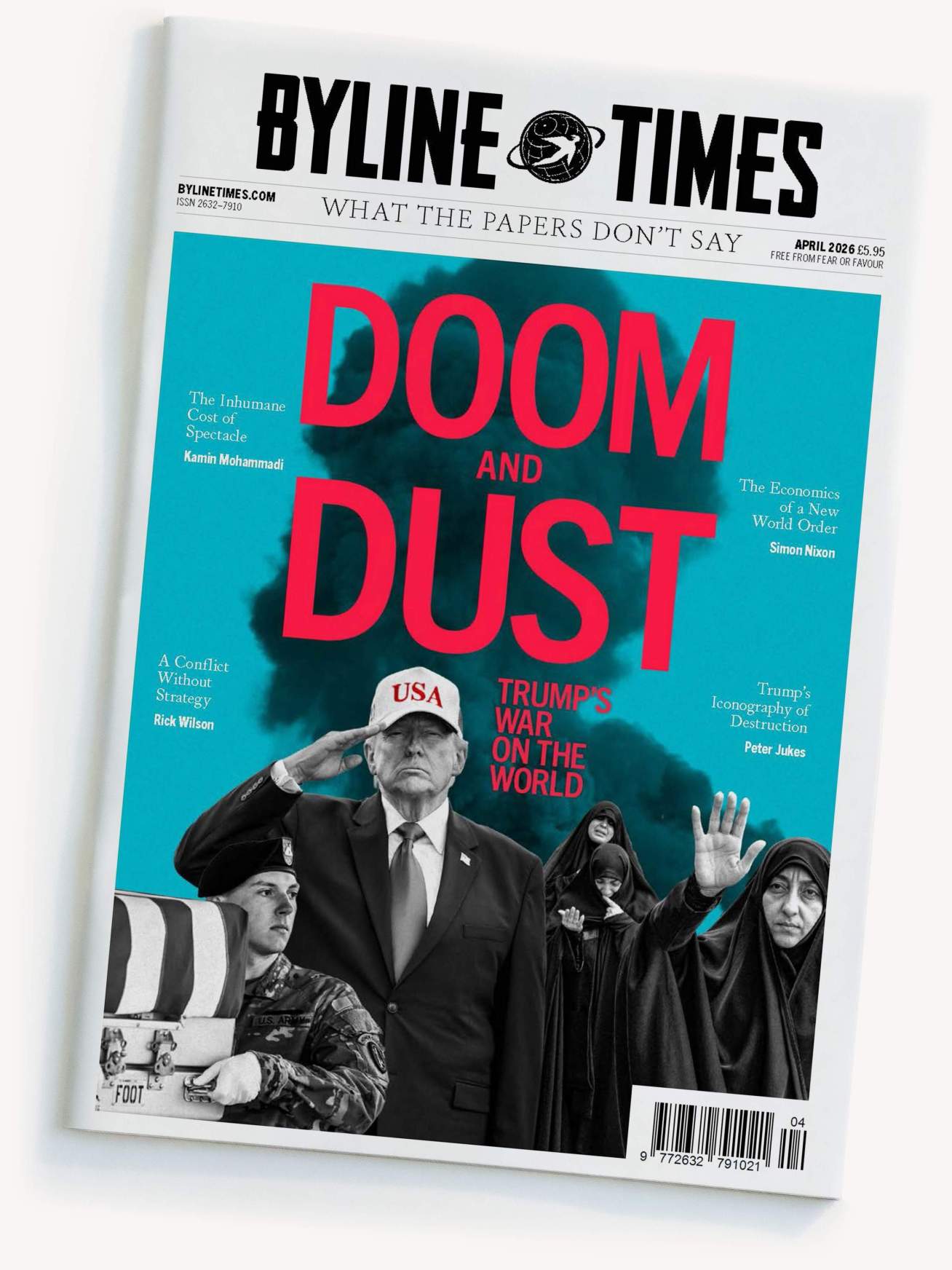
Read our Monthly Magazine
And support our mission to provide fearless stories about and outside the media system
Key elements of the post-world war international order have been fraying for years. So will Donald Trump’s war on Iran finally cause them to buckle and break altogether, like girders on a collapsing bridge? Or could something new and better eventually emerge from the crisis?
Multilateralism
The UN Security Council has long been unable to fulfil its mandate to uphold international peace and security – with the five permanent members of the Security Council able to veto any efforts to rein in either their own behaviour, or that of their clients (though France and the UK voluntarily stopped using their veto power years ago). Russia’s unprovoked invasion of Ukraine and Israel’s relentless bombardment of Gaza have highlighted the UN’s futility.
The US and Israeli attack on Iran, without any pretence at securing legal cover, has effectively driven the final nail in the coffin. The UN has been completely sidelined in this conflict. The US, who helped design the institution after World War 2, no longer pays either its dues, or even lip service to its founding charter, including the requirement to resolve international disputes by peaceful means.
It is hard to see how the UN will ever be able to reassert its claim to global authority or credibility, when even the world’s biggest power, whose strength once underpinned it, is no longer committed to its success. Unfortunately, there is no alternate international forum waiting in the wings to replace it. Instead, countries looking for solidarity or cooperation on common challenges may increasingly have to rely on ad hoc blocs, in regional or thematic groupings.
Other casualties of America’s drift towards unilateralism include free trade, global action on climate change, and effective international cooperation on a host of other issues such as health, science, migration, natural disasters, and development.

Reform Kent Council Suffers Walk Out After Party Declares ‘Immigration Emergency’ During Meningitis Outbreak
The motion by Nigel Farage’s party blamed the spread of “infectious diseases” on undocumented migrants
American Global Leadership
As America abandons multilateralism, and insists it is no longer willing to act as the world’s policeman, some believe that the era of ‘Pax Americana’, or the long period of relative world calm since World War II due to US leadership, is also coming to a close. Many predict this will pave the way to a permanently more unstable world, in which might is right, and the strong can bully the weak with impunity.
Trump’s defenders would argue the opposite – that with his action in Iran he is restoring American dominance, using the American military might to impose peace through strength, and putting all rogue states on notice that America will no longer tolerate their behaviour. Far from undermining international peace and security, with its actions in Venezuela, now Iran, and possibly next in Cuba, they assert that America is demonstrating the kind of robust leadership which is essential to prevent global problems from festering.
However, the notion of American leadership is dependent on the willingness of other countries to follow it. The reluctance of all of its formal allies, in Europe and Asia, to respond to Trump’s call for support in opening the Straits of Hormuz reveals they no longer trust America to lead them wisely. In fact, association with Trump’s America is currently proving politically toxic in most Western democracies, with many voters rewarding leaders who show themselves willing to stand up to Trump, for example, Mark Carney in Canada, Mette Fredericksen in Denmark, and Pedro Sanchez in Spain.
Critics of Trump would also observe that under his administration, America is also behaving too erratically and inconsistently to be a reliable global leader any more. A case in point is Trump’s visible reluctance to tackle Russia’s rogue behaviour in its near abroad, even though it threatens the security of America’s European allies, every bit as much as Iran’s behaviour threatens America’s Middle Eastern partners. While America is distracted in the Middle East, perhaps other powers will use the moment to advance their aggressive agendas – for example, Chinese claims on Taiwan.
If the US chooses to step further back from global entanglements, following the Iran war, there is no other global power willing or capable of stepping into its place to fulfil the role of world policeman. We are more likely to see the world dividing into blocs, with the dominant power in each region trying to exert overall authority – the US in the Western Hemisphere, China in Asia, the EU and Russia duking it out in Europe; and regions with no single dominant power, such as Africa, becoming even more unstable.
The Transatlantic Alliance
Antipathy between the US and its NATO partners has been growing for months, with Trump’s reluctance to come decisively to Ukraine’s aid, his outrageous territorial claims on Greenland, and ever more offensive verbal attacks on many individual members of the alliances, for allegedly failing to respond sufficiently to Trump’s bidding. The collective snub of most NATO countries to Trump’s request for help in the Gulf, and Trump’s dire threats to abandon NATO in return, simply represent the alliance’s deathknell.
Even if America is formally still a member of NATO, no other country can trust it any longer to honour the Article 5 commitment to come to their support in the event of an attack on them. For his part, Trump would claim that they are the ones who have broken the trust, in failing to come to America’s aid in its hour of need. The sense of betrayal is therefore mutual, and deep.
In fact, while Trump seems to be moving ever closer to the idea of the US formally breaking with NATO, many members of the alliance may also appear to be drawing closer to a similar conclusion themselves – that instead of trying to cling onto America, it is time for them to start weaning themselves off American dependance as well.
To the extent that this might lead more of them, at last, to start building up their own military capacities to be better able to manage their security by themselves, a process which is long overdue, this is potentially a positive outcome from the transatlantic rift, though the transition phase is undoubtedly a dangerous one.
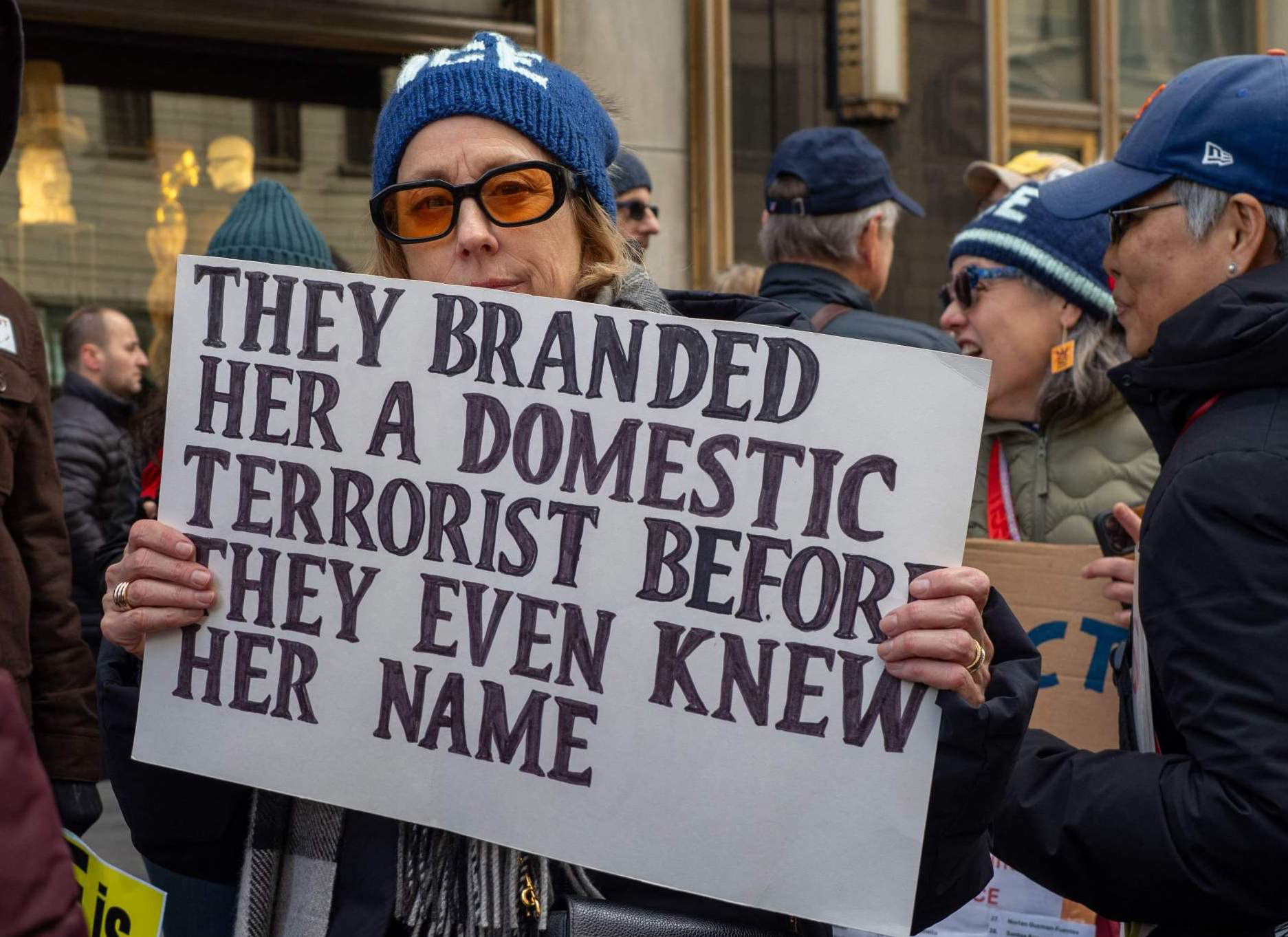
How Trump Is Manufacturing Enemies Out of His Own Citizens
The Trump administration is using disinformation against anti fascists in order to criminalise dissent, argues Caroline Orr Beuneo
The Special Relationship
Under Trump, relations between the UK and the US may also be reaching breaking point, ending forever the notion that there is still a “special relationship” between them.
Bilateral relationships of the historic nature and extent of the UK-US one, forged in war, and based on an unprecedented degree of military, security and intelligence cooperation, should not be dependent on personal friendships at the top, and should be able to survive the odd policy disagreement. For his part, Keir Starmer has admirably tried not to let Trump’s personal slurs towards him derail the enduring nature of the relationship. But, the British public seem to be less forgiving, and have taken much greater offense at Trump’s insults to their country.
Even Trump’s most fawning acolytes in the UK, such as Nigel Farage, and historically staunch supporters of the transatlantic alliance in the Conservative Party, have found themselves needing to express some disapproval of Trump, to avoid voter backlash at home.
On the US side, many of those who understand initial British hesitation over the war in Iran, nevertheless feel let down by Starmer’s continuing reluctance to offer more support, now that the crisis is spreading. Many American security experts have also come to regard the British as simply too weak in military terms to be of much use anymore, after decades of funding and personnel cuts.
If there is a silver lining to this fall out, it is that perhaps it will at last put a simultaneous end to the over-inflated notion of British exceptionalism, which led to the UK being over-reliant on its relationship with the US, and to underplay the importance of its connections to Europe, resulting in the folly of Brexit.
It may also at last force the British public to confront the reality that it is no longer a great power, and to drop its obsession with Britain’s role during World War 2. It is revealing that Trump’s sneer that Starmer was no Winston Churchill came in the same week as the Bank of England moved to replace images of Winston Churchill on their banknotes with pictures of British wildlife. Trump’s jibe barely cut through, despite the efforts of Britain’s right wing press to play it up as a fatal blow against Starmer. The UK has been dining out for far too long on fond memories of Britain’s wartime heroics. It is time for the UK to join the 21st century, and to understand its place as a small island off the coast of Europe, whose security and fortunes are inextricably intertwined with that continent.
Liberalism
We are also entering an era where the values which underpinned the post-war international order – democracy, human rights, and free trade – are also coming under unprecedented strain. The US non-profit organization, Freedom House, has been documenting a steady decline in the number of countries which can still be called Free or Partly Free. Trump’s affinity for dictators and authoritarian style has eroded America’s fabled system of democratic checks and balances at home, and emboldened strongmen overseas. Many democracy analysts believe America under Trump is actively sliding down the road towards dictatorship, whilst championing similar right wing authoritarian movements abroad.
For all Trump’s talk about wanting to support the Iranian people against their repressive regime, he has repeatedly shown himself willing to sell out human rights and democracy activists, if he can cut a deal with their leaders – as he did in Venezuela, where he is now working with Maduro’s successors, in return for access to Venezuelan oil.
Trump’s State Department has removed all the metrics for assessing the state of democracy in other countries in its annual human rights report. It is no longer willing to fund election observations missions. It has cut funding to democracy institutes and non-governmental organisations trying to support pluralism or build civil society overseas.
Trump’s America has also withdrawn from the UN bodies charged with promoting international human rights, and continued to attack the International Criminal Court, charged with prosecuting war crimes, including by sanctioning its personnel.
America was once the world’s undoubted champion of human rights and democracy around the world. Individual democracies watching what is happening in America may at last learn the lesson that they should not take their own freedoms for granted, and make stronger efforts to shore up their own systems.
But without American support or leadership, how many brave human rights defenders or democracy activists in more authoritarian countries will be willing to keep risking their lives for freedom. The greater likelihood is that struggling movements for freedom in other countries, such as in Georgia, will eventually peter out or give up altogether.
The Nuclear Taboo
Another core component of the post-world war consensus was an unspoken taboo against the use of nuclear weapons. During the Cold War, nuclear weapons were primarily there as a guarantee against a full-on war breaking out between the Soviet Union and the USA. At the end of the Cold War, many countries, such as Ukraine, voluntarily gave up or abandoned their efforts to develop nuclear weapons. The declared nuclear powers have largely ruled out their first use, except in extreme circumstances, such as to deter major conventional, chemical or biological attacks. There has also been a tacit understanding that even limited use of nuclear weapons on a battlefield would create an unacceptable risk of escalation.
In a perverse way, the sheer horrific killing power of nuclear weapons, and the risk of mutual assured destruction from their use, meant that they created a form of global stability.
In recent years, however, several powers have sabre-rattled their nuclear status and hinted at their limited use, to try to intimidate opponents, for example, Russia against Ukraine, or nuclear-powered rivals India and Pakistan against each other.
I do not rule out Trump, in his mad zeal to “defeat” Iran, threatening to use limited nuclear weapons against that country, to force the regime to yield. On the other hand, non-nuclear countries watching the war may conclude that absolutely the only guarantee against coming under such attack, as well as Iran itself again, is to acquire nuclear weapons themselves. Far from deterring rogue regimes like Iran from seeking nuclear weapons, it may spur on more countries to do the same.
ENJOYING THIS ARTICLE? HELP US TO PRODUCE MORE
Receive the monthly Byline Times newspaper and help to support fearless, independent journalism that breaks stories, shapes the agenda and holds power to account.
We’re not funded by a billionaire oligarch or an offshore hedge-fund. We rely on our readers to fund our journalism. If you like what we do, please subscribe.
Decision Time
Whether all these worst predictions will come to pass, or whether the world will draw back from the brink, and some of the potentially more positive aspects from the war come to fruition, depends on crucial decisions and developments in the coming few days and weeks.
In terms of the immediate players in the Iran war, will the relentless US and Israeli attacks on Iran finally cause its regime to totter and fall, or will it continue to mount a dogged resistance? If the former, will this lead to internal chaos, or will some form of moderate alternate government manage to emerge, committed to more democratic rule at home, and more peaceful engagement with the world abroad?
In the US, will Trump, who is known to hate “losing” decide to double down if Iran continues to fight, or will he mount a strategic retreat? If he doubles down, will he be able to sustain enough public support for this effort, or might his MAGA coalition break, or more critics of the war be emboldened to speak up? If not public opinion, will the growing economic pressures resulting from the oil crisis finally force him to back down, or will he be tempted to try to impose more repressives measures at home to tamp down dissent?
Even if he manages to extricate America from this conflict and portray it as some sort of success, will America’s reputation truly be enhanced, or will the perceived hubris and arrogance of this operation ultimately erode its influence and standing?
Will Iran be the straw that finally breaks America’s democracy, or forces it to come to its senses, and reckon with the folly of electing a man like Trump?
Will the US and Israel operation in Israel continue in lockstep, or will their differing motives and strategic calculations for embarking on the war cause them to diverge? Will the US-Israeli relationship survive, despite increasing evidence that more and more Americans are coming to view Israel as a problem, not a partner, for America?
Further afield, as the costs and rippling side effects of the war multiply, will America’s reluctant allies finally conclude they have no option but to come to its aid? Can they continue to claim that this is not their war, when they cannot insulate themselves from its consequences? Will they be able to do enough, to salvage what is left of their alliances with America? Will their public even allow them to do so, given the backlash to Trump’s cavalier treatment of their countries?
Some say the world order has been broken for years and needed a good shake-up. But a rickety bridge is still better than none. What will replace it?