
 Subscriptions
 Subscriptions

Read our Monthly Magazine
And support our mission to provide fearless stories about and outside the media system
Reform UK has not shared the addresses of any of its digital crypto ‘wallets’ with the Electoral Commission, drastically limiting the election watchdog’s ability to monitor where Nigel Farage’s party is getting its money from.
Crypto wallets are used for receiving donations in cryptocurrencies like Bitcoin and Tether.
The crypto wallet address is essentially a public ID through which all transactions are recorded on the blockchain, a public ledger showing the movement of crypto funds.
Without the wallet addresses, the Commission cannot conduct any independent verification and is entirely reliant on what Reform chooses to declare about the donations.
Without those addresses the Commission is unable to scrutinise the flow of funds into those wallets to be traced, including information on whether the money originated from overseas sources.
Don’t miss a story
The Electoral Commission has called on the Government to grant it tough new powers to regulate cryptocurrency donations to political parties, warning that the existing legal framework must be “strengthened to prevent impermissible foreign funds entering the UK system.”
In a statement to Byline Times, the elections body called for powers to set legally-binding guidance over crypto donations, to “match the pace of change, thereby mitigating threats to the security of the UK’s political finance regime.”
The EC is warning that “crypto-asset donations, because of the way they function, do present particular challenges and risks in meeting electoral law requirements in identifying donors and ensuring they are permissible.”
The statement comes in response to our investigation exposing weaknesses in the Polish regulatory regime underpinning Reform UK’s cryptocurrency donation portal.
See No Evil
Reform UK is the only major British political party to accept cryptocurrency donations, but as Byline Times found this week, two other smaller parties are also now doing so. Reform UK’s payment processor, Radom, conducts all crypto operations through a Polish-registered entity that is not regulated by the Financial Conduct Authority.
Speaking to Byline Times, a spokesperson for the Electoral Commission suggested that the election finance regulator has requested information from Nigel Farage’s party about how it is receiving donations in cryptocurrencies (such as Bitcoin and Ethereum), which has not been released.
A representative of the elections body told Byline Times: “Reform has not shared any crypto wallet address with us. We routinely request a variety of information from parties to ensure they are fulfilling their legal responsibilities. We cannot comment any further on the nature of these requests as it may impact our enquiries.”

Crypto Donations Now Accepted by Three UK Parties as Concerns Grow Over Foreign Interference Threat
Reform UK and the far-right Homeland Party are now both accepting cryptocurrency donations, as calls grow for Labour to use its elections bill to secure our democracy
To date, no cryptoasset donations have been reported to the Commission. But cash given to parties under £500 is legally not classed as a reportable donation – a loophole that opens the door to large donations being split into many smaller ones, via cryprocurrency, to avoid transparency.
There is no publicly available information to suggest this has happened yet, but anti-corruption groups and many Labour MPs are calling for much more transparency and even a ban on parties receiving the unregulated currencies.
Reform UK’s crypto payments are processed by Radom Pay in Poland. This makes it hard for regulators to demand records. The Polish regulatory regime through which Radom operates also required no minimum capital, insurance, ownership verification or inspection of actual business operations.
As Byline Times recently revealed, the same regime previously housed a Cambodian crime syndicate sanctioned by the US Treasury for laundering $4 billion in illicit funds – including proceeds from North Korean state-sponsored cyber heists used to finance Pyongyang’s weapons programme.
The EC spokesperson told Byline Times: “For UK crypto payment providers registered with the Financial Conduct Authority, we are able to request details of their customers in a similar way to traditional financial institutions. However, we are limited in the information we can obtain from crypto providers that are based overseas.”
The Electoral Commission carries out ‘permissibility checks’ on donations reported to them, to see if the donor is eligible to vote and donate. That is much more difficult when the Electoral Commission does not even know where Reform receives its crypto donations, nor receive information from the Polish crypto processing firm.
It recently emerged that Nigel Farage has invested £215,000 in former Conservative chancellor Kwasi Kwarteng’s Bitcoin reserves company, Stack BTC. Crypto firms were prominent sponsors at the party’s last conference.
Reform’s biggest donor – Thailand-based Christopher Harborne – is a major investor in the cryptocurrency Tether, which in turn made a strategic investment in Rumble, a video platform which hosts a Kremlin-backed influence operation exposed by the US Department of Justice. He has donated £12 million to the party over the past year, including the UK’s largest single political donation of £9 million in one go. Reform has demanded even looser rules governing crypto.

Reform UK’s Crypto Provider on Register That Housed North Korean Money Laundering
Byline Times investigation prompts calls by MPs to ban crypto donations, as alarm is raised about the methods used to finance Nigel Farage’s party
Lacking Firepower
In a reminder that large anonymous crypto donations to Reform UK and others would be illegal, the EC added: “If we are unable to confirm the identity of a donor through information the recipient has obtained or our own checks, the donation would be unidentifiable. This is more likely if the recipient has used an overseas payment provider who we are unable to obtain information from about the identity of the donor.”
While the watchdog did not answer whether it had any dedicated staff monitoring crypto donations, the Commission also said it is “taking specialist external advice on the nature of crypto transactions, including to identify what additional expertise and resources we may need to identify and track crypto donations” – an admission, perhaps, that it does not currently possess the required tools or expertise to monitor crypto flows into British politics.
The threat of illicit foreign money entering British political finance appears to be considered serious enough to involve the intelligence agencies. The EC added that it continues to “work closely with law enforcement and the security services in assessing intelligence and detecting instances of foreign funds entering the system”.
Tim Picton, Senior Advocacy Advisor at Spotlight on Corruption, said crypto donations inherently “present a plethora of unique risks that could undermine our democracy.” A bad actor could donate £500 – below the reporting threshold – a significant number of times by creating multiple crypto wallets, while tools such as ‘mixer accounts’, as well as ‘chain-hopping’ and ‘coin-swapping’ services could obscure the true source of funds. New AI tools could potentially automate this process.

Revealed: Peter Mandelson’s Russian Connections and Palantir Lobbying Links
The disgraced peer was appointed by Keir Starmer’s Government despite warnings about his role on the board of a Russian defence conglomerate linked to Moscow’s early-warning missile systems
Crypto Clampdown?
Ministers promise change is on its way through the Representation of the People Bill currently going through Parliament.
A spokesperson for the Ministry of Housing, Communities and Local Government told this outlet: “All donations made to political parties are subject to the existing laws, which make clear that parties must be wary of suspicious donations and return any with unidentifiable sources.
“We know we need to go further to crack down on foreign actors using their money to interfere in the UK’s elections which is why our Representation of the People Bill introduces a new package of reforms to tackle this.”
Officials say they are awaiting the findings of the Philip Rycroft review into foreign interference in UK politics, due by the end of March, after which they will respond and likely lay Government amendments on crypto to the bill. Crypto donations are expected to feature in Rycroft’s findings.
“Subject to the [Rycroft] recommendations, will take any necessary steps to stop political donations made with crypto assets undermining this,” the MHCLG spokesperson added.
ENJOYING THIS ARTICLE? HELP US TO PRODUCE MORE
Receive the monthly Byline Times newspaper and help to support fearless, independent journalism that breaks stories, shapes the agenda and holds power to account.
We’re not funded by a billionaire oligarch or an offshore hedge-fund. We rely on our readers to fund our journalism. If you like what we do, please subscribe.
As Byline Times revealed last week, three political parties now accept donations through crypto, with far-right party Homeland and direct democracy group The Other Party joining Reform UK. Picton added: “Continuing to permit these donations, with a wild west regulatory framework in place, just stores up problems for the future.”
Spotlight on Corruption is calling for a ban on crypto political donations in Labour’s Representation of People Bill. An amendment has already been tabled to push the Government on the issue. The anti-corruption group also wants to see enhanced investigative powers given to the Electoral Commission.
In the meantime, the Electoral Commission is pushing the Government to consider international proposals for reform including “requiring parties to use specific payment providers, converting cryptoassets to fiat [£] money at the point of receipt, or requiring crypto payment providers to share details of donors with recipients of donations” – none of which currently apply under UK law.
Reform UK were contacted for comment.
Got a story? Get in touch in confidence on josiah@bylinetimes.com
holding farage to account #reformUNCOVERED
While most the rest of the media seems to happy to give the handful of Reform MPs undue prominence, Byline Times is committed to tracking the activities of Nigel Farage’s party when actually in power
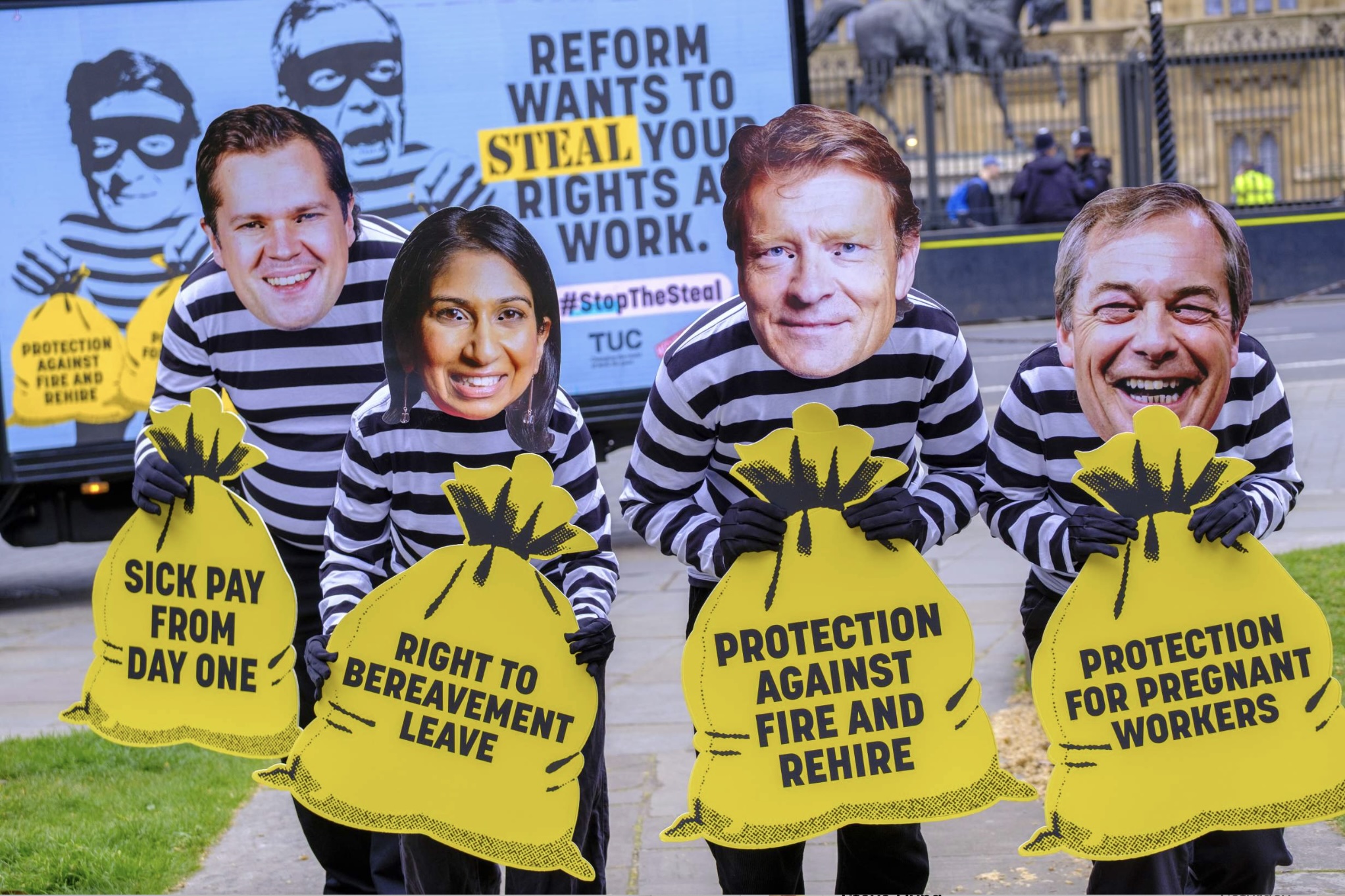



 Contribute to our #ReformUncovered crowdfunder
 Subscribers Get More from JOSIAH
Josiah Mortimer also writes the On the Ground column, exclusive to the print edition of Byline Times.
So for more from him…
