
 Subscriptions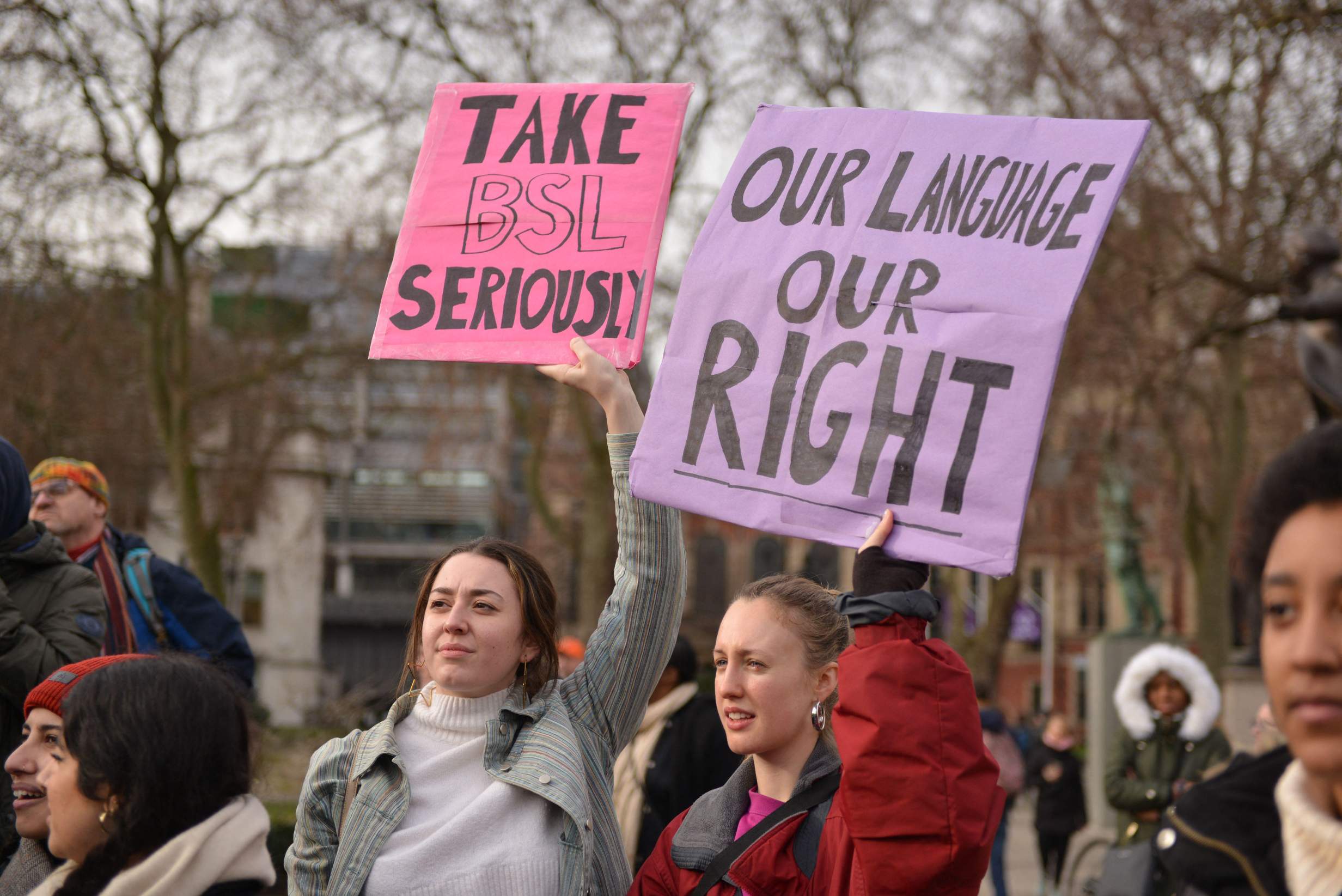

Read our Monthly Magazine
And support our mission to provide fearless stories about and outside the media system
Two Reform-controlled councils have responded to the collapse of a council-funded Deaf support charity with a grant of just £22,000 per year.
Deaf professionals say the collapse of Deafconnect in Northamptonshire in January came without warning – and that the councils may be failing in their legal duties as they provide a tiny grant for Deaf services across two local authority areas covering around 800,000 people.
Deafconnect operated in Northamptonshire for over 150 years, and held the council contract for Deaf services covering both West and North Northamptonshire councils, both now run by Reform UK.
The organisation closed at the beginning of 2026 with no prior public announcement about funding difficulties, and all staff lost their jobs on closure. They had asked the councils for extra support to survive but were refused.
Council funding had crashed from a high of around £140,000 to around £20,000 a year, though the councils maintain that their contribution has been broadly flat in recent years and that the charity’s collapse was triggered by the failure of a major external funding bid.
ENJOYING THIS ARTICLE? HELP US TO PRODUCE MORE
Receive the monthly Byline Times newspaper and help to support fearless, independent journalism that breaks stories, shapes the agenda and holds power to account.
We’re not funded by a billionaire oligarch or an offshore hedge-fund. We rely on our readers to fund our journalism. If you like what we do, please subscribe.
Disappeared Overnight
The charity provided a drop-in service for the estimated 1,800 Deaf people in the area, as well as a children’s service, tinnitus support group, gaming and social groups, and a dedicated centre open five days a week.
It also provided British Sign Language (BSL) courses for those wishing to learn, an advocacy service in partnership with a major advocacy organisation, a sensory room in its centre, and equipment support for hard-of-hearing people. And the charity helped explain letters and correspondence for service users, many of whom struggle with low reading comprehension.
Following the charity’s closure, the councils switched provision for its statutory Deaf support services from a three-year contract to a short-term grant of £22,000 (£11,000 from each council). The previous estimated value of the services was approximately £250,000 a year.
Deaf campaigners locally note that £22,000 will not cover one person’s salary. The new support sessions are expected to be just one day per month for each of the council areas, some of it online-only.
An expressions-of-interest process was launched to replace some of Deafconnect’s lost services. Deaf champion Jessica Pettican and a colleague set up a Community Interest Company to submit an expression of interest, proposing a once-weekly drop-in service.
Their expression of interest, a brief document, was then treated by the councils as a formal grant application, and missed out on the new grant.
Don’t miss a story
As of the time of interview, neither Pettican nor Cllr Sally Keeble knew the identity of the winning provider.
Byline Times has now learnt it is RJ Community CIC, a community interest company which was registered as an entity in January.
The contract award deadline was 17 March. The new service is reportedly due to start in April – but as of 25th March Deaf people had not been told who the new provider would be.
BSL is a recognised language in the UK, carrying a legal obligation on councils to provide services for BSL users. The Equality Act 2010 also requires reasonable adjustments to ensure Deaf people can access services, while the Public Sector Equality Duty requires equalities impact assessments before decisions are made affecting protected groups.
The UK is also a signatory to the UN Convention on the Rights of Persons with Disabilities.

Blow to Nigel Farage After Government Bans Crypto Donations in Urgent Crackdown on Foreign Political Interference
Keir Starmer’s Government acted following publication of a review launched in the wake of Reform’s Welsh Leader Nathan Gill being jailed for taking pro-Russian bribes
Campaigners say no consultation was carried out with the Deaf community prior to the changes, and in a statement to Byline Times, West Northamptonshire Council acknowledged no recent equalities assessment has been completed. The last was in 2024.
Jessica Pettican is providing a free drop-in service on Friday at her own cost, in response to distress in the community. A group of five community members with expertise in Deaf community issues has also been formed to coordinate a response to the councils’ decisions.
The group will attend the full West Northamptonshire council meeting at the Guildhall, Northampton on Thursday (26th March).
In what is believed to be a first, Pettican will address the council meeting speaking through a BSL interpreter.
“It’s All Gone”
Byline Times spoke to Pettican via an interpreter, saying she was “shocked” when she heard the news of the changes.
“The [council] paper is saying everything is fine in the North and the West, but it isn’t. There is no real service or proper access [for Deaf people]. Deaf people are already struggling to access mental health services and hospital appointments, and to have letters translated. [Many] Deaf people have an average reading age of eight or nine due to a lack of education. So anything they receive in the post — they would go to the drop-in service and say, “What does this say?” It is vital for them.”
She added: “If someone reaches a crisis point, it becomes very expensive — more professionals get involved, and it is entirely unnecessary. And there has been no consultation whatsoever about these changes.”