
 Subscriptions
 Subscriptions
Read our Monthly Magazine
And support our mission to provide fearless stories about and outside the media system
Can Trump’s attack on Iran be justified? Is it wise? And is the administration competent enough to make it a success?
My answers to these three questions are: Possibly, No, and Hell, No!
Justified? Possibly – Argument One
There is certainly a moral argument in favour of the war: that Iran is run by an evil regime, which has ruthlessly oppressed its own people – most recently by brutally suppressing protests in January, resulting in the deaths of thousands of its own citizens.
It has also systematically spread insecurity and terror overseas, through its support for regional and international terrorist groups, and collaboration with authoritarian regimes like Putin’s Russia, to whom Iran has sent millions of drones to help Putin prosecute his illegal war in Ukraine.
For many supporters of the war, this argument alone is reason enough. I recently sat next to a prominent American-Iranian citizen and a well-known Russian opposition figure at a lunch in Washington DC, who both told me they strongly backed the intervention in Iran, and indeed would welcome more such actions by Western powers to eliminate dictators everywhere else in the world.
Even if the outcome of such interventions can not be guaranteed, they felt that the removal of brutal leaders at the top of repressive regimes at least opens up a chance for positive change. For them, regime change is not just highly desirable, but should be the main purpose of the war.
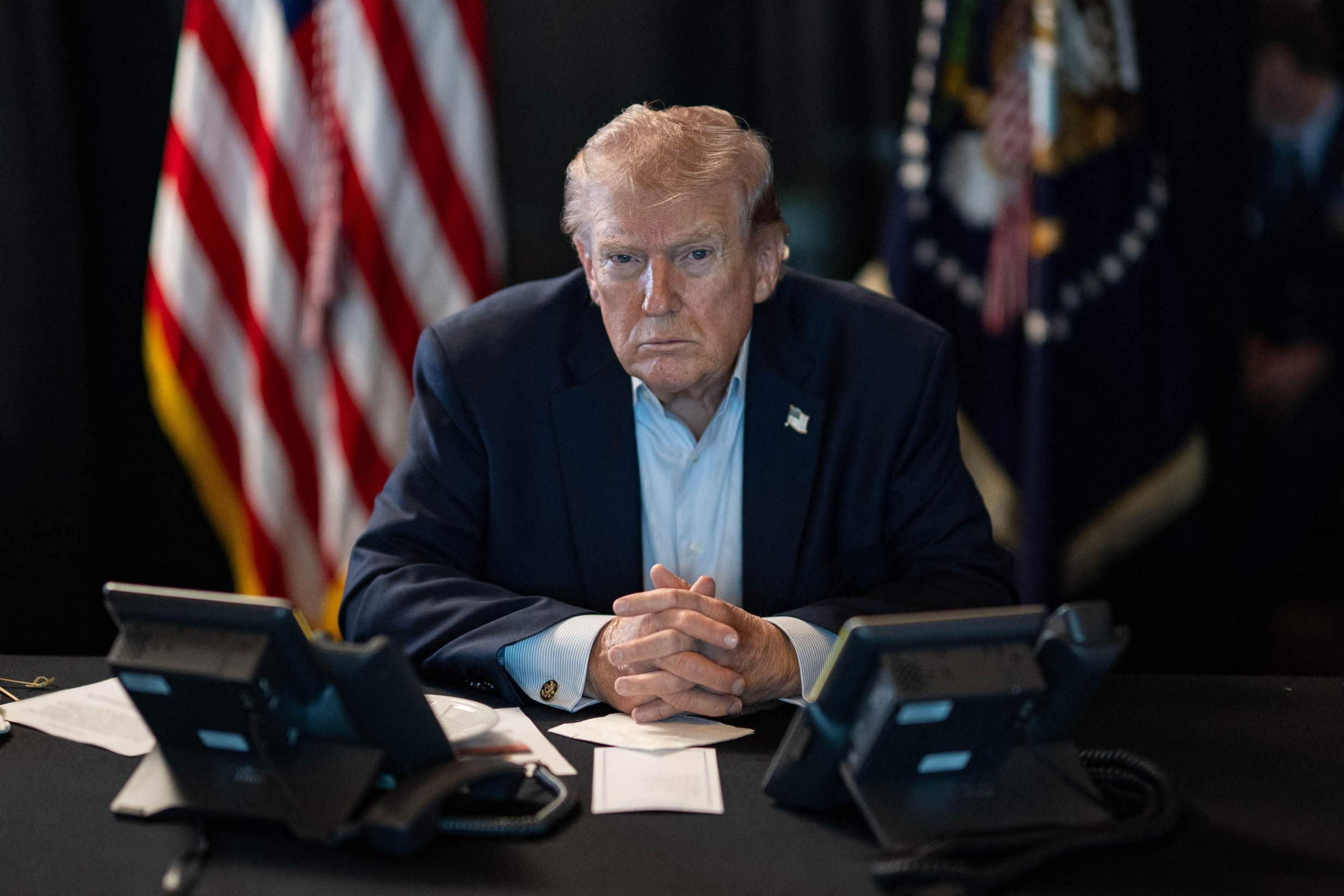
Operation Epic Fury: A Mass of Shifting Objectives
Dr Charles Kriel looks at the Iran War as an information operation and identifies what the West still refuses to understand about it
Justified? Possibly – Argument Two
A different argument is advanced by other supporters of the war – that it is a necessary operation, justified on defensive grounds, because Iran is intent on rebuilding its nuclear and missiles programmes, badly damaged by last year’s 12 Day War, will never be reconciled to the existence of Israel, and will never drop its posture of implacable hostility to the US.
Some would even argue that since the 1979 revolution, Iran has always been at war with the US and Israel, making a definitive showdown between them inevitable at some stage.
For proponents of this argument, it also makes absolute sense for the US and Israel to launch their operation now, because the Iranian regime is at its weakest point in decades, both at home, in the aftermath of the massive January protests, and abroad, as a result of successful Israeli attacks both on its own military structure, and on regional proxies such as Hamas and Hezbollah, as well as the downfall of another critical regional ally, the Assad regime, in Syria.
One might also ask why Iran is the priority over, say, Russia, as another equally brutal regime, and which arguably presents even more of a security threat to America and its allies.
Nor can Iran count on any substantive support from its ostensible major allies, Russia and China, as Russia is bogged down in Ukraine, and China cannot afford to endure a prolonged blockade of its critical energy supplies from the Gulf.
Both these groups would dismiss the legal arguments against the war – that it was not sanctioned internationally by an explicit UN Security Council resolution, or domestically through the approval of Congress, or triggered by the actual prospect of an imminent Iranian attack on Israeli or US interests.
They would argue that it turns international law on its head to suggest that Iran should be able to claim protection from attack on legal grounds when Iran has repeatedly violated almost every principle of the UN and its major conventions.
They would argue that it is naïve and unrealistic to expect the UN Security Council to authorise action against Iran, given the veto power of Russia and China, who routinely violate UN standards themselves, and mainly use their positions on the Council not to uphold international law, but to prevent effective action by the US and its allies.
And they would also argue that it makes no sense to wait until after Iran has successfully rebuilt its military capacity, or after it has attacked a US or Israeli asset or ally in the region, before acting against Iran themselves. Far better to act now, while Iran is still weak.
Furthermore, precisely because the attack was launched without any elaborate efforts to build up an international coalition or muster support in Congress, it granted the operation the benefit of surprise, resulting in the early operational successes, such as the decimation of the senior leadership of the regime, including the Supreme Leader himself, Ayatollah Khamenei.
They would argue that these ends justify the means.
As someone who has always believed in the importance of the international rules-based order, I find many of these arguments to be uncomfortable, and somewhat self-serving, particularly the legal ones, since the US has never hesitated to criticise other countries for acting in violation of international law, yet at the same time, has frequently turned a blind eye to violations committed by its own partners, notably Israel itself.
One might also ask why Iran is the priority over, say, Russia, as another equally brutal regime, and which arguably presents even more of a security threat to America and its allies.
However, I do not entirely dismiss the case in favour of the war, either, because it is true that the international system designed to uphold international law is not working, it is true that Iran is a dangerous and brutal regime, and it is unsatisfactory to contemplate standing by while Iran continues its egregious behaviour, whether to its own people, or abroad. Just because the US is not proposing to take on every rogue regime, doesn’t mean there isn’t a case for tackling Iran.
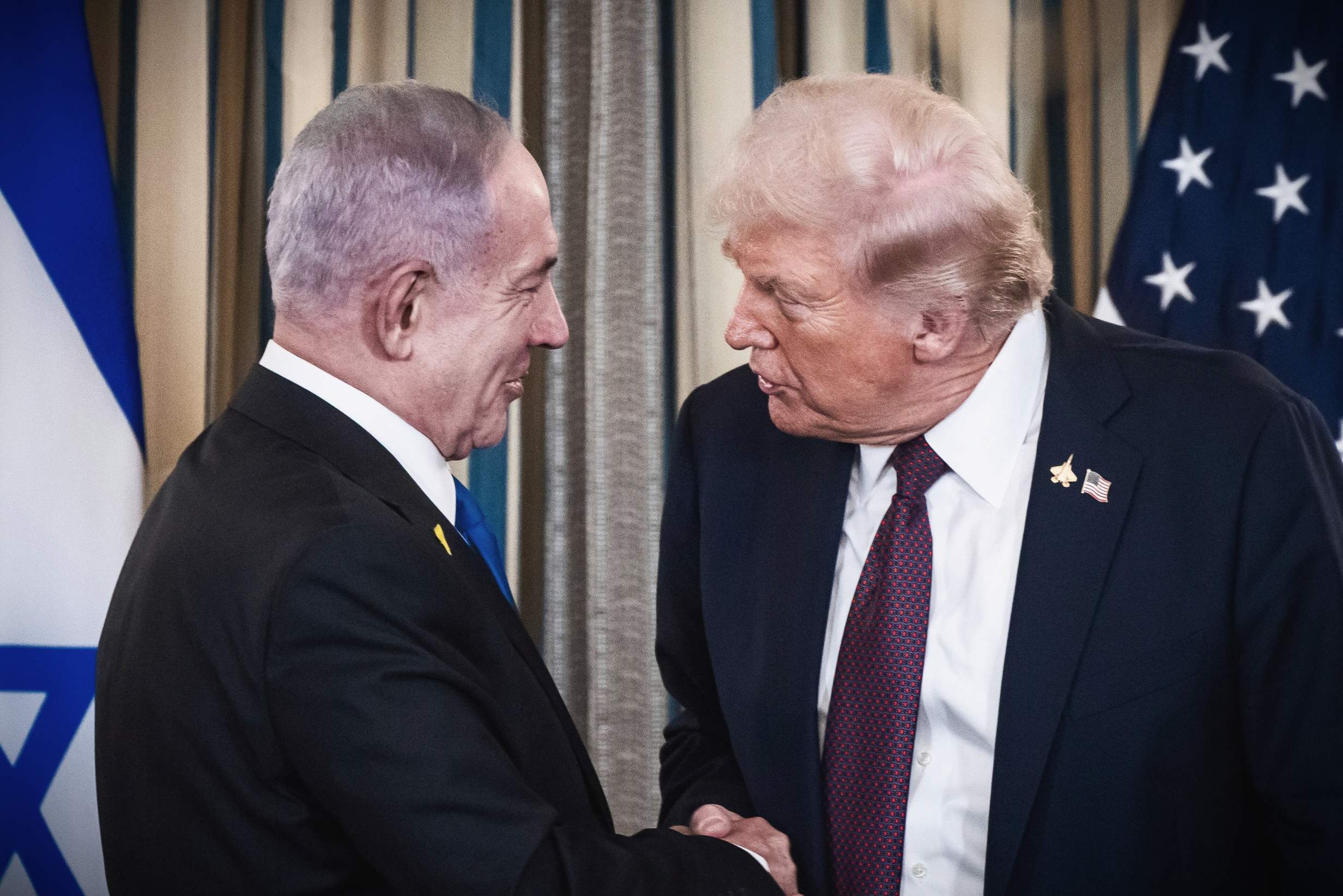
Trump’s Iran War Revives Israeli Plan to Remake Middle East that Drove Post-9/11 Invasions
A Bush era neoconservative network has reorganised under Trump and is now directing the exact same regime change playbook against Tehran
Wise? No
Nevertheless, these arguments don’t necessarily make this intervention a wise one.
In the first place, it is unclear whether the administration had properly explored all other options for curtailing Iran’s aggressive behaviour, apart from the military one. We will never know for sure what exactly was discussed between the Iranian and US negotiators discussing Iran’s nuclear programme, but if the Omani Foreign Minister and many other commentators are to be believed, Iran was offering up far more significant concessions than the amateur US team, led by Steve Witkoff and Jared Kushner, understood.
All wars involve risk and unintended consequences, as the US itself has bitterly experienced in Iraq and Afghanistan recently. Surely, the administration should have exhausted all other options first, before deciding to go for full out war.
Secondly, any major military assault involves significant cost – both the cost of the actual military operation itself, and the opportunity cost, in diverting critical attention and resources from other important national security priorities.
The American security establishment risks being stretched thin, as the Trump administration continues to deploy military assets against drug-runners in the Caribbean, keeps an eye on events in Venezuela following the US raid to snatch Maduro from there, openly contemplates the notion of a similar assault to decapitate the regime in Cuba, and continues its planning for post-war Gaza.
Meanwhile, Russia continues its war in Ukraine, threatening the security of all of Europe, while China builds up its military and rhetoric about seizing Taiwan.
Many would question the wisdom of opening up yet another front, let alone in the volatile Middle East.
Domestically, the Trump administration has scorned the notion that it had any duty to consult Congress, and so far completely failed to make a convincing case for the war to a sceptical American public, to whom it had promised an end to “forever wars,”
Thirdly, the administration does not seem to have made nearly enough effort to prepare the ground in advance for a successful intervention. In fact, I would argue quite the opposite – that it’s not just the Iranian regime which is in a weak position, but also the US administration, which is presiding over a divided country at home, and internationally has seemingly gone out of its way to alienate and offend many of its allies.
I’m no military expert, but it seems to me that before launching a major war, it’s advisable to at least try to build up some support at home and abroad for your planned operation, so that when the going gets tough, they are willing to rally around you.
This is far from the case here. Domestically, the Trump administration has scorned the notion that it had any duty to consult Congress, and so far completely failed to make a convincing case for the war to a sceptical American public, to whom it had promised an end to “forever wars,” whilst continuing to pursue highly divisive domestic policies. Internationally, it has repeatedly browbeaten its allies, and threatened them with tariffs when they have not unquestioningly fallen into line on US priorities.
The administration also doesn’t seem clear on what it is actually trying to achieve in Iran. The justification for the war has changed from day to day, with no clear end goal or exit strategy set in sight. We all saw how badly the 2003 Iraq war turned out, even after months of buildup to the invasion, because of the lack of planning for the aftermath. This war has been launched with almost no apparent forethought or preparation, beyond the military sphere. Operational success does not guarantee strategic success.
Some question the motives and timing of the operation – whether it may have been influenced more by a desire to distract from the ongoing Epstein scandal, voter concerns about the economy, or even as a way to justify postponing the midterms, rather than because the situation in Iran had become critical.
There are also questions about Israel’s role – did it drag the US into war, as Marco Rubio implied by suggesting the US wanted to head off Iranian retaliation for an imminent Israeli attack, before rowing back on his remarks a day later? Even if it is genuinely a joint operation, for how long will US and Israeli goals remain aligned? For Israel, Iran is an existential question. For the US, this is a war of choice.
Is it any wonder that many voters at home, as well as allies such as the UK overseas, have been hesitant to offer their full-throated support for the operation? In fact, Trump is such a divisive figure that many of those who have felt the scourge of his tongue may even secretly want his Iran operation to founder, just for the pleasure of seeing him fail.
Competent? Hell, No
This leads on to the final question around the war, which is whether the Trump administration is actually competent enough to wage the war successfully.
Here, the answer has to be no. On top of the lack of strategic preparation and failure to build any kind of domestic or international backing for the war, this is an administration staffed by rank amateurs.
Most Cabinet-level positions, including critical national security roles such as head of the FBI and the Director of National Intelligence, are occupied by third-rate Trump acolytes, chosen for their loyalty rather than competence, and many of them are completely lacking in the experience necessary to make a success of their roles. The National Security Council has been gutted. Marco Rubio is double-hatted as the Secretary of State and National Security Advisor.
Trump is notoriously fickle. What happens when the costs mount, the body bags pile up, the stock markets continue to slide, the price of oil surges, and popular opposition to the war mounts in the US?
Across government, dozens of senior intelligence, military, legal and diplomatic officials have been fired, as part of DOGE cuts, or for allegedly being too “woke” or insufficiently compliant to the administration. Many of their successors either lack the same degree of experience or capability, or will have been cowed into silence, making them reluctant to give honest advice for fear of losing their own jobs as well.
Law enforcement across the US has been diverted to support ICE in its anti-immigration efforts. The Department of Homeland Security is mired in a funding row with Congress.
The Head of DHS, Kristi Noem, has made a series of amateurish mistakes which harm US internal security, such as removing the requirement for travellers to remove their shoes for inspection when flying, and micro-managing the operation of the Federal Emergency Management Agency, which responds to disasters. These all make the US more vulnerable to terrorist attacks by Iranian-backed sleeper cells.
The kind of government agencies which are often called in to help deal with the wider consequences of war, such as USAID, or to communicate to populations in the affected area, such as Alhurra, a US-funded Arabic language news service which once communicated to over 30 million people in the Middle East and North Africa, have been shut down.
Palantir’s Double Conflict of Interest in the War Against Iran
War was inevitable claimed the three most senior figures in the AI analytics firm which both provided the justification for US/Israeli strikes and profits from the conflict
Many US Embassies in the region still don’t have Ambassadors, and are struggling to organise evacuation efforts for US nationals.
The US has also cut off funding to dozens of NGOs, as well as to many of the leading UN agencies, which are usually active in conflict zones, meaning it can’t call on them to help if, for example, the Iran conflict generates a humanitarian crisis, including massive refugee outflows.
Finally, I doubt the administration’s staying power. Trump is notoriously fickle. What happens when the costs mount, the body bags pile up, the stock markets continue to slide, the price of oil surges, and popular opposition to the war mounts in the US?
Will Trump then abandon the effort, and seek to blame others for the debacle: his military officers for not giving him good enough advice; allies like the UK for not offering enough support upfront; Israel, for dragging the US into the conflict; or the Iranian people themselves, for failing to take enough advantage of the “opportunity” he created, to overthrow the regime?
Unfortunately, it is all too plausible to envisage all these scenarios, with Trump walking away and leaving others to clear up the mess he has created. Alternatively, he could decide to cut a deal with the new Iranian leadership, giving him a face-saving exit strategy, but leaving the fundamental nature of the regime unchanged.
To be clear. I do not mourn the death of Ayatollah Khamenei. Now the war has been launched, I, of course, hope it turns out successfully, with the beleaguered Iranian people at last given an opportunity for a better future. But the odds of success seem slim, and the chances of failure seem high.