
 Subscriptions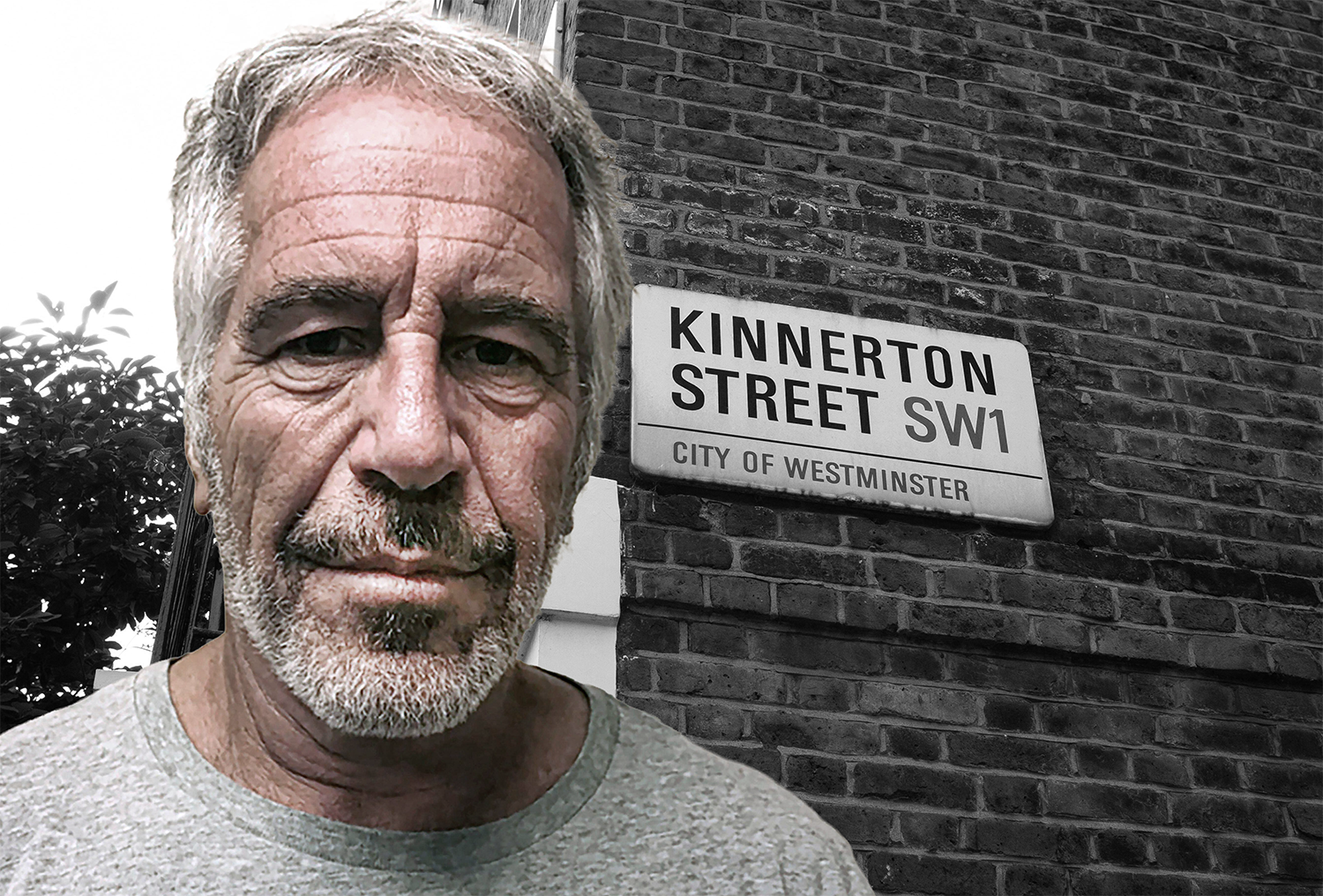

Read our Monthly Magazine
And support our mission to provide fearless stories about and outside the media system
In his last-ever filmed interview, the convicted paedophile Jeffrey Epstein, who killed himself in 2019, was asked: “Do you think you are the devil himself?”
“No,” he replied. “But I do have a good mirror.”
It wasn’t a bad joke. Perhaps even worthy of one of his friends Woody Allen. But it spoke to something deeper. Because if Epstein was the Devil, who were “the infernal crew”, to quote Milton, that buttressed his reign?
After all, the latest US Government release of files has added thousands of pages of emails to the charge that Epstein oversaw a vast, diabolic sex trafficking network.
Much attention has focused on the famous names implicated in this network. But perhaps less has been paid to the very system that – legally and discreetly – allowed his nefarious deeds to stay largely hidden until now.
What particularly stands out is the way Epstein repeatedly relied on London’s high-end service economy to manage risk, suppress scrutiny and launder his reputation.
London, in a way, served as the Devil’s Butler, providing the Luciferian infrastructure to enable Epstein’s activities. And that such a service was made so accessible to a convicted sex offender should give all of us pause for thought.
Reputation Management
In 2011, I was part of an undercover sting operation on the now defunct public relations firm Bell Pottinger. We pretended to be representatives of the Uzbek government – a country at the time in the grip of the despotic rule of Islam Karimov – and posed as people seeking media advice on how to detract from British media scrutiny of child slavery in Uzbekistan. In so doing, we exposed how the company headed up by Lord Bell, Margaret Thatcher’s one time adviser, was willing to use what they called the ‘dark arts’ to manage media scrutiny.
The subsequent exposé of media manipulation and political access cost the firm dearly in clients and in contracts. Bell Pottinger was to later collapse after a 2017 investigation revealed it had been paid to foment racial tensions in South Africa. But what we did not know at the time was that Bell Pottinger executives were also using their dark arts to assist Epstein.

In Putin’s Orbit: The Crypto Politics of Jeffrey Epstein and Peter Thiel
The web of ties between Epstein, Moscow and Silicon Valley leads back to Steve Bannon and Nigel Farage
Emails in the files show senior executives there, via its Pelham Bell Pottinger arm, trying to shore up Epstein’s reputation in the British press. Working through its then managing director, James Henderson, the firm coordinated with Epstein to manage and constrain press coverage, broker third-party interventions, and script defensive narratives. Henderson even wrote to Epstein offering sympathy for his being called a paedophile. “I completely understand your concerns and frustrations as does the Duchess,” he wrote.
Draft language was negotiated line by line with the then Duchess of York with an eye towards damage limitation. Henderson agreed with Sarah Ferguson to say that Epstein “pleaded guilty many years ago to a prostitution crime, not a crime of paedophilia as has been the tabloids’ exaggeration.”
It was all co-ordinated. In March 2011, the Duchess of York told the press, after it had been revealed the convicted sex offender had given her £15,000, that she would “have nothing ever to do with Jeffrey Epstein ever again.” But in April 2011, she wrote to Epstein saying: “You have always been a steadfast, generous and supreme friend to me and my family.”
“I know you and James (Henderson) are going to work on a solution,” she wrote.
By May, Henderson emailed Epstein saying “the Duchess has given several interviews and made the following comments as requested by you.”
Such services cost. Whilst his invoice to Epstein is unknown, that year Bell Pottinger paid Henderson £419,000 (in today’s money) and the company made the equivalent of £3 million profit. Henderson did not reply to Byline Times for comment.
The Department of Justice emails show that such reputation management didn’t end with Bell Pottinger. They also reveal a conversation between Epstein and Oliver Lloyd, a PR consultant in London who was – as one message to Epstein described him – “very good at running interference with the tabloids and shaping their coverage.”
In response to questions from Byline Times, Lloyd said he had never acted for Jeffrey Epstein “in any capacity whatsoever, either directly or indirectly”, and had never received any payment or payment in kind from him.
Libel Law as Reputational Defence
Bell Pottinger also comes up in the files in the context of another arm of London’s reputation management system. The released emails show that in 2011, Henderson liaising with Paul Tweed – a UK libel lawyer famous for high-profile reputation defence.
In May 2011, Tweed’s then London-based law firm – Johnsons – had written to Tatler, a lifestyle magazine, contesting the “grossly inaccurate and defamatory references to (Epstein) being a paedophile.”
“The girls in question were not pre-pubescent,” their letter said and sought a “categoric clarification and apology…to your defamatory allegations and malicious falsehoods.”
They also wrote to The Telegraph, arguing the same.
Tweed downplays his role with Epstein. He told Byline Times that he gave “limited advice”, he never met Epstein and his communications were just “an exchange of emails and phone calls.” He walked away after a few months.
Not before, though, Tweed’s firm invoiced Epstein in April 2011 and August 2011 for a total of £25,254.

How Epstein Channelled Race Science and ‘Climate Culling’ Into Silicon Valley’s AI Elite
The Epstein files expose how racial hierarchy, genetic “optimisation” and even climate-driven population culling circulated inside Big Tech circles
Tweed also told Byline Times that “I most certainly did not seek to “deter or manage media scrutiny”. But in an email to Epstein in 2011 he wrote that he had “put some timely pressure on the Telegraph in particular.”
Paul Tweed’s company motto has it: “Let our reputation protect your reputation”.
It was not the only time the idea of using the UK’s libel laws to challenge British reporting of Epstein’s actions was raised. The now-disgraced peer Lord Mandelson also advised Epstein that he needed a “UK libel lawyer” and recommended Rod Christie-Miller of Schillings. Paul Tweed wrote that he had spoken to Christie-Miller in one email to Epstein and it appears that Schillings was acting for the Duke and Duchess of York.
Schillings told Byline Times they were not employed by Epstein and we do not claim he did anything untoward, but the point remains: Lord Mandelson tried to steer Epstein towards Britain’s claimant-friendly defamation system.
At the heart of this system lie libel lawyers whose tactics consist of aggressive pre-publication threats, privacy injunctions, price intimidation (in case they win and are awarded costs). This, to Epstein, was clearly a professional service he dearly wanted to manage his reputation.
Security as Deterrence
It was not just the apparatus of the law the Epstein files help expose. They also contain FBI reports relating to the British private security arrangements of Ghislaine Maxwell, the socialite found guilty of child sex trafficking for Epstein. These documents name Sparta Security Services Ltd, a UK firm run by former British military personnel, and detail the deployment of ex-UK Special Forces operatives for her close protection.
One sworn statement by Matthew Hellyer, a former Special Air Service trooper, confirms that his company provided security to Maxwell in 2020, and even posted a $1m bond in support of her bail application. He described the press’ attempt to hold Maxwell to account as ‘harassing’ and cited the death of Princess Diana as evidence of journalists’ capacity to cause lethal harm – justifying his protection role.
Epstein did not hire such soldiers. But the presence of Hellyer, alongside other British Special Forces veterans Marcus Wakefield and Martin Jackson also hired by Maxwell on $350 a day, sent out a strong message already conveyed by London’s lawyers and PR firms: former British SAS soldiers can physically shield you from journalistic inquiry. None replied to Byline Times’ request for comment.
London as the Devil’s Playground
Finally, there is the role London’s luxury hospitality sector played as part of this enabling architecture, providing neutral, prestigious spaces where Epstein could meet without scrutiny.
In March 2010, for instance, during a state visit to the UK, the former president of South Africa Jacob Zuma was invited to a private dinner with Jeffrey Epstein at The Ritz Hotel. In an email written by Mark Lloyd, the friend of Epstein (who appears to have invited him onto his boat with a group of young women), Lloyd proposed inviting a Russian model to “add some real glamour to the occasion”. The email does not show any illegality, and Zuma’s foundation has denied any improper conduct. But the Ritz appears here as part of London’s soft-power infrastructure: a venue whose reputation confers privacy and luxury.
In Epstein’s world, London became a place where he could get luxury stationery from Smythsons; purchase art from the auction house Christies; order luxury bed sheets costing over £10,000 from Savile Row’s luxury cloth merchant Holland & Sherry; book his last known girlfriend (and reported mother of his child) a stay at the luxury hotel Claridges; become a place where he was recommended ‘hot’ Mayfair Girls escorts; and, ultimately, be a city where he searched to buy a home.
ENJOYING THIS ARTICLE? HELP US TO PRODUCE MORE
Receive the monthly Byline Times newspaper and help to support fearless, independent journalism that breaks stories, shapes the agenda and holds power to account.
We’re not funded by a billionaire oligarch or an offshore hedge-fund. We rely on our readers to fund our journalism. If you like what we do, please subscribe.
Hiding in plain sight
The latest Epstein files reveal London, then, as a professional service economy where many were clearly willing to do a deal with someone considered the devil himself.
There is no suggestion of illegality on the part of those named in this article. But this is also how immoral economic systems exist. Where each actor performs their narrow, legal professional roles and often does so with a hefty paycheque. An economy based on not asking too many questions, and ensuring plausible deniability at all times.
Where libel lawyers discourage scrutiny, PR firms spin language, security contractors deter intrusion, and the city’s shops and hotels offer white-gloved discretion. None of these services required belief in Epstein’s innocence. They required only a willingness to invoice and to be silent.
This is the rotten heart of London. Where Britain’s service economy sells itself as a butler in black tie: neutral, professional and turning the blind eye.
Yet butlers always need a master. And the master here is not just Epstein, but all the other oligarchs and despots who use London similarly. Masters whose wealth and desires pull them towards a city whose legal, reputational and financial systems have been moulded – from the end of the British Empire onwards – to serve power first and to ask questions last.