
 Subscriptions
 Subscriptions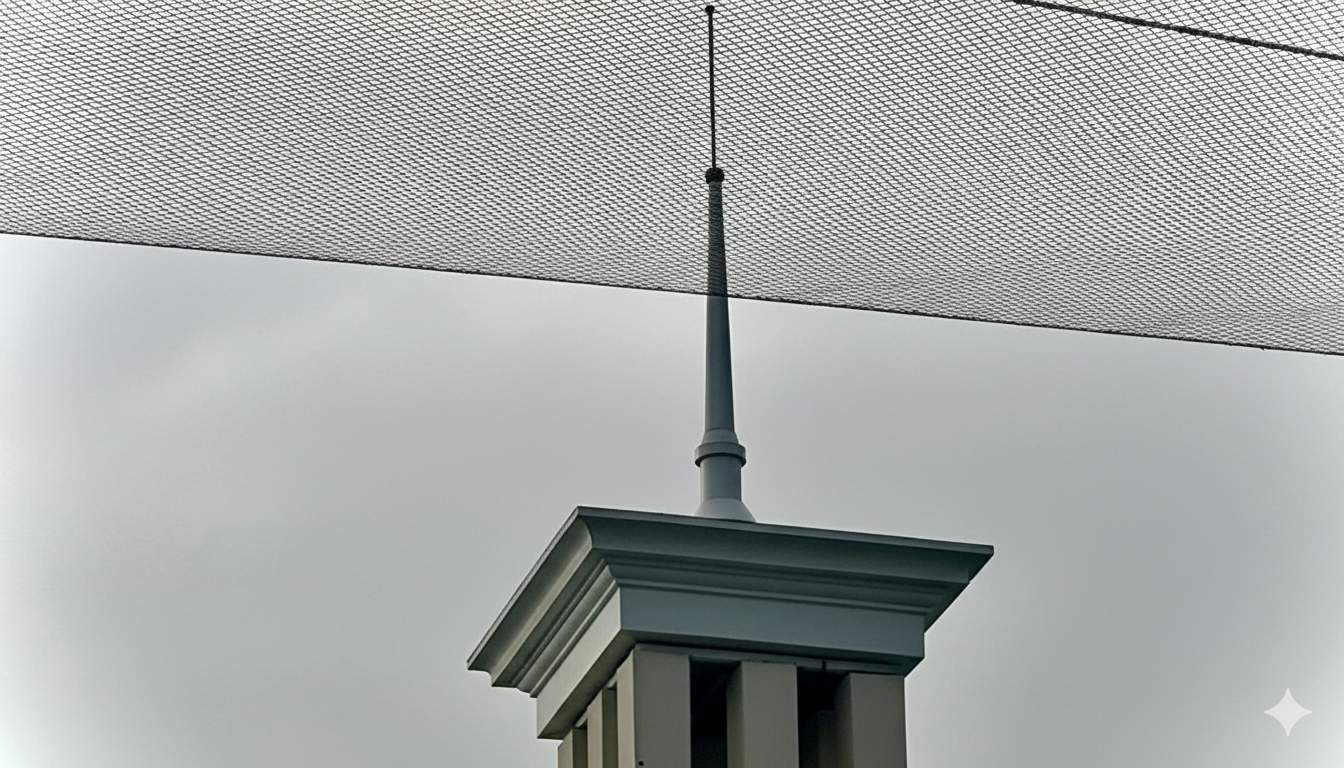

Read our Monthly Magazine
And support our mission to provide fearless stories about and outside the media system
Russian forces began using First Person View (FPV) drones to hunt civilians in Kherson in the summer of 2024, a practice first reported by Byline Times on July 29 that year. Known as the human safari, the tactic deliberately targets civilians, emergency workers, and infrastructure staff and has since been recognized as both a war crime and a crime against humanity, with the aim of forceful displacement.
In response, the Kherson Regional Military Administration has developed layered defences to counter the attacks.
On January 8, these measures, along with the 2025 data, were presented by Head of the Kherson Military Administration Oleksandr Prokudin at a press conference held in a Kherson bomb shelter while undergoing shelling.
Attacks and Casualties
In 2025, the Russian Federation military shelled the territory of the Kherson Region 146,000 times, firing more than 235,000 shells at Kherson city and villages. As a result of Russian shelling, 307 civilians in the region were killed, including six children. Another 2,564 people were injured, including 62 children.
Half of the Russian strikes on the community were carried out by drones. Almost every second victim in the region was injured or killed by a drone attack.
About 100,000 Russian drones targeted civilians, children, the elderly, emergency medical teams, city facilities, critical infrastructure, and maintenance staff in the Kherson region in 2025.
130 civilians died in the Kherson region as a result of the Russian “human safari,” including three children. Another 1,195 civilians were injured, including 17 children.
“Anyone who moves becomes a target, including pensioners going to the market, children out for a walk, and ambulances responding to emergency calls,” said Prokudin.

Inventing Anti-drone Defences in the Ever-changing Environment
Countering drone attacks is a priority for the city and regional military administrations. According to Oleksandr Prokudin, there is no single magic solution, and innovation and creativity remain key to effective defence. No means or system can guarantee 100% protection against drones at this moment. No so-called “umbrella” or “universal dome” capable of protecting 100% of a city from drone attacks yet exists, either in Ukraine or in the world’s most technologically advanced states.
Effective countermeasures require a combination of available forces and tools, anticipation of technological developments, and the methods to counter them.
City authorities, in collaboration with the Ukrainian military, strengthened protection against FPV drones and large Shahed-type drones and built a three-level defence system. This included:
- A radio-electronic wall operates simultaneously at fifteen frequencies and helps disable and destroy different types of drones, from Mavic to FPV
- Physical barriers, including anti-drone tunnels, stop drones from entering key areas
- Mobile units are deployed to shoot down drones that bypass these defences
In recent months, Ukrainian units have shot down 230 Russian Shahed drones, and the number continues to rise monthly, according to Prokudin. In 2025, Ukrainian forces destroyed 93,000 Russian small drones, accounting for 97% of the total number.
The drone technology battle is never static: the Russian military constantly improves drone technology, and, in response, the Ukrainian military continuously adapts its defences. Both Ukraine and Russia are deploying fiber-optic drones, as well as AI-assisted and swarming drones. These systems allow real-time data processing, automated target recognition, and coordinated operations, compensating for personnel shortages and contested signal environments. The technology race adds a new dimension to the human safari, making drone attacks faster and harder to counter.

The EU’s ‘Farage Clause’ Shows the Damage Reform Is Already Doing to the UK
As well as making us poorer each year, Farage’s Brexit is also making us more vulnerable to those who wish to do us harm, argues Chris Grey
Anti-drone Tunnels
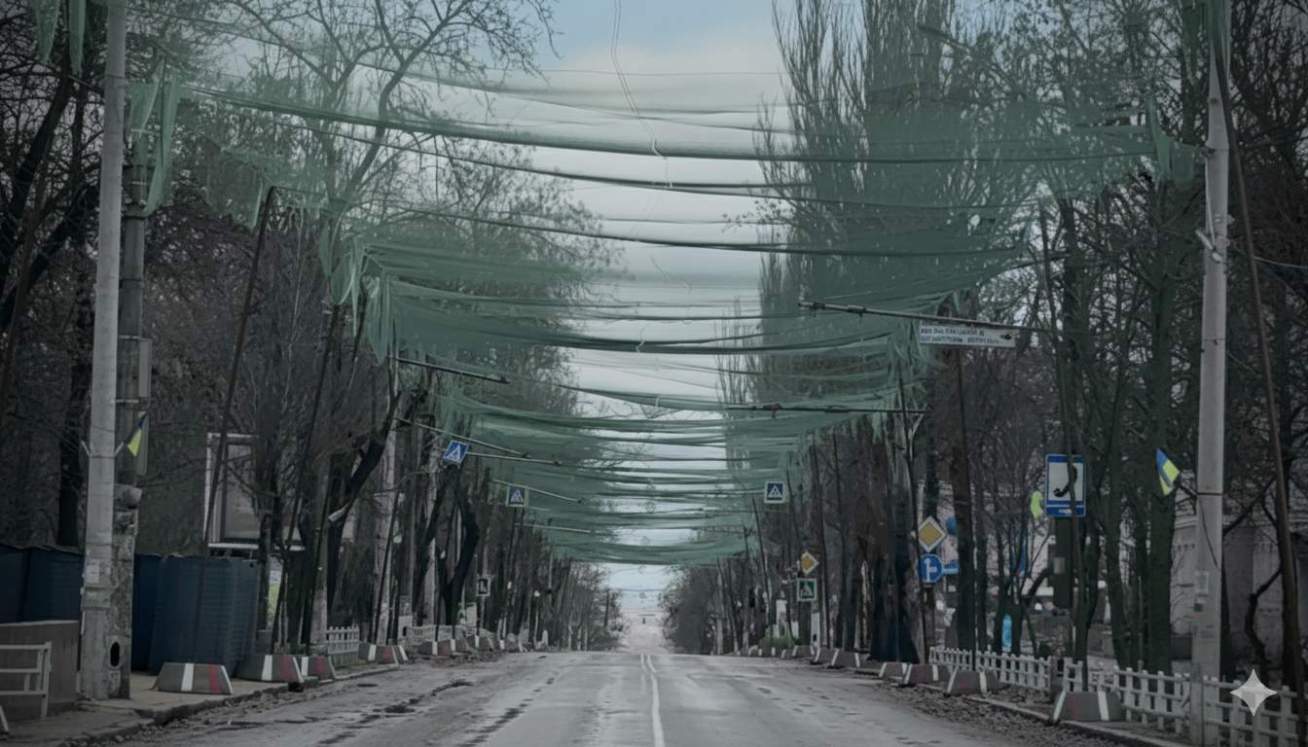
Every day, hundreds of municipal workers install anti-drone tunnels using protective nets stretched over the poles along the city streets and roads to protect drivers from Russian drone attacks. The city uses only fishing nets that have been tested for effectiveness. The criteria are strength, quality, optimal cost, and the ability to integrate the nets into the existing defence system.
To identify the highest-quality nets, ten types of netting materials were used, and each batch was tested under real-life conditions. Ukrainian military units attacked the nets with drones to assess their resistance to strikes. Training ground tests made it possible to select three types of nets that showed the best results in drone interception efficiency.
First, the city maximized coverage of fishing nets for military units, critical infrastructure, hospitals, and other key facilities. Next, authorities began actively protecting logistics routes.
In cooperation with the military command, 27 sites with a total planned length of 217.7 kilometers were identified for the installation of anti-drone protective structures.
In 2025, more than 100 kilometers of roads have been covered with anti-drone tunnels, and the work is ongoing. More than 370 military and municipal service workers are involved daily in strengthening road protection against drones.
The total funding requirement is UAH 261.2 million (£4.6 million), of which UAH 63.8 million (£1.13 million) has already been allocated from the regional budget.
Following President Volodymyr Zelensky’s visit to Kherson in fall 2025, the city appealed to the Government for UAH 96 million (£1.70 million) to install anti-drone nets and is currently awaiting the funds.
Fibre-Optic FPV Drones and Defences
Fibre‑optic FPV drones represent a new stage of warfare because they do not rely on radio signals for control or data transmission. Instead, they are guided through physical fibre‑optic cables, which means they emit no radio frequency signature for conventional drone detectors to intercept. As a result, systems designed to detect, jam, or spoof radio-controlled drones are largely ineffective against them.
Experts from the city military administration monitor and seek to implement the latest technological solutions related to the use of and countermeasures against FPV drones operating via fibre optics.
Some countermeasure details are classified, but the overall process can be outlined. To detect fibre-optic drones, authorities use a range of commercially available sensors. These sensors detect drones in the airspace through sound, movement, and other indicators. Drones are also identified through visual surveillance.
Mobile firing groups destroy fiber-optic drones just as any other drones violating the airspace over the Kherson region. In addition, a system of physical barriers, including nets, is deployed to intercept them. Methods to cut the fibre optic cables are being developed. The military also works to detect and neutralise operators of FPV fibre-optic drones.
Human resources remain a critical factor. One example is Denys, a fighter with the 34th Separate Coastal Defence Brigade. Before the start of the full-scale invasion, Denys lost his leg in a road accident. After the invasion began, he became a volunteer and helped civilians and military personnel cross by boat from the occupied territories to areas controlled by Ukraine. Despite using a prosthesis, Denys participates in combat missions on the left bank of the Dnipro. He currently serves as an interceptor drone operator and has destroyed hundreds of drones.
ENJOYING THIS ARTICLE? HELP US TO PRODUCE MORE
Receive the monthly Byline Times newspaper and help to support fearless, independent journalism that breaks stories, shapes the agenda and holds power to account.
We’re not funded by a billionaire oligarch or an offshore hedge-fund. We rely on our readers to fund our journalism. If you like what we do, please subscribe.
International Support
In the early stages of physical protection of the city and communications, Northern European countries assisted by supplying fishing nets. Volunteer nets from other countries vary in quality. Some are of poor quality and unsuitable for operational needs, while others are of high quality and already protect logistics routes and social facilities. Each batch of nets undergoes testing. Kherson residents credit these contributions with saving lives and maintaining essential services.
Lithuania, a strong ally of Ukraine, has developed high-quality electronic warfare technologies.
Immediate needs include equipping city vehicles with electronic warfare systems and passive protection. Many partner states provide such additional protection for buildings and transport used in critical infrastructure sectors, including healthcare, civil defence, energy, utilities, and transport infrastructure.
Engineers and inventors in partner states are encouraged to develop new solutions in the interests of Ukraine and their own defence. They are urged to seek more effective and reliable technologies to physically counter Russian drone flights, including systems for cutting optical fibers, disrupting video signals, destroying drones in the air, and preventing them from reaching targets through networks of mesh barriers.
The Kherson region now serves as a real-life laboratory for testing modern technologies designed to protect civilians and counter the adversary’s drone fleet. The Ukrainian military and the city administration continue to expand cooperation with international partners.