
 Subscriptions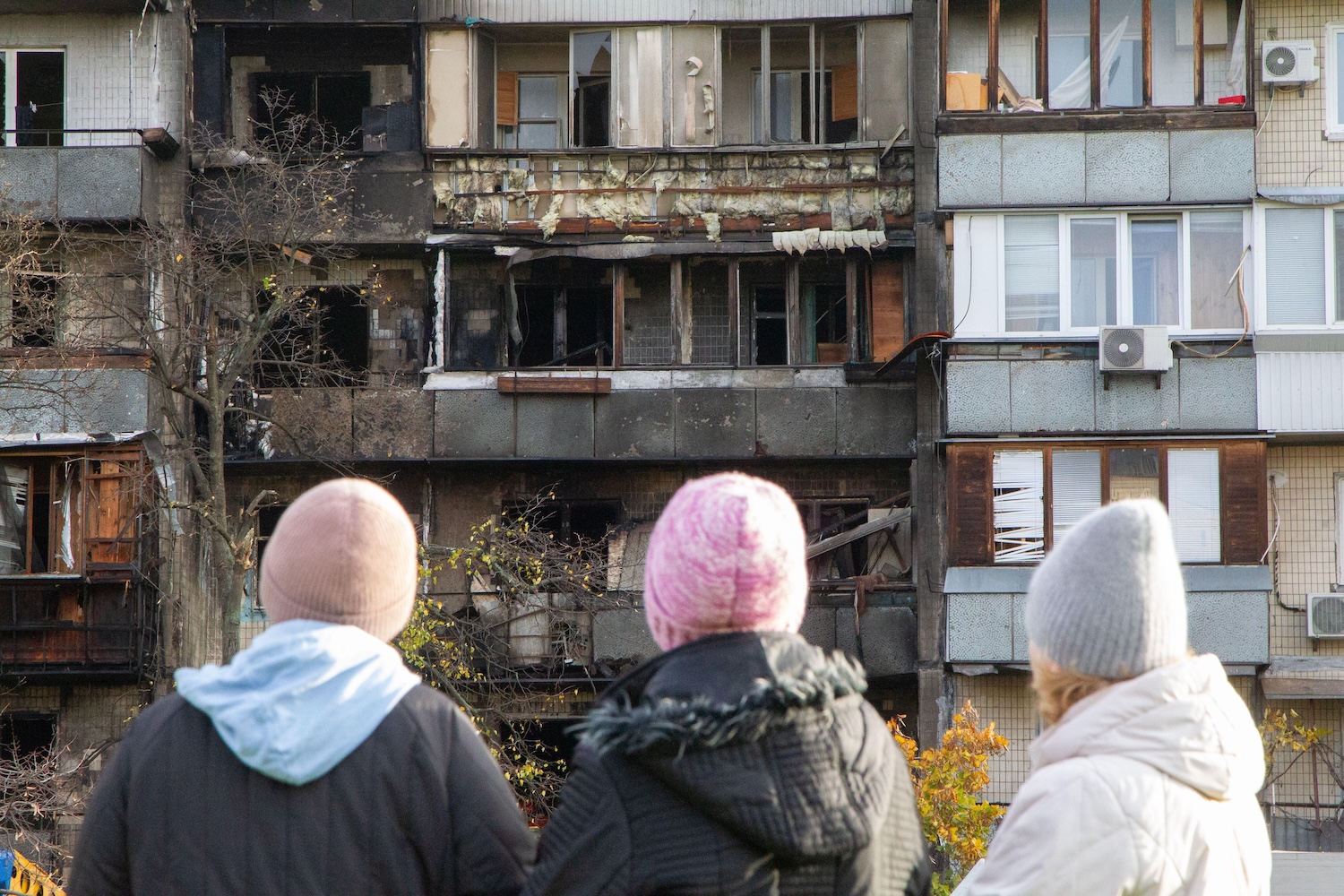

Read our Monthly Magazine
And support our mission to provide fearless stories about and outside the media system
Byline Times first reported on Russia’s “human safari” attacks on Ukrainians back in July 2024. At the time, Putin’s drones attacks on civilians in Kherson City seemed to be a series of isolated atrocities, too brutal to form a pattern. However, more than a year later, the “human safari” has been officially recognised not only as a war crime and a crime against humanity but also as part of a coordinated strategy to drive Ukrainians from their homes.
On 27 October 2025, the Independent International Commission of Inquiry on Ukraine presented new findings to the 80th United Nations General Assembly, documenting a systematic campaign to depopulate southern Ukraine. This is the third report by the Commission and it builds upon previous findings. A conference room paper in May 2025 first documented drone attacks along a hundred-kilometre stretch around Kherson.
The new report expands the investigation to 300 kilometres, from Dnipropetrovsk through Kherson to Mykolaiv, and incorporates deportations and transfers into a broader picture of Russia’s state-directed policy against civilians.
Drones as Instruments of Forced Displacement
The Commission confirmed that Russian forces committed the crimes against humanity of murder and forcible transfer of population through recurrent drone strikes across southern Ukraine. These attacks were coordinated and directed at civilians, homes, humanitarian distribution points, and critical energy infrastructure. First responders such as ambulances and fire brigades were also targeted, in defiance of their protected status under international law. The strikes rendered entire areas uninhabitable.
The Commission concluded that the use of drones was not random but part of a deliberate policy to depopulate Ukrainian territories, spreading terror and coercing civilians into flight. In Kherson, this pattern is clear. According to local authorities, since July 2024, over 200 civilians have been killed and over 2,000 civilians were injured in such attacks in the three oblasts. Almost 3,000 houses have been damaged or destroyed, also by drones.

Is Russia Losing the Great Game in Central Asia?
Iain Overton travelled to Tashkent, where cranes rise over Soviet relics and Chinese cars fill the streets, to see how Uzbekistan has become the lodestar of Central Asia’s quiet pivot away from Moscow
The Road of Death
Elvina Osmanova, a municipal services staffer in her early twenties, forgot her purse at home in Kherson as she set out on a business trip to Mykolaiv, a city 67 miles away. Before the Russian invasion, the drive took about an hour along a flat road lined with sunflower fields and southern steppes.
In August 2025, the road had turned into a surreal landscape. Elvina drove at a mad speed under fishing nets stretched high over wooden poles, forming a long, transparent tunnel. Her car twisted and turned around charred cars; black-and-red flames raged right next to her. The stench of burning fields and gasoline became suffocating. The fire was so close, and the heat so intense, that her windows began to crack. Was she trapped inside the anti-drone tunnel? Would a Russian FPV drone target her next? She saw the fishing nets melting and pressed harder on the gas. At a checkpoint, though, all traffic was stopped: swarms of Russian drones of different sizes and types attacked the M14 highway. Ukrainian electronic warfare (EW) units fought back, but the wait took what seemed to be forever.
Elvina made it back home only after curfew and had to stay and catch some sleep to the sounds of nonstop artillery fire. Before sunrise, now with her purse, she set out again—and soon a Russian drone dropped explosives 30 feet from her car. She saw people jumping out of burning vehicles and heard another explosion, but kept driving. She didn’t know if she would make it to Mykolaiv and if she would be able to make it back home to Kherson.
Since July 2025, Russian forces have shifted focus to highway M14, the only functioning road connecting Kherson with the rest of the country. Using FPV drones, they attack and set fire to civilian and military vehicles. By late August, when Elvina launched on her business trip, the pressure forced the regional authorities to partially close the road for several hours a day, disrupting supplies. If this campaign succeeds, Kherson could face complete isolation and the consequences will be severe. Roughly 60,000 civilians still live in Kherson. Years of war have already eroded livelihoods: businesses closed under occupation, were further devastated by shelling, the flood after the destruction of the Nova Kakhovka dam, and the relentless “human safari.”
The drone attacks, the Commission concluded, are one method in a dual strategy to empty southern Ukraine. The other method is the systematic deportation and transfer of civilians from occupied territories.
Deportations and Transfers
The Commission also documented the unlawful deportation and transfer of Ukrainian civilians from occupied Zaporizhzhia Oblast.
From 2022 to 2023, civilians from occupied Zaporizhzhia were forced to march for kilometres through dangerous operational zones toward the Vasylivka checkpoint. Ukrainians accused of “anti-Russian activities” were expelled from their homes, often after arrests and interrogations. Some were blindfolded and made to walk 10 to 15 kilometres through mined and shelled areas, past trenches and burned-out villages. Many collapsed along the way. These expulsions were presented as “voluntary relocations” in Russian-controlled media.
By 2024, the deportations expanded. Ukrainian civilians were transported thousands of kilometres across Russia and forced to cross the border into Georgia through the Verkhniy Lars checkpoint. Formal deportation orders cited “discrediting the Russian Federation,” “subversive activity,” or “violating curfew.” The documents included entry bans to Russia lasting 20 to 40 years. Victims were often accused of refusing Russian passports or expressing pro-Ukrainian views.
The Commission documented a clear pattern of abuse. Detentions, home searches, and interrogations preceded deportations. Victims were beaten, tortured, and threatened into signing self-incriminating statements. Russian officers and officials confiscated passports, identity documents, keys, and phones, leaving deportees stripped of their belongings and legal identity. Some were coerced into applying for Russian citizenship before being expelled.
ENJOYING THIS ARTICLE? HELP US TO PRODUCE MORE
Receive the monthly Byline Times newspaper and help to support fearless, independent journalism that breaks stories, shapes the agenda and holds power to account.
We’re not funded by a billionaire oligarch or an offshore hedge-fund. We rely on our readers to fund our journalism. If you like what we do, please subscribe.
The process was bureaucratically organised and militarily enforced. The so-called “Directorate for Migration Affairs,” established by Russia in 2023, directed operations and approved deportation decisions. Local decrees and public rhetoric by occupation leaders criminalised dissent and legitimised expulsions. Russian media channels filmed the transfers, sometimes ordering victims to repeat scenes for propaganda videos.
Many civilians were deported with little or no notice, unable to collect personal belongings or contact relatives. Families were separated, homes were confiscated, and properties reclassified as “ownerless.” Deported Ukrainians were left to rebuild their lives in foreign countries with no documents, income, or security.
At every stage, the deportations were marked by fear and humiliation. Victims reported being threatened with disappearance or execution if they tried to return.
The Commission concluded that these actions were not isolated abuses, but part of a coordinated state policy. Deporting or transferring protected civilians without imperative military reason constitutes a war crime. Forcing Ukrainian citizens to accept Russian nationality violates international humanitarian law.
The systematic nature of arrests, detentions, deportations, and threats demonstrates a deliberate strategy of domination and an attempt to erase Ukrainian identity.