
 Subscriptions
 Subscriptions
Read our Monthly Magazine
And support our mission to provide fearless stories about and outside the media system
The announcement that Keir Starmer’s Government is launching a review of “foreign financial interference” in British politics didn’t make much of a splash in today’s paper, but it may turn out to have been one of the most significant political for moments in this Parliament.
For years the Labour party has been under pressure to take the issues of foreign interference, and dark money in our politics, more seriously.
However, a nervousness inside Downing Street about being seen to question the Brexit result, as well as a resistance to take any steps that might also harm Labour’s own funding streams, has meant that little so far has been done.
Even after reports spread last year that the far-right US billionaire Elon Musk was considering bankrolling Reform UK, via his UK companies, Downing Street hesitated to do anything about it.
That now finally appears to be changing. Labour sources who are close to Number 10 say that the conviction of Reform’s former Welsh leader for taking pro-Russian bribes, and the record breaking £9 million Reform donation from a Thailand-based crypto investor have combined to “galvanise” Starmer into taking action.
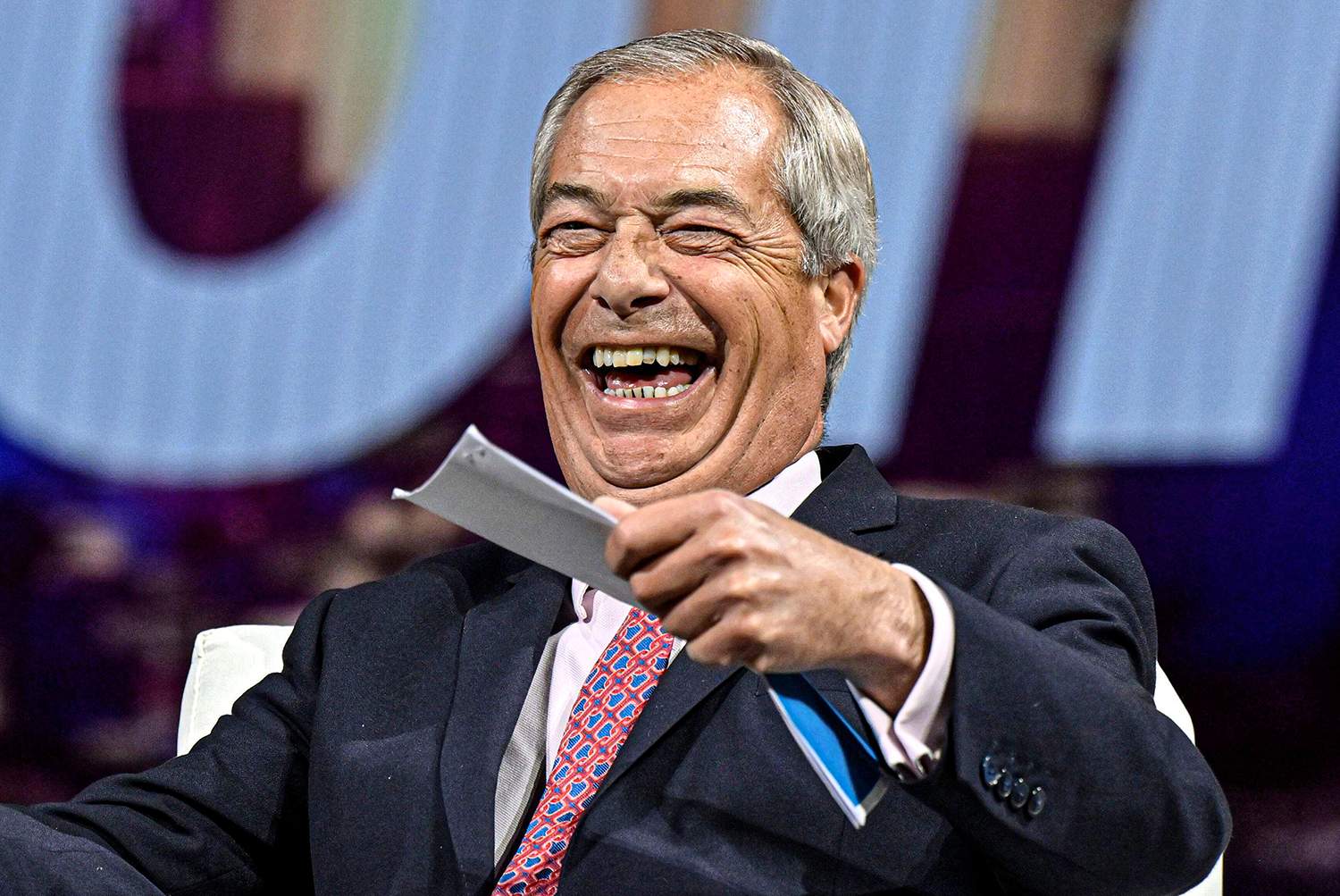
Crypto Investor Donates £9 Million to Reform UK as Nigel Farage Plugs His Company and Tells Industry ‘I Am Your Champion’
The Reform leader recently used media interviews to back Christopher Harborne’s company while promising to cut taxes and regulations on crypto firms
The realisation, as one Labour MP put it to Byline Times, that foreign financial interference could pose both an “existential threat to democracy” and an “existential threat to their jobs” has finally spurred Number 10 into action.
The review, which will be led by the Former Permanent Secretary at the Brexit department, Philip Rycroft, is just the first step in what is likely to see the Government taking significant action to close at least some of the glaring loopholes allowing foreign interference in our politics.
As things stand it is remarkably easy, and cheap, for hostile foreign actors to interfere in our politics. As a recent sting operation by Democracy for Sale exposed, it only takes a little bit of money and a little bit of access to gain real influence over our politics.
Unlike in the corporate world, where there are strictly-enforced protocols against corruption, there are only a few very weak guardrails preventing malicious actors gaining influence.
One good example of this is the All Party Parliamentary Group system, whereby foreign governments are effectively able to buy significant influence among elected parliamentarians for relatively small amounts of money. By hosting events inside Parliament and paying for MPs to visit their host countries, foreign governments and corporations can buy huge amounts of access with very little scrutiny.
Similar access is also gained through the world of opaquely funded think tanks, which have become a hugely prominent force inside Westminster and at party conferences, despite there being little obligation on these groups to disclose where their funding ultimately comes from.
The checks and balances are only slightly better when it comes to the direct funding of our politics. Under current rules, only British citizens and entities can donate to a political party. Yet in reality this rule can be easily bypassed by funnelling money through a UK company, as Musk was reportedly considering. These restrictions were even further loosened under the last Conservative government, which allowed people who had been living abroad for more than 15 years to continue donating to UK political parties. The political funding watchdog, the Electoral Commission, an already fairly toothless body, was further enfeebled under the last Govenrment.
However, it has been the onset of crypto donations that poses perhaps the most significant new threat to our democratic safeguards. The opaqueness of crypto currencies means that UK investigators believe that it has already become the weapon of choice for money launderers and sanctions-evaders.

Nigel Farage’s £9m Donor Profits From Putin Propaganda Platform While Holding MoD Stake
Reform UK’s biggest donor is profiting from ties to a pro-Kremlin platform that hosts a Russian intelligence-backed influence operation
It is also a system that Nigel Farage’s party has a definite interest in. Reform’s largest donor, Christopher Harborne, is a big investor in the stablecoin firm Tether, and Farage’s adviser George Cottrell, who was convicted for wire fraud in the US, following allegations that he offered to launder millions of dollars on the dark web, also reportedly has a keen interest.
This whole world will now fall under the scrutiny of the Government.
According to their statement on Tuesday, Rycroft’s report “will focus on the effectiveness of the UK’s political finance laws, as well as the safeguards in place to protect our democracy from illicit money from abroad, including cryptocurrencies”.
Why Nigel Farage Should be Worried
There are two reasons why this should all concern the Reform leader. The first is that the current Wild West of British political funding is now likely to be significantly more closely policed. That could have real impacts on the ability of Reform to raise funding for the next general election.
The second reason for Farage to worry is about what comes next. Rycroft’s report is due to arrive in March, as the Government brings forward its Elections Bill. Whatever Rycroft finds will be used to justify the Government taking tougher action than it might previously have been prepared to take.
However, there is broader context to all of this which is how the Government chooses to go on the attack against Farage and Reform in the run up to the general election.
Over recent weeks the Prime Minister has made a series of public demands that Farage launch an investigation into his party’s connections to Russia. His comments in the House of Commons carried a remarkable similarity to the demands that Starmer made of Boris Johnson on Partygate, prior to his downfall.
ENJOYING THIS ARTICLE? HELP US TO PRODUCE MORE
Receive the monthly Byline Times newspaper and help to support fearless, independent journalism that breaks stories, shapes the agenda and holds power to account.
We’re not funded by a billionaire oligarch or an offshore hedge-fund. We rely on our readers to fund our journalism. If you like what we do, please subscribe.
The sense among some MPs is that the Prime Minister is deliberately laying a trap for Farage, just as he did for Johnson.
By dismissing the issue so strongly, Farage is arguably walking straight into that trap.
Of course we do not know what Rycroft’s investigations will find. Nor do we know whether Reform, or Farage has anything else to hide.
However, it is certainly telling that the Government’s statement announcing its inquiry into foreign financial interference on Tuesday made no fewer than three references to Nathan Gill in relation to foreign interference.
It is therefore incredibly unlikely that this will turn out to be the last that we hear about this issue.