
 Subscriptions
Read our Monthly Magazine
And support our mission to provide fearless stories about and outside the media system
Unidentified drones overflew a military base in northeast Belgium on Sunday. The affected Kleine-Brogel Air Base hosts Belgian F-16 planes and is also believed to store US nuclear weapons.
The Belgian Defence Minister did not directly blame Russia for the incident but said the tactics point towards it. Recent months have seen multiple Russian incursions into NATO airspace, including drones entering Polish airspace during a large strike on Ukraine and triggering a NATO response, a drone spending nearly an hour inside Romanian airspace, and three Russian MiG-31s violating Estonia’s airspace before being intercepted. Russian naval activity also increased, with a Russian submarine surfacing off France in monitored waters and another tracked while entering the Baltic through Denmark.
It’s now clear that Russia has entered “Phase Zero,” a critical stage of its campaign to prepare for a possible NATO-Russia war, according to the Institute of Study of War. German newspaper Welt agrees: suggesting that war is inevitable.
Ukraine has been warning about this for some time. In a recent exclusive interview series, Ukrainian secret unit officers pointed towards the FSB’s secret psychological warfare tactics used during this “Phase Zero” period. The informational and psychological condition setting stage, are as critical as troop buildups, cyberattacks, reconnaissance operations near NATO borders. The West still has time to act, they warn. However, understanding Russia’s methods is crucial for fighting back.
An FSB Lifehack
Since KGB times, Russian secret services have conducted preparatory campaigns and psychological operations preparing the ground for invasion. Long before drones arrive, minds are prepared through the spreading of propaganda, myths, and narratives. These psychological and information weapons act like malware in the public mind, weakening national resilience.
The FSB develops tactics to manipulate the global collective mind. Ukrainian ‘Elves’ officers obtained and shared with Byline Times a document outlining how Russian special services plan psy ops. It serves as a window into the mindset of an invading force, they said. It reads like a mix of a Cold War era spy novel and a refrigerator operational manual and poorly written psychology textbook: a step-by-step guide to preparing and carrying out a psy-op.
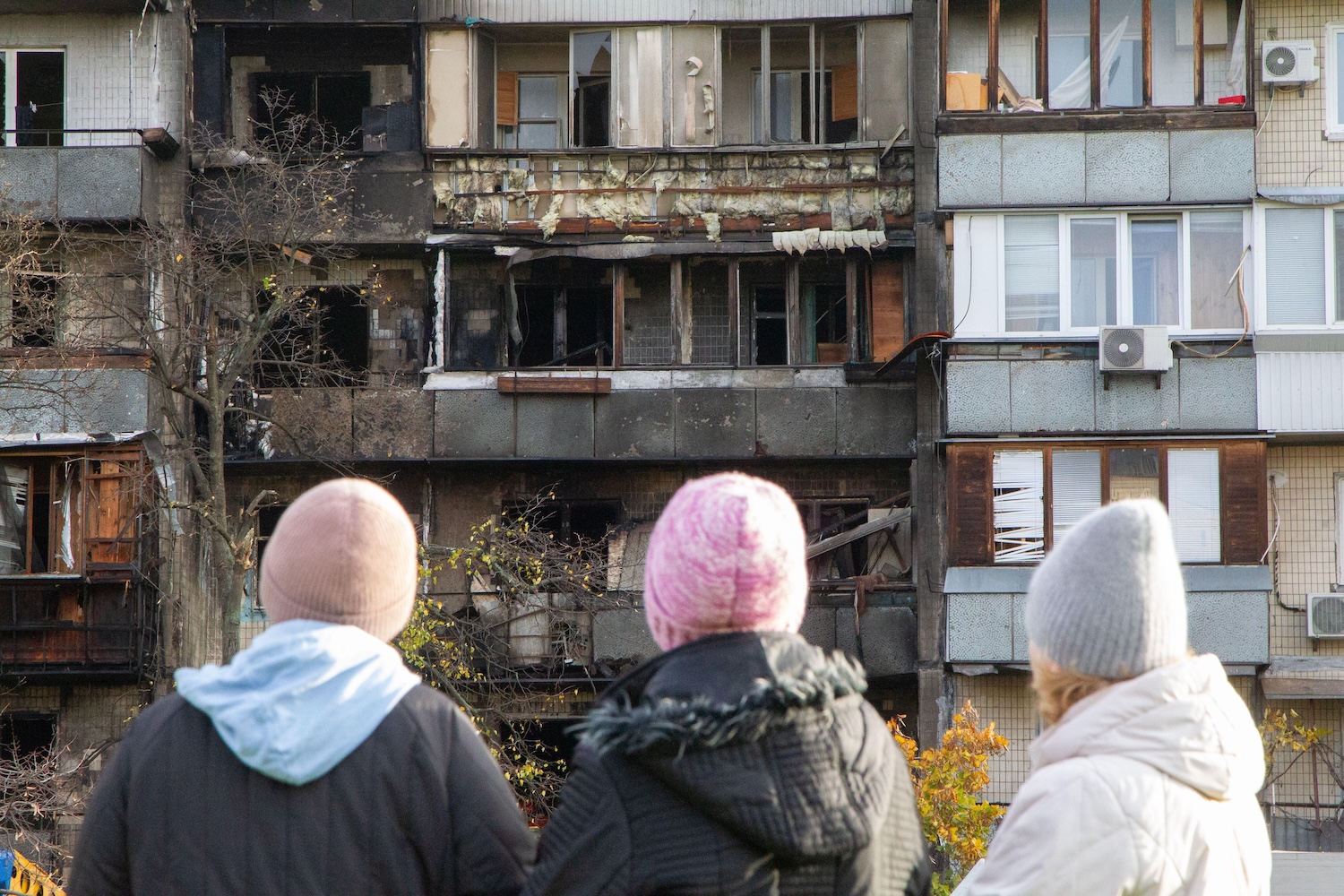
Russia is Using Drones and Deportations to Empty Southern Ukraine, UN Confirms
Putin’s “human safari” attacks on Ukranian civilians, first reported by Byline Times, are a war crime designed to depopulate the country, a UN investigation has found
How to Change a Society
From mapping a society to shaping behaviours, every step is designed, measured and adjusted. Russian operatives dissect communities, zero in on movie stars and activists, incept narratives through “information dumps,” and infiltrate networks as refugees or officials, corrupting people and institutions until resistance collapses.
Mapping
Each operation starts with mapping. Russian special services analysts scrutinise social groups, identify leaders and participants, and analyse how smaller communities fit into the whole.
They assemble dossiers on key figures, scrutinising every personal trait and habit. They profile small and medium organisations, describing the overall mood, levels of trust, conflicts and dysfunctions. They are hunting for loose links and for traits to be exploited. They monitor broader public opinion and local trends. This analysis aims to expose psychological “weak spots” in the targeted society while also helping to find vulnerable elements.
Resources and Environment
Further planning is based on the above analysis of the targeted groups and individuals, and two more factors: operatives’ resources and the operation environment.
The inventory of the analysts’ own capabilities is meticulous. How many operatives are in the task force? What level of training do they have? What technical or informational “psychological weapons” are at hand? What sources of influence are available to reward or coerce? Is there an ability to persuade through expertise or reputation?
The environment is critical. Where will the operation take place? Why? What are the causes of the conflict? How do international institutions and public opinion view it? What is the local population’s stance and economic condition? Russian analysts assess how susceptible people are to influence. They list all available communication channels: local media, social networks and informal networks. They even note cultural landmarks and monuments, criminal statistics and the state of law enforcement.
ENJOYING THIS ARTICLE? HELP US TO PRODUCE MORE
Receive the monthly Byline Times newspaper and help to support fearless, independent journalism that breaks stories, shapes the agenda and holds power to account.
We’re not funded by a billionaire oligarch or an offshore hedge-fund. We rely on our readers to fund our journalism. If you like what we do, please subscribe.
Setting a Target
On the basis of this research, the FSB operatives set an objective, deciding what collective behaviour is to be changed. Reduce the local resistance to the Russian invasion? Demoralize the local population or the army of the adversary? Manufacture a friendlier attitude to the Russian Federation? The objective is stated in concrete terms and a timetable is set for achieving it.
Then, with mathematical exactness, targets are chosen, vulnerable motives and attitudes are pinned down, and the psychological traits to alter in order to deliver the result are singled out. The document lists the most vulnerable traits: pronounced personality traits such as deep complexes, clear character flaws, emotional or psychological disfunction or extreme sensitivity. It highlights poorly functioning group processes, for example, an authoritarian leadership style, bias, rigid stereotypes, internal conflicts and lack of critical thinking. If no clear weaknesses are known, operations focus on the most significant and accessible psychological traits that shape the target behaviour.
Algorithms
At this step, algorithms are designed, with the use of catalogues and templates to speed the work. When teams are ad hoc, decisions fall to experts, and a psychologist is recommended. When resources are lacking, planners seek indirect routes: behaviours that are easier to influence but still produce the intended outcome.
Measuring the Effect
Once tasks, methods and resources are allocated, planners calculate the expected effect. What will count as success? How to measure it? Metrics differ: the chance of lowering morale to a required level and the projected share of military personnel who might surrender or refuse to fight. If during the operation, the numbers fall short, the plan is revised: resources are shifted, capacity is increased or the conditions under which the operation runs are altered.
Methods
Beyond planning, the FSB maintains a toolkit of proven psychological weapons. The Elves listed just a few. A common tactic used nowadays involves deploying trained operatives disguised as Ukrainian refugees. In recent years, Russian intelligence has also sent Kurdish agents posing as Syrian refugees through Belarus to infiltrate Western societies, according to the Elves officers.
The FSB make the Russian invasion seem inevitable by circulating gossips and “secret” information. Narratives such as “It’s already decided” spread through covert networks to prepare locals to accept occupation.
FSB operatives use secret groups and societies to shape and manipulate collective consciousness.
Case Study: Secret Societies
AllatRa, one such societies founded in Ukraine in 2011, mixed pseudo-science, religion, and UFO beliefs, promoting a humanity savior Tsar Nomo modeled on Putin and the “Russian world” ideology. According to Elves, AllatRa targeted judges, prosecutors, and lawyers, circulating secret plans for integration into the Russian Federation justice system after invasion.
Members sought high-ranking positions in Russia, with rumours of salaries surfacing years in advance. The sect, linked also to celebrities and alleged former SBU officials, spread pro-Kremlin propaganda and justified Russian aggression. In November 2023, Ukraine’s security services shut down over 20 branches, with the head charged with state treason and leaders fleeing abroad.