
 Subscriptions

Read our Monthly Magazine
And support our mission to provide fearless stories about and outside the media system
Tuesday was the two year anniversary of Hamas’s barbaric assault on Israel, and the launch of Israel’s devastating military response on Gaza.
The disaster has played out most immediately for Palestinians in Gaza and the West Bank, and the families and friends of the Israeli citizens killed or kidnapped by Hamas.
‘I Pray to God to Save and Guide Us’
This includes my friend, Nabil, in Gaza, who has just been forced to move his entire family, for the umpteenth time, from Gaza City, to a new shelter further south, following the Israeli Defence Force’s instructions for everyone to evacuate Gaza City.
Over the course of the war, Nabil has lost his home, his job, many members of his extended family, and countless friends. He has had numerous close calls with death himself – with bombs frequently missing his shelter by frighteningly close margins. His children’s education has been disrupted. At times, they’ve had barely more than some pitta bread to eat. This summer, his oldest daughter had to be hospitalised due to acute malnutrition.
This week he messaged to tell me that his barber “a kind, humble and innocent man who is 72 years old, was killed with shrapnel as he was walking along a residential street.”
Despite all the trauma, he has tried to stay positive, and maintained notes of grace and hope. His deep religious faith has been a constant source of strength. In messages, he has told me how he has prayed “day and night for the war’s end”, for “the Lord to grant us patience and resilience”, and for God to “save and guide us.”
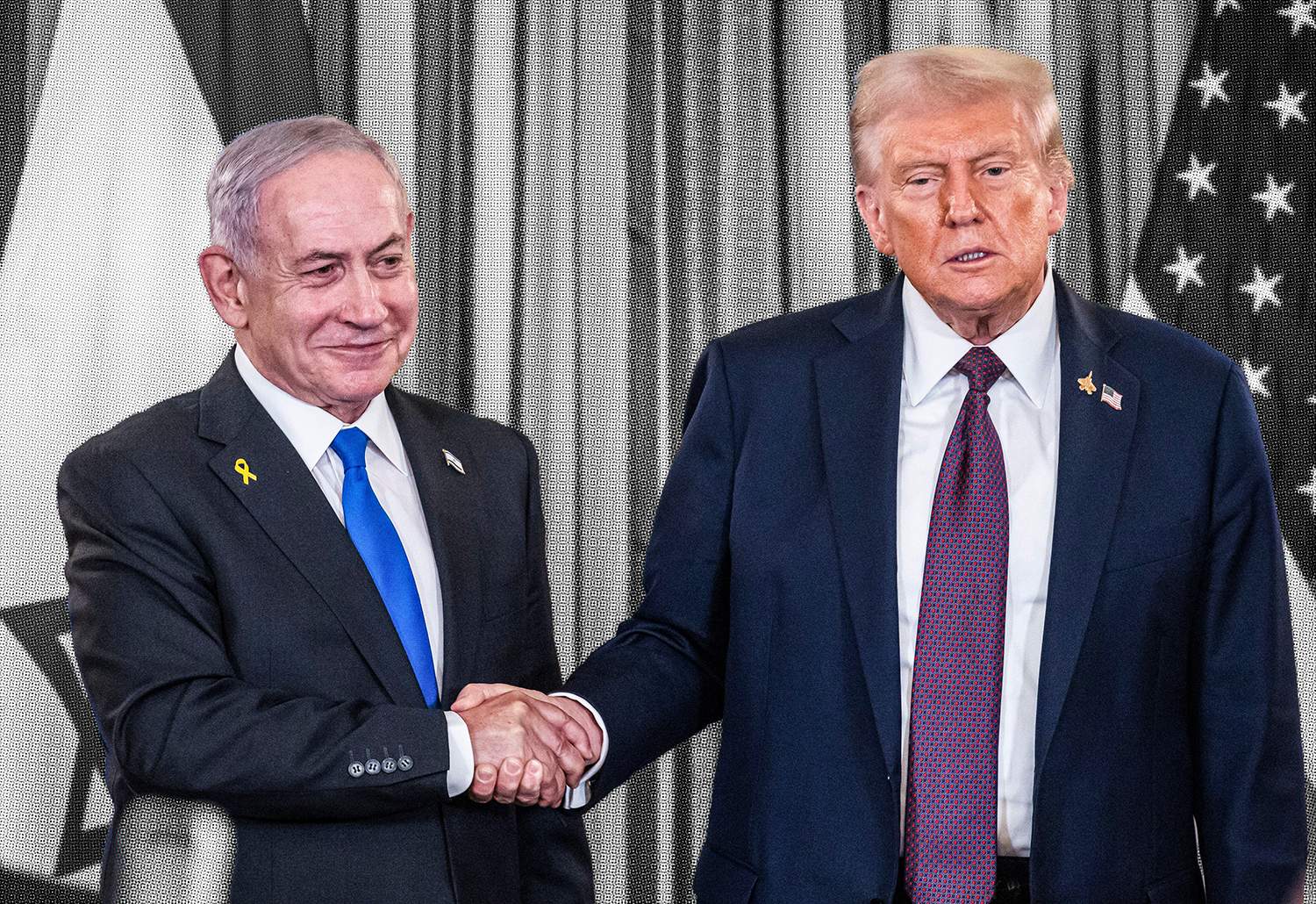
‘Donald Trump’s Plan Will Not End the Gaza Genocide’
The author of The New Age of Genocide, Martin Shaw, on why Trump’s ‘peace’ plan will allow the ongoing destruction and replacement of a Palestinian Gaza
‘There are No Winners In War’
It also includes former Israeli hostage, Eli Sharabi, who I heard being interviewed on US public radio this morning, describing his hellish experience in captivity, shackled in a subterranean tunnel, with no light, air, running water or sanitation. The most heartbreaking aspect of his kidnapping was that, as he was being taken, he promised his wife and teenage daughters that “I will come back”. The hope of seeing his family again kept him strong during his detention. But when he was released earlier this year, he found out that they had all been killed on October 7.
And yet, he has emerged with moral and spiritual strength. In the interview, he said “I love life. I want my life back. Given how much others have endured, and how hard people fought for me, I don’t have time to lie in bed feeling sorry for myself.” Asked for his views on the current Trump peace plan, he said “after two years, it’s time for the war to end. There are no winners in war.”
‘Which Side of History Will You Be On, Prime Minister?’
The conflict has also caused wider regional upheaval, protests and demonstrations between pro-Israeli and pro-Palestinian supporters around the world, and grotesque incidents of anti-semitism and Islamophobia, whipped up and exploited by extremists.
As governments grapple with how to respond to the crisis – torn between genuine revulsion at Hamas’s atrocities, and cavalier disregard for its own people, and horror at the brutality of Israel’s response, and its cavalier disregard for the humanitarian catastrophe in Gaza – even ordinary citizens, far removed from the conflict, and with no previous association with political activism, have been caught up in the tragedy.
This includes my friends, Sarah and Jort, from the Netherlands, whose son, Sil, took part in the recent Global Sumud Flotilla, a humanitarian mission involving over 40 boats filled with courageous volunteers, sailing across the Mediterranean to try to deliver humanitarian supplies directly to Gaza. On the night of October 1, the boats were boarded by Israeli naval forces, and escorted to Ashdod port. The participants were then taken into detention at Ketziot prison in the Negev desert, before being released and deported earlier this week. Several participants afterwards described being mistreated and humiliated while in detention, for example, being kept in poor conditions, made to pose by the Israeli flag, and mocked by their captors.
Jort described to me how his son – “always the odd one out in our family – he was the one who never drew within the lines” – became socially aware and inspired to fight injustice after taking part in role playing exercises at high school, where he – a white man, from a relatively privileged background – was made to experience discrimination. After college, he started crewing for tall ships, and was just about to start work on one of Netherlands’ most prestigious tall ships, when he heard about the flotilla and decided to join.
Sil told his father “Dad, if I don’t do this, them who will? Governments are not speaking out about the hopeless and seemingly endless occupation of Palestine. The people of Gaza are being murdered on the premise that Israel has the right to defend itself. I can no longer look away. I want to be able to tell my children one day that I was on the right side of history.”
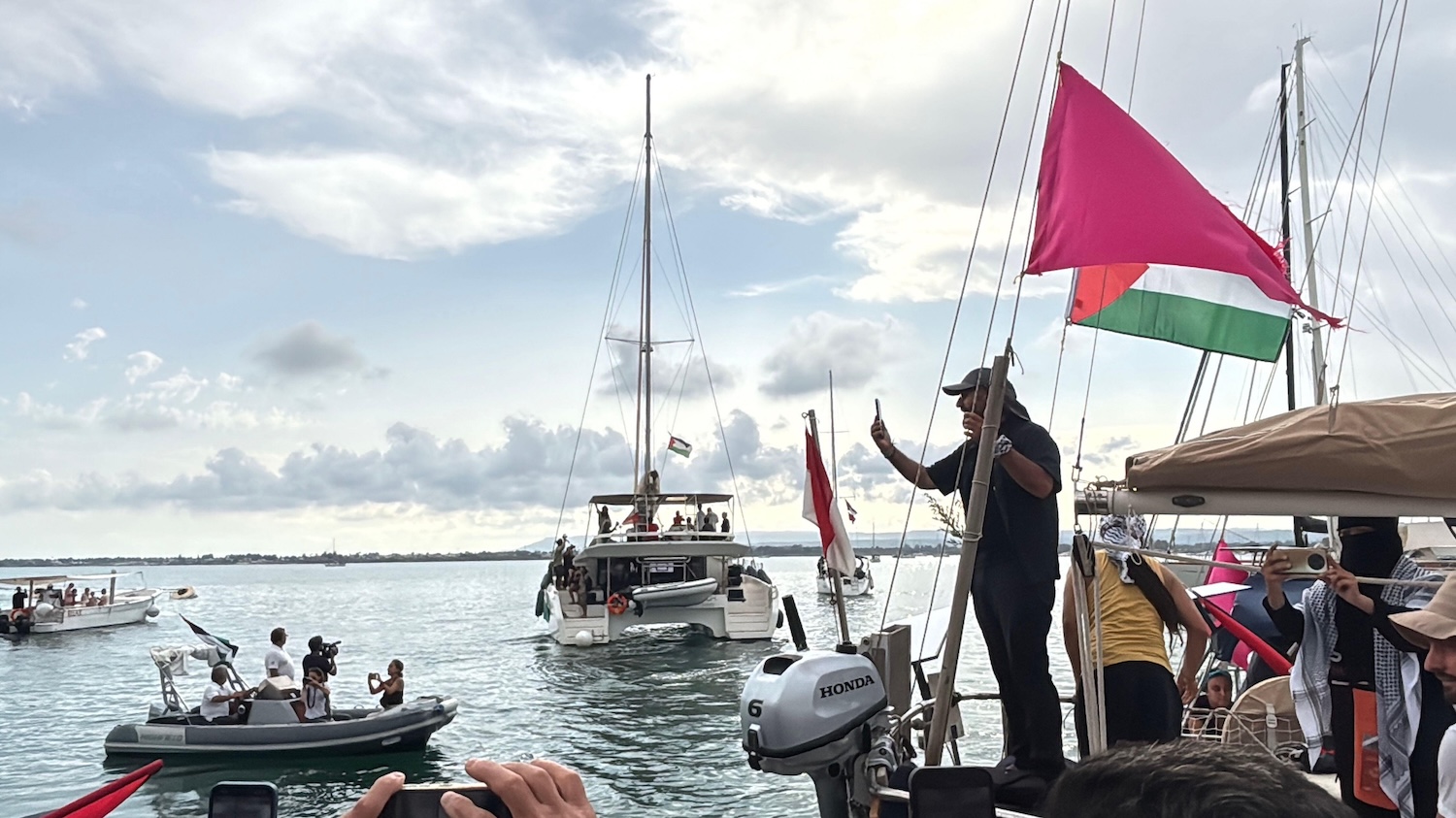
‘Why I Joined the Gaza Aid Flotilla as a Journalist’
The relative lack of media interest in the drone attacks on the aid flotilla heading to Gaza says a lot about the warped priorities of Western journalism, argues Mathilda Mallinson
Jort said that though he feared for his son, he and his wife had always raised their children with the principle that they must become independent, free in their choices, and not hindered by their parents’ opinions. “I thought this was great. Sil was doing the things I should have done, or wanted to do, but never did.”
When Sil was detained in Israel, Jort was outraged by his government’s response, and wrote an open letter to the Dutch Prime Minister, castigating him for his failure to take a clear moral stance on the conflict. Instead of backing the humanitarian mission, and lobbying hard for his citizens’ release, the Dutch Prime Minister had issued a statement saying he understood why Israel had detained the participants, and that it was very unwise of them to have undertaken the journey.
Jort accused the Prime Minister of completely missing the point- failing to appreciate the humanitarian nature of the mission, and the wider context of the unfolding disaster in Gaza. He concluded his letter by saying “Which side of history will you be on, Dick. I fear not the same side as my son.”, signing it off as “the proud father of a brave son.”
Jort told me his letter was motivated not just by concern for his own son, but for all the people involved in the flotilla, trying to make a difference. Like other western governments, the Dutch government had not done nearly enough to try to end the conflict, and seemed to value its economic and security ties with Israel over the lives of Palestinians. It was important to recognize that Israel’s mistreatment of Palestinians long preceded October 7. For example, the way ordinary Palestinians had to go through endless checkpoints just to travel from one part of the West Bank to another was reminiscent of how Dutch citizens were treated during the German occupation of the Netherlands in World War Two.
When I last heard from Sarah and Jort today, they had just reunited with their son, safe and well, but a lot thinner, at Eindhoven airport. In the photo, they are all beaming. They told me Sil is fine, and “more determined than ever”.
These three narratives each encapsulate from a different perspective the human cost of this dreadful war. They also reveal a common sense of faith, compassion and dignity, a yearning for justice, and for peace to prevail over unending conflict.
Would that the leaders of Hamas and Israel who have wrought such death, suffering and destruction could be motivated by the same sense of values and humanity.