
 Subscriptions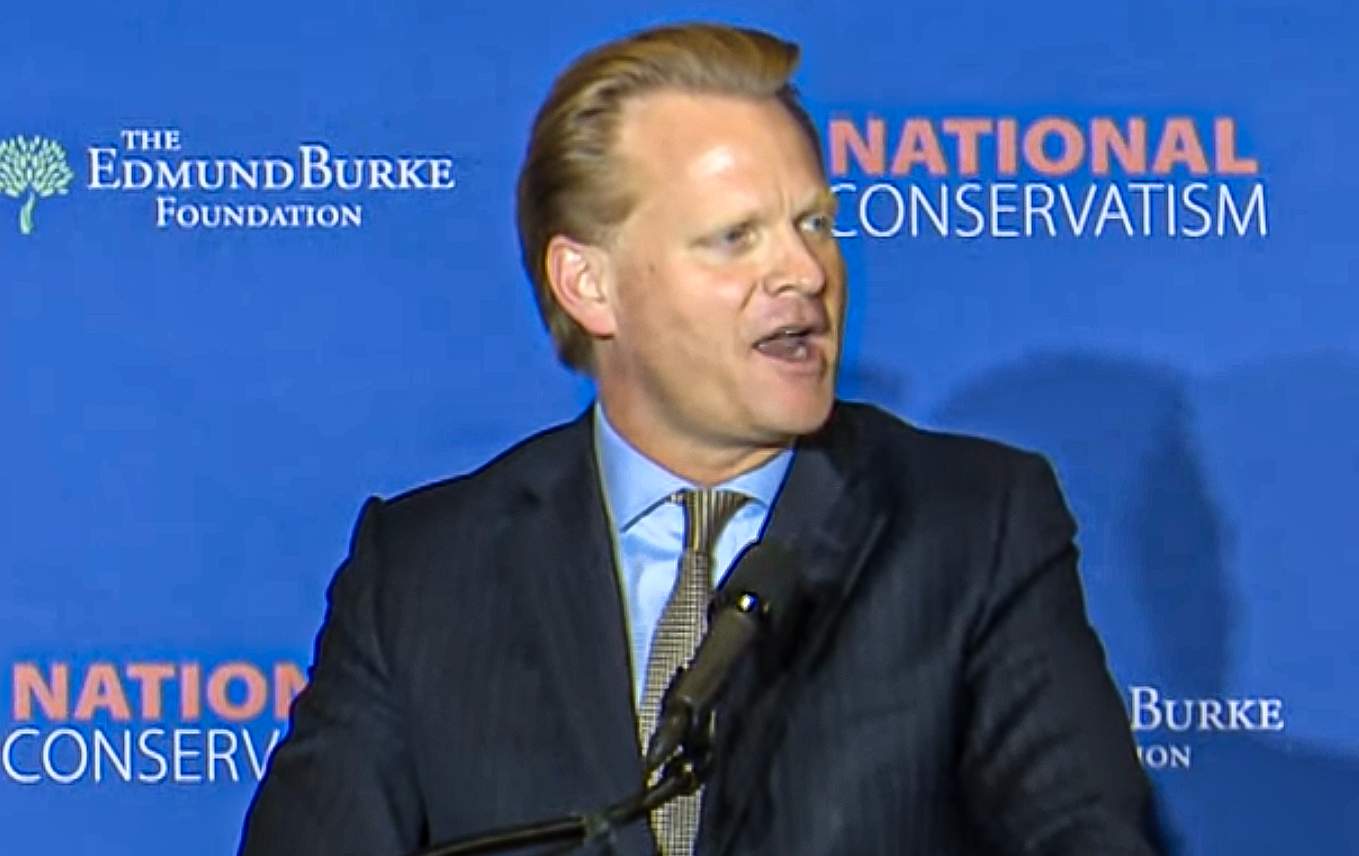

Read our Monthly Magazine
And support our mission to provide fearless stories about and outside the media system
James Orr likes to present himself as a populist with esoteric tastes: cigars in the garden shed, bagpipes louder than Alastair Campbell’s, bookshelves lined with Kant and Thucydides in their original languages. Interviews have had him, his blond hair swept back like a young Heseltine, talking about fox hunting, toxic femininity, the decline of British institutions, and the “spiteful technocratic metropolitan animus”.
They have also found in him something more striking: a philosopher at the centre of the populist right, one who says that if Reform ever got to No 10, Nigel Farage would have to do “very unpopular things.”
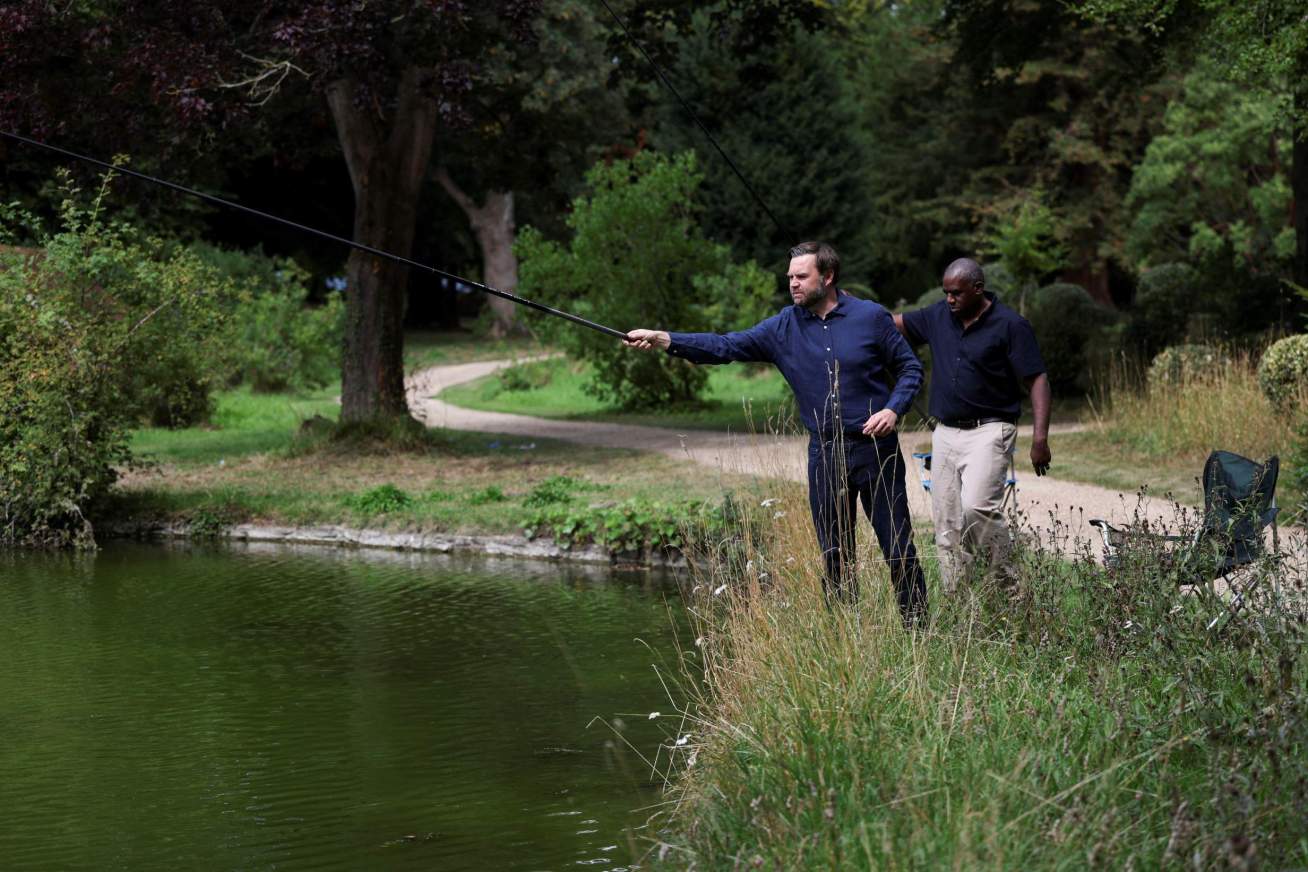
Orr is no longer just a don in Cambridge’s Divinity Faculty. This 46-year-old is described as JD Vance’s “intellectual mentor” and a recent guest at the now (in)famous barbecue in the Cotswolds that gathered Trump’s running mate, Farage and a clutch of Conservative MPs. He is loyal to the project, calling Vance “the future of MAGA”. He is also very much central to it.
Today, Orr sits as the UK chairman of the Edmund Burke Foundation; chairman of the advisory board of the pro-Reform think tank(s) Resolute 1850 / Centre for a Better Britain; on the advisory board of the Prosperity Institute (aka the Brexit-backing Dubai-based group Legatum); and on the board of the Alliance for Responsible Citizenship (it sets out to “re-lay the foundations of our civilisation”). He also managed to find time to organise the Now and England event in June, which had shadow minister Robert Jenrick and one-time Reform MP Rupert Lowe on the ticket.
He’s a man so busy that his list of publications includes a claimed 2022 book, Being and Eternity (Bloomsbury) that, three years on, seems yet to have gone to print. It might take some time.
But judging by what he has published and said, Orr’s views are clearly absolute. He opposes abortion at every stage of pregnancy, including in cases of rape. He thinks the US Capitol riot of January 2021 was exaggerated by the “global left”. He believes diversity weakens nations. He finds Britain’s armed forces compromised by inclusive recruitment adverts. He admires American gun laws.
He also sees secularism as hollowing out “the human world of meaning, significance (and) transcendence”. And Orr seeks certainty against this godless world. He’s a man, in his own words, who stands “committed to the objective existence of the lawful regularities that order the world”.
Such a stance has won him full-page interviews in The Times and The Spectator, outlets eager for a philosophical gloss that offers more than the often inarticulate rump of the far-right. Politico has even called him the “English philosopher king”.
Certainly, Orr is an attractive sell to a political strand that all too often seems limited to serving up reactionary anger and bigotry. Orr’s unwavering belief in God and foundations offers a grounding on which to stack the warm beer and St. George flags.
In his 2019 book, The Mind of God and the Works of Nature, Orr argued that the very notion of natural law only makes sense within a theistic framing. “Metaphysical theism and nomic realism are indeed historically and conceptually conjoined philosophical positions,” he wrote. His argument is rather dense, but his point simple. Science relies on the conviction that nature follows laws, but – he argues – unless those laws rest on divine ideas, they are just brute accidents.
“No God, no powers,” he subsequently concluded.
In 2021, in his essay Divine Lawmaking: Powers and Kinds, Orr turned from phenomenology to the machinery of metaphysics. Engaging with neo-Aristotelian debates about laws of nature, he argued that neither reductive naturalism nor its more expansive Aristotelian cousin could explain why the world displays lawlike regularities. The only answer, he saw, was in classical theism. God’s hand steers the harmony of natural powers; divine ideas underpin the mathematical structures on which all science depends.
His political message comes from this. If the natural order cannot hold without God, then secular modernity, refusing such ballast, will be a house built upon sand.
Orr does not say outright that liberal democracy is as hollow as liberal metaphysics, but he might as well have.
From such ground, his words have grown. Orr, who once parsed Edith Stein’s critique of Heideggerian temporality, now talks of “rainbow people”, “North London dinner parties” and barbarians at the gates.
Last summer he told an interviewer: “No civilisation has invited invaders in and put them up in four-star hotels.” In another speech he said: “The tragedy of liberalism is that it confuses equality with sameness. We’re not fungible. You can’t just import 10 million people from a different civilisational background and expect everything to stay the same.”
In so doing, Orr seems to have distanced himself from the books that made him. Stein, whom Orr studied closely, was murdered at Auschwitz because she was Jewish. Her philosophy rejected a conflation of metaphysical truth with ethnic exclusion.
Orr claims to extend her critique of secular phenomenology; in practice he is in danger of echoing the politics she resisted.
In her own doctoral dissertation, Stein insisted that empathy was not simply inference or projection, but “the experience of foreign consciousness in general, irrespective … of the subject whose consciousness is experienced”.
To be empathetic, for her, was to accept the irreducible presence of another person’s inner life. She would never have dissolved it into the mere typologies of race or culture.
Orr’s politics, by contrast, rests on denying that commonality: he speaks of migrants as “invaders” and insists that millions from a “different civilisational background” cannot be integrated.