
 Subscriptions
Read Our Monthly Magazine
And support our mission to provide fearless stories about and outside the media system
When Israel launched its ferocious bombardment of Gaza within 48 hours of Hamas’s massacre, few, even of those who were alarmed, took seriously the charge of emerging genocide, which I made in Byline Times on 13 October 2023. This was despite Israeli leaders having proclaimed their genocidal intentions from the rooftops within hours of the attacks.
Israeli language that was soon catalogued by South Africa’s lawyers in their case in the International Court of Justice and was quoted by the Court itself in January 2024, when it found a ‘plausible risk’ of genocide and warned Israel not to commit it. This effectively triggered the duty on all signatory states of the Genocide Convention to ‘prevent and punish’ the crime.
Yet despite this, denial remained pervasive. It took two years for ‘genocide’ to become the consensus verdict of informed and public opinion, and even longer for policymakers to catch up.

Israel, Gaza and the Spectre of Genocide
Israel appears to be seeking collective punishment for Hamas atrocities, and this is not self-defense under international law
Today, some of them — especially in the UK’s new Government — are acknowledging Israel’s crimes, but they still deny genocide. This article examines this journey and argues that the new mix of recognition and denial still protects Israel and blocks radical action to end the genocide.
Suppression and Confusion
Few Governments — certainly, not the UK’s — responded to the ICJ’s 2024 judgement. Nor did many media and cultural institutions take it as a signal to take genocide seriously. Most politicians and media not only denied that Israel was committing it, but actively suppressed any mention of the word, cancelled those who used it and accused them of antisemitism.
In the UK, ‘genocide’ was largely banned, not only by the BBC — which has interviewed me once in these three years, on Radio Ulster, even as I have fielded queries from the world’s press — but also in 2023-24 by the Guardian, where the word was confined to rare opinion pieces by people who could boast impeccable Jewish credentials.
Many who were horrified by Israel’s actions were confused in this period. They had not thought much of the definition of genocide, wrongly identifying it with the mass extermination of the Holocaust — which according to the Genocide Convention (as well as experts) is only one of numerous forms that genocide may take. Many also felt that to accuse the state which claims to represent the archetypal victims of itself committing genocide was a step not to be taken lightly.
A Genocide Consensus Emerges
Yet beneath this suppression and confusion, a genuine debate bubbled up. Israel’s obviously deliberate destruction of civilian lives and Palestinian society could not be dismissed as ‘collateral damage’ from urban warfare — in 2026, the Israeli military’s abbreviation for this, ‘Naza’, has become notorious as the title of a devastating new film.

Carnage in Gaza: What Really Happened at the Al-Ahli Hospital?
Peter Oborne reports from East Jerusalem on last night’s deadly attack on an Anglican-run hospital in Gaza
As 2024 wore on, most experts came round to the genocide verdict. The Israeli-American Holocaust historian, Omer Bartov, symbolised this movement. ‘I resisted the conclusion for as long as possible’, he later wrote, but by June he was convinced. A similar shift took place in the human rights world. That November, Amnesty International published what is still one of the best evidenced, legally argued, and most accessible statements of the genocide case.
Meanwhile, the International Criminal Court indicted Benjamin Netanyahu for crimes against humanity and war crimes. Although it did not bring genocide charges, it accused Israel of a ‘wholesale attack’ on the Palestinian civilian population — language that evoked genocide. It was enough for the US right wing to try to destroy the ICC.
In mid-2025, the floodgates opened for genocide recognition, after an emboldened Netanyahu abandoned a major ceasefire, re-escalated Israel’s killing and reimposed its starvation policy. It was this last which finally pushed Western observers over the edge: ‘genocide’ became the consensus of informed opinion, liberal outlets published genocide articles, and majorities started to be recorded for a genocide verdict in the polls.
The New Wave of Denial
By the end of 2025, those who were left denying genocide were mostly people who also denied that Israel had committed large-scale war crimes and crimes against humanity as well as genocide. Yet with Israel on the ideological back foot, 2026 has seen one of the most relentless propaganda campaigns ever, as an army of publicists, activists and bots has engaged in a dual enterprise to kill the rapidly expanding genocide consciousness.
On the one hand, they have still promoted what the denial sociologist Stanley Cohen — who evolved his categories while researching earlier Israeli crimes — called ‘literal’ denial, the basic suppression of the facts of Israel’s atrocities. They work to discredit even the best documentation and too many media still report their lies.
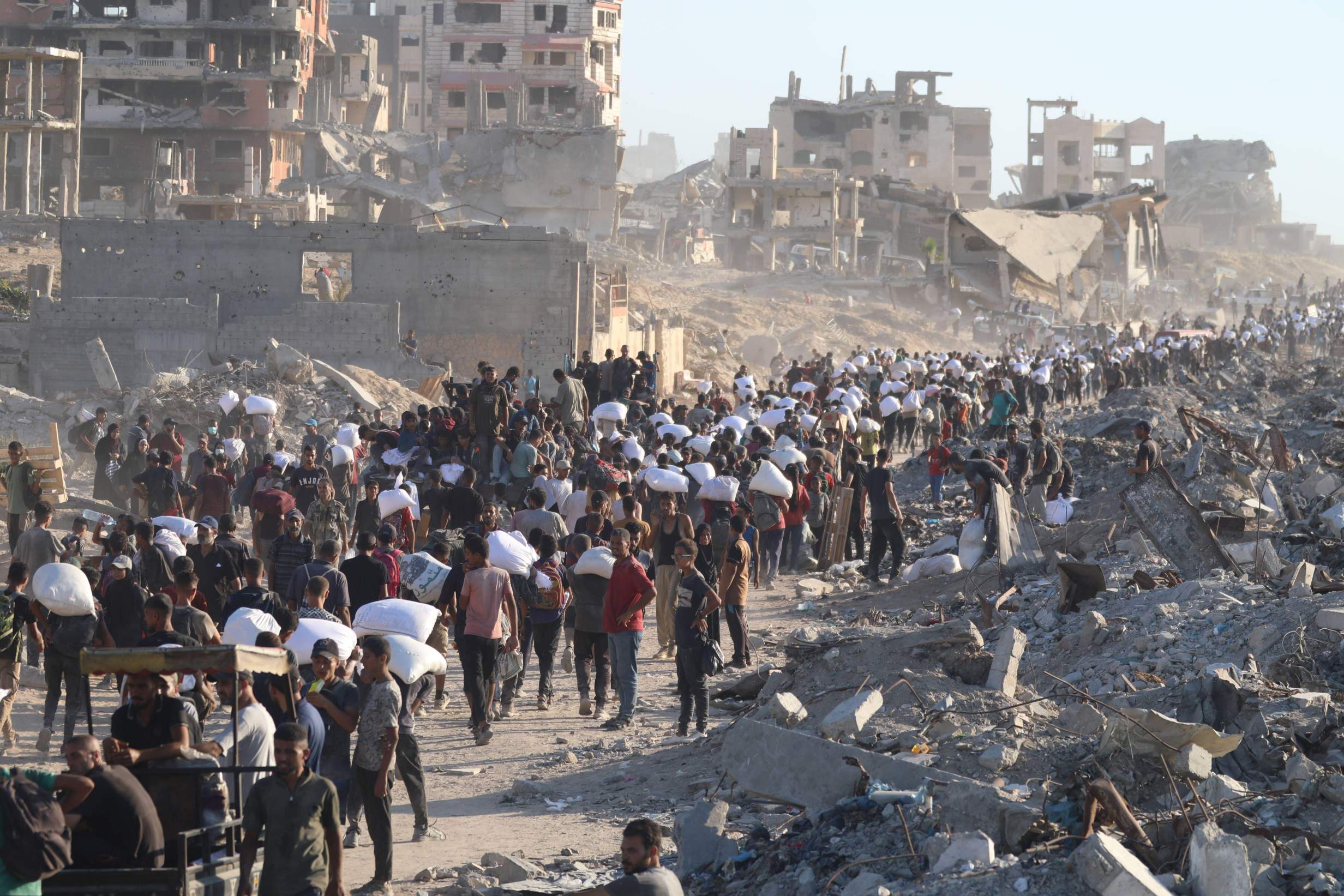
Famine on the Gaza Strip: ‘We See Children So Weak and Hungry They Cannot Even Cry’
Oxfam spokesperson details heartbreaking reality of life on the ground in Gaza amid on-going aid distribution scandal
However, Israeli propagandists now put most effort into what Cohen called ‘interpretive’ denial, where some of the facts are admitted but they are explained away. There has been a new focus on discrediting the genocide case. Even as they ignore legal definitions, they aim to use supposed definitional issues to excuse Israel’s atrocities.
A recent appeal involved intellectuals like Steven Pinker and Niall Ferguson and was headed by disgraced prime minister Boris Johnson. It smears genocide allegations as a ‘blood libel’, evoking the medieval Christian portrayal of the Jews as murdering children for ritual purposes — as though the use of the word ‘genocide’, rather than the destruction of Gaza, is discrediting Israel and the diaspora organisations that support it.
Interpretive Denial in Labour Political Discourse
While Israeli propagandists have been doubling down on suppressing the facts of the genocide and the use of the term, some European centrist politicians who largely agreed with them until 2025 have been shifting their ground.
In the UK, Keir Starmer and other Labour figures proclaimed themselves ‘Zionists’, blamed Israel’s critics for ‘antisemitism’ and called protests ‘hate marches’. Starmer’s Government even doubled down on repression, criminalising repeat protests and banning direct action protesters as ‘terrorists’, as recently as 2025.
Yet when even Donald Trump recognised Israeli overkill, Labour saw the need to distance itself. Now, Andy Burnham has followed Starmer’s recognition of the state of Palestine in 2025 by proposing new sanctions against Israel’s settlement enterprise in the West Bank. In radical discursive moves, Burnham has said that Labour “got Gaza wrong”, and Ed Miliband that “protesters were right, not wrong”, for “calling out” the suffering in Gaza when the Government didn’t.
Miliband has also used strong language to describe Israeli violence, calling settlers “terrorists” and their evictions of Palestinians “ethnic cleansing”. Yet in another way, Miliband’s and Burnham’s language has been heavily constrained, referring only to ‘evidence of war crimes’, not actual crimes, and wholly avoiding the legal terminology of ‘crimes against humanity’ as well as ‘genocide’.
Thus an old form of interpretive denial is accompanying the welcome — if still often implicit — condemnations of some Israeli actions. Burnham does not directly deny that Israel has committed genocide; but neither did Starmer. Rather, Burnham has revived his predecessor’s convoluted formula that the British Government ‘has not yet determined’ whether genocide has been committed.

UK Government Flouted Own Rules Designed to Stop Gaza Intelligence Harming Palestinian Civilians
The revelation raises questions over whether the UK applied safeguards designed to prevent information from 600 RAF intelligence flights being used to harm civilians in Gaza
Starmer and his attorney-general Richard Hermer concocted this as a way for people who know that Israel is probably guilty of genocide to avoid answering the question. They knew it, of course, not least because as a lawyer Starmer had actually prosecuted a genocide case at The Hague.
It is depressing that Burnham has now trotted out this same tired idea. After three years of deliberate mass atrocities and with scores of international lawyers at its disposal, the UK Government obviously could ‘determine’ the question — as academic lawyers, NGOs and a UN commission with a fraction of their resources have done. The idea that they cannot is preposterous. Evidently, the policy remains that the government will not determine the genocide question.
Denying the Implications of Genocide
The Burnham Government’s denial is not limited to this interpretive form. Even more important is a third type that Cohen identified, ‘implicatory’ denial, where people recognise atrocity and suffering but fail to act on the manifest implications of this recognition. Miliband himself alluded to this issue at the Labour Party conference, when he said, “We call out Israel’s illegal occupation of Palestine. And we match words with actions.”
The problem is that Miliband’s sanctions did not match his words. They targeted the new E-1 settlement plans, settler producers and companies that deal with them, and possibly further ministers. But they failed to address the illegal occupation itself or Israel as the occupier—they did not follow through on the recognition of the occupation’s illegality.
Moreover, since it was Gaza that Labour “got wrong”, a reset focused mainly on the West Bank seemed almost like displacement activity. It did not (apart from some mooted humanitarian improvements) address Israel’s new occupation of Gaza, which is forcing the survivors into a tent city and rubble homes in a quarter of the territory.
What the Mixture of Recognition and Denial Protects
The Burnham Government’s combination of partial recognition of Israel’s crimes and praise for protesters with interpretive and implicatory denial is deliberate. Miliband acknowledges “ethnic cleansing” as an excuse for not recognising genocide, because it not a legal term and implies no specific obligations.
Miliband’s reset is carefully crafted to provide political ballast against the insurgent Greens and enough offence to Israel to provoke rhetorical blowback (which in turn helps Labour politically), but no fundamental breach in relations.
Indeed, this mixed recognition-cum-denial is designed to protect the UK’s partnership with Israel, which Miliband himself insisted he wanted to keep when he made his announcements. In case anyone was in any doubt, Burnham sent out Starmer’s old fixer Pat McFadden to assure everyone that the ‘strategic relationship’ with Israel remained intact.
Under the radar, little has changed. There is no question of suspending the UK-Israel military alliance. The changes announced to arms sales have resulted in no extra export licences being revoked. Arms purchases from Israel, which help underwrite its military industry, are untouched. Meanwhile, the Tory appointee Ian Austin, ennobled by Johnson and kept on by Starmer, remains the UK trade envoy.
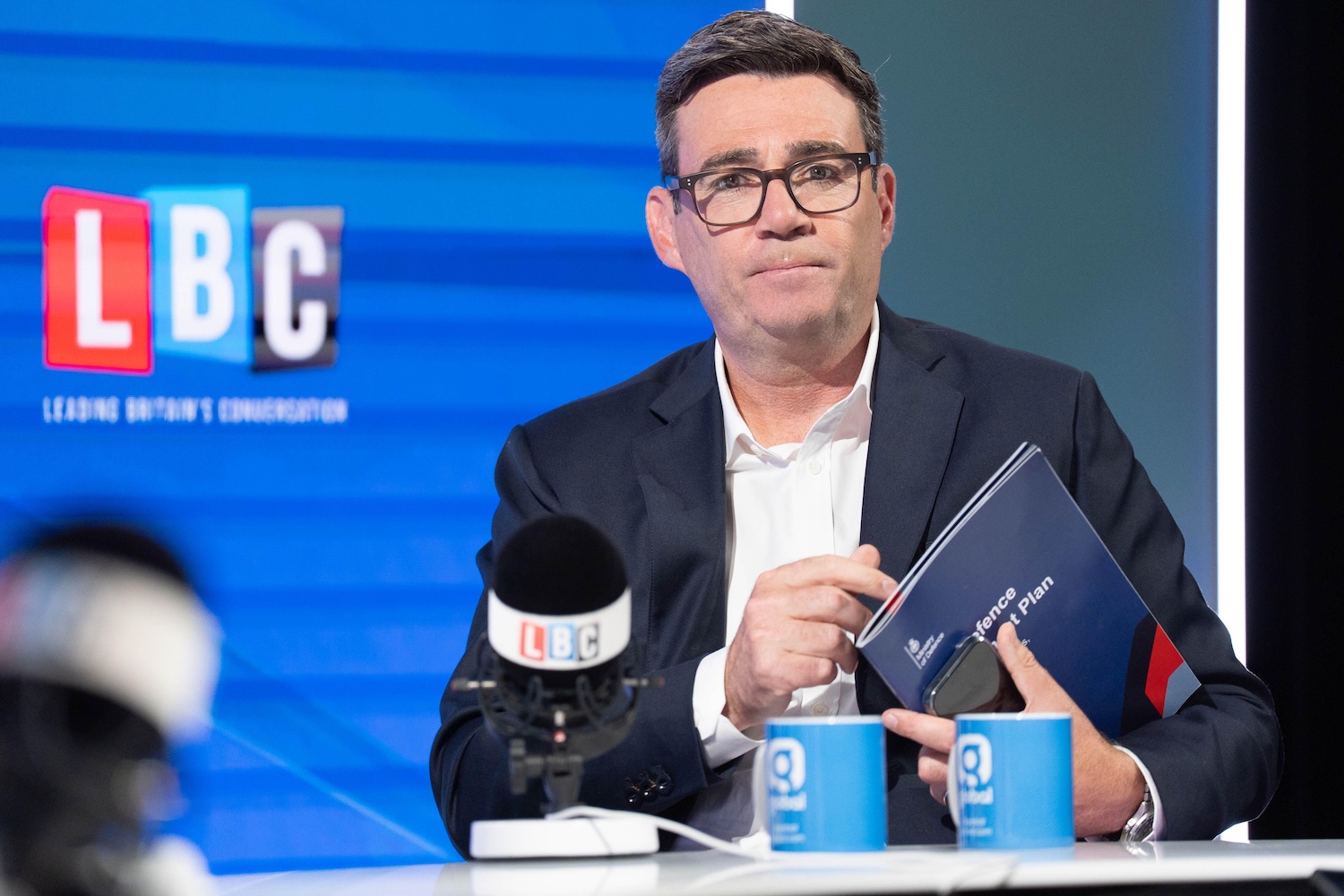
‘Why Andy Burnham Must Break With Israel’
The likely incoming Prime Minister must break with Keir Starmer’s “morally bankrupt” legacy on Gaza in order to restore his party’s reputation with the public, argues genocide scholar Martin Shaw
The amalgam also protects the US alliance. While Mark Carney and Emmanuel Macron have at times openly questioned this, Burnham is following Starmer in keeping close to Trump, and Israel remains a sacred interest for his regime, for which it is attempting to cripple the International Criminal Court.
A deeper breach with Israel therefore appears a provocation too far for Burnham, who has also continued Starmer’s enabling of Trump’s illegal war on Iran. No wonder that beneath the bluster, pro-Israeli forces, from the USA to the Board of Deputies of British Jews, are remarkably relaxed about Miliband’s policies.
Finally, mixing recognition and denial protects Labour ministers who oversaw the UK’s support for Israel’s genocide. The Government as a whole was complicit — no one, not even Miliband, protested. But those who continued to supply the RAF’s surveillance of Gaza to Israel in 2024-25 could also be liable for ‘conspiracy’ to enable genocide, a separate charge from ‘complicity’ under Article III of the Genocide Convention.
This protection is crucial to key members of Burnham’s Government, like John Healey, Yvette Cooper and Shabana Mahmood, as well as ensuring that Labour’s pro-Israel majority goes along with Miliband’s shifts.
ENJOYING THIS ARTICLE? HELP US TO PRODUCE MORE
Receive the monthly Byline Times newspaper and help to support fearless, independent journalism that breaks stories, shapes the agenda and holds power to account.
We’re not funded by a billionaire oligarch or an offshore hedge-fund. We rely on our readers to fund our journalism. If you like what we do, please subscribe.
Conclusions
As Israel’s genocide enters its fourth year, denial is changing. The Labour Government, like some others in Europe, is no longer in the camp of total pro-Israeli denial. Its messaging clearly deviates from the blind protection of genocide advocated by Israel’s trolls and bots, the right-wing press and Boris Johnson’s collection of influencers.
Yet for all its linguistic shifts, Labour continues to deny ‘genocide’, and this is not just a terminological denial. It protects the UK’s relationship with Israel and the USA, as well as Labour ministers responsible for its previous pro-genocide policies.
It is also a sign that the UK is not prepared to follow through on its new rhetoric with a genuinely radical policy shift sufficient to challenge the crippling of Gaza and the wider Israeli occupation, which previous British policies have enabled.