
 Subscriptions
Read our Monthly Magazine
And support our mission to provide fearless stories about and outside the media system
Christopher Harborne’s £36 million donation to Reform UK, announced at the weekend, looked at first like yet another story about opaque cryptocurrency money entering British politics.
Harborne, who is based in Thailand, made much of his fortune in crypto. He is also the most important individual financier of Nigel Farage’s political career, sparking much controversy along the way.
But alongside his crypto interests, Harborne has also invested hundreds of millions of pounds into QinetiQ, one of Britain’s leading defence companies.
What is far less commented on is that QinetiQ’s biggest customer, by far, is the British Government and is a major source of Harborne’s wealth.
Byline Times has examined Harborne’s investments in QinetiQ against regulatory filings, share prices rises and dividend payments and estimate his investment has produced for Harborne an uplift of about £101.7 million.
QinetiQ says that roughly 58% of its group revenues over the relevant period came directly from Ministry of Defence contracts.
So, if you apply that proportion to Harborne’s estimated gains, the portion corresponding to QinetiQ’s MoD-derived revenues comes to £58.8 million.
Harborne has given £61.19 million to the Brexit Party and Reform UK.
The £61 Million Political Donor
The scale of Harborne’s political giving is extraordinary.
Electoral Commission data show that he had given £25.19 million to Reform UK across 21 donations – and this is before his latest promise.
About £10.19 million went to the Brexit Party in 2019 and 2020, before it became Reform UK. Harborne then donated £9 million in August 2025, followed by £3 million in November and another £3 million in January 2026.
The latest £36 million takes his combined support for Farage’s political vehicles to approximately £61.19 million.
This does not include the controversial £5 million Harborne gave to Farage in 2024, which is now under scrutiny by Parliament’s standards authorities and which the Reform leader said was intended to help pay for his security.
Building a Stake in Britain’s Defence Industry
Against this beneficent backdrop stands Harborne the arms dealer investor.
He began buying shares in QinetiQ – a UK company that manufactures military robotics, unmanned aerial drones, and specialised target systems – back in 2022.
A QinetiQ notification published on 30 May 2022 recorded that AML Global Ltd, a Hong Kong company ultimately controlled by Harborne, secured some 41,001,328 shares in the company between 06 and 25 May, equivalent to 7.08% of QinetiQ’s voting rights. This would have cost about £144 million in trading.
A 6 June filing put that holding at 47.35 million shares. A 27 June disclosure saw it rise to 54 million shares. And by 11 July, a further notification saw the stake reach 57,905,817 shares, or just over 10% of the company.
Those shares were subsequently transferred from AML Global to Klear Kite LLC, another vehicle controlled by Harborne.
He later strengthened his position.
The latest disclosed notification, published on 24 August 2026, put Klear Kite’s holding at 72,547,733 shares, some 14.07% of QinetiQ’s voting rights.
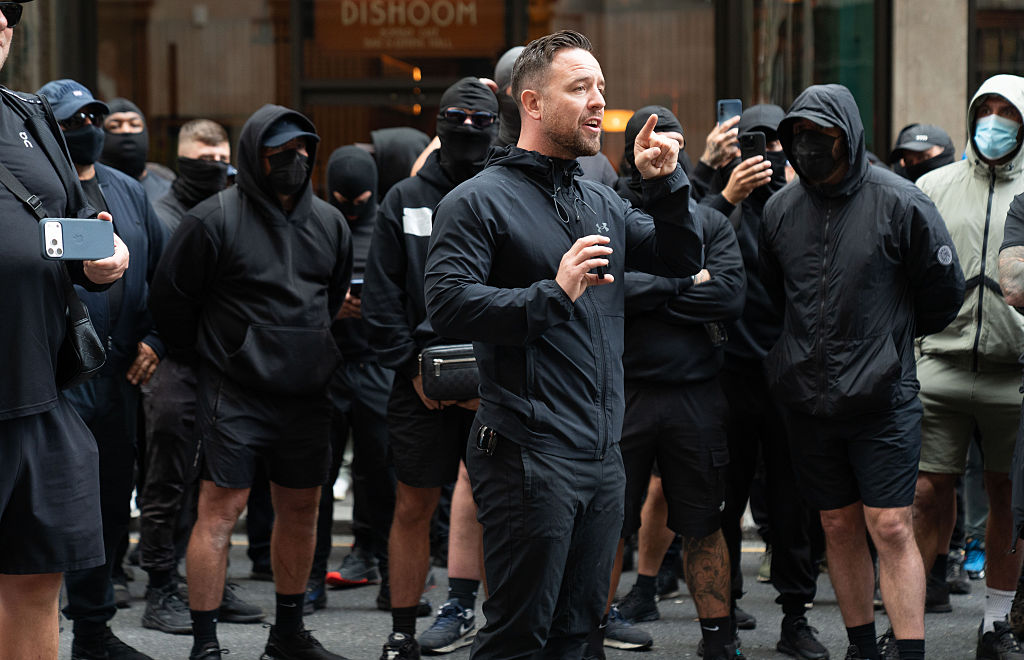
The Reform Councillors Embedded in Britain’s Masked ‘Patriot’ Anti-Migrant Network
A Reform councillor and campaign co-ordinater urged his followers to join and support the masked group
What Has the Investment Made?
The precise value of each of Harborne’s purchases is not public. TR-1 filings reveal when ownership thresholds are crossed, not the execution price of each trade. But historic market prices provide a reasonable basis for an estimate.
Using QinetiQ’s closing price on each of the dates when Harborne crossed the relevant thresholds suggests that his original 57.9 million shares cost about £205.2 million, or roughly £3.54 a share.
The historic closing prices range from 340.6p on 6 May 2022 to 378p when the final threshold in the initial accumulation was crossed in July.
By 15 September 2026, QinetiQ shares were trading at £4.84.
Harborne has subsequently reduced his holdings. Across a series of filings, his disclosed stake fell by a cumulative 7.76 million shares. The reductions include 656,156 shares between January and October 2025,, 1.84 million between May 2026 and 4 August, and a further 5.26 million by 17 August.
If those reductions are treated as coming from his original 2022 holding, about 50.15 million of those shares remain.
At 472.4p each, they are worth roughly £236.9 million. Factoring in what they are worth today compared to what they were bought for, this has produced an estimated unrealised gain of £59.2 million to Harborne.
Using market prices around the relevant disclosure dates, the sale of 7.76 million shares would have generated Harborne an estimated £42.5 million in gross proceeds.
If those shares had an original cost of about £27.5 million, that implies a realised gain to Harborne of around £15 million.
Then there are the dividends.
Applying QinetiQ’s declared dividends to Harborne’s disclosed holdings suggests that he has received approximately £27.5 million in gross dividend income since 2022.
We know, for instance, QinetiQ paid a 5p final dividend for FY22, followed by full-year dividends of 7.7p in FY23, 8.25p in FY24, 8.85p in FY25 and 11p in FY26.
As such, if you put the three elements together – share price rise, share sales and dividends – the estimated economic gain on Harborne’s original investment is about £101.7 million.
This is some £59.2 million in unrealised gains, £15 million in estimated realised gains and £27.5 million in dividends.
Harborne’s wider personal and corporate tax affairs are not public, and tax liabilities could arise in other jurisdictions depending on residence and structure.
ENJOYING THIS ARTICLE? HELP US TO PRODUCE MORE
Receive the monthly Byline Times newspaper and help to support fearless, independent journalism that breaks stories, shapes the agenda and holds power to account.
We’re not funded by a billionaire oligarch or an offshore hedge-fund. We rely on our readers to fund our journalism. If you like what we do, please subscribe.
The Ministry of Defence Contracts
So it is clear that QinetiQ has been a cash cow for Harborne.
The next question is where QinetiQ makes its money.
It’s mainly from the UK Government. For instance, during Harborne’s time as a shareholder, the Ministry of Defence awarded QinetiQ a five-year extension to its Long Term Partnering Agreement worth about £1.5 billion. The deal covers testing, trials, training and evaluation at 16 MoD sites. QinetiQ puts the value of that extension at some £1.54 billion.
Overall, QinetiQ has reported that approximately 57% of group revenue came directly from Ministry of Defence contracts in FY23 and FY24.
Its FY25 financial statements again put the figure at 57%. In FY26, the company said 60% of group revenue came from the MoD, some £1.154 billion of revenue.
Weighted by QinetiQ’s group revenue over those four financial years, the MoD proportion comes to approximately 57.8%.
Byline Times then applied that percentage to Harborne’s estimated £101.7 million economic gain.
On that basis, approximately £58.8 million of his estimated gains corresponds to the share of QinetiQ’s revenues generated by MoD contracts.
This number does not mean that the Ministry of Defence paid Christopher Harborne £58.8 million. It does not mean that 57.8% of every rise in QinetiQ’s share price was caused by an MoD contract. Nor does it allow particular dividends, share sales or capital gains to be traced back to particular government payments. QinetiQ is an international business. Its value reflects operations in America and Australia, acquisitions, investor expectations, market sentiment and much else.
No deduction has been made for tax in these calculations. Harborne’s QinetiQ investment has been held through corporate vehicles including Hong Kong-registered AML Global Ltd, and Hong Kong does not generally impose tax on gains from the sale of shares where those gains are capital in nature, although profits from share trading can be taxable.
Byline Times has therefore calculated gross economic gains rather than attempting to estimate an after-tax profit.
Public Contracts and Private Political Power
There is no evidence that Harborne took money generated by QinetiQ and transferred those same pounds into Reform UK’s bank account.
There is also no evidence that his political donations influenced QinetiQ’s contracts with the Ministry of Defence. Many of those commercial relationships long pre-date his arrival as a shareholder.
Byline Times cannot trace Harborne’s personal money flows, which are not publicly audited.
Yet the underlying relationship with the British state is substantial.
Farage himself has sought to draw a sharp distinction between Reform’s donors and those of the established parties. In a post on X, he accused Labour and the Conservatives of rewarding donors with peerages and government contracts, before asking: “You know what … Christopher Harborne want(s)? Nothing. Just a government that will fix Britain.”
There is no evidence that Harborne has sought anything from Reform in return for his money, or that his donations have influenced QinetiQ’s dealings with the UK Government. But the assertion of complete disinterest sits uneasily alongside the financial reality documented here.
Harborne has given £61.19 million to Farage’s political project while making an estimated £58.8 million in gains corresponding, on a simple pro-rata basis, to QinetiQ’s dependence on Ministry of Defence revenues.
Whatever Harborne may want from Reform, his fortune is hardly detached from the British state that Farage promises to remake.