
 Subscriptions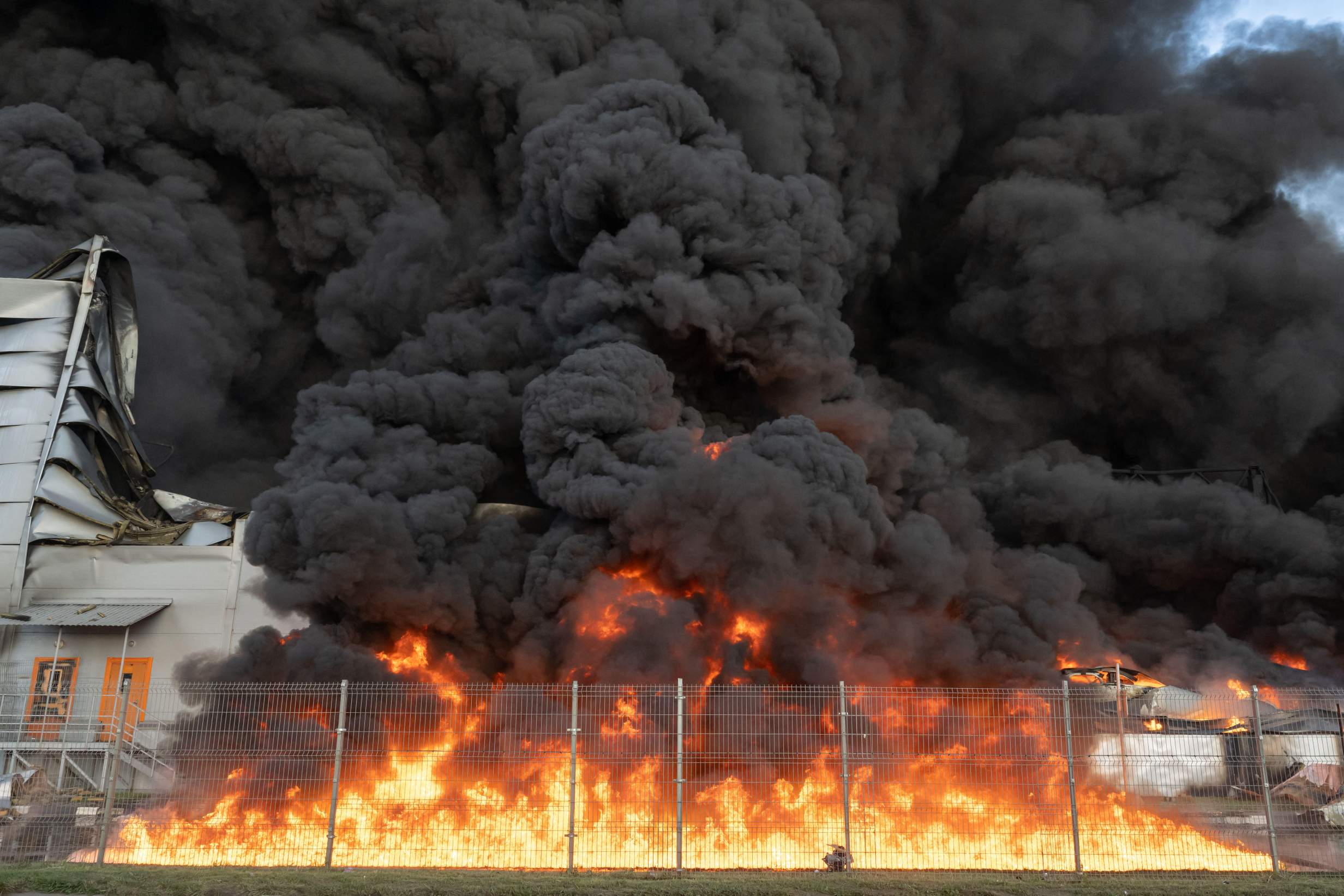

Read our Monthly Magazine
And support our mission to provide fearless stories about and outside the media system
In the last month, Ukraine has set its sights on a new target in Russia, a business by the name of Wildberries. This company is an e-commerce giant, the largest of its kind in Russia, with a market share of almost half of all online retail. At the heart of its business is a network of massive warehouse facilities. When the warehouses burn in the aftermath of Ukrainian drone strikes the footage shows smoke plumes that billow for miles.
There are many valid reasons behind why Wildberries became a focus of Ukraine long-range drone warfare, alongside the continuing attacks on oil and gas infrastructure and strikes to military facilities manufacturing parts for Russia’s deadly ballistic missiles. As the sanctioned Russian oligarch Oleg Deripaska recently said, “the old maxim is that if you owe the bank a million, that’s your problem. If you owe the bank a billion, that’s their problem.” Wildberries has borrowed heavily to build its business, it owes not a billion, but lots of billions. $18.4 billion, more or less.
Put simply, the intent of Ukraine’s Wildberries strategy is to ratchet up pressure on the banking sphere. Much of the lending to Wildberries has come from VTB Bank, a state-owned bank, indicating the strategic importance of this company to the Kremlin.
If a business is strategically important to the Kremlin, it is strategically important to Ukraine too.

Nigel Farage Funder George Cottrell’s Accountant Co-Invested With Russia-Linked Indicted Cocaine Trafficker
The accountancy firm that administers George Cottrell’s Montenegro company, has invested in a property development with the alleged ringleader of the country’s largest money laundering cartel
So far, the attacks on the warehouse network have destroyed 10 of the 15 largest warehouses that the group operates, another 3 in the top 15 have also been severely damaged and are offline. With such a significant impact on its operations (another 5 of the next tier of 15 warehouses by size have also been destroyed) there’s no doubt that this company will be facing difficulty servicing its mountain of debt. This, and a combination of other factors, are leading towards a crisis in the wider banking sector.
While the main business cannot repay its debts, Wildberries acted as an incubator for many small and medium-sized businesses. Approximately 500,000 individual traders use the services (storage, delivery, hosting of their stores, payment processing, etc.) of Wildberries, and many of them face bankruptcy with their goods having gone up in smoke.
Interestingly, a week before the Ukrainian strike campaign began, the company changed their Terms & Conditions to state that they would not be liable for losses caused by drone damage. Maybe they’d been tipped off. But entrepreneurs across Russia have lost their incomes. Those potential new bankruptcies will likely all have bank exposure too. They’ll certainly not be contributing to the tax revenue that the state depends on.
Bankruptcies in Russia were already up 30% year-on-year in the first quarter of 2026, a sign of the pressures Vladimir Putin’s “Special Military Operation” is putting on the economy as a whole. In fact, the only part of the Russian economy that has shown any sign of growth over the last few years has been the war economy. Wars are expensive things, but where does the money come from for the war economy? Well, again, the answer is the banks.
At the beginning of the war, Putin signed an order instructing banks to extend loans to defence contractors on preferential terms established by the Government. As a result, the war-linked loan book amounted to 58% of all commercial lending in 2025. While financing of consumer-related businesses fell from 31% pre-war to 20% of the loan portfolio in 2025. At some point those loans are going to mature, or will require refinancing. How much – considering the high probability of the contractors themselves being picked clean of anything of value by their owners and managers – of that debt is going to go bad and therefore be left on the red side of the banks’ own ledgers?
While the war economy had allowed Russia to pretend that it was still experiencing GDP growth, despite the international sanctions placed on it for its unprovoked violence in Ukraine, that bubble has now burst too, as Russia recently reported a GDP contraction of 0.2%. This would actually have happened sooner were it not for the sanctions waiver that the Trump Administration presented to Russia allowing it to sell its oil on world markets after the onset of the war in Iran closed down oil transit through the Strait of Hormuz.
How oil and gas features in the Russian economy is another key factor in the wider economic picture for the country. Depending on market conditions and production volumes, hydrocarbons have historically made up between 30 to 50% of Russia’s GDP. When Ukraine began its operation to attack oil extraction and refining capacity some months ago, the euphemism “Ukraine’s long-range sanctions” was born. The application of those “sanctions” is not going to stop as they are a key component in crashing the Russian economy as a whole and thus ending the war.
A knock-on effect of the strikes on oil and gas facilities is the fuel crisis that has unfolded across Russia, and aside from the footage of Russians fighting amongst themselves after spending frustrating hours queued at gas stations, this lack of fuel (or lack of quality fuel) is biting into the agriculture sector too.
The Russian harvest season is now underway and farmers find themselves either unable to get fuel for their machinery, or facing fuel costs that make the harvesting of their fields unprofitable, or being asked to put substandard diesel into their combines which can, very quickly, ruin the engines of their hugely expensive machinery.
The outcome of this harvest will not be known for some time. But the signs say it won’t be good. Another key sector of the economy, one traditionally involving significant loan financing, is nosediving.
Back to the Wildberries story. It is noteworthy that it took the Founder and CEO of the company, Tatyana Kim, Russia’s richest woman, more than a month before she said anything at all about the infernos that have engulfed her (and VTB Bank’s) facilities. It is also noteworthy that she referred to the meagre compensation that her company is offering to traders who have suffered losses, Kopeks on the Ruble, as being a “gesture of goodwill” to the customers.
ENJOYING THIS ARTICLE? HELP US TO PRODUCE MORE
Receive the monthly Byline Times newspaper and help to support fearless, independent journalism that breaks stories, shapes the agenda and holds power to account.
We’re not funded by a billionaire oligarch or an offshore hedge-fund. We rely on our readers to fund our journalism. If you like what we do, please subscribe.
It is most noteworthy that she instructed people to “wait for the Russian Government to provide assistance” to them, because trust in the Russian Government is a commodity in short supply.
Trust in the Russian Government, or in any government, can be measured in the willingness (or ability) to buy debt issued by said governments in the form of bonds. After a series of failed (undersubscribed) offerings the Russian Finance Ministry has now suspended, indefinitely, all government bond auctions. Alongside trust, one of the key factors behind the failed recent and cancelled future auctions is the lack of liquidity in the Russian banking sector.
Or, to put it in layman’s terms, the banks have no money.
Put all of these ingredients together. It is a perfect storm. It will only get worse. Prepare for the collapse of the Russian economy, sponsored by Ukraine. It is a matter of when not if. Tick tock.
A final related note from history. Authoritarian regimes have the tendency to collapse very slowly, then suddenly.