
 Subscriptions

Read our Monthly Magazine
And support our mission to provide fearless stories about and outside the media system
Victory for Labour. A heavy and wounding defeat for Nigel Farage and Reform UK. Triumph for Andy Burnham. Complete and utter ruin for Keir Starmer.
We are witnessing the destruction of a prime minister. In real time. It is so humiliating that it’s horrible to watch.
Starmer found himself in an invidious position by the final days of the Makerfield by-election. His only route to survival was a victory for Labour’s deadly enemy, Reform.
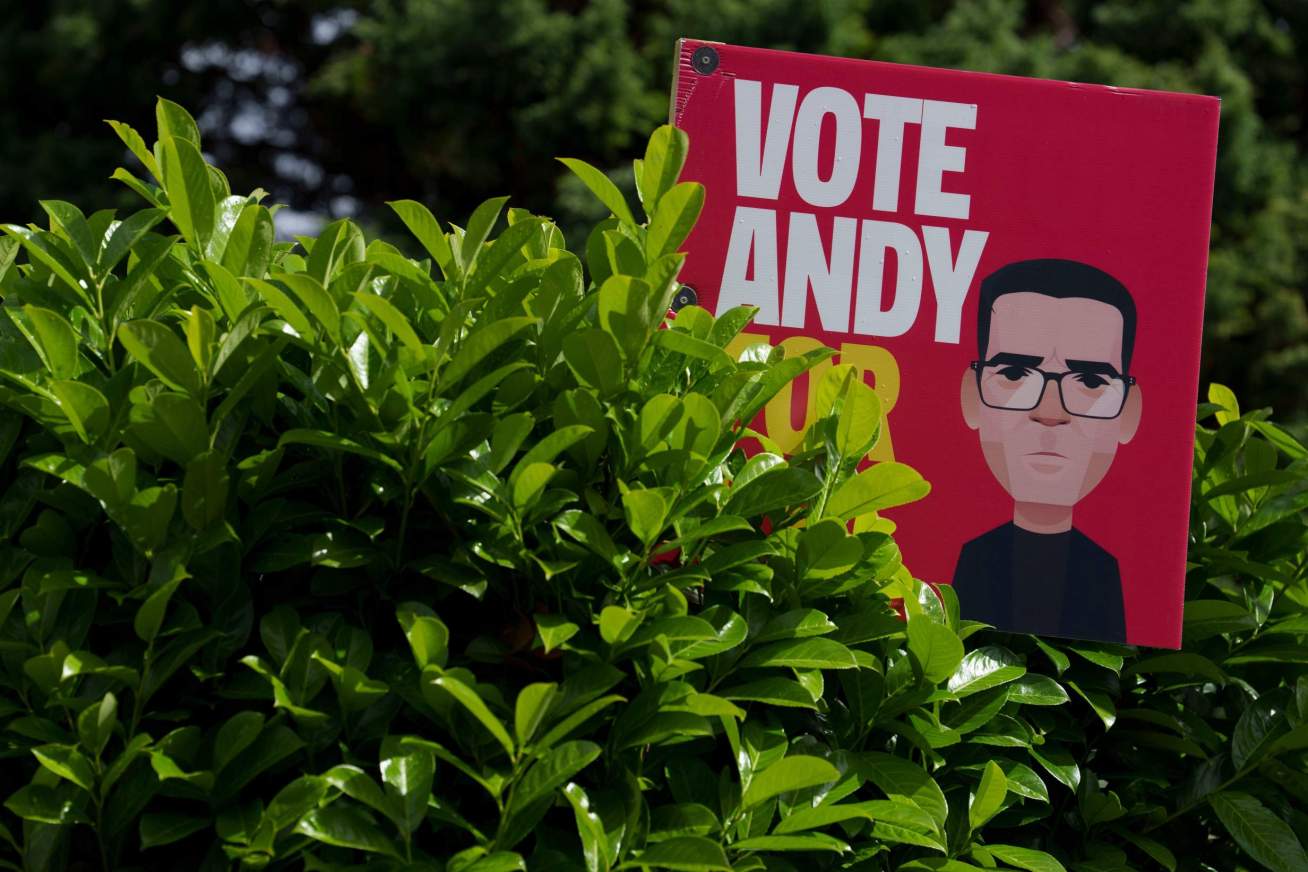
Everybody in the Labour Party knows that, without Andy Burnham, Labour would have crashed to defeat. With Burnham, Labour won an easy victory. The astonishing scale of that victory explains why we will be witnessing the arrival of a new British prime minister.
Andy Burnham’s return to Westminster creates a new political arithmetic. It opens a fresh set of political horizons. It gives hope not just to Labour but to Britain.
Let’s pause and spare a thought for Keir Starmer.
It’s less than two years since he led Labour to one of its largest general election victories. That made him seem immortal. With the Tories crushed, there was talk of a decade in power.
These high hopes make his failure all the harder to comprehend.
In Labour Party history, he will go down as a pariah. A lesson in how not to be a politician. It will be painful for him to remain in Parliament, sitting on the backbenches, watching someone else do better.
The sigh of relief from the Labour Party is audible.
Andy Burnham talks of change, but I wish he wouldn’t. He does not offer a new kind of leadership for Labour. He is a reversion to the mid-20th Century when Labour prime ministers were men of the people.
Burnham is a giant step backwards to a better sort of British politics.
Harold Wilson with his pipe, his Yorkshire accent, and his support for Huddersfield Town.
Comfortable Jim Callaghan, the union official who served as an ordinary seaman in the Royal Navy during the Second World War, and went on to become the only British politician to fill all four great offices of state – home secretary, chancellor of the exchequer, foreign secretary, and prime minister.
Roy Hattersley, who died this month, fits in this mould. Born in desperate poverty in 1930s Sheffield, he rose to become Labour Deputy Leader.
Tony Blair dismantled that world, and the deep morality and wisdom that went with it, by turning the Labour Party into the political wing of the London metropolitan elite.
People from northern, working-class backgrounds – John Prescott being the classic case in point, David Blunkett another – were privately mocked and publicly patronised.
Keir Starmer, with his expensive suits and strangled vowels, was the final doomed manifestation of the Blairite universe.
Burnham’s critics are already pointing out that he too went to London and served as a special advisor. They are missing the point.
Burnham left Westminster and went back to Manchester, 30 miles from where he was born in Culcheth, and proved a huge success as Mayor.
There’s no side to Burnham. He knows who he is. He’s not a fake. Voters like him.
Even so, it’s not going to be easy for him.
The structural problems mount. He can’t spend his way out of trouble as Tony Blair and Gordon Brown could do in the 1990s. Britain’s £3 trillion national debt makes that impossible. If he has sense, he will be honest about this when he speaks to voters. He won’t pretend to have instant answers.
One of Keir Starmer’s deepest problems was the Blairite belief that politicians must lie in order to secure power.
Another was the idea that power can only be secured through alliances with Britain’s mutant mass media, in particular the Murdoch press.
A third problem was the Blairite proscription that, in order to se