

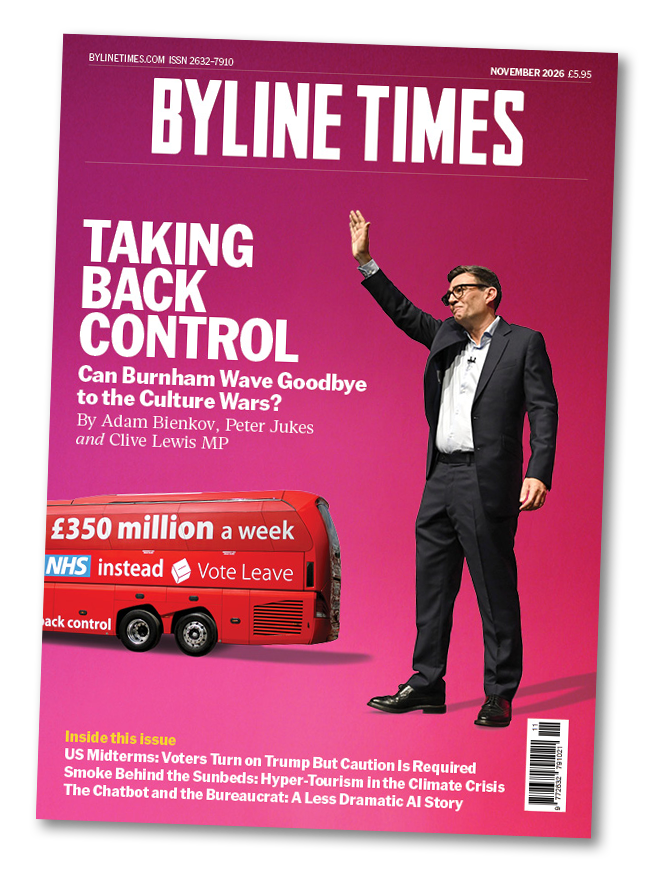
Read Our Monthly Magazine
And support our mission to provide fearless stories about and outside the media system
A little more than a month ago, Labour lost every council seat within the Makerfield constituency boundaries. Reform UK won with an average of 50.4%. Labour came a distant second on 22.7%. It was followed some way behind by the Green Party, Conservatives, and Liberal Democrats.
That the Labour candidate, Andy Burnham, is now expected to win, and to win comfortably, in the Makerfield by-election on Thursday says a huge amount about his brand and the trust he engenders among communities that have known him for nine years as Greater Manchester Mayor, and previously as a local MP and Cabinet minister.
As one woman told me on the doorstep last week, “I watched Andy Burnham on Question Time, and I thought, I can trust that man to do what he says he’s going to do”. Politicians don’t get that response, not in 2026. That Burnham does is a huge asset, and is credit to his achievements in Manchester and his ability to honestly connect with voters.
A win will also be a huge collective boost to Labour morale. The triumphant mood of June 2024, when the party took power after 14 years in opposition, was shortlived.
Early missteps did lasting damage. The decision to cut the winter fuel payment for all but the poorest pensioners, and a state of the nation speech informing the public that ‘things will get worse before they get better’ – the antithesis of Labour’s election pledge – cost it public support it has never recovered.
A win in Makerfield will therefore give Burnham the ability to make a substantial claim: that under his banner, Labour can again inspire hope, rebuild trust in working-class communities, and give people a reason to believe that a vote for Labour is a vote for change that will be realised.
Had he chosen to stand in a seat already projected to stay with Labour at the next election – one of only 83, according to the Electoral Calculus website – he would have no such claim, leaving Reform in a far stronger position.
Makerfield, then, was a brave move – but also a strategic one.
Beating Reform on what it doubtless considered home turf would prove it can be done – giving Burnham reason to claim that he can do it again on a national scale come the next general election.
