
 Subscriptions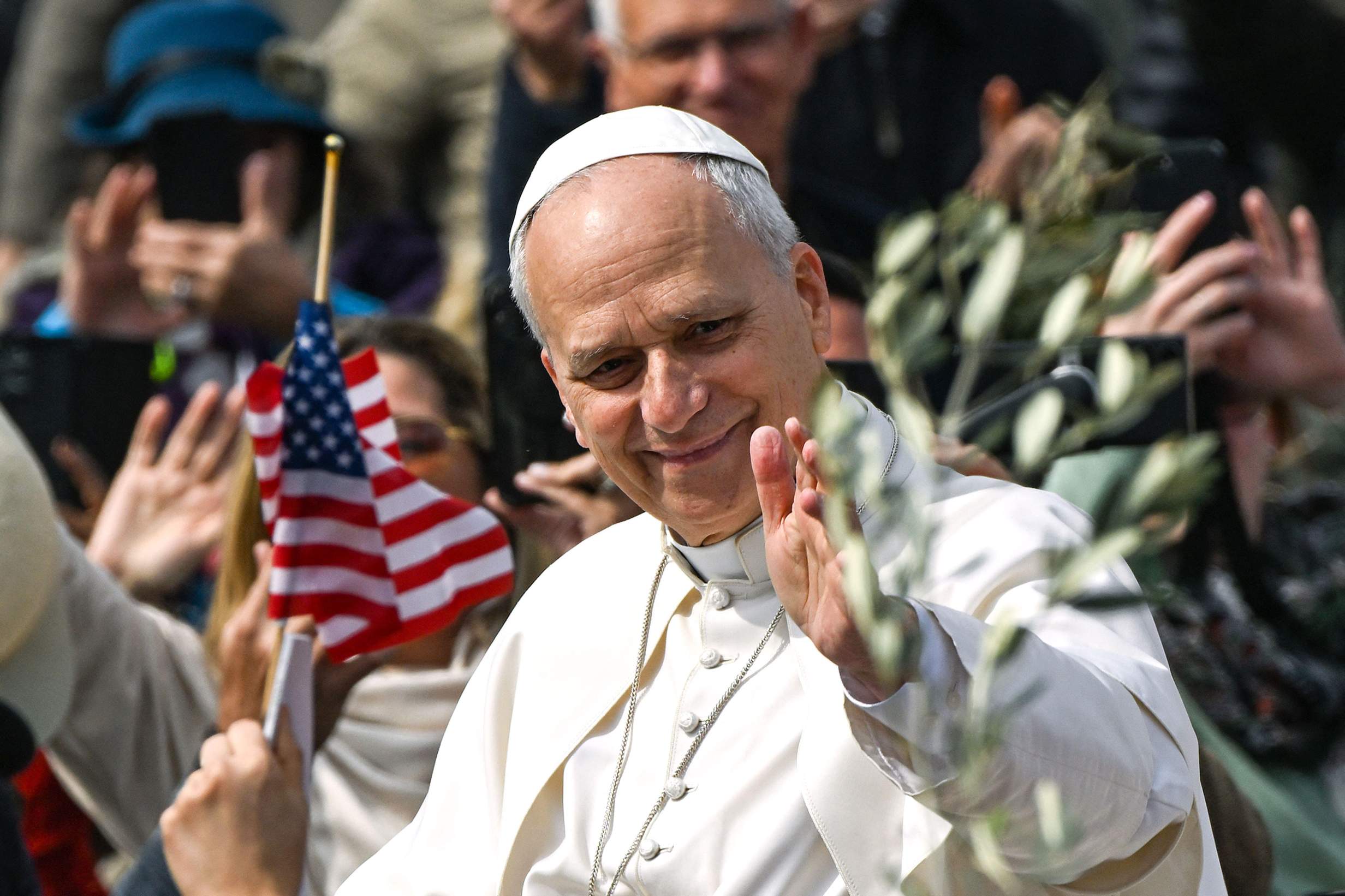
Read our Monthly Magazine
And support our mission to provide fearless stories about and outside the media system
Has US President Donald Trump forgotten just who is buttering his bread? That is the question that the recent trifecta of religiously-themed Trump controversies is bound to raise.
The fight with the Pope, started by Trump and carried on by his Vice President, JD Vance, is sure to alienate some of his conservative Catholic supporters. The AI-generated Trump-as-Jesus image, which the President posted on social media, managed to offend Christians of all denominations. (After all, as the writer John Fugelsang points out, the only thing Jesus and Trump have in common is they are said to have spent a lot of time with prostitutes and used ghostwriters.) And the video evidence that Crusader-tattooed holy warrior Pete Hegseth adheres to the gospel as revealed to film director Quentin Tarantino doesn’t seem likely to help with the white evangelicals who form the most enthusiastic bloc of voters for Trump and MAGA.
This isn’t twelve-dimensional chess by a cunning administration; it’s bad politics from an administration that long ago lost the plot.
Yet it’s not quite as bad as it should be, and that is the more interesting point about this latest episode of how-low-can-he-go. Because the trifecta exposes the nature of the so-called religion that animates the Christian nationalist movement that has sustained Trump in power.
Let’s start with Trump’s hostilities toward the Pope. According to JD Vance, the debate concerns the “Just War Doctrine” and its application to the Iran war. Augustine articulated this theory in the 5th Century and Thomas Aquinas formalised it in the 13th Century. Pope Leo, as a member of the Augustinian order, appealed to this long tradition when he decried “tyrants” who are “ravaging the world” and “cloaking their quest for domination in false religion.”
Just War Doctrine states, in a nutshell, that war may be waged only with a clear and just cause, such a self-defence, on a proper legal foundation and as a last resort. Trump’s war, which has had shifting stated purposes, is hardly in America’s immediate self-defence, and was hardly the last resort—but let’s leave that debate to the side. Trump’s provocations of the Pope have nothing to do with Just War Doctrine in this traditional sense.
Some of Trump’s lackeys have occasionally wrapped the Iran adventure in religious rhetoric, to be sure, but the rhetoric is that of a struggle for civilisational supremacy. When Trump posted his threat to commit war crimes— “A whole civilization will die tonight”—he managed for once to choose at least one word carefully.
The Trump administration’s Department of Homeland Security has certainly grasped the relevant historical antecedents for such a view. It has taken to posting images reminiscent of Nazi propaganda posters, along with the infamous painting by John Gast, titled American Progress, an allegorical representation of Manifest Destiny.
Pete Hegseth gets it too. His tattoo—“Deus Vult” or “God wills it”—is a borrowing from medieval crusader rhetoric that has been taken up by white supremacist-aligned groups in the 21st Century. The argument for war here is not that it is a last resort taken in self-defence. It is a theory that appears to justify aggression towards pretty much anyone who doesn’t remind “us” sufficiently of ourselves.
This tribal theory is not at all unique to people who identify with Western civilisation. Indeed, Iran’s leadership has in turn long framed its war against “the West” and its supposedly decadent features, such as women’s equality, as a civilisational struggle and used this framing in its provision of military, financial, and weapons assistance to proxies over decades.

Trump: ‘When You Think of It, We Shouldn’t Even Have an Election’
As his approval ratings slide amid growing discontent over his unpopular war in Iran, the President is looking at multiple ways to subvert the mid-term elections, reports Owen Bennett-Jones
So, you might think that Christian nationalist sympathisers would have a problem with this body of theory. Maybe some of them do. But Trump’s views have been clear for the past ten years and have, in fact, cost him little of their support.
The Jesus picture, sadly, further exposes the nature of the kind of religion favoured by the MAGA movement. Many Christian nationalist leaders, including conservative Christian ‘rock star’ Sean Feucht and Tennessee Republican Representative Andy Ogles, denounced the image as blasphemous. They are surely right about that.
These anguished denunciations among Trump’s evangelical surrogates would have been more compelling, however, had these MAGA-aligned preachers not spent the past ten years extolling Donald Trump as “God’s man” divinely sent.
From a theological perspective, there is no good case in the Christian faith for deifying Trump. That’s about as pagan as things get. But it didn’t stop Trump’s Christian nationalist supporters before. Will it stop them now?
Pete Hegseth’s impersonation of Samuel Jackson’s fictional hitman in the film Pulp Fiction exposes the same underlying reality of Christian nationalism. We are all supposed to think that Christian conservatives arrived at their politics through an intensive reading of the Bible. But the Bible is famously open to interpretation. And it is well established that many Christian nationalists arrive at their understanding of the Bible through intensive exercises in political partisanship.
In the case of Hegseth, it seems obvious that the lust for domination, conquest, and violence comes first, and the Bible comes after—and maybe it isn’t even the Bible at all.
Many theologians and lay Christians argue that this kind of bloodthirsty religion isn’t recognisably Christian. It surely isn’t the religion of some number of Trump supporters. But how many? And will it be enough to move them?
If we look at this as a numbers game, the trouble for Trump is likely on the Catholic side. Over 80% of white evangelicals voted for Trump, but the evangelical vote is concentrated in deep red districts where MAGA can afford to lose a few votes. Catholics, meanwhile, who represent about 22% of the population, have generally lower levels of support for Trump; 60% of white Catholics voted for Trump in 2024. Moreover, Catholics are spread around the country in crucial battleground states. And Trump’s increase in support among Latino Catholics between 2016 and 2024 is now collapsing.
One way to gauge the reaction is to look at the response from Trump and his coterie. On the one hand, Trump deleted the Jesus post. On the other, he isn’t letting go of his beef with the Pope. After the Pope’s original statement, Trump posted an accusation that the Pope is “WEAK on Crime.” Which is really just a doubling-down on the ideological-tribal theory, refocused on the civilisational enemy within—namely immigrants who are supposedly destroying the American way of life.
JD Vance, whose upcoming book on his newfound Catholic faith features a picture of a Methodist church on the cover, has attempted to lecture the Pope on Augustine and theology, even warning him to “be careful.”
ENJOYING THIS ARTICLE? HELP US TO PRODUCE MORE
Receive the monthly Byline Times newspaper and help to support fearless, independent journalism that breaks stories, shapes the agenda and holds power to account.
We’re not funded by a billionaire oligarch or an offshore hedge-fund. We rely on our readers to fund our journalism. If you like what we do, please subscribe.
Fox News TV and radio presenter, Sean Hannity, a critical mouthpiece for the MAGA network, announced he is no longer Catholic and added, “Pope Leo XIV is now seemingly more interested in spreading left-wing politics than the actual teachings of Jesus Christ…where are the pointed words for Iran?”
In fact, Pope Leo had pointed words for Iran, too, condemning the regime’s murder of its own citizens. In recent weeks, Pope Leo has also condemned violence in the Sudan, said Ukraine has been “martyred” in a “senseless war,” and called for peace in Gaza. Leo also critiqued the “inhuman” treatment of immigrants shunted into detention centers across the U